Free State Targets Surgical Backlogs
The three-day Cataract Marathon, held over the weekend at Boitumelo Regional Hospital in Kroonstad, was a great success, with over 100 patients receiving treatment.
Screening was conducted last week Friday with cataract operations scheduled for Saturday and Su...
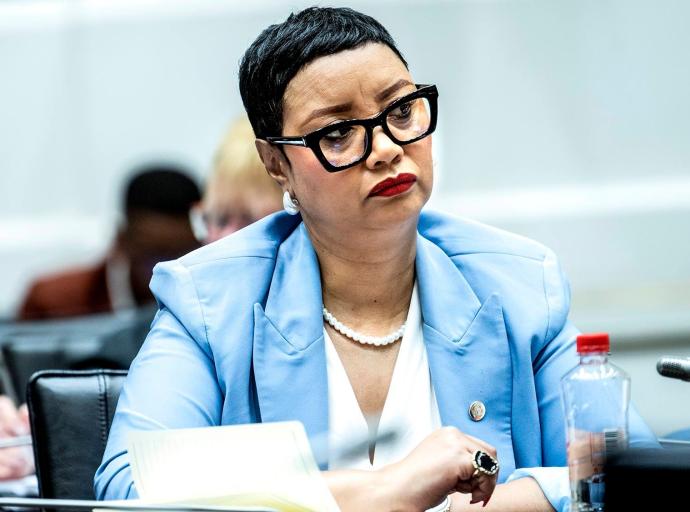
ActionSA’s Dereleen James has said that the testimonies they have heard before Parliament’s Ad Hoc Committee investigating allegations made by SAPS KwaZulu-Natal Police Commissioner, Lieutenant-General Nhlanhla Mkhwanazi, have not come as a surprise, as some MPs have known the state of State Security for the longest time.
James was speaking on the sidelines of the Ad Hoc Committee, where Lieutenant-General Francinah Vuma, who served as deputy national commissioner for Support Services and later Asset and Legal Management, testified on Wednesday.
Vuma was suspended in 2022 and retired in January 2026.
She told the committee that the allegations formed part of a protected disclosure document she submitted to President Cyril Ramaphosa, in which she detailed alleged interference by former Police minister Bheki Cele and National Police Commissioner General Fannie Masemola.
When asked if the committee feels better placed at present as opposed to last month, James said: “I'm not even gonna say that we are in a better place than what we were. Some of us have known the state of State security for the longest time.
“Getting all these testimonies was just basically confirmation of that, which we knew, and it basically just amplified our voices, and it amplified what South Africans are having to experience at your police stations.
“It basically just showed us why we are not being served,” James said. “It has been confirmation basically on something that we've already known.”
While the committee is expected to wrap up proceedings next Tuesday, following the return of Mkhwanazi and Masemola, James said that at some point, they have to conclude “because we've heard enough”.
“Let us get down to the important part of the work of this committee, which is forming that report right now. Unfortunately, I must say that I know South Africans are currently expecting to see people in orange overalls.
“I think if anything, South Africans want to see people locked up and behind bars. This committee is not geared to actually effect arrests,” James said.
“This committee is here to look at reforms, to make submissions in terms of what we have heard in the various departments: how can we best address political infiltration? How can we best address the fact that service providers entangle themselves with SAPS top management and compromise the mandate of SAPS?
“Those are the types of things that we're gonna have to look at; how we can strengthen policies within SAPS, all these state institutions,” James said.
During Monday's committee meeting, MPs were still seeking clarity over the appearance of the Inspector-General of Intelligence (IGI), Imtiaz Fazel.
James said that whether or not he appears before the committee, he is unlikely to tell them something different from what they have heard.
“Whether it is the President (Cyril Ramaphosa) coming now, whether it is the IGI - what are they gonna tell us differently from what we have heard?
“I think for us now, the focus is to apply our minds to the response to South Africans. We know that this isn't the end of an open-door policy for South Africans,” James said.
“We still have the portfolio committees. We still have all these clusters that deal with these issues. It doesn't mean when the Ad Hoc Committee concludes on its work, there aren't spaces open for anyone who still needs to come forward with tangible information.”
A DAMNING contradiction lies at the heart of South Africa’s water crisis. Two water boards are reporting improved performance while the communities they serve continue to experience dry taps.
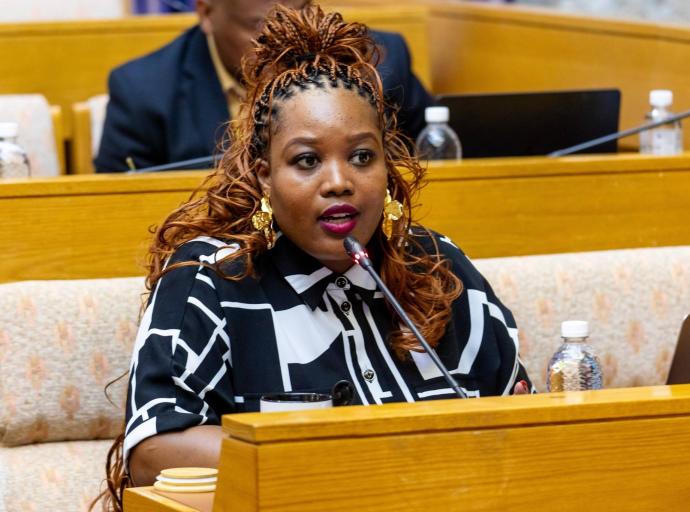
The Portfolio Committee on Water and Sanitation has welcomed the improved performance of Lepelle Northern Water and Overberg Water, but issued a strong warning that misalignment within the water value chain is rendering these gains meaningless to ordinary citizens.
The chairperson of the Portfolio Committee on Water and Sanitation, Leon Basson, said in a statement that the committee was considering the annual reports of all water boards and had received briefings from both entities. While governance and operational performance are improving, the lived experiences of end users paint a contrary picture to the positive performance outcomes reported.
“The good performance by the water boards is a direct representation of a fractured system, where improvements in the performance of the water boards do not translate into direct positive outcomes for communities. In a fully functional system, improvements in the performance of the water boards would lead to a tangible improvement in water access for the people,” Basson said.
Basson’s statement identified municipalities as the critical bottleneck exerting downward pressure on the entire system through two devastating failures: High levels of non-revenue water within municipal reticulation systems and persistent non-payment for bulk water services supplied by the water boards.
He said these challenges posed a significant risk to the financial sustainability of water boards, with municipal debt owed to Lepelle Northern Water alone having increased to R1.36 billion — a figure the committee reiterated requires urgent attention to ensure the sustainability of both the water boards and the broader water supply system.
Regarding Lepelle Northern Water, the committee welcomed improvements in governance and operational performance, with the entity achieving an overall performance rate of 90% against its planned targets. Revenue collection has improved by 11%.
Yet despite these metrics, the municipal debt crisis continues to threaten the entity. Considering the governance and operational challenges experienced in previous financial years, the committee encouraged the board and senior management to continue prioritising liquidity and the overall financial health of the entity, according to Basson.
Overberg Water achieved a clean audit outcome, which the committee noted positively, maintaining that sound governance and strong financial management form a critical foundation for institutional effectiveness and service delivery.
However, the committee emphasised the need for the entity to develop a clear growth strategy to expand its revenue base and ensure long-term sustainability. The committee welcomed several initiatives aimed at improving revenue generation, including plans to secure additional industrial customers and farmers, as well as the management of wastewater treatment works on behalf of municipalities and commercial clients.
The committee urged a collaborative approach between the Department of Water and Sanitation and the Department of Cooperative Governance and Traditional Affairs to ensure comprehensive alignment across the water value chain and to safeguard access to water as a foundation for socio-economic development.
Meanwhile, the committee resolved, following legal advice, to give the National Economic Development and Labour Council (Nedlac) 14 days to make a submission on the Water Services Amendment Bill, following a request by Nedlac for the committee to allow the Department of Water and Sanitation and Nedlac sufficient time to engage on the Bill.
The committee was of the view that the three months requested by Nedlac was not practical and would unreasonably delay the consideration of the Bill.
The Democratic Alliance (DA) has accused the Economic Freedom Fighters (EFF) of opposing progress in government service delivery, following criticism of plans to expand Department of Home Affairs services to bank branches across South Africa.
DA national spokesperson Karabo Khakhau said the party was not surprised by the EFF’s stance on the initiative, which will allow South Africans to apply for Smart ID cards at selected bank branches.
“The Democratic Alliance is unsurprised that the EFF stands against Home Affairs services rolling out to bank branches across South Africa, because the EFF is an enemy of progress,” Khakhau said.
The rollout, which includes services at Capitec Bank and Standard Bank branches, forms part of the department’s efforts to modernise identity services and reduce long queues at traditional offices.
Khakhau described the initiative as a significant step toward improving public access to government services.
“The launch of Home Affairs SmartID applications at bank branches of Capitec and Standard Bank is a groundbreaking leap forward for South Africans, and is the start of the end of queueing for hours outside Home Affairs branches,” she said.
She added that the Smart ID card would help improve security and reduce identity fraud linked to the older green identity book.
“SmartIDs replace the very insecure, and often forged Green ID Book which have allowed illegal immigrants to impersonate South African citizens. It clearly exposes the EFF that they would stand in the way of people converting to secure SmartIDs,” Khakhau said.
The DA also criticised the EFF’s opposition to the programme, claiming it would hinder efforts to modernise Home Affairs services.
“We reject the EFF’s position that they would prefer South Africans to stand in long queues at Home Affairs, and that the EFF would defend illegal immigrants who are using forged SA Green ID Books,” Khakhau said.
Khakhau said the party’s participation in the Government of National Unity was partly aimed at preventing parties such as the EFF and the uMkhonto weSizwe Party from entering national government.
“This is why the DA is determined to keep the EFF out of national government, and it is why the DA entered the Government of National Unity to prevent a ‘doomsday’ where the EFF and MK party entered national government,” she said.
Khakhau also praised Leon Schreiber, the Minister of Home Affairs, for what she described as progress in modernising services.
“The DA is proud of Minister Schreiber’s barnstorming progress at Home Affairs, delivering Home Affairs @ home,” she said.
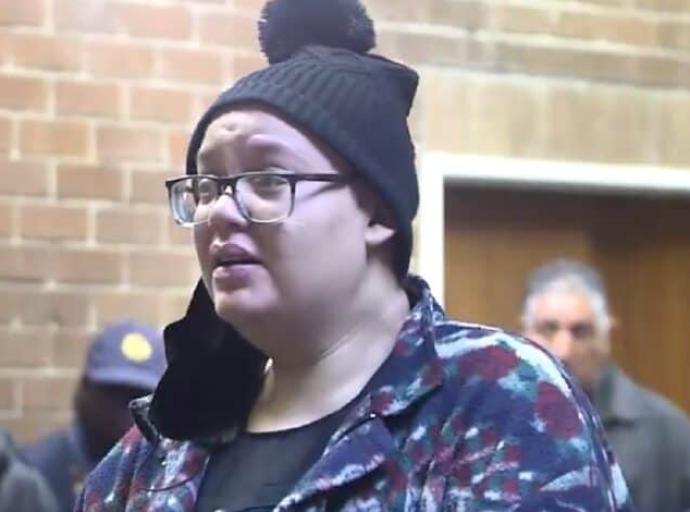
Gauteng mother Tiffany Meek, charged with the murder of her son, is expected to appear in the Palm Ridge Magistrate’s Court on Tuesday.
Meek, 31, from Fleurhof, is accused of murdering her son, 11-year-old Jayden-Lee Meek.
Jayden-Lee was reported missing on May 13, 2025, after he failed to return home after school.
His lifeless, half-naked body was found on May 14, 2025, near the staircase in the Swazi Place complex just metres from the front door of his home.
Meek was arrested on July 11, 2025, and has been in custody since following a failed bail application.
In addition to murder, Meek also faces charges of crimen injuria, attempting to defeat or obstruct the course of justice, and defeating or obstructing the administration of justice.
During her bail application, Meek pleaded with the court to grant her bail as she is the sole breadwinner of her family. She said she could afford R5,000 bail.
Magistrate Annelin Africa denied Meek bail on July 29.
Meek’s arrest caused anger within her community, which had joined the search for the missing boy.
Despite the allegations she faces, Meek also has significant support from many who believe she is innocent.
In September last year, an online petition was started calling for bail for Meek, demanding that she receive fair treatment and be declared innocent until proven guilty.
According to the petition, Magistrate Africa “denied her [Meek] bail in a manner that went beyond legal requirements, relying on untested allegations and casting doubt on her innocence before trial had even begun. Numerous discrepancies and inconsistencies in the investigation raise serious questions about Tiffany’s involvement in the tragic events surrounding her son’s death.”
It further stated Meek’s detention was ‘unnecessary’ while coping with the loss of her son.
It remains unclear who started the online petition.
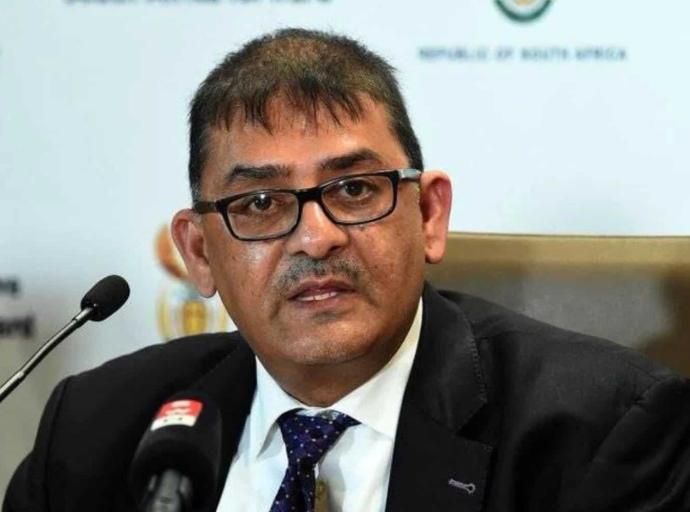
Members of Parliament’s Ad Hoc Committee probing allegations made by SAPS KwaZulu-Natal provincial commissioner, Lieutenant General Nhlanhla Mkhwanazi, are still seeking clarity over the appearance of Inspector-General of Intelligence (IGI), Imtiaz Fazel.
The committee met on Monday to discuss several housekeeping matters, ranging from the rescheduling of National Commissioner Fannie Masemola and Mkhwanazi to appear next week, the delay in the response from President Cyril Ramaphosa, the progress of the matter regarding opening a case against O’Sullivan and the appearance of the suspended IGI.
Most of Monday’s meeting focused on the debate surrounding the appearance of Fazel, where several committee members debated the current limitations surrounding whether he could appear.
Fazel was suspended by President Cyril Ramaphosa in October pending a decision in an investigation by Parliament’s Joint Standing Committee on Intelligence (JSCI) into the Inspector-General’s conduct.
Acting police minister, Professor Firoz Cachalia, had shared Fazel’s classified report with the committee.
Previously, Ad Hoc Committee evidence leader Norman Arendse SC said that several attempts were made with the assistance of the Ad Hoc Committee chair to arrange a meeting with the chair of the Joint Standing Committee on Intelligence, which didn't happen last year.
Arendse had said: “We looked at the legislation, at what was required for him to appear, and subject to the suspended IGI consulting with the president and the Minister of Intelligence, there doesn't appear to be such an impediment to him appearing," Arendse said.
EFF MP Julius Malema voiced his concern in Monday's meeting that Fazel should not be prohibited from appearing before the committee.
“We are not called an Ad Hoc Committee for no reason, and it's not like a police committee calling the IGI, who can actually appear before the intelligence committee. It's not a normal operation.
“Therefore, we cannot want to behave like we are a special committee, which has a lifespan and which has to deal with more complex matters. We had a head of crime intelligence appearing before us. There was nothing whatsoever that was asked, which compromised the integrity of the crime intelligence. Nothing,” Malema said.
“But he was asked questions. He was asked serious questions, but they did not interfere with (anything) top secret or anything of that nature. Corruption can never be a top secret. You cannot classify corruption as top secret.”
“We have to find a way to bring a willing IGI to come before this committee. His willingness is a demonstration that he's got something to share with us,” Malema said.
“He knows what is top secret. He knows it better than me and you. He knows which areas never to converse in public, and therefore, chairperson, our proposal is that whatever happens, let the IGI come.”
Ultimately, the chairperson of the Ad Hoc Committee, Soviet Lekganyane, said that the legal team and evidence leaders will get in contact with Fazel, and take it from there.
“They will get into contact with him… The person who knows their conditions of service (best) is the IGI, who is currently suspended, and he is the one who must respond to our call when we say he must appear before us. The evidence leaders will discuss with him, and decide which day will be possible for him to appear before us,” Lekganyane said.
The committee also heard that the Parliamentary legal team are currently collecting affidavits regarding opening a case against forensic analyst Paul O’Sullivan after he walked out of the Ad Hoc Committee hearing.
While O’Sullivan did return to the committee last Thursday, they haven’t dropped their intention of opening a case against him for allegedly contravening the Powers, Privileges and Immunities of Parliament and Provincial Legislatures Act of 2004.
The committee also heard that President Cyril Ramaphosa has requested that he be able to respond to the questions posed to him by the Ad Hoc Committee by March 16. The EFF, IFP and uMkhonto weSizwe Party (MK Party) raised issues with this, fearing that the delay in his response would impact their ability to ask the president clarity-seeking questions.
Tuesday’s proceedings will resume with the evidence of Acting Deputy National Commissioner for Crime Detection and Divisional Commissioner for Detective and Forensic Services, Lt-Gen Hilda Senthumule, and also see the return of Member of Parliament, Fadiel Adams, who will be questioned by the committee members.
The committee had also resolved to reschedule the appearance of Masemola and Mkhwanazi. The committee felt that it made more sense for the police officials to appear last before the committee rather than this week.
The rand weakened towards R16.80 to the US dollar on Monday as escalating tensions in the Middle East pushed investors away from emerging market currencies and into safer assets.
Trading Economics said the currency was approaching its weakest level since mid-December 2025 as hopes for a swift resolution to the conflict faded.
The rand traded around R16.86 to the US dollar after weakening to R16.81 late on Friday as global risk aversion increased amid missile exchanges between the US, Iran and Israel.
“Ongoing missile exchanges between the United States, Iran, and Israel raise concerns that the conflict may persist, leaving South Africa particularly exposed due to its heavy reliance on imported oil and petroleum products from the region,” said Trading Economics.
Risk averse
Annabel Bishop, chief economist at Investec, said intensifying conflict between the United States, Iran and Israel had driven global risk aversion and strengthened the US dollar.
“The risk is for further rand weakness with the US dollar a safe haven now, running stronger on the severe escalation in geopolitical tensions in the Middle East,” said Bishop.
Bishop added that “safe haven flows on substantial global financial market risk aversion, from the intensifying US/Iran/Israeli war, have strengthened the US dollar and gold price as usual, with outflows from risky assets such as equities and those of emerging markets”.
Foreign investors have also reduced exposure to South African assets. “Foreigners sold off South African portfolio assets, with R3 billion worth of bonds sold on Friday,” Bishop said.
Higher oil prices
The escalation in the conflict has also pushed oil prices sharply higher, raising concerns about inflation and fuel prices.
Brent crude briefly approached $120 per barrel before easing back below $110 as markets reacted to concerns about supply disruptions in the Middle East.
Combined with the weaker rand, the rise in oil prices has pushed up fuel price estimates, with the rand oil price climbing to about R1,814 per barrel from roughly R1,161 per barrel at the end of last month.
Bishop said oil prices of about $110 per barrel or higher, combined with a weaker rand – which she noted is not the expected case – could push consumer inflation above 4% year-on-year in the second quarter of 2026.
“The oil price shock would likely be looked through by the MPC if short-lived, and without second round effects flowing into other prices, leaving interest rates unchanged, but higher food and other prices would increase the chance of a hike.”
Sensitive markets
Andre Cilliers, currency strategist at TreasuryONE, said markets remained sensitive to developments in the Middle East as concerns grew over disruptions to global oil supply.
Brent crude rose above $100 per barrel amid fears that instability around the Strait of Hormuz – through which roughly one-fifth of global oil supply moves – could affect shipments and tighten supply.
The escalation has also strengthened the US dollar as investors seek safer assets during periods of geopolitical uncertainty.
“Until there is clarity on the duration and scale of the conflict, markets are likely to remain volatile with investors favouring defensive positioning,” said Cilliers.