Free State Targets Surgical Backlogs
The three-day Cataract Marathon, held over the weekend at Boitumelo Regional Hospital in Kroonstad, was a great success, with over 100 patients receiving treatment.
Screening was conducted last week Friday with cataract operations scheduled for Saturday and Su...
The University of South Africa (Unisa) has confirmed that Sarah-Jane Trent is a graduate of the institution, having obtained a Bachelor of Laws (LLB) degree in May 2013.
The clarification follows the circulation of false information on social media claiming that she did not hold a degree from the university.
In a statement released on Monday, the university said it “once again distances itself from the statement circulated on social media purported to be from the institution, which was denying that Ms Trent holds a degree from Unisa.”
Unisa described the online claims as a deliberate misuse of its resources and templates, stating that it “condemns in the strongest terms the manipulation and misuse of the university's templates and logo, which are in the public domain, to misrepresent its position.”
The university added that the relevant units within Unisa would be asked to “investigate the origins of the misleading statement and abuse of our resources; and take appropriate legal action.”
Officials emphasised the seriousness of the matter, warning that attempts to misrepresent the university’s position could carry legal consequences.
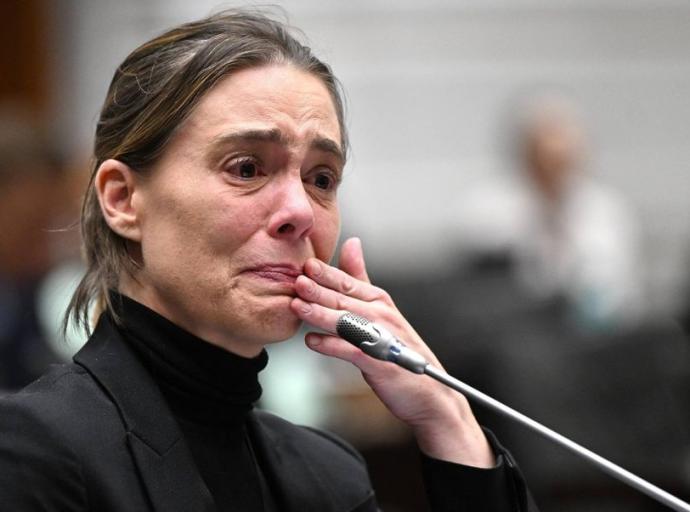
The issue arose after Trent, an attorney and certified fraud examiner, appeared before the ad hoc parliamentary committee last week.
Umkhonto weSizwe Party (MK Party) Member of Parliament (MP) Vusi Shongwe questioned her about her career, including whether she was a qualified lawyer.
She stated that she had obtained a law degree from Unisa, which had enabled her to work for Paul O’Sullivan.
Questions about her legal qualifications emerged during the committee’s proceedings into allegations of influence within South Africa’s criminal justice system.
Members of the committee raised issues related to her legal knowledge, including matters concerning the Independent Police Investigative Directorate Act.
During her testimony, Trent outlined her educational journey. She said she matriculated in 2002 and initially studied marketing.
“In 2003, I enrolled for a degree in Bachelor of Commerce, majoring in Marketing, at the University of Stellenbosch, which I did not complete.
''In 2004, I subsequently enrolled at Boland College, Stellenbosch, where I earned a 16-subject Merit Certificate in Marketing Management,” she said.
She added that she later decided to switch fields and pursue law.
“In 2006, I was in search of employment as I no longer wanted a career in marketing, so I decided to further my studies. In 2007, I enrolled at University of South Africa toward a Bachelor of Laws degree (LLB), which I completed in November 2012. I was conferred a Bachelor’s certificate on 13 May 2013.”
During the weekend, Unisa said it had received multiple inquiries about Trent’s qualifications.
While noting that it would not violate the privacy of any student, the university stressed the importance of relying on official communications.
“This message circulating online is fake. Please rely only on official Unisa communication channels,” it said.
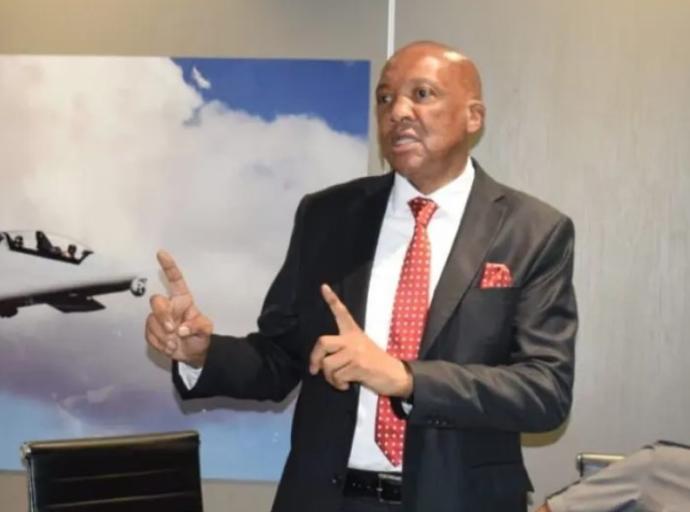
Road Traffic Management Corporation (RTMC) chief executive Makhosini Msibi has scored a major victory after successfully challenging his suspension, clearing the way for him to remain in office.
The Gauteng High Court, through Judge Jan Swanepoel, handed down the ruling on Monday, declaring the decision by the RTMC board of directors to place Msibi on precautionary suspension last year unlawful and setting it aside.
Msibi’s precautionary suspension came into effect on 1 July 2025 after a board meeting held on 13 June, following allegations of financial misconduct, irregular expenditure and governance failures.
In a scathing judgment, Swanepoel said the board did not have the authority to suspend Msibi and further ruled that the adoption of the board charter was also unlawful.
“The first respondent's decision on 1 July 2025 to place the applicant on suspension is unlawful and is reviewed and set aside,” the judgment read in part.
In October 2019, the National Trade Union Congress (NTUC) called for Msibi’s resignation following a scathing report by the Public Protector. The report found irregularities in the hiring of Julia Manamela as an administrative assistant in November 2014.
Following the Department of International Relations and Cooperation’s (DIRCO) plea for all South African citizens to evacuate the Middle East, many have begun returning home as limited flight operations resume following regional airspace closures caused by escalating conflict.
While earlier airspace closures created a crisis for thousands of travellers, major carriers such as Emirates and South African Airways (SAA) are resuming operations, with flights expected to return to 100% capacity soon.
Airspaces across the Gulf region were closed due to severe regional instability caused by US-Israel strikes on Iran and subsequent retaliatory drone and missile attacks.
These actions prompted nations to close airspace to protect civilian aircraft from risks of being caught in or targeted by missiles and drones.
However, major airlines have recently resumed limited commercial and relief flights following severe regional airspace closures.
As a result, DIRCO has asked South African citizens to evacuate the Middle East immediately and take “immediate advantage” of limited commercial flights to return home, as intense fighting is expected to continue.
At least 150 South Africans, many of whom were on pilgrimage in Jerusalem, have already been repatriated via African carriers such as EgyptAir.
Hundreds of citizens stranded in Dubai began returning this weekend after the UAE partially reopened its airspace. Emirates has reportedly resumed three daily flights to South Africa.
Media personality Spitch Nzawumbi took to social media to share his expressions following his arrival in South Africa on Friday.
Nzawumbi said he was safe after he caught the first flight in the morning.
“If there are any South Africans in the Middle East who are desperately trying to fly back to SA, please share with them that Emirates Airlines has confirmed that they have limited scheduled flights travelling to South Africa from Dubai,” he said.
Nzawumbi advised that travellers should not go straight to the airport without receiving their booking confirmation, due to the overwhelming number of people who are trying to fly out to other destinations and consistent cancellations.
“Those who have been put on standby should try to arrive much earlier than the scheduled times with manageable luggage.”
A traveller also took to social media to share her family’s experience while travelling from Durban to Amsterdam.
She said this also affected them financially.
By the time they got to the airport, all Dubai flights were cancelled.
"At that moment, we had no clue what was happening and were just upset about the cancelled flight. Now, looking back, we are so thankful it happened just before,” said the traveller, adding that the family would have been stuck had the conflict occurred hours later.
“My heart goes out to all the travellers who are still stuck, especially because we learned that an act of war is not covered by anybody. The airline will (hopefully) only pay back the unused tickets and the travel insurance does not cover anything in this case. My family's trip all of a sudden got a lot more expensive, and I keep thinking about the people stuck in Dubai.
“From what I read, Emirates has put the people in hotels (with hopefully some meals covered), but they are still stuck in the most expensive city in the world. Even if some meals and the hotel are covered, there are still things you need. Especially those people who were there on a stopover might have a big problem. They have been stuck for six days already! It's a bad city to get stuck in, not to mention the reason why they are stuck,” she said.
Meanwhile, more than 6,400 South African citizens in the Middle East have registered their presence on DIRCO’s Travel Smart system.
Asked how many people are still stuck, Ministry spokesperson Chripin Phiri said this is a terrain for Deputy Director-General (DDG) for Public Diplomacy, Clayson Monyela, who did not respond.
The ongoing conflict between the US, Israel, and Iran has seen further escalation following statements from President Donald Trump and Iranian officials.
In the early hours of Sunday morning, Trump declared on Truth Social that Iran will be “hit very hard”. He signaled a major expansion of the military campaign, stating that areas and groups previously not considered for targeting are now under consideration for “complete destruction”.
He reiterated that he is not interested in negotiating with the Iranian leadership, stating that the war might only end when Iran no longer has a functioning military or any remaining leadership in power.
Trump also demanded an “unconditional surrender” from the Iranian regime.
However, Iranian President Masoud Pezeshkian rejected this demand, calling it a “dream” and asserting that Iran will not hesitate to defend its sovereignty.
The Iranian health ministry reported that US-Israeli airstrikes have killed over 1,332 people, including roughly 200 children, since the start of the campaign.
Police in the North West say they sent over 10 dockets linked to controversial businessman Brown Mogotsi to the National Prosecuting Authority (NPA),
The dockets relate to kidnapping, murder, assault, reckless and negligent driving, assault with intent to cause grievous bodily harm (GBH), and defeating the ends of justice.
It also includes a withdrawn 2011 murder case in which a man died later the same day of the incident at a local clinic.
This comes after the NPA requested that all police dockets linked to Mogotsi be submitted to the authority following his appearance before Parliament’s ad hoc committee last month.
Mogotsi was grilled about allegations that he was acting as a political fixer and about possible links to law enforcement and political figures.
During the proceedings, Mogotsi acknowledged that several criminal charges had previously been laid against him.
The committee was established following explosive allegations made in July last year by KwaZulu-Natal provincial police commissioner, Lieutenant General Nhlanhla Mkhwanazi, who claimed there was widespread corruption and protection of criminal networks within the justice system.
NPA North West spokesperson Sivenathi Gunya confirmed to IOL News that the authority had requested all previous cases against Mogotsi.
“Yes, we can confirm that the NPA has requested dockets from SAPS. We can’t comment any further until we have the dockets,” Gunya said.
Gunya did not respond to a question on how many dockets had been requested from police and whether any further legal steps would be considered after reviewing them.
North West provincial police spokesperson Colonel Adéle Myburgh confirmed that SAPS had received a request from the NPA for the dockets relating to Mogotsi.
“A request was received from the NPA for all dockets relating to Brown Mogotsi. There are quite a number of them (more than 10),” she said.
Myburgh said the dockets relate to cases including kidnapping, murder, assault, reckless and negligent driving, assault with intent to cause grievous bodily harm (GBH), and defeating the ends of justice.
During his testimony, Mogotsi told the committee that he had been arrested and charged with murder after a fight in which a man died.
He claimed the incident occurred in 2010.
Mogotsi’s disclosure came during questioning by MK Party MP Vusi Shongwe, who asked whether he had previously been arrested and charged.
“Yes, I was sentenced for drinking and assault,” Mogotsi said.
Pressed on whether there were other cases that had later been dropped, he replied, “I cannot remember it many times.”
Asked to specify, he referred to charges including reckless driving and fraud.
“There are many. I cannot remember,” he said.
Shongwe then asked directly whether Mogotsi had been charged with murder and whether the case had been dropped.
“Yes, that’s correct. It was dropped,” Mogotsi said.
He told the committee the incident arose from a physical fight in Mmabatho, North West, in 2010.
“It was not intentional,” he said. “There was a fight. It was physical, and he fell on his neck.”
Mogotsi said he did not shoot the man and denied it was a case of self-defence.
“If it’s self-defence, it means I was found not guilty,” he said.
He confirmed that he had been formally charged with murder and that the matter had been enrolled in court. He said he was out on bail and present in court when the case was withdrawn.
“Yes, it was enrolled. It went to court. They said for trial, and it was withdrawn,” he said, attributing the withdrawal to the absence of witnesses.
“There were no witnesses. The day when I was in court, there was no witness,” he claimed.
“The incident happened between me and this person. It was only me and him. The state did not actually have the necessary case to prove.”
MK Party MP Sibonelo Nomvalo asked at what stage the case had been withdrawn and whether Mogotsi had entered a plea.
Mogotsi initially said he had not pleaded but later confirmed that he had entered a not guilty plea.
“In Schedule 5, 6, you have to plead before going to trial. I pleaded not guilty,” he said.
EFF leader Julius Malema questioned how Mogotsi could claim there was no prima facie case if he had been formally charged and had pleaded not guilty to murder.
“When you pleaded not guilty, they would have said to you: ‘You are charged with the murder of so-and-so. Do you understand the charges?’” Malema asked.
“That means there was prima facie evidence of murder.”
Mogotsi replied, “I don’t know.”
He claimed his defence had intended to apply to have the charge reduced to culpable homicide, but the matter was withdrawn before the trial began.
Mogotsi also confirmed that he was a crime intelligence informant in the 1990s and became a contact agent in 2009.
He said he was registered as an agent at the time of the incident and denied that his handler was involved in the case.
Asked whether the deceased was a man or a woman, Mogotsi confirmed it was a man.
He maintained that the death was not intentional and said he had taken the injured man to a clinic before he later died.
“But before the trial, the matter was withdrawn,” he said.
Meanwhile, Myburgh confirmed that the murder case was reported on December 16, 2011.
“The victim, Buthi Jan Mothusi, 35, was allegedly assaulted by Mr Brown Mogotsi, who was 32 at the time of the incident. He died later the same day at a local clinic,” she said.
She said Mogotsi made his first court appearance three days later, on December 19, 2011.
“On October 13, 2022, the case was withdrawn by the NPA,” Myburgh said.
She added that a more detailed report on the cases reported would have to be requested from the relevant police stations.
“Also note that SAPS cannot comment on the reasons why the NPA withdrew a docket,” she added.
Analysts and the uMkhonto weSizwe Party (“MK Party”) have expressed deep concerns over attorney and certified fraud examiner Sarah-Jane Trent's recent testimony delivered before Parliament’s Ad Hoc Committee, revealing alarming connections between private actors and high-ranking officials linked to President Cyril Ramaphosa.
The committee, probing allegations made by SAPS KwaZulu-Natal provincial commissioner Lieutenant-General Nhlanhla Mkhwanazi, heard testimony from Trent in which she exposed troubling questions about the role of private actors who have embedded themselves in South Africa’s criminal justice processes.
This was after Trent's former boss, fraud examiner Paul O'Sullivan concluded his evidence following he walkout recently.
Trent revealed unsettling connections involving high-ranking government officials and key institutions at the Ad Hoc Committee. Trent’s evidence shed light on O'Sullivan's relationship with President Cyril Ramaphosa’s advisor Bejani Chauke.
National Spokesperson for MKP, Nhlamulo Ndhlela, said that they cannot ignore the disturbing pattern that has emerged when the activities of Trent and O’Sullivan are examined.
The party highlighted how, during cross-examination in the trial involving Duduzile Sambudla-Zuma, Trent admitted that when she laid criminal charges, she was acting on behalf of the organisation Forensics for Justice.
“This admission raises serious concerns about the motives, methods and accountability of private individuals who appear to exercise disproportionate influence in criminal matters involving political figures and public representatives.
“This past week, former Member of Parliament Vincent Smith was sentenced to seven years’ direct imprisonment in a case that originated from charges laid by Ms Trent.
“While the courts have pronounced themselves on that matter, it remains legitimate to interrogate the broader environment in which certain individuals repeatedly position themselves as aggressive pursuers of some public figures while seemingly acting as defenders of others,” Ndhlela said.
“The contrast is glaring because when Andile Ramaphosa reportedly received approximately R2 million over twelve months through his company Blue Crane Capital from Bosasa in relation to an allegedly corrupt contract, and later a further R500,000 linked to the CR17 campaign of President Cyril Ramaphosa, the same actors who present themselves as relentless corruption fighters, adopted a very different posture.
“Instead of laying criminal complaints with the same zeal demonstrated in other cases, Ms Trent, Mr O’Sullivan and their associates reportedly worked vigorously to advance arguments defending Mr Ramaphosa’s innocence,” Ndhlela said.
“While the Constitutional Court ultimately found that President Ramaphosa did not deliberately mislead Parliament regarding the CR17 payment, the MK Party notes that the conduct of private actors in the lead-up to such matters raises legitimate questions.
“The selective activism displayed in these cases creates a dangerous perception that certain individuals are pursued with extraordinary aggression while others are shielded with equal determination. For the MK Party, this pattern cannot be ignored,” Ndhlela said.
He added that the party has consistently warned that South Africa faces not only a crisis of prosecution but also a crisis of perception.
“The MK Party is seeking legal counsel regarding the legality of Ms Sarah-Jane Trent and Paul O’Sullivan’s actions, as well as avenues to pursue criminal charges. We stand firmly with all those who have experienced what increasingly appears to be politically motivated persecution masquerading as justice,” Ndhlela said.
Political analyst Professor Sipho Seepe added that there is little doubt that the relationship between (Cyril) Ramaphosa and O'Sullivan leaves much to be desired.
“What has emerged is that O'Sullivan targeted certain individuals in law enforcement under the pretext of fighting corruption. In doing so, he would engage in what looks like extortionist techniques that border on blackmail.
“At the same time, he seemed willing to ensure that the favourites are exonerated. O'Sullivan's word seems to carry weight,” Seepe said.
“After stating that he found nothing amiss with Andile Ramaphosa when it relates to Bosasa, that was the end of the story. There was no appetite by law enforcement agencies to investigate further.
“O'Sullivan's questionable methods have not prevented him from being a trust go-to person by those close to Ramaphosa,” Seepe said.
Professor André Duvenhage echoed Seepe’s sentiments, saying that various commissions have implicated top leaders within the ANC, from presidents to secretaries-general.
“This is evidence that is available in public, but is not acted on by the public prosecutor. The fact that they are not found guilty has nothing to do with their innocence, but it has a lot to say about the underperformance coming from the criminal justice system at large against individuals of political status, profile and influence.”
In response to the testimony from Trent and the subsequent allegations, spokesperson for the president, Vincent Magwenya, said: “The president has received detailed questions from the Ad Hoc Committee. Issues arising from the Ad Hoc Committee will be responded to directly with the Ad Hoc Committee.”
Amid rising fears triggered by a University of Free State (UFS) study, health authorities have stepped forward to reassure the public regarding the safety of menstrual products, particularly sanitary pads and pantyliners.
In a press briefing held on Sunday, Health Minister Dr Aaron Motsoaledi, alongside a panel of specialists, sought to clarify the findings of the study, which had suggested the presence of harmful endocrine-disrupting chemicals (EDCs) in these products.
Published in February 2026, the UFS study titled “The presence of endocrine-disrupting chemicals in sanitary pads: A study done in South Africa”, found small amounts of EDCs in 16 sanitary pads and seven pantyliners purchased online, including some marketed as chemical-free.
The UFS news story linked the EDC exposure from these menstrual products to serious health issues such as hormonal imbalances, fertility problems, endometriosis, and certain types of reproductive cancer.
The health department and Department of Women, Youth, and Persons with Disabilities consulted experts from the South African Medical Research Council (SAMRC), the South African Society of Obstetricians and Gynaecologists (SASOG), the South African Society of Reproductive Medicine and Gynaecological Endoscopy (SASREG), the National Health Laboratory Service (NHLS), the South African Health Products Regulatory Authority (SAHPRA), and the World Health Organisation (WHO).
Motsoaledi explained that EDCs are chemicals, either natural or human-made, that disrupt the endocrine system. EDCs are everywhere, found in low concentrations in food, household, personal care, and beauty products (cosmetics, toothpaste, shampoo, lotions, etc.), clothing, and electronics. They are also widely used as pesticides in agriculture to kill pests.
“Concentrations of EDCs in menstrual products are very low. The findings of EDCs in sanitary pads do not automatically translate into harm in the human body,” Motsoaledi said.
He said the study established no link to clinical harm. Given the absence of reliable data, a small sample size, and the non-involvement of clinicians, endocrinologists, or chemical pathologists, the experts who would be the first to detect harm, no proven public harm can be confirmed.
SASOG President Professor Ismail Bhorat said the EDCs only have “the potential to interfere with the actions of hormones, and there has been no established risk for the presence of these EDCs”.
He said the widespread incidental presence of these chemicals, found in almost all exposures, is not unique to sanitary products and does not signify a health risk.
Bhorat also said that the low EDC exposure from sanitary products (pads/pantyliners) is due to small, sub-permissible concentrations and the study’s small, less generalisable sample size.
“It is safe to use the menstrual products as they are at the moment, and we have reached the conclusion that we should not have a change in the usual practice of what we are doing now,” Bhorat said.
SAMRC President and CEO Professor Ntobeko Ntusi emphasised that the findings of small EDC quantities in sanitary pads, in soil, food, and many agricultural products to date have not been causally linked with any adverse clinical events.
“We also know that sanitary pads, pantyliners, and many hygiene products have been used for many, many years by women all over the world, and there’s been no signal of harm from their use following many decades,” Ntusi said.
WHO Headquarters Technical Officer (chemical safety projects), Dr Richard Brown, said this is an extensively studied global issue in many countries.
“From a public health perspective, the health benefits which are derived from these products should not be withdrawn without a good reason to do so. Those health benefits have to be balanced, and there is no clear evidence of harm from these products identified to date,” Brown said.
He added that they consistently follow the latest global scientific research, shared via reports like those from the WHO. Expert committees use these findings to set permissible levels for products, ensuring a safety margin, with information shared worldwide.
Acting Commissioner Hardin Ratshisusu of the National Consumer Commission stated there is no immediate quality concern with market products from their perspective, and they “will not be instituting any product recalls on this basis”.
“We have indeed, yes, initiated an investigation, and based on this information, we should be wrapping up that work quite soon,” Ratshisusu said.