Free State Targets Surgical Backlogs
The three-day Cataract Marathon, held over the weekend at Boitumelo Regional Hospital in Kroonstad, was a great success, with over 100 patients receiving treatment.
Screening was conducted last week Friday with cataract operations scheduled for Saturday and Su...
Acting Police Minister, Firoz Cachalia, announced on Monday that the Independent Police Investigative Directorate's (IPID) full report into the Phala Phala farm scandal has been declassified.
Cachalia, responding to a written question from the African Transformation Movement, revealed that the report status was lifted on February 2.
However, the report remains largely inaccessible to the public, as Cachalia stated that IPID reports are typically not intended for general public consumption.
This breakthrough follows months of legal threats from ActionSA, which prepared papers to challenge the 'Top Secret' status as unconstitutional and a 'whitewash' intended to protect President Cyril Ramaphosa.
The party also argued that this is an abuse of power intended to shield Ramaphosa.
The report was originally classified by IPID under the Minimum Information Security Standards (MISS). Former Police Minister Senzo Mchunu previously defended this, citing the need to protect the integrity of the investigation and witnesses.
The Phala Phala scandal, also known as “Farmgate”, involves the 2020 theft of an estimated $580,000 in cash (initially alleged to be $4 million) hidden in furniture at Ramaphosa's private game farm in Limpopo.
The incident remained secret until June 2022, when former spy chief Arthur Fraser filed a criminal complaint. Fraser accused Ramaphosa of money laundering, kidnapping, and bribery to recover the funds without reporting the theft to the police.
Ramaphosa maintains that the money was legitimate proceeds from the sale of 20 buffalo to Sudanese businessman Hazim Mustafa and that he reported the matter to his head of security.
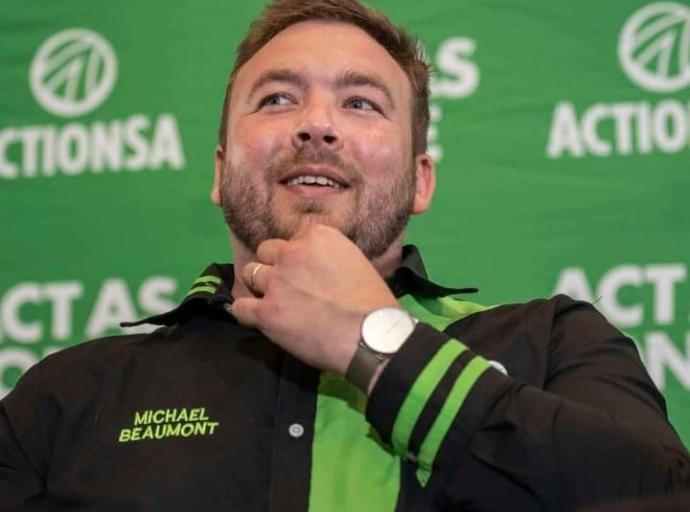
In a statement issued on Monday, ActionSA's national chairperson, Michael Beaumont, said IPID must now unseal the declassified report into Phala Phala.
He said the party has already issued papers to IPID to ensure this happens immediately.
However, IPID spokesperson Lizzy Suping, who also confirmed the declassification of the report, said it should be noted that the report is not for public consumption, adding that anyone who wants access to the report must submit a Promotion of Access to Information Act (PAIA) request to “our” information officer.
Cachalia's spokesperson, Kamo Mogotsi, said the Parliamentary response clarifies that IPID reports are not intended for public release and may only be accessed through the appropriate legal channels, subject to applicable restrictions.
Mogotsi added that Cachalia does not direct or interfere with IPID investigations or findings, adding that his role is strictly defined and limited by legislation to safeguard the directorate’s independence.
“It should also be noted that IPID’s investigation pertained to the conduct of SAPS members, rather than the primary criminal matter of breaking and theft,” she said.
The IPID investigation focused specifically on the conduct of South African Police Service (SAPS) members, including Major-General Wally Rhoode, and whether they conducted an unauthorised “off-the-books” operation to recover stolen foreign currency.
The directorate is also probing allegations that SAPS members pursued and interrogated suspects in Namibia without official jurisdiction or a registered police docket.
Cachalia also stated that any legally obtained version of the report is likely to be heavily redacted.
However, Beaumont said the victory of obtaining this report will allow ActionSA and civil society to challenge both the redactions and the report itself in court if these concerns are realised.
“ActionSA was already in the process of preparing legal papers to declassify the IPID report. Legal means will be considered again if IPID does not provide the full transparency South Africans have been demanding,” he said, adding that the fact that ActionSA has had to fight this matter for more than a year shows that this GNU government has continued where its predecessors left off, protecting their own interests over those of the country.
Beaumont said the party will communicate the next step upon receiving the report.
Meanwhile, African Transformation Movement (ATM) leader, Vuyo Zungula, who has been a central figure in lodging several formal complaints and legal challenges regarding the Phala Phala report and the subsequent investigations, told a national broadcaster that the party will also submit an application for access to the report and request that the directorate be summoned to present it to the Portfolio Committee on Police.
Chairperson of the Standing Committee on Appropriations, Dr Mmusi Maimane, has said that while calling for the deployment of the South African National Defence Force (SANDF) is a very popular thing to say, it is not a fundamental solution to the crime crisis in the country.
His remarks came during a briefing held by chairpersons of Parliament’s Finance Cluster Committee on Monday, where he discussed the expenditure on crime and debt management.
During his budget tabling, Finance Minister Enoch Godongwana announced that R1 billion each will be allocated to the South African Police Service (SAPS) and the SANDF to fight organised crime in the country through the Criminal Assets Recovery Account (CARA) fund.
He added that spending on peace and security - which includes police services, defence and state security, law courts and prisons, and home affairs - increases from R268.2 billion in 2025/26 to R291.2 billion in 2028/29.
The minister also explained that while the current cost of the SANDF deployment is unknown, he deduced that it would be funded through Section 16 of the Public Finance Management Act (PFMA), which governs the use of funds in emergency situations.
Portfolio Committee on Police will be briefed by SAPS on the deployment of the SANDF in support of SAPS operations, including deployment to the Western Cape, Gauteng and Eastern Cape.
Maimane said that no one is going to invest in an economy that is unsafe, and it is important to acknowledge the R1 billion rand investment into crime and helping with police.
“But I want to argue strongly. I know it's a very popular thing to say, ‘send the army, send the army, send the army.’ But what the army doesn't do is, it doesn't police murder, and I want that point to sink in.
“Because ultimately, all the army can do is tactically give the police an opportunity to be able to catch up. But it isn't a fundamental solution to addressing the fact that 74 South Africans are being murdered every day in the last quarter.
“It doesn't address the fact that conviction rates, as far as murder convictions are concerned, are one in five. We will be looking at Budget allocation, and increasing the number of headcounts and police, making sure that we can employ more detectives, and ultimately make sure South Africa is a safe place to invest in,” Maimane said.
He also added that there is no denial about the fact that the doctor-to-patient ratio needs to be improved, and that what happened at Tembisa Hospital is an insult.
“When people loot resources at a hospital, and it seems like there's a continuation, when I went to hospitals like Frere Hospital (in the Eastern Cape), there seem to be some genuine challenges in the healthcare sector. Every rent that is spent must deliver value.
“Therefore, those who are stealing resources from people are actually putting citizens' lives at risk.
“Talk about the social wage all you like, the fact is, a citizen who goes to Tembisa and cannot find oxygen, and cannot find a bed. People don't prefer to sleep on the floor because they feel like it,” Maimane said.
“The fact of the matter is that when the hospital hasn’t invested in those beds, the harsh reality and the consequence of that issue means that ultimately, citizens are being put at absolute risk.”
Maimane added that there is also a need for investment in infrastructure that builds libraries, and infrastructure that ensures maths and science are available for young South Africans, “because if we fail at that task, it means that our young people…but they become further unemployable. And secondly, they have no capability of being able to go further into tertiary education, and compete with citizens from all over the world”.
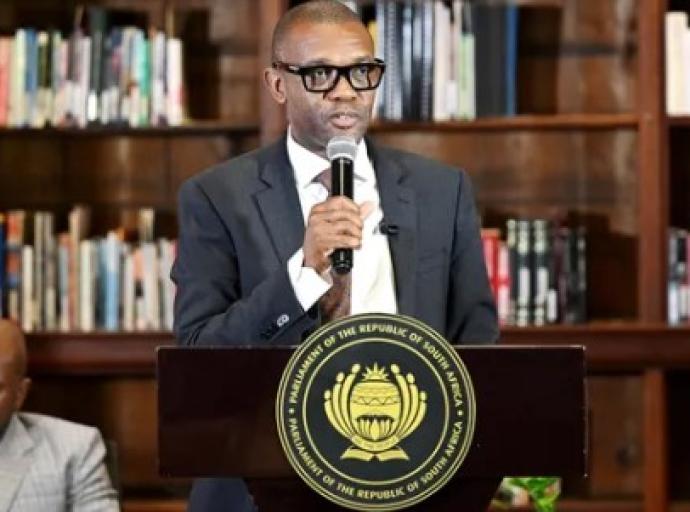
Chairperson of the Standing Committee on Public Accounts, Songezo Zibi, has said that the finance minister is not a superman, and that the National Treasury cannot be omnipresent, making sure that municipalities are being financially responsible.
Zibi made the remarks during the Parliament’s Finance Cluster Committee on Monday, where he addressed the role of the committee on fiscal expenditure, including the infrastructure spending and the cost reductions.
His remarks come after Enoch Godongwana said municipalities must return to the “foundational principle of fiscal integrity”, where revenue collected for a specific service is first used to sustain and maintain that service.
Godongwana warned that diverting funds away from core trading services such as water and electricity risks long-term system failures. He added that municipalities that do not practice fiscal integrity contribute to growing maintenance backlogs and deteriorating infrastructure.
“If this practice of collecting revenue from basic services while diverting the funds to unrelated functions continues, maintenance backlogs will grow, services deteriorate, and critical infrastructure systems eventually collapse,” Godongwana said.
Godongwana singled out Johannesburg’s water finances as a stark example.
The city generates R11.9 billion in water revenue, yet only R1.3 billion is allocated to Joburg Water for capital expenditure. “This has contributed to the massive backlog of R64 billion that is needed to fix water supply problems in the city,” Godongwana said.
Godongwana warned that if the City of Johannesburg does not turn things around, the National Treasury will be forced to intervene as the national government “cannot be a spectator” as the metro’s infrastructure deteriorates.
Zibi said that while there appears to be an expectation that the Finance Minister can ensure fiscal responsibility across hundreds of government authorities, this is not founded in the reality of how a functioning political system should work.
“Neither the finance minister nor the officials of the Treasury are an omnipresence that watches administrative and policy decisions, like a hawk, to ensure that public funds are allocated and used efficiently. There's simply not enough of them to do that.
“Our constitutional scheme places a responsibility on every public institution, and all public officials, like ourselves here from Parliament, to ensure that South Africans owners get the best value for their taxes.
“Too much of the funds allocated by the finance minister for social and economic development are lost to ill-considered policy and administrative decisions, poor financial management and corruption," Zibi said.
“When this happens, it is not possible to fulfil what the president and minister say in their respective policy statements at the beginning of the year.
“Projects end up costing more because of poor project management on the ground and poor contract management. It is not uncommon for contractors to be allowed to miss critical deadlines, and in some cases, eventually be evicted after getting paid. But there is no consequent attempt to recover the funds.
“That puts the treasury in an impossible position of having to come up with more funds for the same projects, sometimes to suffer recurrence.”
Zibi said that given the prevalence of mismanagement and criminality, it is important that Parliament, provincial and municipal public accounts committees work very closely with the auditor-general to safeguard the funds.
“When we listen to the finance minister speaking, and we ask ourselves, what is the finance minister going to do? The finance minister is not a superman or superwoman, depending on the gender of the finance minister at the time.
“They can't be everywhere. If municipalities aren’t performing, then you've got a serious problem. The economy can’t grow. So much of this is caused by the employment of unsuitable people to critical management and executive positions.
“I am (also) not happy that the government is just hunting for ghost workers, which is very important. What we additionally need is a skills review and audit, to be prepared to redeploy, or eject people who are either non-performing or under-qualified, for the work that they do.”
DA MP Siviwe Gwarube has confirmed she is running for Deputy Federal Chairperson.
The DA is expected to hold the national federal congress in April 2026.
Gwarube made the announcement on X on Monday, declaring: “Yes it is true, I am running!” She said the DA must grow into the country’s largest party to deliver meaningful national change.
“The truth is simple: we need to be the largest party in South Africa in order to bring the change so desperately needed,” she wrote, calling for leaders who can “organise, build and expand our support in every province and every community.
“Only a growing DA can deliver a growing SA,” she stated that growth is survival.
She is not alone in entering the fray. DA MP Karabo Khakhau has accepted nomination for Deputy Chairperson of the Federal Council, vowing to strengthen party structures.
“Democrats. I have accepted nomination to serve as our DA deputy chairperson of Federal Council. Together we can build structures and win the Future.”
Meanwhile, Geordin Hill-Lewis and Solly Msimanga have both confirmed bids for senior national leadership roles.
Hill-Lewis is campaigning on his governance record in Cape Town, citing job creation and service delivery.
Msimanga has pledged to consolidate support and energise voters nationwide.
This is after party leader John Steenhuisen has announced he will not seek re-election, triggering a high-stakes internal contest and opening space for generational renewal.
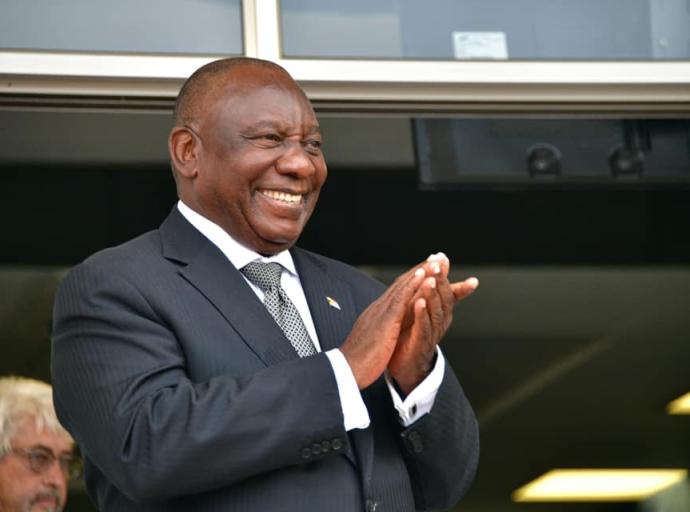
President Cyril Ramaphosa says the 2026 National Budget will accelerate inclusive growth, create jobs, and tackle poverty, as government builds on recent progress to stabilise and reform the economy.
In his weekly letter to the nation, speaking on the budget presented by Finance Minister Enoch Godongwana, Ramaphosa said every allocation reflects a developmental choice aimed at improving the material conditions of South Africans.
“Every budgetary allocation is a developmental choice: ensuring there are teachers in classrooms, nurses and doctors in clinics, electricity and basic services in homes and businesses, infrastructure to grow the economy, and employment opportunities for communities,” he said.
The president said the budget comes after a prolonged period of economic uncertainty but builds on progress made in recent years to stabilise, reform, and transform the economy.
Improvements in public finances, stabilising debt, a narrowing budget deficit, credit rating upgrades, and improved market confidence all signal what he described as the beginning of an economic recovery.
“A stable macroeconomic environment boosts investor confidence and increases the government’s capacity to invest in both growth and poverty relief without compromising sustainability,” Ramaphosa said.
He added that the stabilisation of public finances had created space to accelerate public investment, sustain the social wage, and direct resources to reforms that drive growth and job creation.
The social wage accounts for over 60% of government spending after interest payments.
Ramaphosa said the allocation for the current financial year will enable government to provide healthcare services to 84% of the population, social grants to 26.5 million beneficiaries, and free basic services to more than 11 million indigent households.
It will also support approximately 13.6 million learners at school.
“This is a redistributive budget that reduces inequality, builds the capabilities of our people and strengthens the foundations for inclusive growth,” he said.
Ramaphosa said Basic education has been identified as a key foundation for long-term growth.
Additional spending has been allocated to employ more educators, while further funding has been directed to the early childhood development grant to reach an additional 300,000 children and to align the National School Nutrition Programme with food inflation.
The budget also places strong emphasis on infrastructure as a driver of inclusive growth, he said.
Over the next three years, public spending on infrastructure will exceed R1 trillion to build and maintain roads and rail lines, expand energy infrastructure, and invest in water and sanitation systems.
“Improved infrastructure lowers the cost of doing business, raises productivity, and supports our country’s exports,” Ramaphosa said.
However, he acknowledged that the government cannot finance infrastructure needs on its own.
''We are therefore mobilising investment from private and other sources, and opening the space for public-private partnerships.
''As we encourage private investment in electricity, rail, and port operations, we are maintaining state ownership of strategic national infrastructure,'' he said.
Under Operation Vulindlela, departments and public entities are undertaking reforms in energy, telecommunications, water, and logistics.
Ramaphosa also conceded that many municipalities remain in financial distress, driven by weak revenue collection, poor management, and substantial service delivery backlogs.
Over the medium term, R19.2 billion will be reallocated to reform electricity, water, sanitation and solid waste trading services in metros, with funding linked to performance against clear targets, he said.
The Municipal Infrastructure Grant is being reformed to address underspending and misuse of funds. Over the next three years, R86.9 billion has been allocated to support the provision of free basic services to indigent households.
To stimulate employment, an additional R4.1 billion has been allocated to the Presidential Employment Stimulus to provide work opportunities to more young South Africans.
He said the Government has also moved to ease the regulatory burden on small businesses by more than doubling the VAT registration threshold and significantly increasing the capital gains tax exemption for small business owners who wish to sell or transfer their enterprises.
Ramaphosa said the budget is anchored on three imperatives: maintaining fiscal sustainability, driving inclusive growth, and protecting society’s most vulnerable.
“As we build on the momentum of our recovery, we will continue to be guided by fiscal discipline, structural reform, targeted investment and an overarching commitment to improving the material conditions of every South African,” he said.
*This article was first published by Eye Witness News
South Africans stranded in the conflict-ridden Middle East have been urged to contact the Department of International Relations and Cooperation (DIRCO), as tensions escalate in the region.
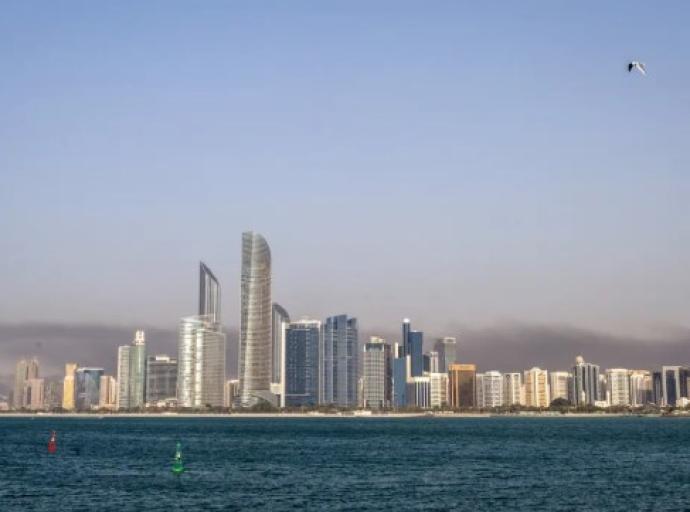
Airports Company South Africa (ACSA) has confirmed that about 14 flights between the United Arab Emirates (UAE) and South Africa have been cancelled, leaving many stranded.
This, as tensions in the Middle East worsened over the weekend, with ongoing airstrikes and military action involving Iran, Israel and the United States (US).
*This article was first published by Eye Witness News