Free State Targets Surgical Backlogs
The three-day Cataract Marathon, held over the weekend at Boitumelo Regional Hospital in Kroonstad, was a great success, with over 100 patients receiving treatment.
Screening was conducted last week Friday with cataract operations scheduled for Saturday and Su...
Pupils made up just over 5% of more than 12 000 road deaths recorded nationwide in 2024.
As the new school term gets underway, families across South Africa are being reminded that a child’s journey to and from school can be just as important as what happens in the classroom.
Parents and caregivers have been called upon to take greater responsibility for how children travel each day, particularly when using scholar transport services with public schools set to reopen on 14 January 2026.
Road safety authorities warn that children between the ages of 5 and 14 remain among the most vulnerable road users, with traffic-related incidents continuing to claim young lives.
According to figures by the Road Traffic Management Corporation (RTMC), pupils made up just over 5% of more than 12 000 road deaths recorded nationwide in 2024, underscoring the urgent need for stronger preventive action.
“This is an unacceptable situation as these unfortunate fatalities could have been prevented if proper precautions were taken.
“Parents must understand that road safety starts at home before a child gets into a vehicle that transports them,” RTMC spokesperson Simon Zwane said in a joint statement.
Scholar transport safety: Call for parental vigilance
Zaitoon Rabaney, executive director of ChildSafe South Africa, has emphasised that ensuring pupil safety cannot rest on authorities alone.
She noted that while scholar transport operators are subject to inspection, parents and caregivers play a vital role in identifying potential risks by paying attention to the condition of the vehicles their children use.
Rabaney urged parents to seek other transport options whenever a vehicle shows signs of being unsafe or not fit for the road.
Parents are also encouraged to verify driver credentials before allowing children to board.
“Scholar transport must never be viewed as a mere convenience, but as a critical service that requires rigorous safety standards.
“Collectively, we must ensure that operators are not only legally compliant but also fit for the duty of transporting children.”
Government steps up enforcement
Speaking to the media this week, Transport Minister Barbara Creecy highlighted that scholar transport safety formed the final phase of the December–January road safety campaign.
She visited the North West on Thursday to inspect 60 school buses at a depot, where officials tested brakes want to make sure that these vehicles are in good condition,” Creecy said.gears and other safety components.
The minister acknowledged ongoing safety challenges in scholar transport and indicated that the North West provincial government had responded by establishing a dedicated enforcement unit.
The province operates a fleet of 786 buses from more than 300 service providers.
“If a bus company brings a roadworthy vehicle here, but then substitutes that with an unroadworthy vehicle, they will be caught by the law enforcement authorities that they’re now patrolling villages and schools in villages because this is where we have seen cheating.”
Creecy pointed out private scholar transport vehicles hired by parents must be clearly marked and tested.
“They must also be brought to road safety vehicle testing sites so that they can be tested for road worthiness.”
She emphasised the importance of policing driver behaviour following a serious incident last year in which a roadworthy bus was driven by an intoxicated driver.
“We want to make sure that taxi associations and bus operators are self-policing and making sure that their drivers are behaving in a responsible manner when they carry people’s precious children to and from schools.”
Road conditions and funding challenges
Addressing poor road conditions, Creecy said responsibility lay with provincial and municipal authorities, adding that a unified set of road maintenance standards had been adopted last year.
This aims to ensure conditional grants are properly spent and that municipalities do not return infrastructure funding while roads deteriorate.
Creecy added that funding for scholar transport remains under discussion following engagements with Education Minister Siviwe Gwarube.
“That policy is aimed at trying to address the question of the standard of transport that learners receive, the amount of transport that learners receive, and in the longer term in conjunction with National Treasury, the financing of scholar transport.”
The ANC's downward trend may be evident in the 2026 local government elections.
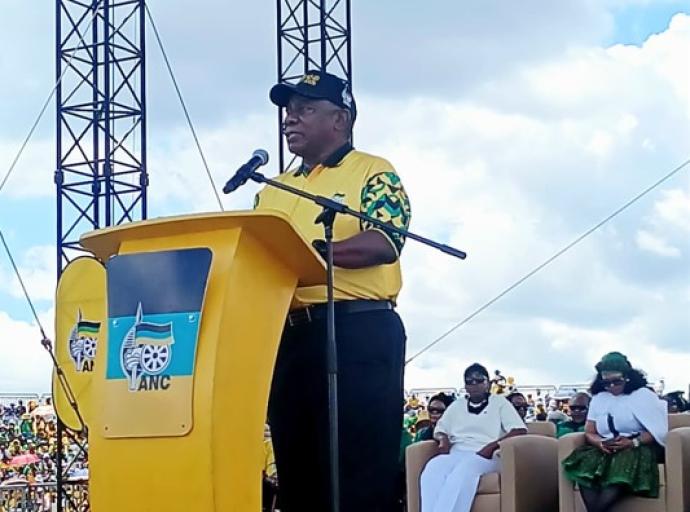
The poor attendance at the ANC January 8th birthday anniversary rally is another sign that the party is on the decline – and it’s of its own making because it has neglected the electorate.
The ANC, experts said, had failed to recognise the connection between the state’s inability to meet people’s expectations, including the party’s own promises, and declining voter turnout in elections.
This assessment by political analysts concerns the low attendance at the party’s 114th anniversary rally, held at Moruleng Stadium outside Rustenburg on Saturday.
They said that the poor organisation of the anniversary and the scorching sun added to the discontent of party members, who had endured the pain of empty promises over the last 30 years.
Expert on ANC’s January 8 Statement
Political analyst Goodenough Mashego told The Citizen that the ANC anniversary statements lacked vision, which has not changed since the party was unbanned.
Mashego said the latest statement failed to address the country’s conditions but was merely marching orders for ANC members, not the rest of South Africans, ahead of elections.
“The statement that President Cyril Ramaphosa delivered on Saturday did not speak to the general public but to the ANC.
“You can’t issue matching orders only to your members, especially during the election year.
“It needs to address voters, especially those who left the party for other parties. Instead, it was a nostalgic trip into history. I don’t think the statement was visionary,” Mashego said.
Ramaphosa promised the ANC would improve services through functional local government, rejuvenate economic growth, and ensure visible ANC renewal.
‘ANC is learning the hard way’
Political analyst Ntsikelelo Breakfast, director of the Centre for Peace, Security and Conflict Resolution at Nelson Mandela University (NMU), said the ANC is learning the hard way.
The party misjudged the impact of its long-standing ignorance of the electorate’s concerns regarding service delivery.
However, Breakfast said the ANC appreciates that change is necessary for it to be acceptable to the public.
There is a change of heart within the party to restore its dignity and trust from the electorate.
Breakfast alluded to the logistics and poor organisation of the event, but said the numbers no longer mattered because the ANC was in decline.
“Even if the ANC had full attendance at the stadium, these numbers no longer translate into votes.
“The bottom line is that the ANC does not appreciate the strong nexus between the lack of government service delivery and voter turnout in elections,” Breakfast said.
ANC to decline further ahead of municipal elections?
According to independent analyst Sandile Swana, the rally appeared to have been organised haphazardly.
The party seemed to have planned extensively, with multicultural groups scheduled to perform, but failed to check the likely attendance figures.
Swana also referred to the unstoppable ANC decline, which may be evident in the 2026 local government elections.
“The ANC has joined the league of smaller parties, of which it is a leader. It could be facing challenges from parties like uMkhonto weSizwe in places like Gauteng,” Swana said.
Swana said there is a clear signal of ANC decimation due to numerous negative developments surrounding the party since 2008, including the removal of Thabo Mbeki, the advent of the Zuma administration, corruption and inadequate service delivery.
The ANC had lost its parliamentary majority in the National Assembly, KwaZulu-Natal, the Northern Cape and Gauteng, forcing it to cobble together a coalition of 10 political parties.
It was no longer in a position to implement its own programme without consulting the government of national unity partners, he said.
The African National Congress (ANC)’s 114th anniversary celebrations at Moruleng Stadium in the North West drew tens of thousands of supporters, complete with music and political theatre — yet just beyond the stadium gates, crumbling roads, water shortages, and failing infrastructure laid bare the province’s deepening service delivery crisis.
Against this backdrop, President Cyril Ramaphosa used his address to emphasise the urgent need to strengthen local government and improve the provision of basic services.
“Local government is the sphere of government closest to the people and must fulfil its basic responsibilities,” Ramaphosa said.
He outlined priorities including road maintenance, refuse removal, sanitation and access to clean water. “Municipalities should fix potholes, remove refuse regularly, keep communities clean and green, and provide clean water and sanitation,” he said.
ANC members and supporters arrived in large numbers, many in striking attire, underscoring the significance of the occasion. However, travelling to the venue highlighted persistent service delivery challenges facing the area.
While the atmosphere inside the stadium was festive, the surrounding communities told a different story.
The North West province has long struggled with deteriorating infrastructure, particularly pothole-riddled roads — a problem so widespread the province has earned an unflattering reputation for poor road maintenance.
In many rural settlements, residents continue to endure years of inadequate service delivery, with failing infrastructure and recurring water shortages.
Ramaphosa also called for increased funding for infrastructure maintenance and urged municipalities to develop in-house capacity. “Municipalities must build functional yellow fleets and employ skilled personnel to address water leaks, potholes, and power outages, and to deliver basic cleaning and greening services,” he added.
The president further announced that the Department of Electricity and Energy will connect 20 communities to the national grid each year, expanding access to clean and affordable electricity. In addition, North West has received R1.2 billion to improve access to water services.
“We call on municipalities to ensure proper project preparation, the use of skilled contractors and disciplined implementation so that these projects deliver real benefits to communities,” Ramaphosa said.
Commanding dancefloors in the vibrant town of Pampierstad, Northern Cape, 25-year-old Tebo Oreboleng Morongwa—better known as TeboM—aims to make her mark on the music scene every time she steps onto the DJ booth. At first glance, the energy shifts. Her deep house sets take listeners on a carefully curated journey of rhythm and melody. Trained at the legendary Soul Candi Studios in Pretoria in 2023 under music maestro Nizhe de Soul, TeboM is now carving her own path, determined to become a role model for aspiring DJs and prove that decks have no gender. “As female DJs, we are often underestimated. Many believe we lack skill, we are underrepresented in lineups, face unfair bookings, miss out on mentorship, and are often objectified rather than respected for our craft,” she shared. “I always knew I wanted to be in the media space, so music—or rather deejaying—found me. Gigs and proper management have been a challenge, but I’ve always been a go-getter. That mentality is why giving up is never an option for me,” she added. More than a selector, TeboM is a curator of moments. Follow her journey as she continues to redefine the Northern Cape soundscape, one unforgettable set at a time.
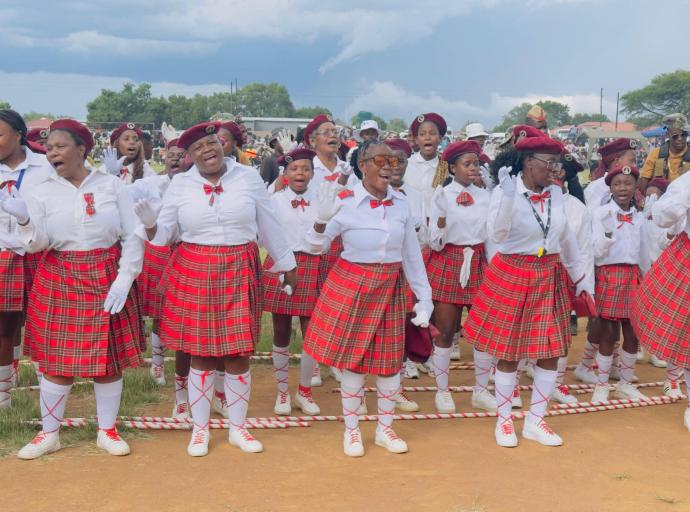
What began as a vibrant community celebration at the annual Mphebatho Troop Festival at Dertig Sports Ground near Mathibestad in the North West province turned tragic when a lightning strike injured several troopers and claimed two lives. On 3 January 2026, the Mphebatho Troop Festival hosted its annual event, held in honour of Sesotho culture in South Africa, promoting unity, celebration and camaraderie between the two countries. The festivities featured performances by local music groups and were attended by several dignitaries, including royalty. During the event, while troopers were seated under a tent, two lightning strikes occurred. Peter Selemela, a survivor and trooper from Sun Rise who participated in the festivities, said a sudden downpour accompanied by lightning caught them off guard. According to Selemela, the first strike was distant, but the second hit the tent directly, leaving people shocked and immobile. “Seconds later, people were on the floor. I couldn’t move as my left hand suddenly became numb. I noticed another trooper’s legs had stopped functioning, so I crawled towards him and pulled him closer to the tent,” he said. Selemela added that emergency services eventually assisted them at the Mphebatho Library. The North West Department of Health confirmed that 150 patients were taken to the Mathibestad Clinic. Thirteen were critically injured and transferred to Jubilee Hospital, while two patients were declared dead on arrival and awaited forensic services. Most patients sustained mild lightning-related burns, with 34 still awaiting medical assessment at the time of reporting. The remaining patients were treated and discharged. North West Health MEC Sello Lehari said he was pleased that Mathibestad Community Health Centre was fully operational during the tragedy. He confirmed that both day and night staff were on duty. “The health professionals on site included two doctors, four professional nurses and three enrolled nurses, bringing the total staff complement to nine,” said Lehari. “EMS support was strengthened through the deployment of two North West EMS ambulances, two Gauteng EMS ambulances and Planned Patient Transport.” Speaking on behalf of Premier Lazarus Mokgosi, Social Development MEC Sussana Dantjie conveyed condolences to the affected families and confirmed that the festival would continue next year. “We expect all stakeholders to work together to ensure the smooth hosting of the next festival,” she said. Dantjie acknowledged concerns from some attendees who believe the fatalities could have been prevented with quicker emergency response, but noted that “death ultimately remains in the hands of God”. Moretele Local Municipality Mayor George Manyike visited the Mashishi family in Lefatlheng, who lost their daughter Kenoshi (35), a teacher at Tlhaloganyo Primary School and a mother to a 10-year-old son. He also visited the Shekwambane family in Itsoseng Section, Dertig, Ward 18, who lost their daughter Koketso (28).