Free State Targets Surgical Backlogs
The three-day Cataract Marathon, held over the weekend at Boitumelo Regional Hospital in Kroonstad, was a great success, with over 100 patients receiving treatment.
Screening was conducted last week Friday with cataract operations scheduled for Saturday and Su...
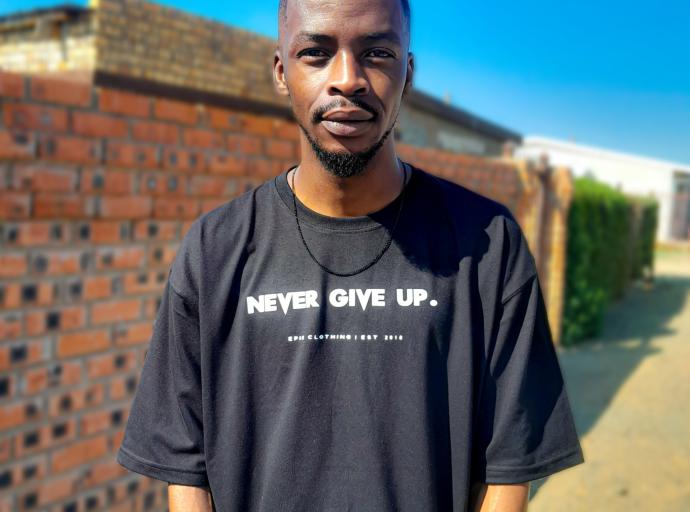
Crafting late Saturday nights with hypnotic basslines and seamless transitions, EPIK commands the floor as shifting energies ripple through fog-filled rooms. With every drop, walls sweat, bodies move and the crowd waits in anticipation for the next hit — a soundscape that travels far beyond the dancefloor. Born and raised in Trompsburg in the Xhariep region, Ntlantla “EPIK” Kutyunga (33) has been carving his path in the music industry for more than 12 years. From humble beginnings, he has steadily grown his brand through live performances, events and strategic collaborations. “I fell in love with DJing in 2011 while I was a varsity student,” EPIK recalls. “I was influenced by Prince Kaybee, who was a resident DJ at one of the clubs in Bloemfontein. What started as a passion soon became a serious career as I immersed myself in learning the art of deejaying and understanding music beyond just entertainment.” EPIK’s signature sound is shaped by some of South Africa’s music heavyweights, including Kabza De Small, Oscar MBO and Prince Kaybee. His carefully curated mixes set the mood and transform spaces into immersive musical experiences. “I major in Amapiano and Afro-house/3-Step,” he explains. “I’m known for reading the crowd, delivering high-energy sets and creating memorable experiences through smooth transitions and well-curated playlists.” Like many independent artists, EPIK has self-funded his career, reinvesting personal savings into equipment, branding and skills development. “My journey hasn’t been without challenges — limited resources, stiff competition and the difficulty of breaking through as an independent artist,” he says. “But resilience and consistency have been key to my growth.” A dreamer at heart, EPIK envisions himself performing on bigger stages, releasing signature mixes and original productions, and expanding his presence nationally. He also hopes to mentor upcoming DJs and contribute meaningfully to the creative industry. “I aspire to become one of the pioneering event coordinators, open a clothing store and have my clothing brand recognised nationally,” he adds. For a dose of EPIK’s signature sound, catch him this Saturday at the ANC 114th Anniversary After-Party at Chesanyama, Trompsburg. For bookings and enquiries, email This email address is being protected from spambots. You need JavaScript enabled to view it..
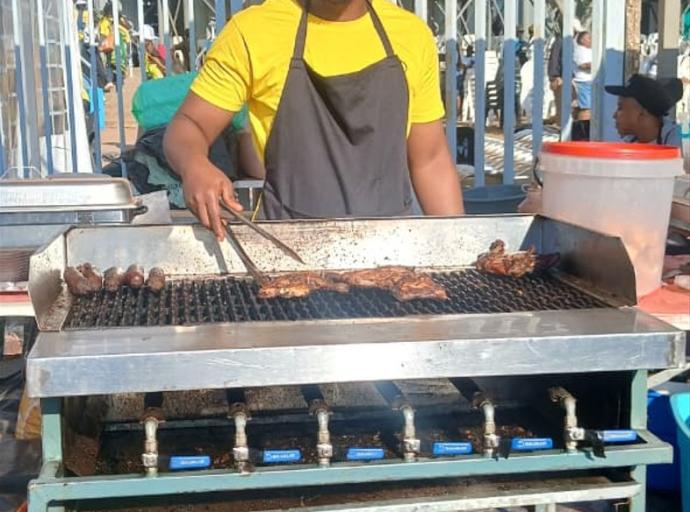
The African National Congress’s (ANC) decision to host its January 8 celebrations in the dusty streets of Moruleng village in the North West province thrust the area into the national spotlight — delivering a short-term economic boost for both formal and informal traders. The influx of party leadership, delegates and supporters injected fresh spending into the local economy, driving demand for accommodation, transport and food. Small businesses, in particular, benefited as visitors opened their wallets during the weekend-long celebrations. However, the strategy of using major political events to stimulate local economic recovery drew mixed reactions. While some residents welcomed the activity, others criticised the ANC for staging the event in the rural village of Moruleng, where the stadium — built to accommodate 20 000 people — failed to reach full capacity. Despite what some interpreted as a muted show of political support, business was brisk for many traders. Up-and-coming Rustenburg-based entrepreneur Tshepamo Mmusi secured her first-ever catering gig at the ANC’s 114th anniversary celebrations and exceeded her projected earnings. Mmusi, who launched her catering company last year, said she had struggled to gain entry onto the Central Supplier Database (CSD). Once approved, her business, K&T Consultant, landed a catering contract for the event. “Although I faced a few challenges, I made more revenue than I had anticipated. It was a valuable learning experience, and overall I truly enjoyed it,” said Mmusi. She added that income from selling hot dogs, cold drinks and confectionery items would help sustain her business through January’s typically slow trading period. Entrepreneur Sithembiso Mthethwa travelled from Gauteng in hopes of tapping into the festive crowds. “Locals were initially hostile, especially since I’m not from the North West,” Mthethwa said. Undeterred, he set up his stall in the early hours of the morning — a move that paid off. Mthethwa, who owns Sassy Food Pro in Gauteng, said food entrepreneurship was more than just business. “When something is your passion, you naturally work smarter and harder,” he said. “I exceeded my income expectations and really enjoyed learning more about the North West and its local economy.” Not all experiences were positive. A local chef from Moruleng expressed frustration after spending nearly R3 000 on compliance and acceptance certificates, only to struggle to trade on the day. “I arrived early with an official vendor access ticket, but I couldn’t even park my car or trailer at the selling point,” she said. “I was told the area was already full, and I had to leave some of my equipment behind.” The chef said she earned just R300, far below expectations, and felt sidelined as vendors from other provinces were allowed to operate with fewer hurdles. “I urge the ANC to stop being disorganised and honour its promises. If compliance certificates are required, they must be properly enforced — some of us spent our children’s school fees hoping to make a decent return,” she said. While the celebrations brought cash into Moruleng, they also raised difficult questions about fairness, planning and who truly benefits when politics comes to town.
Through mentorship, strategy, and collaboration, Modisenyane is equipping women entrepreneurs with the tools to succeed and leave a lasting legacy.
Businesswoman Tshepiso Modisenyane is rewriting the rules for women in business. Through her Precious Women Organisation, she is turning ambition into action—mentoring, networking, and equipping women entrepreneurs with the tools, knowledge, and confidence to thrive in a competitive market. On 9 January 2026, she brought together 83 SMME owners for a masterclass in strategy, compliance, and growth, proving that the future of women-led business is unstoppable. With a decade of success, the Precious Women Organisation prioritizes SMMEs, youth, women, and children, with a clear goal of fostering growth and economic empowerment among local business owners. “Upon establishing this organization, I realized that most businesses operate traditionally and often don’t comply with legislative requirements. That’s when I decided to use my acquired business knowledge, alongside my family lineage of successful entrepreneurs, to enlighten others,” Modisenyane shared. The event brought together existing SMMEs and startup enterprises to engage on crucial aspects of business foundations, including strengths, weaknesses, opportunities, and everyday challenges entrepreneurs face. Heavyweights of the business spectrum were invited, including stakeholders, motivational speakers, and industry experts, to help forge a supportive structure for women business owners to ascend to success. A total of 83 SMME owners attended, benefiting from masterclasses and presentations by Nedbank, SEDFA, SARS, and FDC. Tshepiso Modisenyane is proving that the future of women in business is collaborative, strategic, and unapologetically powerful. She is not just hosting events—she is curating a legacy of leaders.
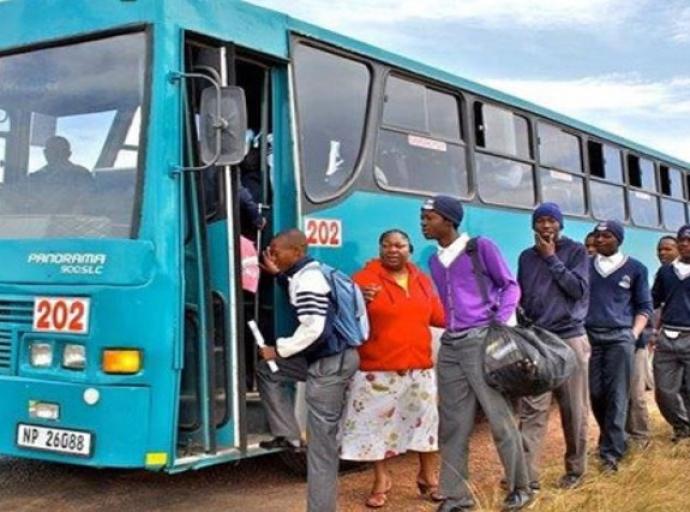
As the first term of the new academic year begins, many learners across the North West rely on scholar transport to travel safely between their homes and schools. However, incidents of overloading continue to pose a serious risk to learner safety. In November 2025, traffic officers in the province impounded a 15-seater scholar transport vehicle that was carrying 29 learners—almost double its permitted capacity. The incident was strongly condemned by the Department of Community Safety and Transport Management. According to departmental media liaison officer Charles Matlou, while the province does not experience widespread challenges with scholar transport overloading, authorities remain vigilant and are urging communities to report any violations. “We don’t have a major challenge with overloading because the service level agreement between the department and service providers is very clear,” said Matlou. “We specify how many learners must be transported to a particular school, which determines the type of vehicle to be used. However, we urge parents and community members to report any cases of overloading so that we can investigate.” Matlou warned that offenders will face the full might of the law. To address the issue proactively, the province has deployed traffic officers across major routes to monitor scholar transport vehicles. “Our traffic officers are active throughout the province. If they come across an overloaded vehicle, action is taken immediately. Fines are issued and the trip is halted until an additional vehicle is arranged to transport the excess learners,” he said. MEC for Community Safety and Transport Management, Wessels Morweng, has reiterated that learner safety cannot be compromised under any circumstances. While transport operators are primarily responsible for overcrowding, Matlou said parents also have a role to play. “We urge parents to report service providers who overload vehicles, but we also caution them not to contribute to the problem by allowing their children to use unsafe, overloaded transport,” he said. Matlou added that all traffic offences carry legal consequences. “It becomes complex with parents because the department has agreements only with service providers. However, service providers who are pressured to break the law must report those responsible. Ultimately, we call on all parents to ensure that they never put their children’s lives at risk,” he said.
A deadly, fast-spreading disease is decimating herds, sending shockwaves from farm to fork. As prices near the brink of soaring and supermarkets edge toward ration warnings, the outbreak has reached the halls of power, where political parties are diagnosing the crisis through starkly different lenses—not as a political battle but as an agricultural emergency. Foot-and-mouth disease (FMD) is highly contagious, primarily affecting cloven-hoofed animals including cattle, pigs, sheep, goats, and various wildlife species. It directly impacts livestock health, production, and trade, posing a significant threat to the farming and livestock industry. Symptoms include fever, blisters, lesions, lameness, reduced milk production, rapid breathing, and decreased appetite. Farmers are urged to control contact between infected and healthy animals and to ensure surfaces and environments are not contaminated. Preventative measures include isolation, supportive care, vaccination, culling, and strict biosecurity protocols. On 9 January 2026, the Free State Department of Agriculture and Land Reform reported 194 confirmed active cases across all 11 local municipalities, including Moqhaka, Ngwathe, Mestimaholo, Mafube, Dihlabeng, Nketoana, Phumelela, Maluti-A-Phofung, Matjhabeng, Nala, and Setsoto. KwaZulu-Natal, meanwhile, remains an epicenter with over 200 cases, according to the Farming Portal. The disease has now crossed into commercial beef and dairy herds as well as game farms targeting cloven-hoofed species. The South African red meat industry, valued at approximately R80 billion, faces immense pressure as prices fluctuate and farmers struggle to move animals to abattoirs, resulting in major financial losses. “Foot-and-mouth is a big problem, especially for upcoming farmers! They need income from selling stock, but the disease hinders them greatly. Some areas of the Free State are fortunate because they are not affected,” said farmer Barry Maree. He added, “Vaccines are also difficult to obtain. The government has done nothing over the past 14 years to secure vaccines. In short, government has been sitting on its hands.” However, Minister of Agriculture John Steenhuisen said the crisis is systemic, requiring significant change, financial commitment, and strict enforcement of animal movement controls. Towards the end of 2025, he announced the rollout of vaccination aimed at supplying 1 million doses. Logistical constraints, potency concerns, and the high number of animals to vaccinate pose significant challenges, with private sector involvement needed for long-term self-sufficiency. “South Africa’s path to regaining FMD-free status through vaccination will take years of sustained effort. Failure risks prolonged export bans, economic damage, and deepening rural hardship. For now, the nation watches as the most ambitious disease-control effort in modern history begins—impacting food security, rural stability, and the future of livestock farming,” stated the Farming Portal. Political parties have demanded urgent intervention for months, but progress appears slow. “Foot-and-mouth disease is no longer a distant threat—it is an active risk to farmers, food security, and the Free State economy. Urgent oversight, coordination, and accountability are needed. I have formally requested a joint meeting of the Legislature’s economic and governance committees to engage the Departments of Agriculture and Community Safety and key agricultural organisations. We need clarity on vaccine availability, testing delays, and animal movement controls. Delays and fragmented responses will only worsen the crisis,” said Armand Cloete, Free State Freedom Front Plus Chairperson. Thomas Macingwane, Provincial Deputy Chairperson of the Economic Freedom Fighters, added: “The Department of Agriculture’s lack of support for smallscale farmers has contributed to the rapid spread of contagious diseases. Most emerging farmers lack resources to vaccinate their livestock, delaying disease control. The Department focuses on established agricultural sectors, but neglecting the smallest farmers undermines the safety of the entire food chain.” Roy Jankielsohn, DA Free State Provincial Leader, said: “We are in contact with both local and national agriculture departments regarding farmers’ concerns. We are also concerned about the lack of enforcement of restrictions when FMD is identified. Municipalities have failed to control cattle on public lands, allowing them to move freely across boundaries without permits.” Dr. Waynard Boshoff, VF Plus National Leader and veterinarian, called for drastic action: “A state of disaster should be declared to contain FMD in the beef industry. Ministerial task teams’ recommendations have not been implemented since 2016. Declaring a state of disaster would secure additional public funds exclusively for disease control. Vaccine production capacity exists in South Africa, but it must be activated. The crisis escalated significantly under the current Minister; failure to act urgently would be unforgivable.” The fight against foot-and-mouth disease continues, with the nation awaiting decisive action from the national government.
...Marking the end of the provincial government’s long-standing slogan, ‘Retla ba phetha rebaphethe hofihlela ba tlwaela’
For six years, the Free State province reigned supreme in the National Senior Certificate (NSC) results. That streak came to an end as KwaZulu-Natal clinched the top spot with a pass rate of 90.6%, pushing the Free State into second place at 89.33%. Speaking on the results, Free State Department of Education spokesperson Howard Ndaba expressed satisfaction despite the drop. “We want to congratulate the class of 2025 for doing an excellent job. Out of 38,205 candidates, over 34,000 passed, and 43% achieved Bachelor passes. Every district recorded over 85% pass rates, with Mangaung leading at 92%,” he said. Ndaba noted that the province’s decline was largely due to lower performance in mathematics and accounting, which also saw national declines. To address this, the department plans retreats to strategize interventions and boost results in these critical subjects. On the goal for 2026, Ndaba emphasized that the priority is quality, not ranking. “Our obsession is not position one, but achieving targets that allow learners to access higher education with strong marks. This year, our target was 95%, which we did not reach. Soon, new targets will be set, and we will work towards them,” he said, adding that the province’s only competition is itself. Ndaba also praised KwaZulu-Natal for its achievement, noting the province had more than 100,000 exam candidates. He highlighted individual excellence, including 17-year-old Bokang Mokubung from Bluegumbosch Secondary School in Phuthaditjhaba, who ranked first among the top three learners in quintile 3 schools nationwide for Mathematics. Mokubung will be celebrated among the top 100 learners at a function hosted by the Department of Education in partnership with the Central University of Technology today. “We also want to thank learners, parents, teachers, and partners such as corporations. Education is a societal issue, and we need collective support to improve and maintain strong results,” Ndaba said. National Senior Certificate 2025 Overview: • Overall pass rate: 88% (slight increase from 87.3% in 2024) • Higher Certificate passes: 13.5% • Diploma passes: 28.1% • Bachelor passes: 46.6% Provincial pass rates 2025 vs 2024: • KwaZulu-Natal: 90.6% ↑ (89.5%) • Free State: 89.33% ↓ (91%) • Gauteng: 89.06% ↑ (88.4%) • North West: 88.49% ↑ (87.5%) • Western Cape: 88.2% ↑ (86.6%) • Northern Cape: 87.79% ↑ (84.2%) – largest improvement • Mpumalanga: 86.5% ↑ (84.9%) • Limpopo: 86.15% ↑ (85%) • Eastern Cape: 84.17% ↓ (84.8%) The Northern Cape emerged as the province with the most significant improvement compared to 2024, showcasing the ongoing efforts to strengthen education across the country.