Free State Targets Surgical Backlogs
The three-day Cataract Marathon, held over the weekend at Boitumelo Regional Hospital in Kroonstad, was a great success, with over 100 patients receiving treatment.
Screening was conducted last week Friday with cataract operations scheduled for Saturday and Su...
South Africa’s economy has seen some headwinds and volatility in 2025, however, there have been some silver linings. The year opened with uncertainty as the tabling of the annual national budget was postponed three times due to a lack of consensus among members of the government of national unity (GNU).
Even so positive developments emerged as seen in statistical data points tracking the country’s economic activity.
Despite a turbulent start characterized by uncertainty about government spending priorities amid rising debt pressures, and revenue constraints, the economy showed some resilience. Endurance was demonstrated in three consecutive quarters of economic growth mainly supported by improvements in manufacturing, mining and trade output.
Chief Economist at Econometrix, Dr. Azar Jammine says implementation in some structural reforms is taking effect and improvements in the economic trajectory are notable.
“We saw an upturn in gross fixed capital formation for only the second time in nine quarters. One has to reiterate that you cannot get higher sustainable economic growth if you don’t invest more in the economy. Instead, for many years, we’ve been investing less and less, but the most recent figures show a slight turnaround and improvement. We have also seen South Africa being lifted off the grey list by the Financial Action Task Force of the world, on the basis of doing more to fight illegal transactions and money laundering. We’ve also seen South Africa’s credit rating being upgraded by a notch by Standard and Poor’s Global, which, in turn, is a function of the realization that the government is sticking to its guns with fiscal discipline,” says Dr. Jammine.
More still needs to done, Jammine says, to get the economy firing from all cylinders to inspire investor confidence and employment growth.
“It’s a gradual process. There are still huge stumbling blocks to overcome, including high levels of crime, poor levels of education, and associated productivity. The low level of small business activity in relation to big business activity, compared with other countries, is also a concern. These are structural aspects that still need to be addressed,” adds Dr. Jammine.
While National Treasury has paused the proposed implementation of a higher Value Added Tax what happens with next year’s budget hinges on the extent of tax revenue collections.
This year South Africa faced both domestic and external shocks including tariffs, trade and geopolitical tensions. Fiscal Policy Analyst, Shillboy Mothiba had this to say.
“I saw some of the data or some bites coming out of National Treasury, just the fact that we don’t seem to be accredited in the 2026 G20, which is quite unfortunate because you would expect that South Africa would go into 2026 really carrying and championing some of the consensus that came out of the 2025 G20 declaration. It’s really unfortunate, but we’re hoping that, as I said earlier, with the now-designated US ambassador to South Africa, such tensions may be addressed in the new year so that the South African delegation can continue to participate in the G20,” says Mothiba.
A new 3% inflation target has largely been accepted by the market as beneficial, while government expects the economy to average 1.8%, over the next three years.
However, the upcoming local government election is expected to present some economic uncertainty, next year.
Employees of Golden Leopard Resorts (SOC) Ltd (GLR) and Madikwe have finally received relief after pension fund contributions deducted from their salaries for more than three years were paid over to the relevant administrators.
The settlement follows intervention by the North West Department of Economic Development, Environment, Conservation and Tourism (DEDECT), together with the North West Parks and Tourism Board (NWPTB).
According to a departmental statement, pension contributions were deducted from employees’ salaries but were not transferred to pension fund administrators, leaving workers without retirement security.
The department said previous funding allocations intended to address the arrears were never implemented, resulting in prolonged delays.
To resolve the matter, DEDECT allocated a total of R42.5 million, broken down as follows:
R12.5 million for outstanding pension fund contributions
R26 million to settle SARS obligations, including VAT and payroll taxes
R4 million for overdue salary increases covering a 19-month period from April 2024 to October 2025
“All payments have now been made in full, bringing pension contributions up to date for all affected employees,” the department said.
The settlement benefits more than 300 employees at GLR and Madikwe.
MEC for Economic Development, Environment, Conservation and Tourism in the North West Province, Bitsa Lenkopane, welcomed the development, saying it reflects the provincial government’s commitment to accountability and financial stability.
“The resolution of this matter demonstrates that the 7th Administration continues to place the interests of the people at the centre of its work, while addressing historical challenges and restoring confidence in public entities,” said Lenkopane
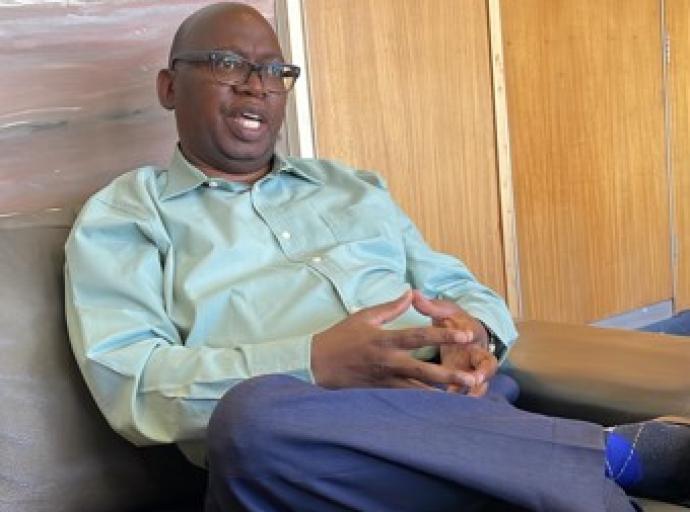
Stepping into office with a clear mandate to restore credibility and efficiency, the newly appointed Free State Director-General Dr Molefinyana Phera has vowed to root out corruption and incompetence across the provincial administration.
Journal News Editor-in-Chief Refilwe Mochoari sat down with Phera to unpack his vision, priorities, the challenges ahead and how he plans to rebuild public trust in government services.
With more than 30 years’ experience in governance and 22 years at senior and executive level, Phera — a lawyer and human resources professional — becomes the sixth Director-General of the Free State since 1994.
Appointed on 12 December 2025, Phera has been tasked by Premier MaQueen Letsoha-Mathae to provide strategic leadership, strengthen governance coordination, improve audit outcomes, digitise administration and ensure effective policy implementation across all spheres of government.
As the province continues to battle allegations of corruption, inefficiency and poor service delivery, questions remain over whether Phera can deliver on his bold promises.
Here is what he had to say…
Thank you for granting us the opportunity to sit down with you and congratulation for you appointment as you take over this important role. What are your top three priorities as the new Director-General, and how do you plan to achieve them?
My first priority is to improve coordination of governance, which is the core function of the Office of the Premier. In terms of Sections 3 and 7 of the Public Service Act, the Director-General’s primary role is to coordinate government machinery.
I intend to intensify this coordination to ensure seamless, predictable administration across departments. For example, applying for a job at the Office of the Premier should follow the same process as applying at a hospital. Public administration must be uniform, predictable and guided by common standards.
People must know what to expect when they interact with government. This approach will also be extended to municipalities.
My second priority is to obtain clean audits. Clean audits are a reflection of clean governance and instil public confidence that public funds are managed lawfully and responsibly.
Audits today go beyond financial compliance; they also assess non-financial performance, including whether departments are achieving their annual performance plans. A clean audit therefore confirms that finances are properly managed and that performance targets are being met.
We want to start with the Office of the Premier, which has received qualified audits for the past five years. We are determined to change that trajectory. According to the Auditor-General, there has already been improvement: we achieved a clean audit on non-financial performance but were still qualified on financial performance. Our goal is to address this in the next audit cycle. As the Office of the Premier, we must lead by example.
The Office of the Premier has received qualified audits for five consecutive years, during which time you served as Deputy Director-General. How will you change this now that you are DG?
I am not here to say, “I found this here.” I am here now, and I take responsibility. When I arrived in 2021, one of the major audit issues related to international bursaries and reconciliation with DIRCO. That matter has since been resolved, as reflected in the audit reports.
Those findings fell under my area of responsibility as Chief Director and later DDG for Corporate Reform. It is important to note that a DDG is accountable for a specific programme, not the entire department. In Programme Two, which I oversaw, there were no negative audit findings.
I am fully aware of the remaining challenges, particularly in supply chain management and proof of occurrence, and these are the areas we are addressing.
My third priority is the digitisation of administration and service delivery. This process is already under way. We have launched Free State Online, which offers improved access to government services, as well as an e-Recruitment platform to connect young people with employment opportunities. Bursaries for next year have also been advertised online.
In February, we will roll out the Virtual Private Network (VPN) infrastructure, which will enhance digital service delivery, improve telephony systems, reduce paper usage and allow residents to access services remotely, without standing in long queues.
As we digitise more services, we are also strengthening cybersecurity. These initiatives are not limited to the Office of the Premier; they are intended for the entire province. We also aim to extend the VPN to municipalities and enable access to government services through Wi-Fi at Thusong Centres.
There has been controversy around employees being removed from work, with some cases still on-going in court. Can you clarify this issue?
No one was removed; contracts simply came to an end. These were long-standing but non-compliant contracts. When they expired in September 2024, we allowed them to lapse in order to regularise the process.
The matter was handled in an orderly manner, with unions involved. Those who challenged the process in court were unsuccessful. Some employees returned after meeting the required criteria. In certain cases, salaries were adjusted where individuals were earning senior-level pay without the requisite qualifications. We corrected those processes.
What are your plans regarding employment equity and managing a diverse workforce?
We operate within the framework of South Africa’s laws, which promote unity in diversity. Employees, regardless of race or background, must be treated equally.
We have management structures and committees to ensure compliance, and I will continue to oversee these. In the Office of the Premier, we are doing well in terms of race and gender equity, with women forming the majority of staff.
However, we acknowledge shortcomings in the employment of persons with disabilities. Currently, representation in the OTP is around 2%, compared to about 5% in the Department of Social Development. That said, employees with disabilities are reasonably accommodated, whether through assistive personnel or physical support.
Corruption remains a major concern, particularly around tenders and incomplete projects. How do you plan to tackle this?
There is both a prevalence and a strong perception of corruption. While instances do occur, the actions of a few individuals often create the impression that the entire public service is corrupt. I believe the majority of public servants are honest.
The first step in fighting corruption is strengthening controls to reduce opportunities for wrongdoing. The second is enforcing consequence management. Where irregularities are identified, investigations must follow, disciplinary action must be taken, and criminal cases opened where necessary. The courts must determine guilt — we cannot be both referee and player.
Whether an official is incompetent or corrupt, the consequences must be the same. My mantra is simple: remove incompetent and corrupt people from the system. We must report corruption to the relevant authorities and improve internal controls to prevent irregularities.
What do you anticipate will be your biggest challenge as DG?
Public dissatisfaction with service delivery, perceptions of corruption, loss of trust in government, youth unemployment and dysfunctional municipalities are realities we cannot ignore. My biggest challenge will be managing expectations. People want immediate results, yet leadership often requires delivering under difficult conditions.
Do you feel you have big shoes to fill?
Absolutely. I am following in the footsteps of highly respected leaders. And here I am — a boy from Masilonyana. Fortunately, I still have access to most of my predecessors, and whenever I need advice, I will reach out to them.
FACT FILE: DR MOLEFINYANA PHERA
Matriculated: 1993
First employment: Registry clerk in the office of the late Ouma Tsopo (1993)
1996–2000: NEHAWU Shop Steward
Assistant Director: Labour Relations, Department of Treasury
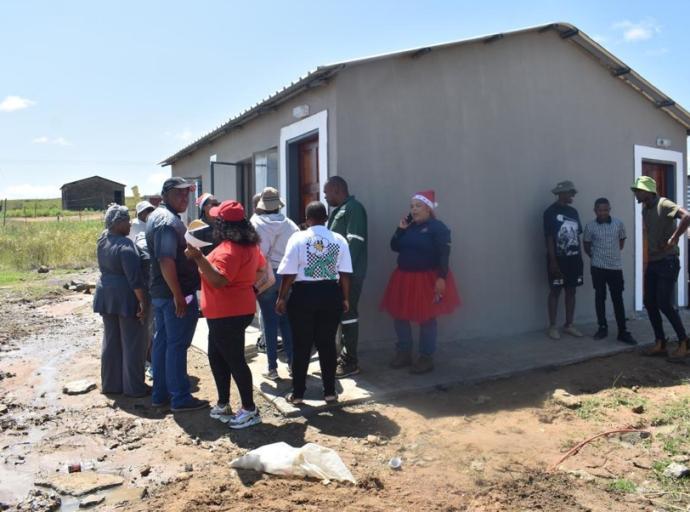
The Member of the Executive Council (MEC) for Human Settlements, Saki Mokoena, has handed over 10 housing units to beneficiaries in Bethlehem as part of the department’s ongoing housing delivery programme.
The handover took place in Bakenspark Extension 5, where qualifying residents received newly built houses aimed at improving living conditions for vulnerable members of the community. The initiative forms part of the department’s commitment to providing sustainable human settlements and dignified housing.
Among the beneficiaries was 83-year-old Tello Alfred Litsiki, who previously resided in informal housing.
In a statement issued on Christmas Eve, the Department of Human Settlements confirmed the launch of a Catalytic Housing Project in Bakenspark Extensions 5 and 6.
“The project has an estimated budget of approximately R370 million and is expected to deliver 1,248 housing units under various programmes, including First Home Finance, Breaking New Ground, and Social Housing,” the statement noted.
The department further indicated that the project is designed to accelerate housing delivery, advance spatial planning transformation, and promote inclusive economic growth.
MEC Mokoena stated that the project remains under development, with 180 units currently underway, and is anticipated to reach completion by late 2026.
In light of the adverse weather conditions experienced across the country in recent weeks, the MEC expressed confidence that the newly handed-over houses would provide beneficiaries with improved safety and comfort. He reaffirmed the government’s commitment to service delivery and the fulfilment of its constitutional mandate.
A total of 32 Christmas babies have made their way across the Free State province from the early hours of the morning today.
Fourteen girls and 18 baby boys were born at maternity wards across the province.
According to Free State Health Department spokesperson Bonny Sehularo, the maternity ward at Bongani Regional Hospital in Welkom is having a busy day.
The first baby girl was born at 00:02 to an 18-year-old mother at the Elizabeth Ross District Hospital in Qwaqwa. The first baby boy was born at 00:23 to a 27-year-old mother at Bongani Regional Hospital in Welkom
Among the mothers who welcomed their new family members was 23-year-old Sophy Pule from Qwaqwa.
Pule welcomed her daughter at 01:34am at Mofumahadi Manapo Regional Hospital in Qwaqwa weighing 3,650kg
The Premier of the Free State, MaQueen Letsoha-Mathae, MEC for Health in the Province, Monyatsi Mahlatsi, and other members of the executive council visited some of the hospital maternity wards to meet the new babies.
These include Senorita Ntlabathi District Hospital, JD Newburry District Hospital in Clocolan, and Pelonomi Tertiary Hospital in Bloemfontein among others.
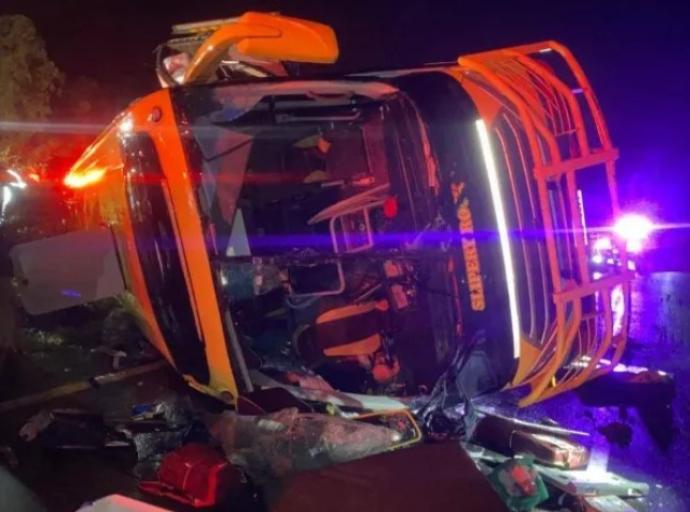
Three people have died after a bus they were travelling in overturned on the N1 south, between Edenburg and Bloemfontein, in the early hours of Monday.
Following the accident, 71 passengers were transported to hospitals in the area for treatment.
Emergency services responded quickly to assist those affected.
Sipho Towa, Chairperson of the Road Accident Management Systems, confirmed the casualties and the response, saying, “The accident, unfortunately, claimed three lives.”
''We offer our condolences to the families affected.''
The Road Traffic Management Corporation has also urged festive season travellers to reduce high speeds and respect all road regulations, following a series of deadly head-on collisions in KwaZulu-Natal and the Free State.
“An unacceptably high number of head-on collisions involving speed and reckless driving have been recorded since the start of the festive season,” the RTMC said.
Eleven people have died in the latest crashes, which occurred in KwaZulu-Natal and the Free State.
The KwaZulu-Natal crash occurred in KwaMbonambi on Friday, December 19.
It is alleged that “a driver of a light delivery vehicle was overtaking and went onto the path of an oncoming vehicle.”
The driver of the oncoming vehicle tried to avoid the LDV but lost control and overturned.
The delivery vehicle then collided head-on with another vehicle, resulting in “five people killed, eight with serious injuries and six with light injuries,'' said the RTM.
In the Free State, five people died and three were injured when two vehicles collided head-on outside Heilbron on Saturday, December 20. The collision occurred “on a blind rise.” The causes of both crashes are under investigation.
Data collected by the RTMC shows that “head-on collisions are responsible for twelve percent of crashes on South African roads this festive season.”
Speeding is the leading traffic law violation, with close to 50,000 traffic fines issued for speeding and 255 drivers arrested for driving at high speeds and exceeding the speed limit by 40 kilometres an hour.
Motorists are called upon to “desist from overtaking over solid lanes, on blind rises and when the view ahead is not clear,” the RTMC said.