Free State Targets Surgical Backlogs
The three-day Cataract Marathon, held over the weekend at Boitumelo Regional Hospital in Kroonstad, was a great success, with over 100 patients receiving treatment.
Screening was conducted last week Friday with cataract operations scheduled for Saturday and Su...
Warning to councillors and party deployees to deliver on promises or face consequences
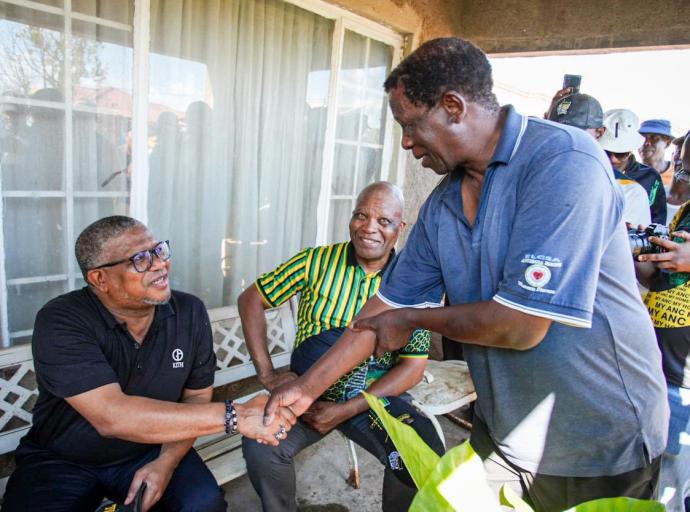
ANC Secretary-General Fikile Mbalula has issued a blunt warning to party deployees, telling underperforming cadres to “shape up or ship out” as the governing party steps up efforts to woo voter support ahead of this year’s local government elections. Mbalula on Tuesday led ANC volunteers on a door-todoor mobilisation drive in Ward 25 in the Bojanala region of the North West, as part of preparations for the party’s January 8 anniversary rally. The ANC is marking 114 years since its establishment, with this year’s celebrations taking place in Rustenburg. Festivities will culminate in President Cyril Ramaphosa’s January 8 Statement at Moruleng Stadium outside Rustenburg on Saturday, where he is expected to outline the party’s priorities for the year ahead. During his engagement with residents of Monakoto village, Mbalula assured the community that the ANC’s local government action plan would be implemented and that party deployees would be held accountable for addressing service delivery concerns. “I am glad that the councillor and the mayor are here. When I come back, I don’t want to hear the repetition of the same problems. I want a report back,” said Mbalula. “Our local government action plan says we must fix problems in local areas. If things are not fixed, then we are going to fix you, the mayor.” He stressed that councillors have a responsibility to ensure services are delivered consistently and effectively. “They must be present in communities and deliver on what they promise — not speak big English, but be on the ground and resolve service delivery challenges,” Mbalula said. “We are here to listen to our communities and assess whether our deployees, especially councillors, are doing the work the ANC sent them to do. Leaders who are unknown to their communities and out of touch cannot be tolerated.” Since the start of the week, ANC national and provincial leadership have been undertaking various outreach activities across the North West province as part of the anniversary programme. The annual January 8 Statement traditionally sets the tone for the ANC’s agenda for the year, reflecting on challenges facing the party and outlining planned interventions under a chosen theme. ANC national spokesperson Mahlengi Bhengu said the party’s focus was on tangible service delivery rather than rhetoric. “We have local service delivery intervention teams, local government teams and rapid response teams from Luthuli House on the ground — the entire Luthuli House is in the North West,” Bhengu said. She added that service delivery interventions had already begun. “Where we see a pothole, we immediately call the councillor, who must then contact their principal, the mayor, on the spot.
CENTLEC Chief Executive Officer (CEO) Malefane Sekoboto’s recent contract extension has come under scrutiny, with concerns raised about the decision-making process, transparency and compliance with procurement and governance regulations. The move has prompted renewed calls for accountability at the Mangaung Metro Municipality (MMM). The controversy follows accusations by the Democratic Alliance (DA) in the Free State that the municipality undermined transparency and limited public access by using closed December council meetings to push through questionable decisions, including the extension of Sekoboto’s contract until 31 March 2026. Sekoboto’s term was due to end on 31 December 2025. However, DA councillor Dirk Kotze said the contract was extended during a virtual meeting without adherence to the necessary legislative requirements, exposing the municipality to governance, audit and legal risks. “The DA opted not to participate in the vote regarding a three-month extension of the CENTLEC CEO’s contract,” said Kotze. “We warned that this decision violates legal requirements and exposes the municipality to serious governance, audit and legal risks. We condemn the Executive Mayor, Gregory Nthatisi, and the Speaker, Lawrence Mathae, for misusing closed council meetings to push questionable decisions, limit public access and undermine transparency.” Kotze further argued that the extension was unlawful. “According to the Municipal Systems Act, CEOs of municipal entities must be employed on fixed-term contracts. Once such a contract expires, the position must be declared vacant and an acting CEO legally appointed. Extending an expired contract circumvents safeguards designed to prevent the recycling of senior management contracts,” he said. In contrast, Economic Freedom Fighters (EFF) deputy chairperson in the Free State, Thomas Macingwane, dismissed the DA’s claims and urged residents to question the party’s credibility, accusing it of inconsistency and disowning its own decisions. Macingwane said council had resolved to extend the contract by three months to allow the recruitment process to continue, adding that closed council meetings are standard practice for senior management appointments. He argued that such procedures protect councillors from pressure by disgruntled or unsuccessful candidates. “On the issue of the extension, council resolved before recess that the CENTLEC board should advise council on the expiry of the CEO’s five-year contract. The DA had no issue with that decision at the time, but because they are inconsistent and have their own preferences for who should be CEO, they launched a campaign against this CEO from the beginning of the financial year,” said Macingwane. Macingwane’s claims were supported by Mangaung Metro acting spokesperson Nicolette Maysiels, who confirmed that council had approved the relevant reports, albeit with some amendments. Maysiels told Journal News that council met on 15 December to correct the composition of the interim board and resolved to extend its term as an acting board for a period not exceeding three months. “On 22 December 2025, the interim board then met to consider the position of the CEO and the related human resources processes,” she said. According to Maysiels, the meeting passed several resolutions, including the extension of the CEO’s employment contract for a further three months, in line with clause 17.3 of Sekoboto’s employment contract.
Former North West Health Department head Dr. Andrew Lekalakala has lost his bid in court to declare the province’s Powers, Privileges and Immunities Act unconstitutional. The challenge came after Lekalakala openly acknowledged allegations of corruption before the provincial legislature and immediately filed a motion claiming the legislature itself was unconstitutional—a move that escalated a routine corruption prosecution into a highstakes legal battle over the province’s legislative framework. The section under scrutiny criminalizes, as perjury, knowingly providing false information on a material matter before the legislature or its committees, once warned. It also outlines the powers, privileges, and immunities of the Provincial Legislature, including freedom of speech and debate, regulation of internal affairs, and oversight when acting as a court. Lekalakala, facing fraud and corruption charges in the North West High Court, argued that being compelled to testify before the legislature violated his constitutional right against self-incrimination and his right to a fair trial. The charges relate to a R180 million, three-year mobile primary healthcare contract with Gupta-linked company Mediosa, which the department terminated in 2018. Lekalakala was summoned to testify before a joint session of the North West Legislature following the contract’s cancellation. In his affidavit, Lekalakala described the legislative committee’s conduct as “inhuman and unfair,” adding: “I experienced the process as being domineering and threatening. I was constantly threatened with remarks such as ‘the police must be called’ and that I could be locked up immediately.” Afterward, a formal complaint was lodged, leading to his prosecution in the High Court for fraud, corruption, and contraventions of the Public Finance Management Act. The state presented evidence from Dr. Kgosi Motlabane, the former deputy director-general of the department, which Lekalakala argued was privileged and should not be admissible in criminal proceedings. In its judgment on December 19, the High Court emphasized that Section 22 of the Immunities Act protects the integrity, effectiveness, and credibility of legislative oversight. “It compels witnesses to provide dependable and truthful testimony, deterring dishonesty and ensuring public confidence in the legislative process,” the court held. The court clarified that Section 22 punishes only deliberate falsehoods, not silence, and cannot be interpreted to override rights such as protection against self-incrimination. It underscored the subsidiarity principle, stating that constitutional issues should be decided only when necessary to resolve the case: “Courts must decide no more than is required to dispose of the matter.” Lekalakala’s case, while initially a corruption trial, has now become a landmark test of the province’s judicial integrity—balancing the fight against graft with the principles of constitutional order. Its outcome is poised to influence not only this prosecution but the broader administration of justice in the North West.
Party set to use its 114th anniversary celebrations to win back lost votes
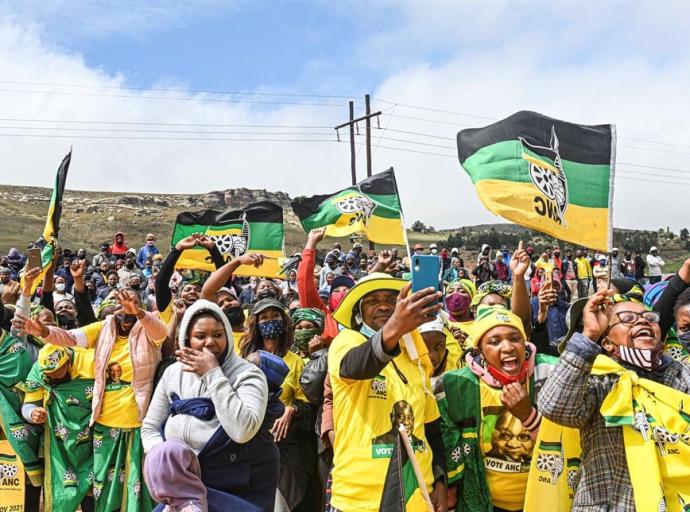
Lightning strike turns historic Mphebatho Festival deadly What began as a vibrant community celebration at the annual Mphebatho Troop Festival at Dertig Sports Ground near Mathibestad in the North West province turned tragic when a lightning strike injured several troopers and claimed two lives. On 3 January 2026, the Mphebatho Troop Festival hosted its annual event, held in honour of Sesotho culture in South Africa, promoting unity, celebration and camaraderie between the two countries. The festivities featured performances by local music groups and were attended by several dignitaries, including royalty. During the event, while troopers were seated under a tent, two lightning strikes occurred. Peter Selemela, a survivor and trooper from Sun Rise who participated in the festivities, said a sudden downpour accompanied by lightning caught them off guard. According to Selemela, the first strike was distant, but the second hit the tent directly, leaving people shocked and immobile. “Seconds later, people were on the floor. I couldn’t move as my left hand suddenly became numb. I noticed another trooper’s legs had stopped functioning, so I crawled towards him and pulled him closer to the tent,” he said. Selemela added that emergency services eventually assisted them at the Mphebatho Library. The North West Department of Health confirmed that 150 patients were taken to the Mathibestad Clinic. Thirteen were critically injured and transferred to Jubilee Hospital, while two patients were declared dead on arrival and awaited forensic services. Most patients sustained mild lightning-related burns, with 34 still awaiting medical assessment at the time of reporting. The remaining patients were treated and discharged. North West Health MEC Sello Lehari said he was pleased that Mathibestad Community Health Centre was fully operational during the tragedy. He confirmed that both day and night staff were on duty. “The health professionals on site included two doctors, four professional nurses and three enrolled nurses, bringing the total staff complement to nine,” said Lehari. “EMS support was strengthened through the deployment of two North West EMS ambulances, two Gauteng EMS ambulances and Planned Patient Transport.” Speaking on behalf of Premier Lazarus Mokgosi, Social Development MEC Sussana Dantjie conveyed condolences to the affected families and confirmed that the festival would continue next year. “We expect all stakeholders to work together to ensure the smooth hosting of the next festival,” she said. Dantjie acknowledged concerns from some attendees who believe the fatalities could have been prevented with quicker emergency response, but noted that “death ultimately remains in the hands of God”. Moretele Local Municipality Mayor George Manyike visited the Mashishi family in Lefatlheng, who lost their daughter Kenoshi (35), a teacher at Tlhaloganyo Primary School and a mother to a 10-year-old son. He also visited the Shekwambane family in Itsoseng Section, Dertig, Ward 18, who lost their daughter Koketso (28). By: Abigail Visagie By: Mogomotsi Selebi By: Abigail Visagie Party set to use its 114th anniversary celebrations to win back lost votes T he African National Congress (ANC) has embarked on a charm offensive in the North West province as it seeks to win back support ahead of this year’s local government elections. Through mass rallies, community visits and door-to-door campaigns, the party is pushing a message of renewal and unity—despite growing criticism over deteriorating infrastructure, failing services and public frustration. As thousands of supporters are expected to descend on Moruleng Stadium outside Rustenburg tomorrow for the ANC’s biggest annual birthday celebration, the festivities unfold against a backdrop of mounting service delivery failures across the province. Communities grappling with pothole-ridden roads, unreliable water supply and struggling municipalities are questioning whether the ruling party’s renewed promises will translate into tangible change on the ground. However, according to ANC North West provincial spokesperson Tumelo Maruping, the party’s renewal project centres on restoring public trust through improved service delivery. “We do accept as the ANC that we have serious challenges, and that we are unable to address all the issues confronting our communities at once. However, we are working hard to attend to service delivery challenges,” Maruping said. The celebrations began last week with a series of activities, including door-to-door campaigns, memorial lectures and community engagements. First on the programme was a visit by ANC President Cyril Ramaphosa to Kgosi Pilane of the Bakgatla ba Kgafela Royal Family in Moruleng Village. The mass rally is expected to attract more than 50,000 ANC members. Ramaphosa is also expected to outline the party’s priorities for the year ahead, with a focus on renewal, unity and tackling pressing socio-economic challenges. Poor infrastructure development, unemployment and high crime levels remain among the most pressing service delivery challenges facing the ANC, with the North West flagged as home to some of the country’s worst-performing municipalities. Last year, Journal News reported that 14 of the province’s 19 municipalities were placed under intense scrutiny for allegedly violating residents’ basic human rights following complaints from individuals, civic organisations and political parties. A damning report by the South African Human Rights Commission found widespread failures in the provision of essential services, including water, electricity, sanitation, refuse removal and road maintenance—shortcomings that collectively infringe on residents’ constitutional rights. Municipalities implicated include the City of Matlosana, JB Marks, Maquassi Hills, Dr Ruth Segomotsi Mompati District, Lekwa-Teemane, Ditsobotla, Moses Kotane, Madibeng, Moretele, Rustenburg and Mahikeng local municipalities. The commission warned that the service delivery crisis in the North West is persistent and requires urgent intervention.
Mangaung Metropolitan Municipality Mayor Gregory Nthatisi has drawn a firm line against municipal neglect, calling for unity, accountability, and renewed civic responsibility.
Speaking to Journal News on the sidelines of the commemoration of the historic Waaihoek Wesleyan Mission Church — the birthplace of the ruling party — in Bloemfontein on Thursday, under the theme “Our Heritage, Our History,” Nthatisi said democracy belongs to the people and can only be sustained through collective action.
He emphasised the importance of residents paying rates and taxes, protecting public infrastructure, and ensuring that undisciplined officials are held accountable for poor performance.
Accompanied by the Free State Premier, MaQueen Letsoha Mathae – the mayor hosted members of the provincial religious community, bringing together leaders from faith-based organisations, traditional leadership and civil society.
“The people of Mangaung and ANC supporters must understand that this democracy belongs to them. They must join hands to ensure services are delivered. To sustain these services, residents must pay their rates and taxes. There must also be greater awareness that littering undermines cleanliness, and people should refrain from damaging municipal property,” said Nthatisi.
“We are committed to improving this institution to better serve its people. We will not tolerate officials who are undisciplined and fail to perform their duties. The days of the municipality neglecting its residents are over.”
The ANC, the oldest liberation movement in Africa, was founded on 8 January 1912 in Bloemfontein by John Langalibalele Dube, Pixley ka Isaka Seme, Solomon Plaatjie and Walter Rubusana. The organisation was established to unite South Africans against colonialism and racial oppression, later leading the struggle against apartheid and governing the country since the advent of democracy in 1994.
He said the gathering in Waaihoek reaffirmed a fundamental truth: that democracy emerges from unity in diversity and can only be renewed in the same manner.
“Let us unite, gather and walk this liberation path together — not as separate entities, but as co-authors of a freedom that remains incomplete,” Nthatisi said.
Nthatisi described the occasion as a celebration for all South Africans.
“Thanks to the leadership of the ANC, which convened in this area to establish an organisation that paved the way for the democratic society we enjoy today, this site has been declared a heritage site rich in history.
“Together with religious denominations, social organisations, civic structures and democratic formations, we have chosen to converge here to start the year by reminding ourselves where South Africa comes from.
“We are reflecting on our origins, the roots of our democracy, and how we can move forward united — holding each other’s hands and celebrating our journey together,” he said.
Nthatisi said the Waaihoek gathering served as a reminder of the ANC’s historical role in shaping South Africa’s democracy and the responsibility shared by government and citizens to safeguard it. He called on communities, faith-based organisations and civil society to work together in renewing the country’s democratic foundations and advancing service delivery for all.
As academic pressures, social challenges, and demands from home life continue to mount, experts are increasingly sounding the alarm over school-related stress among children and adolescents.
Notably, the World Health Organization (WHO) reports that around one in seven of these young individuals worldwide is affected by a diagnosable mental health condition, with local estimates suggesting that the actual rates may be even higher in certain regions.
A substantial number of these difficulties stem from issues linked to school pressure, bullying, exam stress, and unstable home environments.
The toll of stress is felt by both younger children and teenagers, although the signs are frequently overlooked or misinterpreted as typical growing pains. Murray Hewlett, the CEO of Affinity Health, highlights the critical need for adults to remain vigilant.
“Children don’t always have the words to explain what they’re feeling,” Hewlett says. “Adults need to watch for changes in behaviour, mood, or routine, as these are often the earliest signs that a child is struggling.”
Behavioural shifts are often the initial indicators of stress, with manifestations varying by age. For instance, younger children may exhibit sudden clinginess or develop anxiety when separated from their carers.
He says they might also express a reluctance to attend school, display increased irritability, throw frequent tantrums, or lose interest in previously enjoyed activities. Conversely, teens may withdraw from family and friends, experience a sudden decline in motivation, skip classes, or isolate themselves in their rooms, often spending excessive time online.
Stress can also present as physical symptoms, particularly in children who may find it challenging to articulate their emotions. Signs like frequent stomachaches, headaches, sleep disturbances, nightmares, and persistent fatigue can indicate underlying anxiety.
Hewlett details that they might observe that their child feels unwell on school mornings yet appears healthy over weekends, hinting that the issue may be stress-related rather than illness.
Emotional changes offer another important warning sign. Children feeling overwhelmed by stress can experience emotions they struggle to comprehend or express, manifesting as heightened worry, unexpected crying spells, low self-esteem, negative self-talk, or a sense of being swamped by schoolwork.
Teens often exhibit stress through frustration or irritability, utilising statements such as “I can’t do this” or “School is too hard,” which should never be dismissed, as they often point to deeper struggles.
Academic performance can be seriously impacted as well. Children suffering from stress may find it difficult to concentrate, remember information, or meet assignment deadlines. They might procrastinate, fall behind, or even lose interest in subjects they once found engaging.
Hewlett reveals that a sudden decline in marks should not automatically be attributed to laziness; rather, it is often a reflection of mental overload due to excessive school demands.
It is explained that social pressures further exacerbate these issues. Bullying, peer pressure, and concerns over fitting in can render the school experience overwhelming. Signs that a child is struggling socially may include avoiding discussions about friends, resisting participation in group activities, or displaying reluctance to attend school altogether.
Of particular concern is the rising prevalence of online bullying, especially among teenagers, which can be challenging for parents to detect unless they notice sudden changes in behaviour.