Free State Targets Surgical Backlogs
The three-day Cataract Marathon, held over the weekend at Boitumelo Regional Hospital in Kroonstad, was a great success, with over 100 patients receiving treatment.
Screening was conducted last week Friday with cataract operations scheduled for Saturday and Su...
Province slips to second place after eight-year reign as KZN tops 2025 matric results
After six years at the summit, the Free State has slipped from the top spot in the national matric rankings — but its historic 91% pass rate remains untouched.
The province has been overtaken this year by KwaZulu-Natal, which achieved a pass rate of 90.6%.
Minister of Basic Education Siviwe Gwarube announced the 2025 matric results on Monday evening in Johannesburg.
Despite losing the number-one position, the Free State continues to rank among the country’s most consistent and high-performing provinces in the education system.
This year, the Free State recorded a pass rate of 89.33%, followed closely by Gauteng at 89.06%. The national pass rate stands at 88%. North West achieved 88.79%, while the Northern Cape recorded 87.79%.
According to Gwarube, the class of 2025 made history, with all 75 education districts nationwide achieving pass rates above 80%.
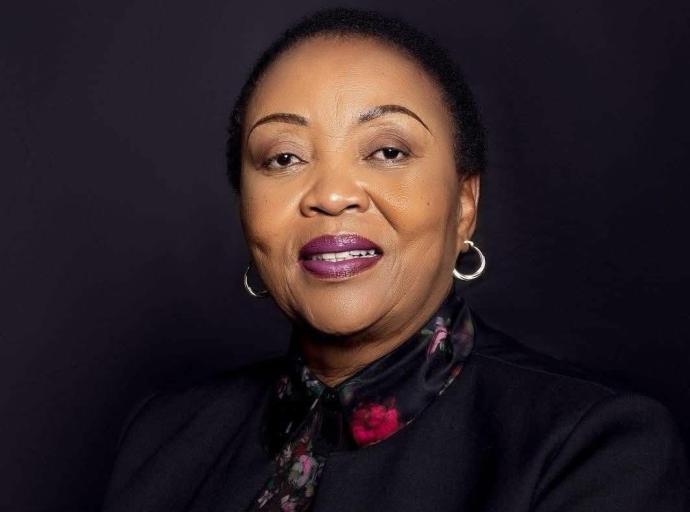
Free State MEC for Education Mantlhake Maboya said the 91% pass rate achieved by the class of 2024 was the outcome of a targeted 90% ambition set by the province as far back as 2010. She said the department’s sustained efforts and commitment had been key to this success.
“This is the highest matric pass rate in the history of our country and should be a moment of great pride and celebration for all of us. So, 14 years down the line, we have been working very hard towards that ambitious target of 90%,” she said.
Although the province did not top the rankings this year, the department remains satisfied with the results, and Maboya congratulated KwaZulu-Natal on its achievement.
The Department of Basic Education reported that more than 900 000 matriculants wrote the 2025 examinations across over 6 000 centres, making it the largest NSC examination cohort in history.
Of the total passes, 46% qualified for bachelor’s degree studies, 28% for diploma programmes, and 13.5% for higher certificates.
The Free State will host a matric “well done” function tomorrow at the Central University of Technology, where the province’s top 100 matriculants will be honoured.
The Department of Employment and Labour said the submission would mark the first year in the submission of EE Reports since the amendment of the EE Act that now requires designated employers to prepare and implement EE Plans for the period from 1 September 2025 until 31 August 2030.
The department explained that the Employment Equity Amendment Act, No. 4 of 2022, became operational from 1 January 2025.
Since then, two sets of EE Regulations on EE reporting forms and other EE templates, and the 5-year sector EE targets for the eighteen economic sectors were published on 15 April 2025 to provide guidelines to employers and employees on how to interpret and implement the EE amendments and sector EE targets.
In terms of the EE Amendment Act, designated employers will, for compliance purposes, be assessed against their own annual targets set towards meeting the relevant 5-year sectoral numerical targets.
The 5-year sectoral numerical targets are key milestones towards achieving the equitable representation of the different designated groups within the four upper occupational levels in an employer’s workforce in relation to the demographics of the applicable economically active population (EAP), and for persons with disabilities.
In terms of the EE Act, it is important that the reports submitted must contain the prescribed information and must be signed by the Chief Executive Officer of the designated employer.
The National Employers' Association of South Africa (NEASA) explained that missing the deadline to submit the EE reports may lead to Labour Court action and possible fines.
It added that employers should keep evidence of attempts to submit in case there were system glitches or the system crashed.
“It is certainly not ideal to miss the deadline, and therefore employers are advised to, should errors occur, continue their efforts to submit and to keep record of their attempts by taking screenshots of the error messages.
“Employers should not wait until the last minute on 15 January to submit in order to avoid this pitfall. Non-submission of EE reports will place designated employers in an extremely difficult position as they will simply be non-compliant. Although there is no guarantee that proof of attempts to submit and the error messages received will be accepted as an excuse, at the very least it may be used to attempt to mitigate the fallout of non-submission.”
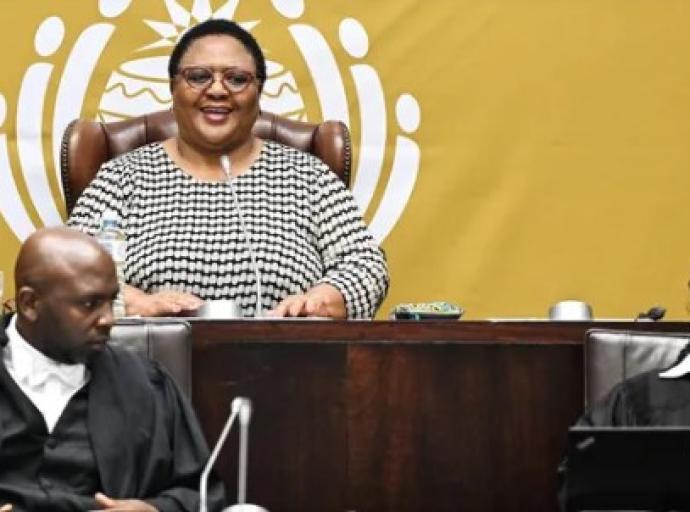
Finance Minister Enoch Godongwana on Tuesday said the Special Adjustment Bill underscored the need for self-sufficiency and the need to move with speed in addressing universal health access through the implementation of the National Health Insurance (NHI).
Godongwana said the court cases challenging the NHI will delay implementation of the legislation.
He noted that both protagonists in the court action proclaim they support universal coverage and access.
“It is my submission that these parties must meet and craft a settlement. We want to move ahead with implementation of NHI. These cases are going to delay for more years,” he said.
Godongwana made this statement in response to the debate during which the National Assembly passed the Special Appropriation Bill, aimed at addressing the funding gap created by the withdrawal of the US President’s Emergency Plan for Aids Relief (Pepfar).
Tabling his Medium term Budget Policy Statement late last night, Godongwana allocated an additional R750.4 million to the Department of Health.
A total of R590.4m has been allocated for provinces through the District Health Program grant for the comprehensive HIV component and R130.2m for the South African Medical Research Council (SAMRC) for critical research.
Speaking during the debate on the bill, committee chairperson Mmusi Maimane said the fundamental question was to ensure the health department and health systems remained sovereign.
“We must see through the eyes of ordinary people who depend on the well functioning public health care system that ensures that there isn't a financialisation of their own personal health and ensures that HIV treatment can be given effect,” Maimane said.
ANC MP Michael Segede said the withdrawal of Pepfar funding was not an administrative oversight, but a deliberate political decision taken by the US government led by President Donald Trump's administration. and amplified by anti revolutionary forces within in South Africa, especially Afriforum.
Segede said the bill was a pivotal instrument of ensuring palpable inroads against HIV, AIDS and TB infections, but also for socio economic growth.
MK Party MP Sanele Mwali said the withdrawal of Pepfar funding has had severe consequences, including the loss of skilled healthcare workers, closure of clinics, and significant reduction in essential HIV services.
“We must acknowledge the failures of the Government of National Unity and the Department of Health in the provinces, the corruption, the maladministration, the dependency on foreign aid, have compromised our state sovereignty,” Mwali said.
DA MP Kingsley Wakelin the discussions around health funding revealed urgent questions about sustaining vital programmes and building a resilient system that serves all the people.
“A primary concern is maintaining current infrastructure and systems for essential health services. When external support changes, we must ensure there is no backsliding in life,” Wakelin said.
EFF MP Nonhlanhla Mkhonto said her party has consistently made it clear that it rejected the continued reliance on foreign aid to ensure that all South Africans have access to quality and dignified medical services.
“For more than 20 years, we have allowed this government, the former liberation movement and the National Treasury, to implement continuous budget cuts and below inflation increases to the health budget.
“This deliberate underfunding has pushed the public health care system to the brink of collapse. Clinics are overwhelmed, hospitals are understaffed, and communities are left vulnerable,” said Mkhonto.
IFP chief whip Nhlanhla Hadebe said the Special Appropriation Bill has once again exposed South Africa on over-reliance on external donor funding for essential health services.
“For many years donor support has effectively subsidised functions that should be sustainable integrated in the national fiscus,” Hadebe said.
ActionSA MP Alan Beesley said South Africa should not depend on overseas donor funding to meet basic health obligations.
“We should decisively shut the taps that bleed corruption and self enrichment within the health sector,” he said.
His sentiments were echoed by UDM’s Nqabayomzi Kwankwa, saying South African can't depend on foreign funding to fund its essential services.
“Dependence weakens our sovereignty and exposes our people to decisions taken in foreign countries. We must never allow critical programmes to rely on programe of other countries,” Kwankwa said.
Earlier, the National Assembly passed the Tax Administration Laws Amendment Bill and the Taxation Laws Amendment Bill with the MK Party, EFF, UAT, ATM and National Coloured Congress objecting.
Also passed was Adjustment Appropriation Bill, which made R10.1 billion allocation to budgets of departments with the MK Party, EFF and UAT registering their objections.
Responding to the debate Godongwana stated that Adjustment Appropriation Bill made provision for unforeseen spending, repairs and rehabilitation of infrastructure damaged during disasters.
“If you do not vote for this budget, you are actually saying that infrastructure must not be repaired,” he said.
The bills will be sent to the National Council of Provinces for concurrence when it sits on Thursday.
Education stakeholders have detailed the many sacrifices and interventions made, including teachers having to sleep at school, that led to KwaZulu-Natal being crowned the best performer in the country in the 2025 National Senior Certificate results.
Education stakeholders spoke to The Mercury yesterday about the practical initiatives implemented by schools that enabled the country’s most rural province to surpass the Free State to clinch the top spot and a 90.6% pass rate.
They noted that in some schools, principals and teachers went as far as sleeping at schools during camps to ensure learners were supported. Department officials, members of the education portfolio committee, and school principals praised the collaboration between pupils, teachers, and parents, saying it has been fundamental to the province's consistent improvement.
Emmanuel Duma, principal of Sibusisiwe Comprehensive Technical High School in uMbumbulu, emphasised that discipline among pupils, teachers, and parents is central to the performance of schools.
“The reason the province has achieved this success is thanks to the discipline shown by the parents, the teachers, and the pupils towards their schoolwork.”
His school achieved a 100 percent pass rate for the third consecutive year.
“For instance, if I call a meeting with the parents today, they will be here at 3pm;that is the commitment they are showing to the school. The teachers in the school teach with great enthusiasm. The pupils of the school are present every time they are supposed to be at school.
“The leadership of the school, through the school management team (SMT), leads by example. As a school principal, I cannot expect other teachers to be at school on Saturday while I am spending time with my family or at home; the SMT leads by example. We implement a lot of programmes; we know that we have to keep the children at school for longer periods, including morning classes, weekend classes, and afternoon classes, to ensure that we maintain focus.
“We intervene where necessary, adhere to our schedule, release results on time, conduct revision work as planned, and stick to the programme we are supposed to follow,” he said.
Sakhile Mngadi, a member of the Edu-cation Portfolio Committee, remarked that they had witnessed firsthand the sacrifices made for this success.
“It is important to state clearly that these results are first and foremost the achievement of teachers, learners, and local school-based staff who put in the work under extremely difficult conditions.
They are the ones who carried the system, often without adequate resources, and they deserve the credit.
“What these results demonstrate is the resilience of our learners, especially those in rural and disadvantaged communities, and the commitment of educators who refuse to allow circumstances to determine outcomes. During our oversight work as a committee, we saw very practical interventions on the ground. These included focused learner support programmes, subject-specific interventions, revision and catch-up camps, and strong leadership from principals.”
Mngadi said that in some schools, principals and teachers went as far as sleeping at schools during camps to ensure learners were supported, supervised, and able to focus fully on their work. "That level of dedication made a real difference," he said.
Acting chairperson of the Education Portfolio Committee, Hlengiwe Mavimbela, said the commitment of the school leadership cannot be under emphasised.
“Throughout our oversight visits to schools and our interaction with the leadership of the department, we were assured that the focus was on first-class ‘trophy’ results, and this was demonstrated by hard work, patience, and commitment, which today yielded the positive results we have witnessed.”
She added that the teacher unions must be commended for playing a part in producing the sterling work.
“Without their collaboration and the commitment of their members in class-rooms, we would not have produced these results.”
She commended their efforts and challenged them to continue and keep the province in the leading position even in 2026.
Education MEC Sipho Hlomuka saidthe province is focused on achieving more:“What makes KwaZulu-Natal’s resultsremarkable is that the quality comes fromthe ground,” Hlomuka said.
“It comes from schools facing infra-structure challenges in various districts of the province. It comes from schools that lack resources.” Despite these constraints, he noted that educators and learners remained committed. “We have limited resources, but our educators and learners are committed,” he said.
“The quality of our results continued to improve across the board; this is a reflection of the interventions by our district teams and educators, as well as the dedication of our learners to their academic work.
“Our bachelor passes have increased from 84,470 in 2024 to 89,161 in 2025. This is one of the key indicators of the depth of this academic achievement. We will continue with efforts to improve the quality of our results, especially in gateway subjects like Mathematics and Physical Sciences.”
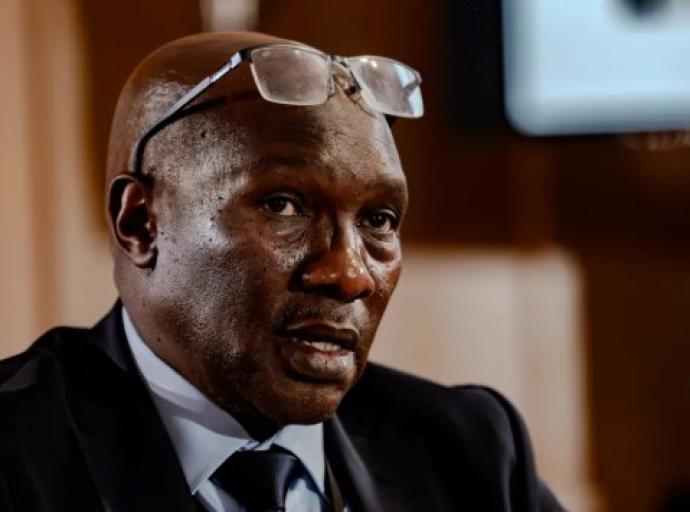
Parliament's Ad Hoc Committee investigating allegations of police corruption resumes its hearings this week, with more high-profile witnesses like the head of crime intelligence, Dumisani Khumalo, expected to give evidence.
The committee will resume its business from Wednesday after it concluded the last leg of its hearings in November last year, before the Christmas and end-of-year recess.
The resumption of hearings follows the evidence of several witnesses, including KZN Police Commissioner Nhlanhla Mkhwanazi, former minister Bheki Cele, and attempted murder accused businessman Vusimuzi 'cat' Matlala.
Matlala was the last witness to give evidence, where he detailed how he allegedly paid former minister Bheki Cele R500,000 and how Cele interfered in police matters on his behalf.
The committee also heard from other witnesses, like minister on special leave, Senzo Mchunu, who defended his irregular decision to disband the political killings task team.
The committee will now sift through more evidence from witnesses, including former commissioner Khomotso Phahlane gives oral evidence on Wednesday, following Khumalo on Thursday.
"Committee work will continue also this week, including the hearings by the Ad Hoc Committee investigating allegations by Mkhwanazi, said Parliament Spokesperson Moloto Mothapo.
Meanwhile, forensic investigator Paul O'Sullivan has refused to appear before the committee in person, saying this will make him a target and that he fears for his personal safety.
The committee is expected to conclude in February, with Mkhwanazi expected to be the last witness.
*This article was first published by Eye Witness News
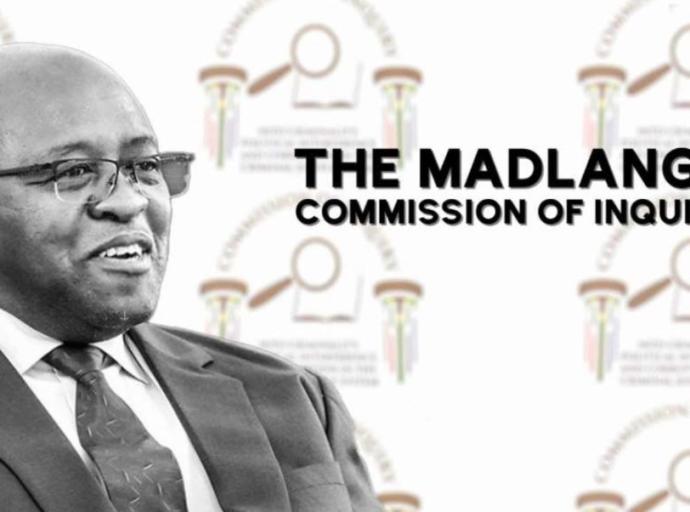
The Madlanga Commission of Inquiry is set to resume on the 26th of January.
In a statement on Monday, Commission Spokesperson Jeremy Michaels, confirmed the resumption of the public hearings in two weeks.
The commission submitted an interim report to President Cyril Ramaphosa on the 17th of December - after commencing three months prior.
The inquiry is set to continue to with phase two of its public hearings at the end of the month.
Phase two provides persons implicated in phase one an opportunity to respond to the allegations made against them and, where applicable, to make their own allegations.
Alongside the responses to the allegations of KZN police boss Nhlanhla Mkhwanazi, and the witnesses supporting him, phase two also provides for the ventilation of other issues falling within the commission’s terms of reference but not addressed in phase one.
The likes of suspended deputy national police commissioner, Shadrack Sibiya, head of organised crime, Richard Shibiri and KZN hawks head, Lesetja Senona, are all expected to testify during phase two.
The commission is expected to conclude their hearings towards the end of April where a six month final report will be presented to Ramaphosa.
*This article was first published by Eye Witness News