Free State Targets Surgical Backlogs
The three-day Cataract Marathon, held over the weekend at Boitumelo Regional Hospital in Kroonstad, was a great success, with over 100 patients receiving treatment.
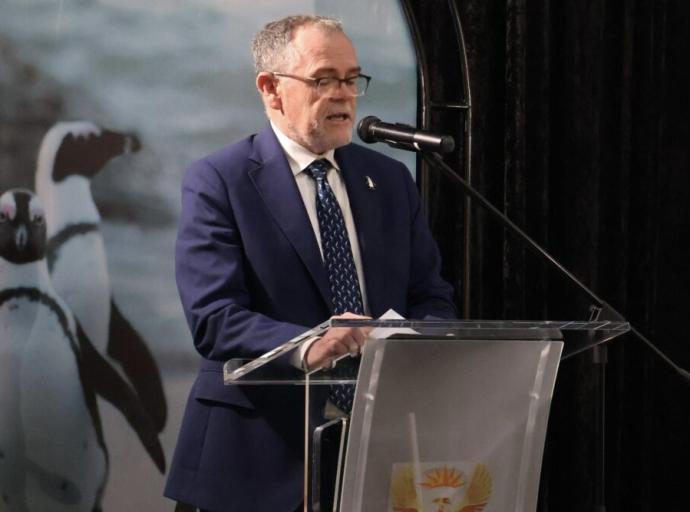
Screening was conducted last week Friday with cataract operations scheduled for Saturday and Su...
The DA's former Federal Finance Chairperson and former Minister of Forestry, Fisheries and the Environment, Dr Dion George, has accused Helen Zille of making false allegations against him, that include irregular staff appointments to his ministerial office and inflated salaries at public expense.
George said the party had never brought these charges against him, describing it as a smear campaign after he announce his resignation from the DA.
George announced his resignation last week following the report of the DA’s Federal Legal Commission (FLC), which cleared the party’s leader, John Steenhuisen, of allegations regarding the misappropriation of DA funds via a party-issued credit card.
George had pushed the party to investigate Steenhuisen and he claims that this led to his recall as a Minister and the party issuing charges against him.
In the statement issued shortly after George resigned, the DA’s federal Council Chairperson, Zille, described his resignation as “unfortunate”, adding that he left before the internal disciplinary processes against him could conclude.
Zille said the allegations faced by George included irregular staff appointments to his ministerial office and inflated salaries at public expense.
He also faced accusations that staff in his ministry sought departmental information to pursue internal party political matters, bringing the party into disrepute through the media, Zille said.
Zille said it would have been preferable for George to go through the Federal Legal Commission (FLC) process to test the veracity of these allegations.
The statement was released on January 15, shortly after George’s announcement that he was leaving the DA.
However, in his response to the DA through his lawyers, Gittins Attorneys INC, George said 'there was never a disciplinary, ethical, or investigatory process initiated in accordance with the DA’s own rules, the principles of natural justice, or constitutional standards of fairness, as alluded to by Zille in this regard'.
The current Minister of Forestry, Fisheries and the Environment (DFF), Willie Aucamp, in December 2025, lodged a complaint with the Public Protector against George, alleging that he misused state resources to investigate his private business affairs, including links to the lion breeding industry, after he took office.
The party also accused George of leaking internal financial information and airing internal grievances through the media.
His attorneys said these allegations have never been formally put to George in writing, to date.
“And the who, what, where, and when intricacies of the various smear campaigns against our client’s character have never been justified,” read the statement released on Monday.
DA spokesperson Jan de Villiers insisted that the FLC investigation found a number of grounds to charge George in terms of the DA constitution and established FLC practices.
“Unfortunately, Dr George decided to leave the party rather than face disciplinary proceedings, where he or his attorneys would have had all the opportunity to state his case,” he said.
George was fired as minister in November after Steenhuisen’s request to President Cyril Ramaphosa to remove him from his position, citing poor performance.
George claimed he was targeted because, as the DA's Federal Finance Chairperson, he had blocked Steenhuisen’s party credit card due to “serious financial irregularities” and “unreconciled personal expenses”, such as Uber Eats and family household expenses.
He claimed that he was "purged" for refusing to favour the captive lion breeding and hunting industry. He claimed Steenhuisen replaced him with Aucamp, an ally of the wildlife-ranching lobby, to protect specific commercial interests.
He claimed that Aucamp failed to disclose personal commercial interests and potential conflicts of interest, as he and his family have direct ties to the lion breeding and hunting industry.
He also characterised his removal as a "purge" of independent voices within the DA who opposed to Steenhuisen's leadership style and his perceived "capture" by the ANC.
George's legal team said that while the allegations (against George) require formal notice, an opportunity to respond and present evidence, none of this has been pursued by the DA.
The law firm added that the DA has also adopted the stance that 'these wild, unsubstantiated allegations can be pursued by the party, without formal notice, without documentation and without affording our client a right to reply'.
The lawyers added that George has systematically been denied information and documentation, including the “secret part report” conveniently exonerating Steenhuisen from the abuse of the party’s credit card.
“The latter is no trivial matter; the implications are that Minister Steenhuisen has viewed the funds from donors as his own, open to personal abuse. Again, in a corporate setting this would attract sanction, not a whitewash,” said the attorneys, adding that George’s resignation from Parliament and from the DA was a principled decision taken to remove political distractions and does not constitute an admission of wrongdoing."
In his resignation letter, George said the report was his final straw.
He dismissed the report as a “whitewash” and accused the party of "cooking the books" to protect its leader.
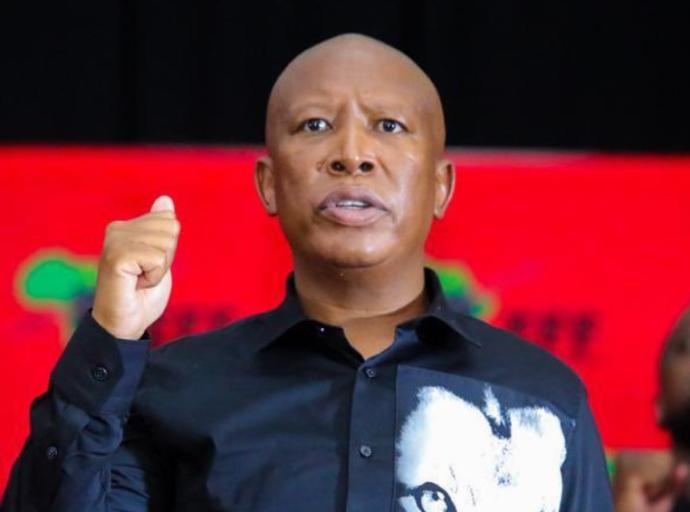
EFF leader Julius Malema will not participate in Parliament’s ad hoc committee proceedings this week as he prepares to return to the East London Magistrate’s Court on Friday for a pre-sentencing hearing.
Malema was convicted in 2025 on five charges, including unlawful possession of a firearm and ammunition, discharging a firearm in a public space, reckless endangerment and failure to take reasonable precautions.
The convictions stem from a July 2018 incident during the EFF’s fifth anniversary celebrations in Mdantsane, where Malema was filmed firing a rifle into the air.
The upcoming hearing will determine Malema’s sentence, with the possibility of direct imprisonment.
Under the Constitution, any member of Parliament sentenced to more than 12 months’ imprisonment without the option of a fine is disqualified from holding office for five years.
The EFF confirmed on Monday that Malema would be absent from the ad hoc committee’s work this week.
In a statement, the party dismissed the court’s ruling as politically motivated and irrational, maintaining that the case was driven by hostility toward the organisation rather than evidence.
The party urged the public to closely observe the legal proceedings and cautioned against speculation regarding Malema’s absence from parliamentary activities.
EFF Deputy Secretary-General Leigh-Ann Mathys will represent the party in committee engagements for the remainder of the week.
Meanwhile, Parliament’s ad hoc committee met on Monday to finalise its programme through February.
The committee is expected to hear testimony this week from former Independent Police Investigative Directorate (IPID) head Robert McBride and suspended EMPD chief Julius Mkhwanazi.
Members of Parliament (MPs) have also called for forensic investigator Paul O’Sullivan to appear before the committee, warning that failure to comply could result in serious consequences.
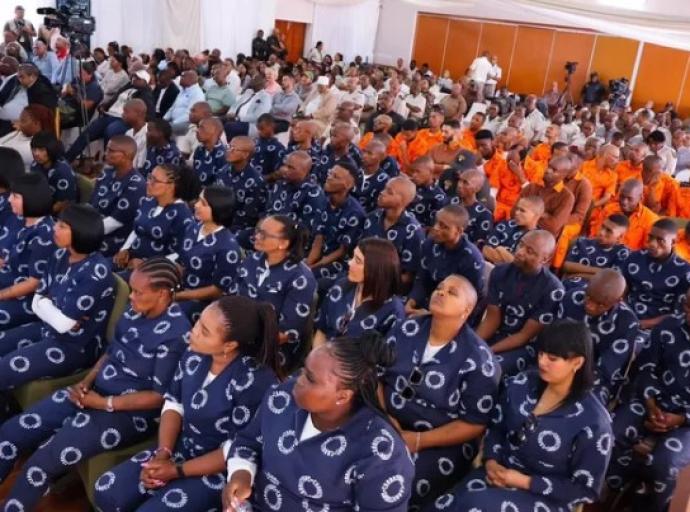
The Department of Correctional Services (DCS) has recorded a historic pass rate of 94.4% in the 2025 National Senior Certificate (NSC) examinations, with inmates across the country producing strong academic results despite the challenges of incarceration.
Correctional Services Minister Dr Pieter Groenewald announced the results on Monday at Goodwood Correctional Centre in the Western Cape. He described the achievement as one of the department’s proudest moments.
A total of 180 inmates from 18 DCS schools nationwide sat for the 2025 matric examinations, alongside thousands of learners across South Africa. Fifteen DCS schools achieved a 100% pass rate, while inmates collectively earned 132 distinctions.
“This is a celebration of resilience, discipline and educational excellence,” Groenewald said. “These results affirm that rehabilitation through education is yielding positive outcomes and giving offenders a meaningful opportunity to rebuild their lives.”
The minister stressed that education is an important part of DCS’s rehabilitation mandate, noting that academic achievement plays a key role in breaking cycles of crime and contributing to safer communities.
However, Groenewald raised concerns about a growing preference among learners for Mathematical Literacy over Mathematics, warning that this trend could limit future educational and career opportunities.
Usethubeni Youth School at Westville Correctional Centre in KwaZulu-Natal produced the highest number of distinctions, with 58, followed by Baviaanspoort Youth School in Gauteng with 56 distinctions. The KwaZulu-Natal region also registered the highest number of learners and the most Bachelor passes.
Top-performing learner Nkosinathi Jabulani Gumede from Usethubeni Youth School achieved an overall average of 85.5%, while Jooste Tyrique from Baviaanspoort Youth School, who is currently on parole, placed second with 84.4%.
Groenewald praised DCS educators, officials and management for their commitment to offender rehabilitation, and encouraged inmates to draw inspiration from former offender Lubabalo Fongoqa.
Fongoqa, who entered prison with only a Grade 9 qualification and served 18 years in correctional facilities, now holds an LLB degree from the University of South Africa. He is the director of Songo Legal Consultants, a motivational speaker and deputy chairperson of the Black Lawyers Association Student Chapter in the Western Cape.
“Do not allow incarceration to limit you or let these opportunities slip through your fingers,” Groenewald told inmates. “One day, we hope you will go out into society and make us proud.”
Fongoqa echoed the minister’s message, saying prison walls do not define or limit dreams, and credited perseverance and access to education for transforming his life.
The South African Social Security Agency (Sassa) has dismissed claims circulating on social media that its Covid-19 Social Relief of Distress (SRD) grant policy has been amended to allow foreign nationals broader access to the grant, warning that the information is false and misleading.
Sassa spokesperson Paseka Letsatsi said the agency was concerned about growing public confusion sparked by online claims suggesting that asylum seekers and special permit holders were receiving South African taxpayers' money through newly amended regulations.
"This information is incorrect, misleading and may cause unnecessary confusion to social grant beneficiaries and the public at large," Letsatsi said.
He stressed that no changes had been made to the SRD grant framework.
"Sassa wishes to categorically state and put it on record that no policies or regulations have been amended regarding the Covid-19 SRD," Letsatsi said.
According to Sassa, any policy shifts related to social assistance fall under the authority of National Treasury and the Department of Social Development, neither of which announced changes during the recent budget processes.
"No such amendments were announced either by the Minister of Finance during his Medium-Term Budget Policy Statement and Minister of Social Development, Sisisi Nokuzola Tolashe during her Budget Vote Speech," Letsatsi said.
He added that should any changes be introduced in future, the public would be formally informed.
"Should there be any changes in our regulations, that will be announced by the Minister of Social Development, and the amended regulations will thus be published," Letsatsi said.
Sassa reiterated that eligibility for the Covid-19 SRD grant remains governed by regulations published in 2022.
These allow temporary assistance for persons with insufficient means who are South African citizens, permanent residents, refugees, valid asylum seekers, or holders of specific special permits, provided they meet age, residency and income requirements.
As of January 1, the agency received 14,135 Covid-19 SRD applications from permanent residents, refugees and special permit holders, of which 8,368 were approved and 2,690 paid.
Letsatsi urged the public to exercise caution when sharing information related to social grants.
"Members of the public need to verify information through official Sassa and government channels before circulation," he said.
The World Bank has given South Africa a modest vote of confidence, saying the economy is growing again but warning that the recovery remains weak.
According to the latest World Bank Global Economic Prospects report, South Africa’s economy expanded by an estimated 1.3% in 2025, supported by a more reliable electricity supply, a strong agricultural harvest and improving business confidence.
"In South Africa, growth strengthened in 2025 to 1.3%, supported by more reliable electricity supply, a bumper agricultural harvest, and a pickup in business confidence toward year-end. Fiscal consolidation efforts and a lower inflation target further bolstered investor sentiment," the report noted.
The World Bank predicts that growth will edge up only slightly over the next two years, reaching about 1.5% by 2027.
"Growth in South Africa is projected to increase to 1.4% in 2026 and 1.5% in 2027. Continued reform momentum — particularly in energy and logistics — alongside rising public investment is expected to crowd in private investment and support medium-term growth prospects," the report stated.
"Private consumption and investment will remain the main growth drivers, aided by efforts to improve public-expenditure efficiency and ease supply-side constraints."
However, the report cautions that these gains remain modest, both for South Africa and across Sub-Saharan Africa, adding that growth at these levels remains well below what is needed to absorb new entrants into the labour market, reduce unemployment or ease widespread poverty.
"Despite modest gains, growth rates remain too low to generate enough jobs or significantly reduce poverty, leaving the economy vulnerable to external shocks and domestic constraints."
The report also notes that South Africa and other African economies face external trade risks, including the expiration of the United States’ African Growth and Opportunity Act (AGOA) in late 2025, unless it is extended.
IOL previously reported that the US House of Representatives has approved a three-year extension of the African Growth and Opportunity Act (AGOA), and South Africa has welcomed the decision.
Minister of Trade, Industry and Competition Park Tau said the renewal “provides the necessary relief to companies in the context of the tariffs implemented by the United States” and ensures “certainty and predictability for African and American businesses that rely on the programme”.
However, while Tau has welcomed the extension, there’s still uncertainty around South Africa’s participation in the programme, because the bill now goes to the US Senate for approval, and some lawmakers have raised concerns about the country's foreign policy and diplomatic relationship with Washington.
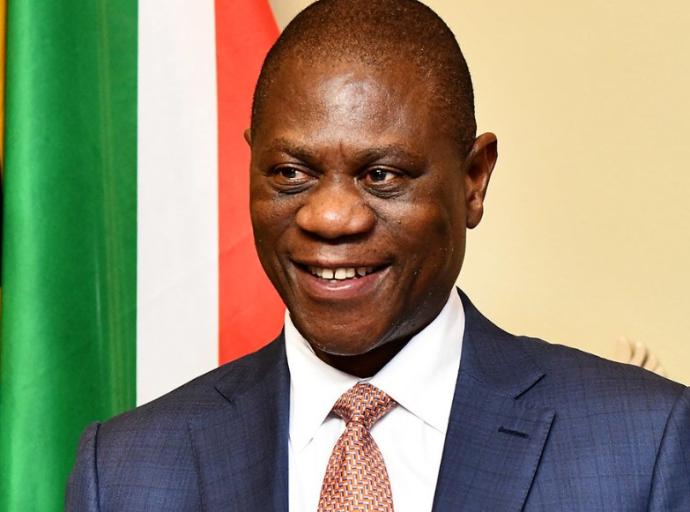
Despite the government’s promise to conclude the National Dialogue in the first half of 2026, Deputy President Paul Mashatile has indicated that it may take place after the local government elections.
Mashatile said this during the 2026 National Dialogue Steering Committee (NDSC) induction session on Saturday.
The two-day induction, held at Unisa’s Muckleneuk main campus in Pretoria, concluded on Sunday afternoon.
The induction took place to formally prepare the 99-member committee for its role in leading a nationwide consultative process and it followed a handover from the Convention Organising Committee.
The steering committee is tasked with outlining the practical roadmap and phased plan for dialogues across the country.
The induction session of the National Dialogue team consisted of the Eminent Persons Group (EPG), the NDSC and the Secretariat of the dialogue.
Mashatile is the chair of the Inter-Ministerial Committee on the National Dialogue.
The National Dialogue is convened to address deep-seated national crises like poverty, inequality, crime, and slow economic transformation by bringing all sectors of society together to forge a new, shared vision and social compact for the country's future, moving beyond talk to practical action and rebuilding trust.
The first session of the National Dialogue, known as the First National Convention, convened from August 15 to 16, 2025, at Unisa.
Although there is no clear date, the second session was planned to be held in the first half of 2026.
Mashatile, through his spokesperson, Keith Khoza, said the process leading to the dialogue will require a huge effort to onboard society broadly.
He added that, given the task at hand, it may require that the actual dialogue may take place after local government elections.
The specific election date has not yet been announced, but the window is determined by the five-year term of the current councils, which officially ends on November 1, 2026.
Mashatile said the reasons behind the decision are that the public will be involved in the election, including a voter registration campaign.
“Secondly, the dialogue must be orchestrated to reach the lowest levels of society. This means both responsibilities will be demanding. Consequently, at a certain point, the dialogue work will be paused in favour of election work,” he said.
The total cost of the National Dialogue initiative is projected to be R450 million, with R270m funded by taxpayers via the Department of Planning, Monitoring and Evaluation (DPME) and the remainder from the private sector.
Mashatile said even though there is a budget allocated for the process, the government will allocate necessary resources.
“How resources are utilised must be transparent and there should be proper accountability and responsibility,” he said, adding that the government is committed to seeing the work of the dialogue completed.
He said the discussion of what was discussed in the closed session will be divulged through dialogue structures.
The induction, according to the committees, offered critical inputs, key reflections and handover reports between the structures.
“We were reminded about the intention behind structures, how they are intended to work together and what is expected from each, in the dialogue process,” read the National Dialogue page comment on X, adding that communication that prioritises clarity and verified information can be expected.
Meanwhile, President Cyril Ramaphosa has urged the newly inducted steering committee to ensure that the “significant initiative” remains a citizen-led process that is inclusive and well organised.
Ramaphosa said the citizens must be able to freely participate as individuals, in organised formations and through representative bodies.
“The people of this country need to take ownership of this process,” he said.