Free State Targets Surgical Backlogs
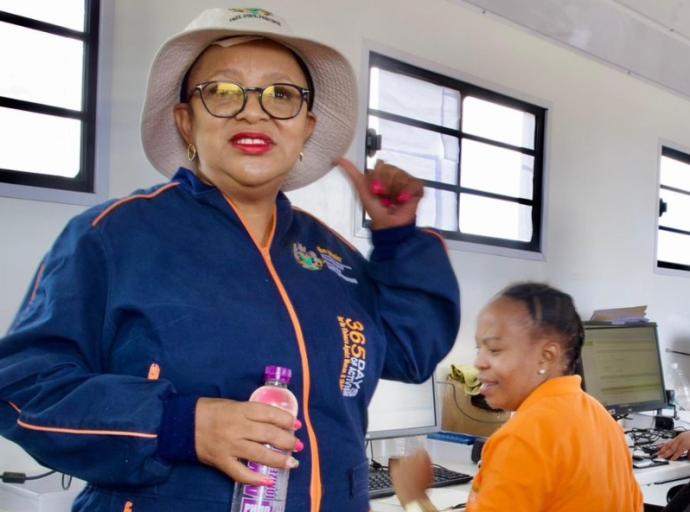
The three-day Cataract Marathon, held over the weekend at Boitumelo Regional Hospital in Kroonstad, was a great success, with over 100 patients receiving treatment.
Screening was conducted last week Friday with cataract operations scheduled for Saturday and Su...
North West Premier Lazarus Mokgosi has declared 2026 the “Year of Decisive Action to Fix Local Government and Transform the Economy,” unveiling an aggressive turnaround strategy aimed at restoring collapsing municipalities and improving service delivery across the province. Opening the provincial legislative year on 26 February 2026, Mokgosi committed to ensuring stable, functional municipalities ahead of the upcoming Local Government Elections, while pledging full support to the Electoral Commission to deliver free and fair polls. “Municipalities are the closest sphere of government to our people. They affect daily lives directly and serve as the practical base for economic activity,” Mokgosi said, referencing Section 153 of the Constitution, which mandates municipalities to promote social and economic development. He stressed that fixing local government means restoring administrative functionality to meet basic community needs and create an environment conducive to business growth and job creation. “We must improve water provision, electricity supply, refuse removal and road maintenance,” he said. The Premier highlighted improvements in provincial governance, noting that nine of eleven departments received unqualified and clean audit outcomes in the last audit cycle. All senior managers have complied with financial disclosure requirements, a move aimed at strengthening ethical leadership and preventing conflicts of interest. Performance agreements have been signed by Executive Council members, with political consequence management promised for non-performance. Several cases involving government and municipal officials are under investigation, while others are before the courts. On finances, Mokgosi reported that the province spent 98% of its allocation from National Treasury and expects no funds to be returned to the national fiscus this financial year. A province-wide Smart-Gov Monitoring and Evaluation Dashboard will be launched at the start of the 2026/27 financial year, integrating all departments into a single real-time oversight platform to track expenditure, performance and service delivery outcomes. Encouragingly, municipalities such as Moses Kotane, Taung and JB Marks improved from qualified to unqualified audit opinions. Disclaimer audit outcomes have dropped dramatically from nine municipalities in 2020/21 to just one — Ditsobotla — in 2024/25. However, Mokgosi admitted that instability has devastated some municipalities. He described Ditsobotla as a “textbook example” of how poor governance destroys local economies, erodes revenue and worsens unemployment. To strengthen struggling municipalities, the province will invoke Section 154 of the Constitution to enhance capacity in waste management and road maintenance. Ditsobotla and Matlosana are priority areas, with support from SANRAL and farmers’ organisations. Remedial action plans are underway, alongside Section 106 investigations into alleged maladministration at Matlosana, Madibeng and Tswaing. Eskom will assist municipalities battling load reduction through energy efficiency and demand management grants. Through the “Adopt a Municipality” initiative, Ramotshere Moiloa has signed a Memorandum of Cooperation with Infrastructure South Africa. Over the next 24 months, the partnership aims to fast-track infrastructure development, boost revenue collection and address maintenance backlogs. Water and sanitation remain a major priority. The province has allocated R300 million for water and sanitation projects, alongside R1.9 billion for bulk water supply initiatives in Madibeng, Ratlou, Mahikeng and Ramotshere Moiloa. Mokgosi apologised to residents affected by delays, citing vandalism and criminality as contributing factors. Cases have been reported to the South African Police Service for investigation. “The people of North West must see change,” he said. “We will not only listen — we will deliver.”
Premier Zamani Saul warns that without urgent transmission upgrades, the province’s green economy ambitions could stall.
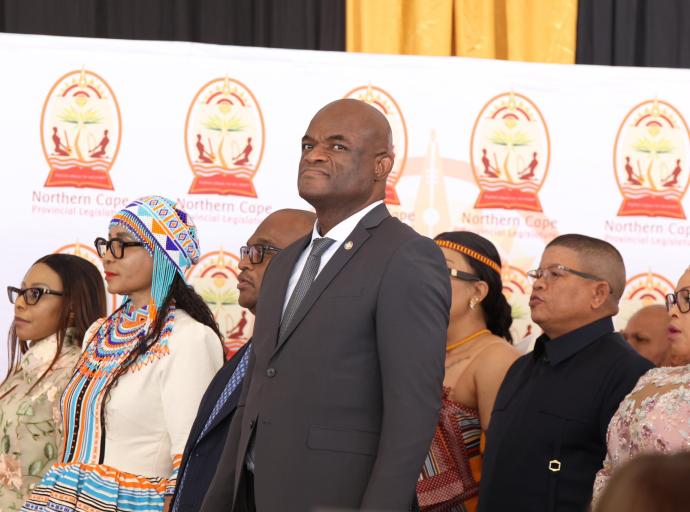
orthern Cape Premier Zamani Saul has committed his administration to an aggressive transmission infrastructure overhaul, warning that without urgent upgrades the province risks losing billions in renewable energy investment. Delivering his 2026 State of the Province Address, Saul acknowledged that while the Northern Cape has cemented its position as South Africa’s renewable energy powerhouse, inadequate grid capacity has emerged as the single biggest obstacle to further growth. “We are producing clean energy at scale, but our ability to transmit that power to the rest of the country is constrained,” Saul said. “Generation without adequate transmission infrastructure is like building a dam without pipelines.” The province hosts some of the country’s largest solar photovoltaic and wind projects under the Renewable Energy Independent Power Producer Procurement Programme (REIPPPP). Yet much of its transmission network was originally designed to serve sparsely populated rural communities — not to evacuate massive volumes of electricity generated by utility-scale renewable plants. Why the Grid Is Constrained Saul said the transmission backlog stems from decades of underinvestment in high-voltage infrastructure, combined with the rapid expansion of renewable projects in recent years. “The grid was not built for the scale of renewable energy we are now attracting,” he said. “We have reached a point where new projects cannot connect because the transmission lines are full.” Bureaucratic delays, environmental approval processes and funding limitations have compounded the challenge. As a result, several renewable energy projects have faced connection delays, slowing job creation and dampening private sector momentum. The constraints carry broader economic risks. Investors require certainty that once generation capacity is built, it can be connected to the national grid without delay. “If we do not resolve transmission bottlenecks, we risk undermining investor confidence. That is not a position we can afford to be in,” Saul warned. Strategic Partnership with Eskom Central to the province’s response is a strengthened partnership with Eskom, which manages South Africa’s transmission network. Saul confirmed that Eskom has committed to expanding and modernising key transmission corridors across the Northern Cape. “We are working closely with Eskom to accelerate the rollout of new transmission lines and substations,” he said. “This includes strengthening the backbone network to integrate future renewable projects.” Government will align provincial planning with Eskom’s Transmission Development Plan to ensure infrastructure is built ahead of demand rather than in reaction to crisis. Saul also signalled support for reforms that could enable greater private sector participation in transmission investment. In previous addresses, Saul repeatedly positioned the Northern Cape as the country’s “renewable energy frontier.” In 2024, he described grid expansion as “non-negotiable” if the province was to maintain its competitive edge. Last year, he linked unlocking transmission capacity to industrialisation opportunities tied to green hydrogen, battery storage and renewable manufacturing. This year, that focus sharpened, with transmission upgrades framed as both an economic imperative and a service delivery priority. “Reliable electricity is not just about megawatts; it is about dignity, opportunity and stability,” Saul said. “A strengthened grid supports households, enables business growth and anchors our green economy ambitions.” Accountability and Execution To fast-track delivery, a dedicated intergovernmental task team will coordinate between provincial departments, Eskom and independent power producers. The team will monitor progress, remove administrative bottlenecks and accelerate approvals where possible. “We cannot allow red tape to delay infrastructure that is vital to our future,” Saul said. “Timelines must be met, and there will be accountability where commitments are not honoured.” Transmission projects are capital-intensive and often take years to complete — a reality Saul acknowledged. However, he insisted that failing to act would be more costly in the long run. “The cost of not investing is far greater than the cost of building,” he said. “If we act decisively now, the Northern Cape will remain at the forefront of South Africa’s energy transition.” As implementation begins, residents and investors alike will be watching to see whether the province can convert its renewable energy advantage into sustained economic growth, improved service delivery and longterm energy stability. For Saul, the message was unequivocal: the Northern Cape’s green economy ambitions hinge not only on abundant sunlight and wind — but on steel towers and transmission lines capable of carrying that power to the nation.
Suspended CEO’s appointment reignites debate over rehabilitation, accountability, and public trust in healthcare leadership
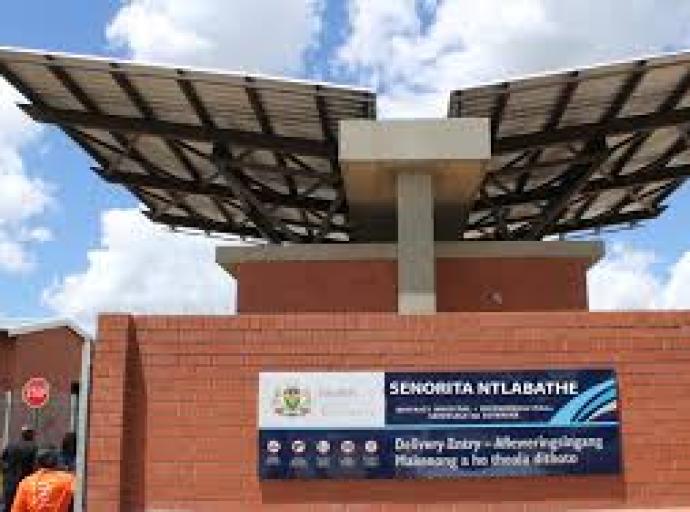
The suspension of Zongezile Adam Zumane, CEO of Sinorita Nhlabathi Hospital, has ignited a nationwide debate over fairness, rehabilitation, and whether individuals with criminal convictions should occupy senior positions in public institutions. Zumane, appointed to lead the Ladybrand-based hospital in July 2025 despite a prior fraud conviction, now faces scrutiny amid allegations of political patronage and governance concerns. His appointment has sharply divided public opinion and placed the Free State Department of Health under renewed examination. Critics argue that entrusting a convicted fraud offender with the leadership of a public healthcare facility — responsible for managing taxpayer funds and delivering essential services — undermines public confidence in government institutions. For many, the issue is not only about legality, but about ethics and optics in a sector already grappling with systemic challenges. Supporters, however, contend that the matter raises broader constitutional and moral questions: if rehabilitation is a cornerstone of South Africa’s justice system, should individuals who have served their sentences be permanently barred from positions of responsibility? Corrections and rehabilitation specialist Singabakho Nxumalo cautioned against blanket disqualification based solely on past convictions. “Our correctional and rehabilitation systems are designed to reintegrate individuals into society. Denying employment or leadership roles indefinitely can defeat the purpose of rehabilitation and perpetuate cycles of marginalisation,” he said. Nxumalo emphasised, however, that context is critical. “Healthcare leadership carries immense responsibility and requires public trust. Authorities are justified in weighing past convictions against the demands of the position and ensuring safeguards and oversight are in place.” Legal analyst Advocate Nthabiseng Dubazana echoed the need for balance. “It is possible to integrate rehabilitated individuals into leadership roles provided robust monitoring, accountability mechanisms, and demonstrated competence exist. Society must reconcile its fear of past wrongdoing with evidence of rehabilitation.” Public sentiment remains deeply divided. Some community members express discomfort at the idea of a former fraud convict overseeing hospital operations and finances. Others argue that once a sentence has been served and rehabilitation demonstrated, continued exclusion contradicts the purpose of the correctional system. Free State Premier Maqueen Letsoha-Mathae has firmly rejected suggestions that she should bear responsibility for the appointment, arguing that Zumane’s employment within the provincial health department predates her tenure. Letsoha-Mathae noted that Zumane had been working at Winburg Clinic following his release from prison and was already part of the provincial health system before she assumed office. She described it as misleading to attribute his appointment solely to her administration. “Why do you now see that Zumane has been appointed to the government?” she asked, questioning why the issue had not been raised under previous administrations. While stating that she does not wish to clash with the media, the premier expressed frustration at what she perceives as selective scrutiny. She maintains that Zumane’s presence within the provincial health department must be understood within the broader context of decisions taken before her leadership. As investigations continue, the controversy has evolved beyond a single appointment. It now serves as a litmus test for how South Africa balances the principle of second chances with the ethical and governance standards expected of public office-bearers. At its core lies a difficult question: can a person with a criminal past lead a public institution with integrity — and what safeguards are necessary to ensure that public trust is not compromised? The outcome may shape not only the future of one hospital, but the broader national conversation on accountability, rehabilitation, and the boundaries of redemption in public life.
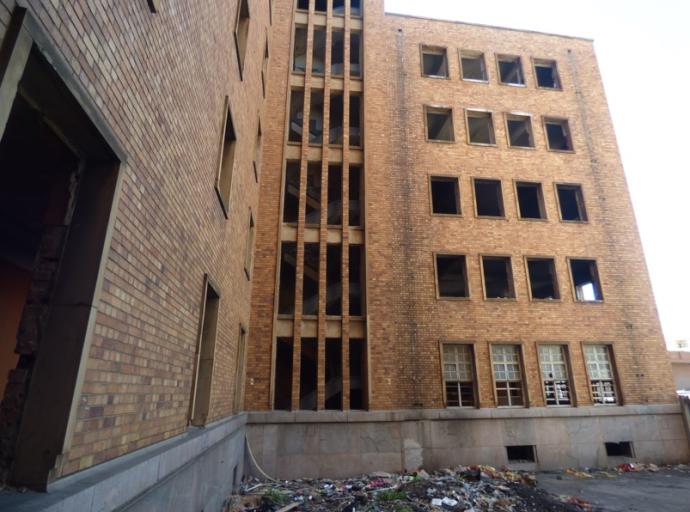
Behind crumbling walls, rusted gates, and broken entrances, a hidden city is quietly growing. In buildings long forgotten by their owners and written off by officials, homeless people — and in some cases suspected criminals — have carved out makeshift homes, dividing rooms with cardboard and turning abandoned offices into fragile shelters. For the homeless, these structures offer protection from the streets, crime, and harsh weather.
For government and law enforcement, they are ticking time bombs — hubs of illegal electricity connections, fire hazards, overcrowding, and alleged criminal activity. Inside these decaying buildings — deep in the heart of the Free State’s capital, Bloemfontein — lies a stark reflection of a city grappling with urban decay and a worsening homelessness crisis. The Journal News team this week visited the old Post Bank building on the corner of Oos Burger and Selborne Ave in the CBD. What met us was overwhelming. A suffocating, putrid smell clung to the air long before we stepped fully inside. Shattered windows gaped open like broken teeth. Paint peeled from the walls in long, tired strips, resembling old scars. Trash lay scattered across the floors, and a heavy silence hung in the corridors — unwelcoming, unsettling, and deeply disturbing. With no running water, electricity or functioning sewer system, about 20 homeless people and drug users have formed a makeshift community inside the building — co-existing in a world they have designed to suit their survival, even though it is far from habitable. For 32-year-old Thabiso Mokhethi from Botshabelo Section E, the building has been home for him and his girlfriend since last year. After years of living on the streets due to addiction, he says this is the closest thing to stability he has known. “It is not easy living here, but it’s better than being on the streets and sleeping anywhere you can hide your head. In here, at least I can wake up, fetch water and bathe, or start a fire to cook because we don’t have electricity,” he said. Mokhethi admits he can return home whenever he chooses, but for now, he has accepted this life and its hardships.
Crime within the building, he says, is rare among residents. “We trust each other. Problems only start when outsiders come in and steal from us.” He survives by washing cars and assisting with parking in the CBD. When the old Post Bank building shut its doors years ago, no one imagined it would be stripped of its dignity — reduced from a symbol of economic activity to a shell of its former self. Duda Ntemi has lived in the building for two years, after dropping out of school in Grade 11. He says residents feel unfairly targeted. “We are always the first suspects when something happens around here. When police come, they are aggressive and don’t give us the benefit of the doubt,” he said. “Winter is cold here, but we make it work. We just hope the municipality redevelops this place. In a way, we are the ones preventing it from falling apart.” For nearby businesses, however, the building represents more than neglect — it represents loss. “Our businesses suffer because customers are scared to come here. Some get robbed. The smell is unbearable, especially during windy or rainy days. It’s a nightmare, but we are here for our bread and butter,” said Boniswa, a local businesswoman. However, for law enforcement, the challenges created by unoccupied buildings are huge and complex. According to Free State police spokesperson Sergeant Mahlomola Kareli, the number of vacant buildings — particularly in the CBD — is rising steadily, creating growing challenges for law enforcement. “The number of vacant buildings, especially in the CBD, is increasing by the day. In many instances, owners only realise something is wrong when they discover their buildings have been broken into and then open cases of theft,” Kareli said. He added that one of the major concerns is the unofficial occupation of these properties. “You often find that buildings are being occupied without the owner’s knowledge. In some cases, the owner is completely unaware that people are living inside,” he said. Last week, the Mangaung Metropolitan Municipality hosted a Safer City Indaba to address service delivery challenges. During the event, Free State Premier Maqueen Letsoha-Mathae raised concerns about abandoned buildings in the city. She called on the municipality to fast-track the allocation of residential land, repurpose unused properties and partner with investors to unlock economic activity and create jobs. Something is haunting about these abandoned buildings. They carry the city’s layered history — reminders of a time when the CBD thrived. Today, they stand as monuments to neglect, symbols of a service delivery crisis that continues to reshape the face of Bloemfontein.
My brother and colleague, Tshepo Mokoka, penned a provocative and necessary article which he titled, “Second Chance or Second Betrayal”. The article was published on one of the local online platforms called Insider Chronicle.
The article asks the kind of question that unsettles the comfortable and confronts the sentimental. It is sharp. It is emotionally honest. It reflects a real fear in our communities that trusting someone who once violated their trust might invite further harm.
And yet, precisely because I respect him, I must disagree.
The article gives us a memorable line that “we ought to be wary of the man who burned down a house, demanding we trust him with matches.” It is poetic. It lands emotionally. But unfortunately, poetry is not policy. And emotions, however understandable and justified, cannot trump our constitution.
Here is the question we must rather ask: if the man burned down the house and the court sentenced him, he served that sentence in full and suffered the long cooling-off period after serving it; what then?
Fortunately, the Constitution of South Africa does not believe in permanent exile. It does not create a caste of the eternally condemned. Section 10 guarantees human dignity. Not selective dignity. Not dignity for the unblemished. Human dignity.
Section 12 guarantees the right to freedom and security of the person. Section 22 affirms the freedom to choose a trade, occupation or profession. These clauses are not meant for decorative purposes. They are a statement of national intent that punishment has limits. If prison is not the limit, then what is? Social death?
The article fears a “second betrayal.” I understand and agree with that fear. Communities ravaged by crime cannot afford to be naive. But we must also be careful not to commit another betrayal; the betrayal of our constitutional promise.
We are not being cautious when we say to an ex-offender that “you have served your time, but you will never work here. You will never live here. You will never belong here”. We are simply being contradictory, populist and dangerously scandalous.
We demand rehabilitation in theory and sabotage it in practice. If you deny a person lawful means of survival, you are not preventing crime. You are incubating it. A man who cannot access work, housing or community will irk out a living where he can. Survival does not wait for moral approval. Then we will gather at conferences and lament recidivism, as though it descended from the heavens.
The Constitution progressively imagines something braver than suspicion. It imagines restoration. It imagines that once a debt is paid, the slate is cleared in law even if memory lingers in emotion. We cannot run a democracy on perpetual vengeance, the madness of serving a sentence until Jesus comes back. That road leads to a society of permanent outcasts and outcasts are not stable citizens. They are people with nothing to lose.
Reintegration is not softness. It is self-preservation. It is saying that we will not create a subclass of the inherently unwanted. It is saying we will not undermine our own constitutional values simply because we are afraid.
My brother Mokoka raises the alarm about matches. I raise the alarm about the slow-burning and unending fire of permanent retribution. I have also just come across another article that brands Mr Zumane as a “convicted fraudster,” as if he must permanently be chained to his lowest moment. See, we even refuse to recognise him as an ex-offender seeking reintegration. Such lexicon is casually discarded in favour of labels that deny him redemption and humanity. If we deny ex-offenders lawful lives, we should not be surprised when unlawful ones return to haunt us.
The Constitution gave us a path out of that cycle. The question is whether we are brave enough to walk it or we choose the easy path of pandering to a populist pulse.
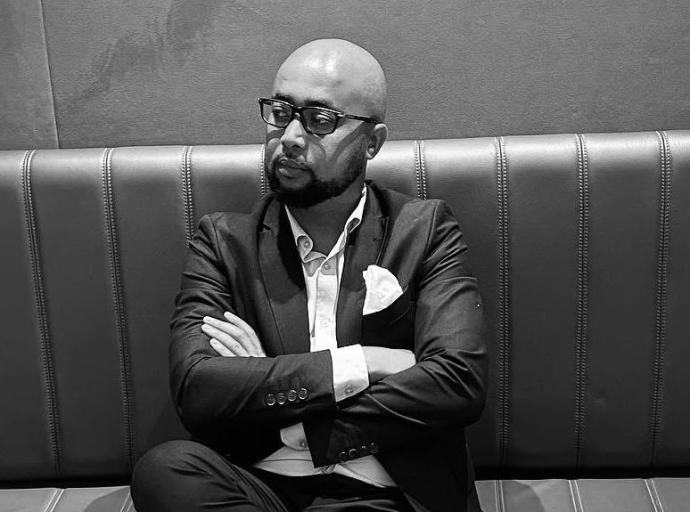
*Tshediso Mangope moonlights as a social commentator in his spare time and writes in his own personal capacity…
** The views expressed do not necessarily reflect those of this publication (Journal News).
It took Nelson Mandela to cease existing for his oppressors to finally acknowledge the contribution he made to the world.
As one of them bleated shortly after Madiba took his last breath on 05 December 2013, “He (Mandela) was a human, human man” he said. Yes he was. Everybody with a functional brain knew that. It was only our oppressors who chose to believe that a man, who constantly advocated for peace, was a violent, deranged terrorist. The irony of a violent regime seeing our leaders as nothing more than vicious killers is laughable.
Thirteen years after we laid our beloved Madiba to rest, his spirit remains with us. He has indeed multiplied. But so have some of those who previously oppressed and dehumanized us. They have replaced the loathed army and police uniform with suits. The guns, well at least away from the public glare, have been replaced by gadgets to wage a relentless war against this government. Sadly, some of our people have joined in and chosen the side of our former oppressors. They have cuddled up to Madiba’s jailors and formed a united force to cripple our government.
Nothing, it would appear, could ever please them. Except, of course, the collapse of government. Despite our best efforts to improve the quality of the lives of the people of this province, they continue to look for faults. That became apparent during the State of the Province Address in Bloemfontein on Friday, 20th February 2026. They even go as far as to ridicule our efforts to give our people a better life.
When this government handed Nkgono Lucy Nkosana of Ezibeleni, in Zastron the keys to her own house, all the right-thinking people of the Free State province were happy for her.
It was the same when Ntate Litsiki Tello of Backenpark in Bethlehem and Mme Mamokete Emily Motloung of Bohlokong also received keys to their newly built houses. We cheered.
We were all happy for them. Finally, what we envisioned when the Congress of the People sat and drafted the Freedom Charter was coming to life. Or at least that is what we thought. Instead, our efforts have been met with ridicule, scorn and insults.
One could be forgiven for thinking that the people who have perfected the art of promising heaven on earth to our people, would at least acknowledge, if not support, our efforts. But no. Not them. Instead of applauding this government for providing shelter for Mme Nkosana, they would rather criticize.
Bokang Mokubung has received a bursary from the Free State Provincial Government, but opponents of progression are so blinded by their dislike for this government that jeers for Bokang have been muted by their constant rumblings. His namesake Bokang Lehloenya has received over R1 million worth of processing equipment and his product, Motoho, is sold in big retail stores. Yet our ‘friends’ who constantly talk about the emancipation of our people, cannot even acknowledge the tireless efforts of government.
Perhaps there is something I am missing. Maybe it is not that they cannot see the good that we have done. Maybe, just maybe, they cannot stomach the fact that this government is led by the people whom they once oppressed. Maybe the thought of seeing the people who used to shiver at their mere sight makes them sick to their very core.
Their partners on the other hand are perhaps sickened by the fact that, despite their efforts and disruptive ways, the people of the province have seen right through them and chosen leaders with a proven track record of governing. Maybe?
Our province has just emerged from a difficult period and with the little resources we have, we are slowly beginning to rebuild. We are restoring the dignity of our people. We do not expect to be congratulated, not least by our opponents, but the least they can do is to acknowledge the progress we have made.
To the people of our province, we thank you for your continued support and we promise to work hard to build the province we can all happily call home.
*MaQueen Letsoha-Mathae is the Premier of the Free State province.