Free State Targets Surgical Backlogs
The three-day Cataract Marathon, held over the weekend at Boitumelo Regional Hospital in Kroonstad, was a great success, with over 100 patients receiving treatment.
Screening was conducted last week Friday with cataract operations scheduled for Saturday and Su...
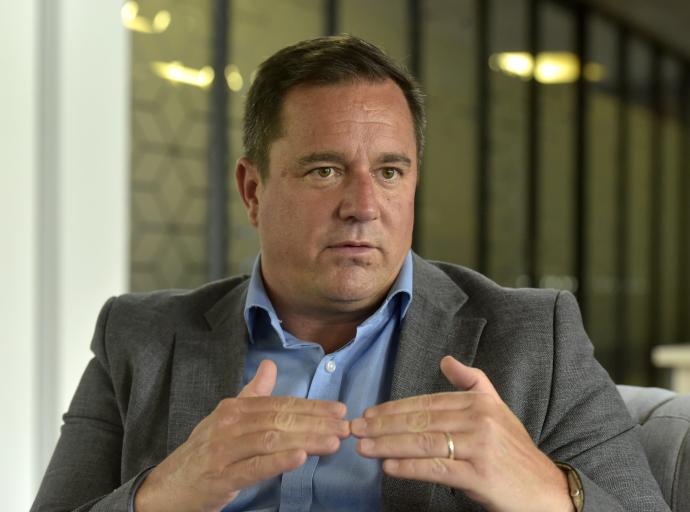
Internal tensions within the Democratic Alliance are intensifying ahead of the party’s April federal congress, with senior leaders coalescing around Western Cape agriculture MEC Ivan Meyer as a possible successor to John Steenhuisen in the national agriculture portfolio.
Several party figures say momentum is building for a broader reshuffle of the DA’s cabinet positions in the Government of National Unity, driven largely by dissatisfaction with the handling of the foot-and-mouth disease (FMD) outbreak and concerns about the party’s credibility among farming communities.
The outbreak, which has disrupted livestock movement and unsettled export markets, has become a focal point for internal criticism. Insiders argue the crisis has dented confidence in the agriculture department and weakened Steenhuisen’s standing, particularly after he confirmed he would not seek a third term as DA federal leader.
One senior party leader, said there was now “broad agreement that agriculture needs a reset,” arguing the response to FMD had harmed the party’s reputation. The disease has been declared a national disaster, with agricultural organisations warning of serious economic consequences if it is not contained.
Steenhuisen has defended the department’s response, noting the outbreak predates his tenure and pointing to improved coordination with provinces. He also acknowledged the strain on producers, saying: “To our farmers who have watched their livelihoods disappear before their eyes, I hear you,” while pledging that the government would “stop at nothing” to eradicate the disease.
Despite this, farmers and industry bodies remain uneasy. AgriSA chief executive Johann Kotzé warned of “the cumulative economic impact” if the outbreak is not swiftly brought under control, particularly for rural towns reliant on livestock.
Within DA structures, Meyer is increasingly seen as the frontrunner to assume the portfolio once a new party leader is elected. Supporters cite his academic background in agricultural economics and experience in the Western Cape, saying he could help rebuild confidence with producers and export partners. Attempts to obtain comment from Steenhuisen and the DA were unsuccessful.
Reports indicate provincial leaders from Gauteng, North West and Limpopo have discussed his candidacy in internal forums. The proposed reshuffle could also affect other DA ministers in the Government of National Unity, including Siviwe Gwarube (Basic Education), Dean Macpherson (Public Works and Infrastructure), Leon Schreiber (Home Affairs), Willie Aucamp (Forestry, Fisheries and the Environment), and Solly Malatsi (Communications and Digital Technologies).
Publicly, the party has sought to downplay talk of succession, projecting an image of unity. However, recent media engagements by some members suggest a more complex internal picture. Earlier in February, IOL reported that Steenhuisen’s future as a minister was uncertain after he announced he would not contest the party leadership.
Political analysts warned that the decision could weaken his position in government. Kedibone Phago, a professor at North-West University, argued that relinquishing the party’s top post reduces Steenhuisen’s leverage within the GNU.
“Stepping down as DA leader in order to focus on being a minister actually weakens his position. Without control over the party, he won’t have influence over who serves in government and he can easily be reshuffled,” Phago said.
Another analyst, Dr Levy Ndou, said South Africa’s political dynamics make it difficult for non-party leaders to retain senior executive roles.
“I don’t see him remaining a minister if he is no longer part of the top leadership,” Ndou said. “In South African politics, cabinet positions are typically reserved for party leaders. If Steenhuisen stays on, the DA would be doing something we have not seen before.” IOL NEWS
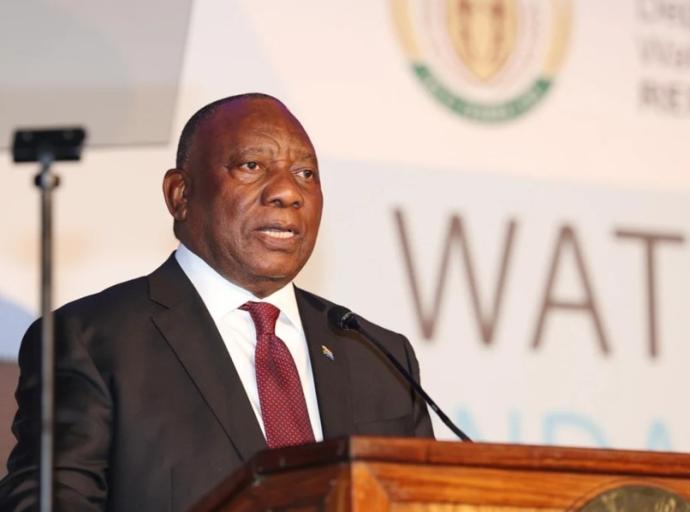
President Cyril Ramaphosa has called on the youth to consider the South African National Defence Force (SANDF) as both a career and a calling.
Ramaphosa was speaking at Armed Forces Day, held in Thohoyandou, Limpopo, on Saturday.
The president emphasised the country's need for skills in engineering, medicine, technology, and strategy, urging young people to serve for the love of their country and help build a better nation.
Addressing soldiers, the president commended their role in protecting the borders and serving communities, encouraging them to continue flying the national flag high on all missions.
“To the young people present here today and watching across the country, by serving your people, you build your own future, and you contribute to a better nation. To our soldiers, you remind us that through our collective resolve as a nation, we are able to rise above any challenge we might face.” EYEWITNESS NEWS
Gauteng Premier Panyaza Lesufi is set to deliver the State of the Province Address (SOPA) on Monday.
It is an annual event where the premier looks back on government’s performance in the past year and outlines future objectives.
This year’s edition will take place at the Nasrec Expo Centre in Johannesburg, which the speech expected to start around 6pm.
One of the consistent calls in Lesufi's previous three addresses; is for the military to be deployed in the region to fight Zama Zamas.
That’s no longer an issue as the president has already signed off on it.
Lesufi also used the SOPA to announce the Gauteng government’s temporary work initiatives for unemployed young people.
However, Lesufi was left with egg on his face last year after the Gauteng crime prevention wardens programme unofficially known as Amapanyaza was deemed unlawfully constituted by the Public Protector.
The DA in Gauteng, which is the official opposition, has urged the premier to drop what it calls his "pie-in-the-sky" ideas and focus more on the basics of provincial government.
Meanwhile, the uMkhonto weSizwe Party is planning to march from Soweto to the Nasrec Expo Centre where it will demonstrate against the event, which it calls useless and a platform for empty promises. EYE WITNESS NEWS
President Cyril Ramaphosa’s proposed R54 billion performance-linked incentive to rescue failing municipal water, sanitation and electricity systems is already under scrutiny, with experts warning that money alone will not fix entrenched governance failures.
Announced during the 2026 State of the Nation Address, the six-year funding package is designed to pressure metros to reform struggling utilities and reinvest revenue into maintaining and upgrading critical infrastructure.
Ramaphosa also unveiled a National Water Crisis Committee — which he will personally chair — to coordinate interventions and deploy technical experts to distressed municipalities.
In a further sign of a tougher stance, criminal charges have been laid against 56 municipalities for failing to meet their water obligations. Municipal managers could also face prosecution in their personal capacities under the National Water Act.
But Professor William Gumede of the Wits School of Governance cautioned that without decisive leadership changes and strict consequence management, the incentive risks becoming “another bailout that disappears”.
He argued that municipal collapse is rooted less in a lack of funding and more in weak technical capacity, political patronage and corruption. Docking salaries, dismissing non-performing officials and clawing back funds from contractors who fail to deliver, he said, are critical steps to ensure reform.
Dr Ferrial Adam of WaterCAN described the allocation as inadequate given the scale of infrastructure decay and the high levels of non-revenue water — treated water lost through leaks, theft or billing failures. She stressed that municipalities must prioritise leak reduction, strengthen financial controls and enforce accountability if the funding is to translate into reliable service delivery.
While Ramaphosa’s intervention signals urgency at the highest level, analysts warn that without firm accountability and sustained oversight, billions more could be spent without restoring water security to struggling communities.
For residents facing dry taps and crumbling infrastructure, the success — or failure — of this plan may determine whether South Africa averts a full-scale municipal collapse or sinks deeper into its service delivery crisis.
The Free State has recorded a notable drop in murder and several serious violent crimes, offering a measure of relief — but a troubling rise in sexual offences and domestic violence is casting a shadow over the gains.
Newly released third-quarter crime statistics for the 2025/26 financial year show a 7.2% decrease in murder cases, with 287 cases reported compared to the same period last year.
According to figures released on Friday by Acting Police Minister Firoz Cachalia, several key violent crime categories in the province showed encouraging declines between 1 October and 31 December 2025.
Assault with intent to cause grievous bodily harm (GBH) dropped by 4.8%, falling from 3,456 to 3,290 cases. Aggravated robbery declined by 10.3%, with notable improvements in specific subcategories. Carjackings fell by 12%, while business robberies decreased by 9%.
Stock theft, a persistent concern in the largely rural province, also recorded a 5.1% decrease, with 1,204 cases reported compared to 1,269 during the same quarter last year.
However, not all crime indicators moved in a positive direction.
Sexual offences, including rape, increased by 2.4%, with 1,112 cases reported — up from 1,086. Domestic violence cases also rose by 3.1%, reaching 2,345 incidents during the quarter.
The rise in gender-based violence remains a serious concern for authorities, particularly as much of the interpersonal violence occurs between individuals who know one another or share households.
Despite the mixed picture, provincial police have intensified crime-fighting operations. A key intervention has been Operation Shanela, a high-density policing initiative targeting violent crime hotspots.
Through Operation Shanela, 12,250 suspects were arrested in the Free State during the reporting period. The operation includes roadblocks, stop-and-search activities, tracing of wanted suspects and compliance inspections aimed at disrupting criminal networks and increasing police visibility.
While the latest statistics reflect measurable progress in certain serious crimes, authorities have cautioned that sustained and coordinated efforts are required to address persistent challenges — particularly sexual offences and domestic violence.
Provincial leadership maintains that crime reduction remains a priority, with ongoing collaboration between law enforcement, community structures and social services aimed at improving safety across both urban and rural communities.