Free State Targets Surgical Backlogs
The three-day Cataract Marathon, held over the weekend at Boitumelo Regional Hospital in Kroonstad, was a great success, with over 100 patients receiving treatment.
Screening was conducted last week Friday with cataract operations scheduled for Saturday and Su...
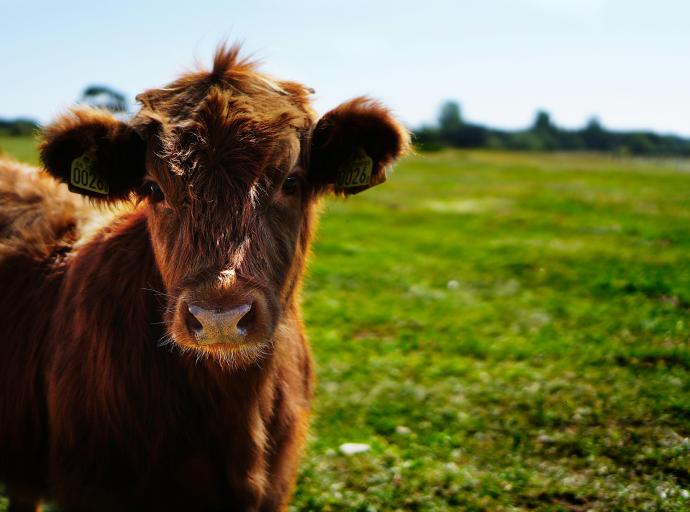
A fast-spreading livestock disease is tearing through herds, sending shockwaves from farm gates to supermarket shelves. With fears of looming price hikes and possible rationing, what began as an agricultural crisis is fast escalating into a national emergency — and political flashpoint.
Foot-and-mouth disease (FMD), a highly contagious viral infection affecting cloven-hoofed animals such as cattle, pigs, sheep, goats and several wildlife species, is threatening the backbone of South Africa’s livestock industry. The disease compromises animal health, slashes productivity and disrupts trade, placing immense pressure on farmers and the broader agricultural economy.
Symptoms include fever, blisters and lesions in the mouth and on the hooves, lameness, reduced milk production, rapid breathing and loss of appetite. While FMD does not pose a direct threat to human health, its economic consequences are severe, particularly for export markets reliant on disease-free certification.
The Free State Department of Agriculture and Rural Development has confirmed 344 active cases across municipalities in the province — a figure that underscores the scale and urgency of the outbreak.
Minister of Agriculture John Steenhuisen has announced that a nationwide vaccine rollout is underway to curb the spread of the virus and safeguard the country’s FMD-free status, a critical requirement for the resumption of export trade.
Farmers have been urged to comply strictly with control measures, including isolation of infected animals, vaccination, culling where necessary and the enforcement of stringent biosecurity protocols.
For many in the sector, South Africa’s return to FMD-free status hinges on the swift distribution of vaccines — and the collective discipline of the agricultural community to contain the outbreak before its economic bite deepens.
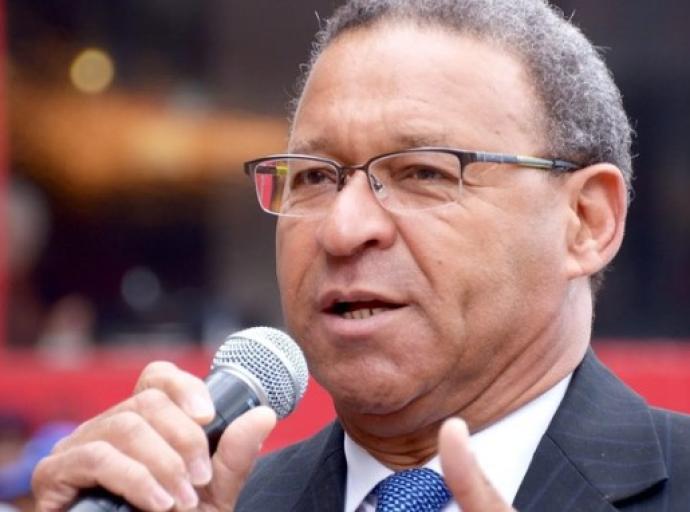
Not only has renowned politician and anti-apartheid activist Reverend Dr Allan Boesak said that President Cyril Ramaphosa should fire officials implicated in Parliament’s Ad Hoc Committee and Madlanga Commission, but he would also advise the president to resign.
In an interview with Newzroom Afrika on Sunday, Boesak said Ramaphosa should fire officials who have been implicated in criminal activities brought to light at the commission, chaired by Justice Mbuyiseli Madlanga.
The commission identified prima facie evidence of criminal conduct and corruption, prompting immediate referrals for criminal investigation, urgent prosecutorial decisions, and disciplinary action.
Parliament’s Ad Hoc Committee have been investigating allegations of police corruption and political interference ventilated by KwaZulu-Natal Provincial Police Commissioner General Nhlanhla Mkhwanazi.
Boesak criticised how the president has kept the interim Madlanga report private, and only relayed certain bits of information through his own perspective, instead of making it public.
He said that he would tell Ramaphosa how “everybody who has been involved in criminal action that's in your purview, that's from the president's office, right down, fire them”.
“I would even say to the president, ‘You have failed us at so many levels and in such a deep, deep, deep way in terms of what your office expects of you, and what your people expect and demand of you, that you should begin by resigning yourself.
“Let us start from over,” Boesak said. “This government that we have, immoral as it is, by elevating people who celebrate, and profit, and benefit from genocide…I mean, that just in itself is so immoral, I can't even find the word to speak about it.”
Boesak has said that South Africans should “stop what is happening right now, (and) start from the very beginning”.
“Not just a new conversation about morality, but a new conversation of the way we govern, and the way we respond to our responsibilities, that, in my view, is not just democratically given by our people, but demanded by God."
Political analyst at the University of KwaZulu-Natal, Zakhele Ndlovu, said Boesak has a point, and how, at this stage, Ramaphosa has lost all credibility.
“His reluctance to be transparent regarding the interim report of the Madlanga commission suggests that he's got something to hide and is protecting certain individuals. Boesak is right to question the way Ramaphosa governs. His administration presided over the looting of the Covid-19 funds. His administration also allowed rioters in 2021 to run amok,” Ndlovu said.
“He spoke about 12 instigators of the riots, but not even one of those instigators has been identified and prosecuted. The cloud remains hanging over his head regarding Phala Phala.
“Ramaphosa needs to be transparent and come clean. He needs to stop protecting wrongdoers such as Senzo Mchunu and Shadrack Sibiya,” Ndlovu said.
“His handling of the water crisis shows that he is out of touch. Similarly, deploying soldiers to crime-infested areas is a bad idea. He needs to fix the police force. At this rate, Ramaphosa is making the Zuma presidency look good.”
Another political analyst, Nkosikhulule Nyembezi, said many South Africans are crying betrayal over the ANC’s reluctance to implement bold measures to fight corruption and maladministration.
“Many Struggle veterans are not adding their voices to that charge in public, but they privately agree. There is astonishment that President Ramaphosa and many in the ANC leadership blithely conceded to several administrative hurdles by subverting good governance and ethical leadership, instead of removing from government positions individuals implicated in corruption and maladministration,” Nyembezi said.
“There is horror at Ramaphosa’s subsequent suggestion that the only tangible action he is taking in implementing the commission’s findings is to direct further investigation, as if the bloody slate of corruption crimes perpetrated by the implicated individuals can simply be wiped clean.”
He added that the biggest surprise is that there are still people who claim to be surprised when Struggle veterans like Boesak speak out.
“We knew that this president and the ANC leaders have a reputation for inaction, even though the party purports to be committed to party renewal. The internal ANC politics is one in which carnivorous, corrupt leaders cut deals with each other, and the smaller ones fall into line or get crushed underfoot.
“If you are genuinely shocked by these developments and Allan Boesak’s comments, I can only assume you have not been paying much attention,” Nyembezi said.
The presidency has been contacted for comment in response to Boesak’s comment, but has yet to respond.
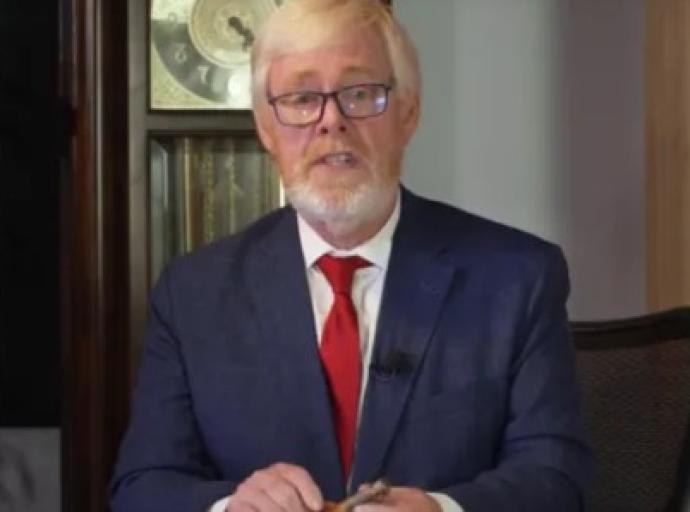
United States ambassador-designate Leo Brent Bozell III has arrived in South Africa and is expected to present his credentials to President Cyril Ramaphosa before formally assuming his diplomatic duties in Pretoria, international news agency Reuters has reported.
His arrival marks a significant moment in relations between Pretoria and Washington, which have experienced strain in recent months over foreign policy positions, trade matters and broader geopolitical alignment.
Under diplomatic protocol, an ambassador formally takes up their post only after their credentials are accepted by the host country’s head of state. Once Ramaphosa receives Bozell’s credentials, he will officially become Washington’s top envoy in Pretoria.
IOL previously reported that Bozell’s deployment to South Africa was imminent following his confirmation by the US Senate in December. His nomination drew attention locally due to his long-standing role in conservative media activism in the United States and sparked debate about how he would engage with South Africa’s government and civil society.
The bilateral relationship has faced tension over several issues, including South Africa’s case at the International Court of Justice and its positioning in global diplomatic matters.
Reuters reported that Bozell’s arrival signals Washington’s intention to maintain direct diplomatic engagement with South Africa, Africa’s most industrialised economy and a key regional player.
Further reaction from the Department of International Relations and Cooperation and political stakeholders is expected as Bozell prepares to formally assume office.
Last month, IOL reported that the US Embassy in South Africa confirmed that Bozell had been sworn in as the United States ambassador-designate to South Africa.
In a statement shared on Facebook at the time, the embassy said it looks forward to working under Bozell’s leadership to advance American priorities and promote “a safer, stronger, and more prosperous America” through continued engagement with South Africa.
"The US Embassy looks forward to working under his leadership to advance American priorities and promote a safer, stronger, and more prosperous America through continued engagement with South Africa.
"He will formally assume his duties following the presentation of his credentials to the Government of South Africa," the embassy stated at the time.
Bozell’s swearing-in follows his confirmation by the US Senate in December, at a time of heightened diplomatic tensions between Washington and Pretoria.
In December, IOL reported that the United States Senate had formally confirmed Bozell as the US ambassador-designate to South Africa.
While Bozell now holds the title of ambassador-designate, he will enter the diplomatic mission in South Africa, recently engulfed in a diplomatic firestorm following the raid at a US "refugee" facility in Johannesburg and the deportation of Kenyan staff from the centre — incidents Washington has labelled as "unacceptable harassment".
Mandate for Confrontation
In October, IOL reported that Bozell had issued a warning that Washington believes Pretoria is moving closer to the People's Republic of China and promised to stop what he called South Africa's "geostrategic drift" in the direction of America's international rivals.
At the time, Bozell promised to "communicate our objections to South Africa's geostrategic drift from non-alignment toward our competitors, including Russia, China, and Iran" if appointed as Washington's top diplomat in Pretoria during his appearance before the US Senate Foreign Relations Committee.
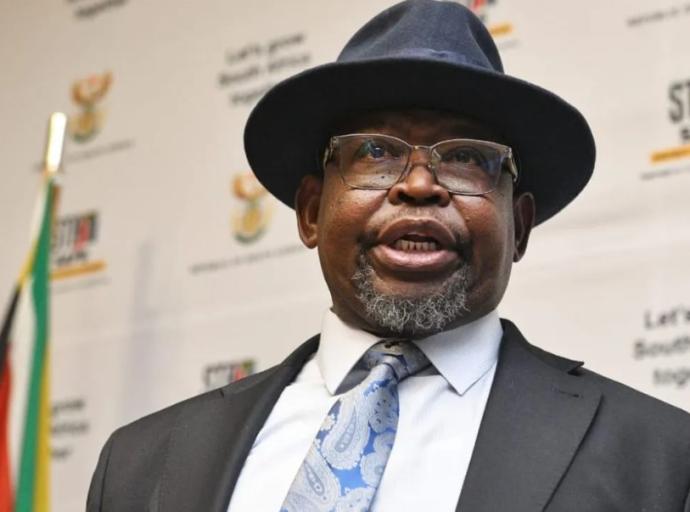
Finance Minister Enoch Godongwana faces one of the most delicate balancing acts of his tenure when he tables the National Budget Review next week Wednesday, tasked with funding an ambitious slate of commitments announced by President Cyril Ramaphosa while safeguarding a fiscus that remains structurally constrained.
In his State of the Nation Address last week, Ramaphosa pledged a sweeping package of interventions aimed at improving service delivery and restoring confidence in a crucial year for local government.
These include deploying 10,000 additional labour inspectors to curb business non-compliance, allocating R2.5 billion to support small and medium-sized enterprises (SMEs), mobilising more than R1 trillion in infrastructure investment over three years, addressing collapsing municipal water systems, strengthening intelligence coordination to tackle organised crime, and deploying the military to assist police in gang-affected areas.
While the policy intent has been broadly welcomed, economists caution that ambition must be matched by credible fiscal execution.
Speaking at the North West University Business School Pitso 2026 on Monday, Sanisha Packirisamy, chief economist at Momentum Investments, noted that the fiscal backdrop has improved modestly in recent months, largely due to favourable commodity prices.
Packirisamy said these dynamics could produce better-than-expected revenue outcomes in the short term, but warned that this remains cyclical relief rather than structural repair.
"We are sitting with a still constrained fiscus. I would say that the fiscal dynamics have turned a bit more favourably in the last couple of months. South Africa has been gifted once again with the commodity price of windfall," she said.
"But it's really not enough for this very long list of competing priorities on the social front for South Africa. The key really is to start including the private sector. Through reform measures such as Operation Vulindlela, which really focuses on the network industries by liberalising some of these sectors, that's really how we are going to anchor a higher growth rate in order to meet some of those socio-economic demands."
Without sustained growth above current levels, Packirisamy said Treasury risks being forced to extract more revenue from a narrow and already stretched tax base.
Analysts broadly expect this year’s Budget to prioritise stricter enforcement and smarter incentives rather than sweeping tax increases. The South African Revenue Service has intensified compliance measures, particularly around provisional tax and capital gains reporting, as government leans more heavily on administrative efficiency to stabilise revenue.
There is increasing consensus among economists that additional tax hikes could prove counterproductive. Instead, relief from bracket creep—where inflation pushes taxpayers into higher tax brackets—has emerged as a potential measure to support households without undermining fiscal discipline.
For the property market, the Budget’s impact will be largely indirect but nonetheless significant.
Dr Andrew Golding, CEO of the Pam Golding, said consumers have reason for cautious optimism as subdued inflation, sustained rand strength, lower fuel prices and the prospect of further modest interest rate relief have eased cost pressures across the economy.
Golding said recent milestones - including the adoption of a lower inflation target, a credit rating upgrade and removal from the Financial Action Task Force grey list - have strengthened South Africa’s risk profile and lowered borrowing costs.
"However, even with a modest revenue buffer, fiscal pressures persist. A rising public wage bill, financially vulnerable state-owned enterprises and growing social expenditure continue to constrain fiscal flexibility," he said.
"Economic growth remains insufficient to significantly expand the tax base, requiring Treasury to balance deficit consolidation with social and political considerations. There is increasing consensus among analysts that further tax increases could prove counterproductive, potentially dampening revenue rather than enhancing it."
Small and medium-sized enterprises sit at the centre of the growth narrative.
In the SONA, Ramaphosa argued that if every SME hired just one additional worker, South Africa could generate three million jobs. Government has committed R2.5bn in funding to support more than 180,000 SMEs, alongside R1bn in guarantees and proposed amendments to the National Credit Act to improve access to affordable credit.
Simone Cooper, head of business and commercial banking at Standard Bank South Africa, said the Budget will be the real test of these commitments.
"Small businesses cannot grow on good intentions alone," she said. "They need funded programmes, streamlined regulations and improved payment cycles to translate policy into economic impact."
Cooper said financial institutions must complement government efforts with accessible funding solutions and advisory support, particularly in regions where entrepreneurial resilience is already evident.
Ultimately, the 2026/27 Budget is expected to adopt a prudent, credibility-focused framework—one that reassures markets while avoiding politically destabilising measures.
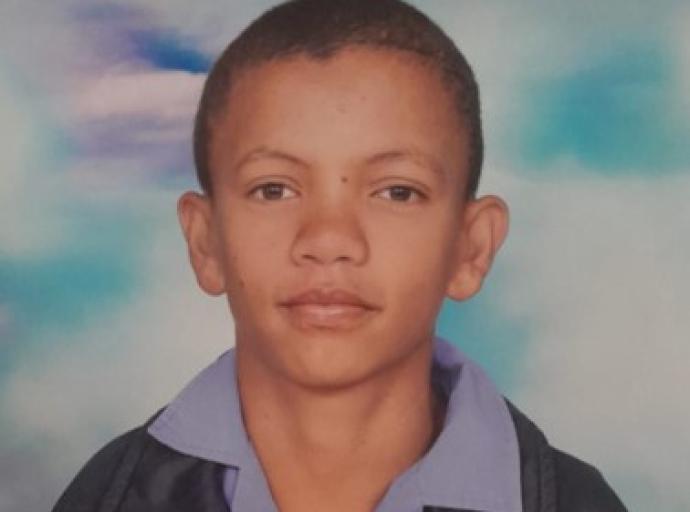
A year later, the family of 14 year old David Waterboer is still searching for him after he disappeared on 7 February 2025 while he was on his way to a sports event in Concordia, Northern Cape.
The South African Police Service (SAPS) from Springbok and Nababeep is offering a R75 000 reward for any information that could lead to the safe return of the teenage boy.
Waterboer was last seen by his mother. He was wearing black shorts, a t-shirt, and navy blue sandals.
The investigation is ongoing, with detectives from the Springbok Family Violence, Child Protection and Sexual Offences Unit and SAPS members working together to find him.
The public is urged to be on the look for David and anyone with information should to contact Captain Whynoma Love at 082 874 4532 or SAPS Crime Stop at 08600 10111.
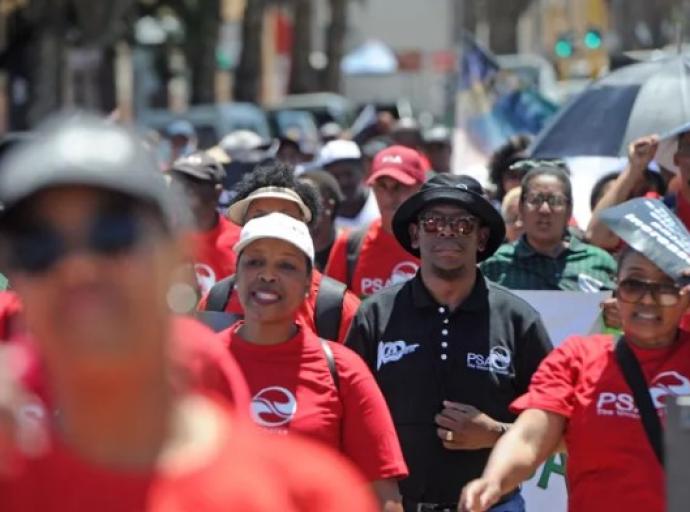
Trade unions in the Public Service Coordinating Bargaining Council (PSCBC), affiliated to the Federation of Unions of South Africa (FEDUSA), and other federations have threatened protest action against the Government Employees Medical Scheme (GEMS) over its recent monthly contribution increases.
GEMS implemented a 9.8 % increase from January 2026.
On Sunday, a coalition of unions, including the South African Policing Union (SAPU) and the Public Servants Association (PSA), condemned GEMS for implementing a 9.8% increase in member contributions, describing the decision as a 'blatant departure from the scheme’s mandate to provide affordable healthcare to its members'.
Paul Sauer, representative of the South African Teachers' Union (SAOU), voiced the frustration of public service workers, stating, "In the past two years, we have been shunned by GEMS. We are now left with no alternative but to embark on protest action to get them to retract or withdraw the increases. Our other demand is that GEMS needs to engage us on a collective agreement to ensure that these increases are reasonable."
FEDUSA spokesperson, Betty Moleya, said this decision comes at a time when public servants continue to face sustained financial pressure due to rising living costs, increased household debt, and stagnant real wage growth.
"The cumulative effect threatens access to affordable healthcare and has direct implications for worker wellbeing and the sustainability of public service delivery," Moleya stated.
Moleya indicated that the recent increases should be understood in their cumulative context, after GEMS implemented a 13.4 percent contribution increase in 2025, a 9.8 percent increase from January 2026, followed by the 9.5 percent adjustment effective 1 April 2026.
He said this will result in a cumulative increase of 23.2 percent over two years, while public servants only received a 5.5 percent salary increase for 2025/26.
"The mismatch between wage adjustments and medical aid contribution increases is clear. Real income is being eroded. Workers are being forced to choose between healthcare and other necessities," Moleya added.
The federation further accused GEMS of disregarding the Regulatory Guidance given by the Council for Medical Schemes, which proposed an average membership contribution increase of 3.3%. As a result, organised labour has called on the regulatory authority to exercise its oversight duties to remedy the situation ahead of the April 2026 increases.
"GEMS proceeded with a 9.8 % increase from January 2026, followed by the 9.5 % adjustment from 1 April 2026. This significantly exceeds the regulator’s benchmark. Organised labour in the PSCBC calls on the regulatory authority to exercise its oversight responsibility to ensure that member interests are protected," the federation stated.
Last month, IOL reported that GEMS had informed public servants’ representatives that it cannot unilaterally reverse the 9.8% increase in 2026 member contributions without approval from the Council for Medical Schemes (CMS), with the insurer indicating that the decrease in the contributions to 9.5% will only be realised in February next year.
According to GEMS, its board of trustees has resolved that the previous recommendation of the 9.8% increase from January 1, 2026, switch to 9.5% if approved by the CMS, is the only implementable option that it can put forward to the PSCBC.