Free State Targets Surgical Backlogs
The three-day Cataract Marathon, held over the weekend at Boitumelo Regional Hospital in Kroonstad, was a great success, with over 100 patients receiving treatment.
Screening was conducted last week Friday with cataract operations scheduled for Saturday and Su...
He was best known for his leading role in the award-winning 2005 film, Tsotsi.
Chweneyagae also starred in various films, including iNumber Number, Zama Zama and the telenovela, The River, where he was notorious for his hilarious role of ‘Cobra’.
His uncle, Mzwakhe Sigudla, says he was having difficulty breathing when he passed away.
Sigudla says, “There has been speculation, and we want to clarify that there has been no foul play with what happened to Presley and unfortunately, it is what you call natural death.”
“He had a bit of complication related to breathing and paramedics were called to attend the scene, but unfortunately, he did not make it and there is nothing we know other than that, and we want to put it to the nation that it is a natural death.”
Inspiring actors
The Mmabana Arts, Culture and Sports Foundation in North West says Chweneyagae played an important role in inspiring generations of actors.
The foundation’s Acting CEO Hendrick Motsileng says Chweneyagae will continue to influence emerging artists through his legacy.
Motsileng says, “Presley’s achievements in this particular sector have played a very big role in inspiring quite many creatives in our province, but not only in our province but also outside our province.”
“Remember that Presley comes from the dusty villages of Mahikeng. So it shows that with consistency, determination and hard work as a young person, you can achieve what you want to achieve. If you are focussed on what you are doing, so that cannot be underscored.”- Additional reporting by Gontse Sekhantso.
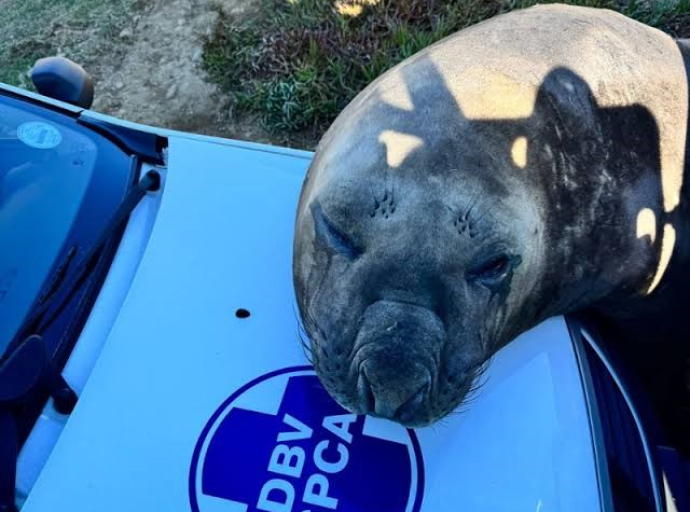
A Southern elephant seal’s unexpected journey through the streets of Gordon’s Bay ended with a successful rescue operation. The seal’s short visit caused quite the rukus on the streets of Cape Town with locals rushing to get a view of the giant animal.
Emergency Rescue Operations
The Cape of Good Hope SPCA confirmed that a coordinated rescue effort was launched immediately after the seal was spotted near Sir Lowry’s Pass Road around 6am. A team of wildlife and emergency services worked together to ensure the safe return of the seal to its ocean home.
Local Reaction
Residents were astonished as they witnessed the large seal moving clumsily along the roads, even pausing at one point to rest on a parked vehicle. Many locals captured videos and photographs of the comical scene unfolding in their neighbourhood.
Coordinated Efforts
By 8am, the SPCA had secured the area with assistance from various organisations, including the City of Cape Town’s Marine Unit, SANParks, Two Oceans Aquarium, Shark Spotters, Traffic Services, SAPS, and Gordon’s Bay Security and Medical Services. This collaboration highlighted the community’s dedication to animal welfare.
Successful Relocation
Thanks to the strategic planning and teamwork involved, the elephant seal was successfully sedated and transported back to its natural habitat. SPCA spokesperson Belinda Abraham expressed gratitude for the community’s concern for the seal’s welfare, stating, “Animal rescue truly takes a village.”
Back to Nature
The elephant seal is now safely back in the ocean, hopefully steering clear of urban areas in the future, marking the end of its extraordinary escapade.
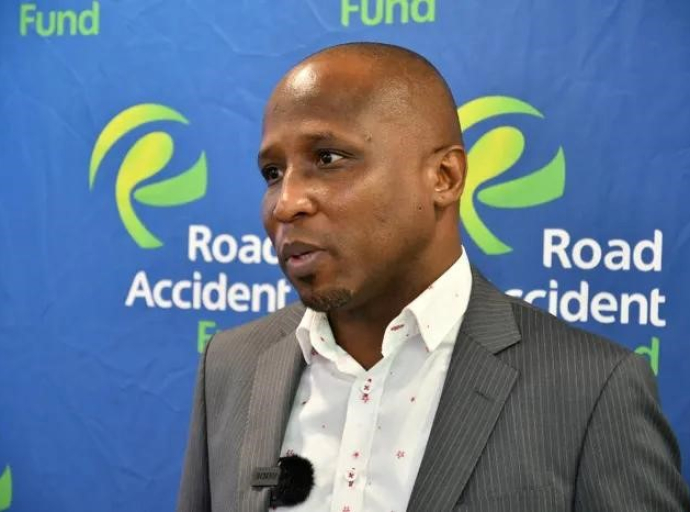
The CEO of the Road Accident Fund Collins Letsoalo has been placed on special leave.
The RAF Board informed the Transport Department that Letsoalo will remain on leave until the conclusion of a Special Investigations Unit probe.
Letsoalo is implicated in a R79 millionlease tender for the RAF’s Johannesburg offices.
According to the Department of Transport national spokesperson Collen Msibi this special leave does not subject Letsoalo to disciplinary processes within RAF but rather to allow for investigations to run smoothly.
A month ago eNCA spoke to Letsoalo regarding allegations of fraudulent approval of a R79 million lease deal.
He then denied any wrongdoing.
At that time he said he does not fear an investigation into this contract, and other RAF deals.
JSE-listed Tiger Brands, which recorded a 78% jump in earnings per share in its first half to the end of March on the back of sales of non-core units, reiterated its resolve to settle claims relating to 2017 massive listeriosis outbreak “as soon as possible”.
Tiger Brands has not disclosed the full value of the settlement, which it said it had presented as a total amount at the end of April, although it has stated it has enough insurance to cover the claims. In a recent statement, it also refused to accept liability.
“The offer is subject to certain conditions and has been made without admission of liability and in full and final settlement of the claims of the claimants,” it said.
What has been called the largest listeria outbreak in South Africa’s history happened in 2017. It was traced to Tiger Brands’ Enterprise Foods facility in Polokwane and resulted in 218 deaths and close on 1,000 infections.
The settlement process now moves quantifying individual damages for eligible claimants as well as attorneys taking those offers to the plaintiffs.
“Tiger Brands and its insurers remain committed to achieving a just resolution of the listeriosis class action as soon as possible,” it said.
Africa’s largest food producer posted a 17.6% jump in headline earnings per share, a figure that strips out profit from sales of units, to 951c for the interim period, despite ongoing inflationary pressure and a consumer base still watching every rand.
Tiger Brands’ price inflation of 2.1% helped offset the flat volumes, leading to revenue improving 1.9% to R18.5 billion.
“Despite early signs of economic recovery offering some much-needed relief, consumers remain under pressure and continue to seek value in their food basket,” said CEO Tjaart Kruger.
The company is sticking to its cost-cutting plans, optimising logistics, engineering value into recipes and packaging, and squeezing more efficiency out of its factories, to protect margins and keep products affordable.
Tiger Brands continues to focus on trimming non-core assets, with the sale of the Baby Wellbeing division and a 24.4% stake in Chile-based company, Empresas Carozzi bringing in R4.4bn during the period and another R600 million received in April.
Having sold those entities, as well as its Langeberg & Ashton Foods business, it said it has entered into a deal to sell its Wheat Mill and Maize unit in Randfontein. Tiger Brands did not provide more details, although it noted that selling non-core entities to ensure it has a “competitive edge” and can win market share.
Shareholders are set to benefit from a special dividend of 1 216 cents per share, returning R1.8bn to investors, pending approval from, the South African Reserve Bank. Management says this strikes a balance between rewarding investors and maintaining the flexibility needed for sustainable growth.
“Tiger Brands has achieved growth in line with guidance, underpinned by a continued focus on driving value for consumers, execution of key strategic priorities, and implementing continuous improvement initiatives of logistics optimisation, value engineering and factory efficiencies,” it said.
Thousands of workers at the Nissan manufacturing plant in Pretoria stand to lose their jobs.
The Japanese car maker is reportedly considering shutting down production in Argentina, Mexico, and South Africa.
While the company is yet to make an announcement, speculation has unsettled both employees and students who were eyeing Nissan as a prospective employer.
The National Union of Metal Workers says it’s yet to talk with the company over this matter.
One analyst says should Nissan shut down its Pretoria plant, the main impact will be job cuts and loss of export revenue.
Nissan had not responded to eNCA's inquiries at the time of broadcast.