Free State Targets Surgical Backlogs
The three-day Cataract Marathon, held over the weekend at Boitumelo Regional Hospital in Kroonstad, was a great success, with over 100 patients receiving treatment.
Screening was conducted last week Friday with cataract operations scheduled for Saturday and Su...
Deputy minister of police Polly Boshielo, condemned the increase in gender-based violence in the country, stating that the suspects in the murder of Olorato Mongale had been linked to 22 other cases targeting women.
Boshielo was speaking during the funeral service held for Mongale, 30, in Bloemfontein in the Free State on Sunday. Mongale, who was living in Johannesburg was found murdered after going on a date last Sunday.
Last week police named three suspects linked to Mongale's murder as Fezile Ngubane, Philangenkosi Sibongokuhle Makhanya and Bongani Mthimkhulu, who is still at large. On Friday Makhanya shot at police, who returned fire and killed him at a residential complex in eManzimtoti while police also clarified that Ngubane had been a victim of identity theft.
Boshielo said: “We will also not rest until we find Mthimkhulu. (KZN Police Commissioner) Nhlanhla Mkhwanazi said they will not rest until they find Bongani. We are still searching for him. He and Philangenkosi Makhanya were working together and they were a syndicate that was targeting women in various malls across the country. Our investigation is now standing at 22 cases that they are linked to these two criminals. Women from across the country have positively identified them as the pair that kidnapped and robbed them," Boshielo said.
Mongale was described by her family as a fighter who fought to the end of her life.
Her mother Basetsana Mongale spoke on Sunday during the emotional send off after scores of mourners, including friends, relatives and community members gathered at the Manguang City Hall for her funeral.
"My daughter was extra careful and would not have allowed a total stranger to fetch her from her gate, I know that she is a fighter.
"When I saw her at the government mortuary, I could see that my daughter fought; she fought until her nails broke off..., We might not understand the ways of life, but she fought," Basetsana Mongale said.
Wits University’s representative Jerome Sethemba stated that that Mongale was a dedicated student whose work spoke of her academic abilities and a way of life.
“Olorato Mongale was beautiful in so many ways, in every way possible that you can imagine. She was unique in many ways, you could meet her by the cafe near the library, and she would already know who you are.
"Olorato was with us for a very short time, but she had everything that a Witsie is; excellence and determination," Sethemba said.
The Public Investment Corporation’s (PIC) R74 million cash injection, originally intended to stabilise feed supplies and pay overdue salaries, was meant to offer short-term relief. But the Gauteng High Court ruled this did not absolve Daybreak of its legal and ethical responsibilities.
“The company’s entire defence was premised on the claim that the money had solved the problem,” the NSPCA said in a statement.
“But the court made it clear that real, sustained welfare interventions were still lacking.”
The court focused on the animals themselves, stating: “The urgency was necessitated by the collapse of [Daybreak’s] responsibility to appropriately care for the chickens in their possession and under their control, and that the management of Daybreak has collapsed and there was financial mismanagement of the available funds.”
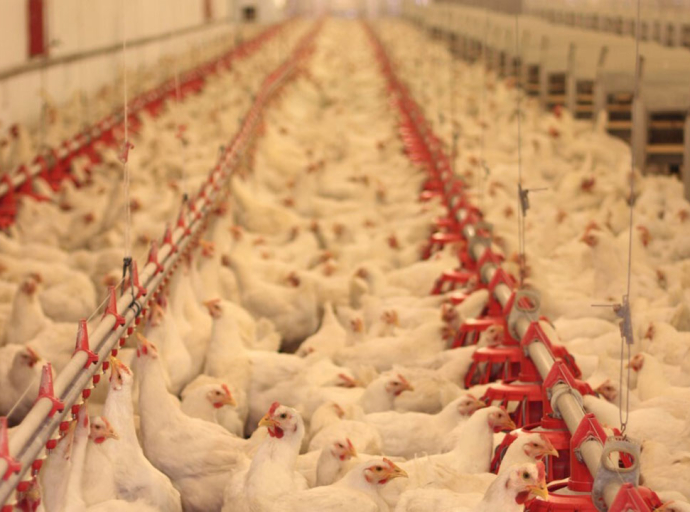
The NSPCA, which brought the case after a whistleblower alerted it to the horrific conditions at the company’s breeder operations, documented what it described as “catastrophic welfare emergency”.
According to the NSPCA, more than 594 000 breeder birds were found at risk of starvation, cannibalism and neglect due to chronic underfeeding and inhumane culling practices, and 350 000 broiler birds had to be culled.
“This is not just a failure of farming practices; it is a collapse of basic ethical standards,” said NSPCA senior inspector Nazareth Appalsamy. “The breeder birds are not only starving, they are suffering immensely. Daybreak must now comply lawfully, or face contempt of court proceedings.”
The court order compels Daybreak Foods to immediately cease all inhumane culling practices; feed all birds appropriate, species-specific food throughout its operations; suspend breeding and placement of chicks until proper nutrition is ensured; submit a humane recovery plan within five working days; allow the NSPCA unrestricted access to all premises; and pay the NSPCA’s legal costs, jointly with the PIC.
The NSPCA, which deployed teams to the farms for 12 days, discovered that casual, untrained workers were tasked with killing large breeder birds by swinging them by their heads, a method both illegal and ineffective, the NSPCA said in a statement.
According to the NSPCA, Daybreak failed to disclose the worsening situation, delayingintervention until an internal whistleblower came forward.
“Without this tip-off, the suffering of these animals would have remained hidden,” said the organisation.
While the animal welfare emergency is the most visible symptom of Daybreak’s collapse, financial mismanagement and poor governance run equally deep.
On 20 May, the company was placed under voluntary business rescue. The PIC, which owns 100% of the company on behalf of the Government Employees’ Pension Fund, Unemployment Insurance Fund, and the Compensation Fund, supported the move.
Business rescue practitioner Tebogo Maoto has been appointed to steer the turnaround.
Interim chairperson of the Daybreak board, Dr Charlotte Nkuna, expressed cautious optimism.
“We welcome the appointment of the business rescue practitioner as part of the collective effort, together with the PIC, to rescue the company and save approximately 2 800 jobs.
We are confident that the business rescue proceedings will help Daybreak Foods to achieve a credible turnaround plan in the interest of all our stakeholders.”
However, the restructuring comes amid the DA alleging that two directors of Daybreak Foods received six-figure payments while workers went unpaid, chickens were left to starve, and the company edged toward entering business rescue.
The DA has written to Parliament’s Standing Committee on Finance, requesting an urgent hearing, and is now awaiting a response.
General manager of the Broiler Organisation at the South African Poultry Association, Izaak Breitenbach, said while he could not comment on what was happening at Daybreak Foods, the situation did not impact supply of poultry in South Africa.
“While we have already seen a reduction in production from Daybreak, other producers have taken up production to bridge the reduction. There will not be a shortage as a result of the situation at Daybreak.”
The NSPCA remains on-site, ensuring compliance with the court order. However, with hundreds of thousands of birds still at risk, the crisis is far from over.
Statistics show that 2.95% of school staff screened between March 2024 and February 2025 were flagged for criminal activity, including violent and sexual offences.
New data from background screening provider TPN has raised concerns about the safety children in school environments across South Africa, as it revealed that 2.95% of school staff screened between March 2024 and February 2025 were flagged for criminal activity, including violent and sexual offences.
While TPN said the figure slightly improved from last year’s 3.08%, this still equates to one in every 34 individuals vetted, from teachers to groundskeepers, having a criminal record. Of those flagged, 1.22% had criminal records specifically related to abuse and sexual offences.
In a statement, legal counsel at TPN, Ashleigh Laurent, said: “Even a small percentage translates into dozens, if not hundreds, of adults with concerning backgrounds working in proximity to children.”
The report found that 43.9% of those with criminal records were convicted of violent and serious crimes. Assault accounted for 23.17%, theft for 18.29%, drug trafficking 12.2%, housebreaking 3.66%, and murder 2.44%. In addition, 1.06% of staff were flagged as being involved in legal proceedings and awaiting trial, including for offences like assault and malicious damage to property.
Responding to the findings, Department of Basic Education spokesperson Elijah Mhlanga said: “A person awaiting trial is considered innocent until proven guilty. That's according to the law in South Africa. Schools are required to conduct vetting for all staff that are employed. Provinces are currently conducting vetting even though it is a slow and expensive process that falls out of the ambit of the Education Department when it comes to the expertise.”
He added that the sector has a large teacher cohort of some 410,000 teachers before office administrators are included.
"The process is ongoing even though new employees come into the sector while others exit. It must be made clear that this task will never be concluded, instead it forms part and parcel of our regular administration.”
Mhlanga emphasised that staff members found guilty of offences involving children should not remain in contact with learners.
“A staff member found guilty of offences related to children should be removed from functions that will keep them in close contact or require close dealings with children. An investigation should also be put in place to establish whether the offences were disclosed to the authorities or not.”
National Professional Teachers' Organisation of South Africa chief executive officer Thirona Moodley said vetting should be compulsory and ongoing. “Teachers and all school personnel must be beyond reproach. We trust them with the physical and mental well-being of the children of our nation. All such employees must be vetted before employment; they are required to disclose any criminal convictions on their application for employment.”
Moodley also flagged a concerning gap in the system. “We must also be conscious of the fact that some sexual perpetrators may not have criminal records because the matter was never reported to law enforcement. It’s for this reason the Department of Education must act very quickly on allegations of a sexual nature as well as any other serious allegations against an employee. This does not always happen and the person remains in the school or returns after initial suspension because the department failed to act within the timeframe of the law.”
South African Democratic Teachers' Union (SADTU) spokesperson Nomusa Cembi said the nature of the offence had to be considered when dealing with employees flagged for past convictions.
“It depends on the offence, those that really endanger the life of a learner, we believe that person should not be in charge of learners.”
On whether failure to disclose a criminal past should result in dismissal, Cembi said: “It will also, again depend on the offence. There are offences that cannot be negotiable, like a sexual offence. That is not negotiable."
Cembi also noted that school governing bodies needed support in hiring non-teaching staff: “School governing bodies should also be empowered to really know how to check people that they employ. Because, groundsmen are employed by SGB. So they should tighten their vetting measures and should be taught how they should look out for such people.”
Economists expect a poor GDP reading to be published this week, continuing the trend of stagnating economic growth in South Africa.
High-frequency data has already pointed to a stagnant first quarter of the year, which reflects January to March 2025, before global tensions erupted due to the United States’ tariff war.
Analysts expect a reading of around 0% real growth for Q1, down from a paltry 0.6% increase in the last quarter of 2024. A small quarterly contraction may also be in the mix.
Nedbank said that agriculture will probably be the ‘star performer’ for the quarter, while activity in mining, manufacturing, electricity, construction and trade is expected to be bleak.
These sectors would have been held back by a difficult operating environment, aggravated by persistent inefficiencies in essential economic infrastructure as well as the stronger base in Q4.
While the economists expect an acceleration in growth in the remainder of the year, it is unlikely going to be enough to push the country to the growth levels it needs to address persistent issues like unemployment.
“Despite minor progress on the structural front, operating conditions remain challenging, and production costs are high,” Nedbank said.
“The weaker global recovery will weigh on output, particularly given South Africa’s elevated cost structures, underlying inefficiencies, and significant infrastructure constraints.”
This puts the South African government’s lofty target of 3% growth even further out of reach.
GDP expectations for 2025 have declined significantly since the start of the year, with an expected range of 1.6% to over 2.0% growth now sitting at about 1.4% growth at best, and below 1% growth at worst.
The South African Reserve Bank (SARB) was the latest to cut back its growth expectations for the year, lowering its forecast to 1.2% from 1.7% before.
The central bank estimates that the economy will grow by 0.1% quarter-on-quarter in the first quarter of the year, setting a poor momentum base for the quarters to come.
According to Nedbank, the only way South Africa can steer itself out of the slow-growth rut is by accelerating the necessary reforms to get the economy going.
“Accelerating structural reforms are the key to enhancing the international competitiveness of industries,” it said.
“This would enable the economy to grow faster and create more jobs without hitting supply bottlenecks, driving up costs, and stoking inflation.”
However, while the country has counted some successes on this front — particularly with Operation Vulindlela (OV) — things are not panning out as quickly as many had hoped
With the recent ‘launch’ of phase two of OV, it was made abundantly clear that many of the phase one projects were still lagging and being carried over to the next phase.
Economists at the Bureau for Economic Research (BER) warned that even the big successes of phase one, such as the load shedding crisis, could also still not be considered ‘over’.
Indeed, South Africa’s constrained electricity grid remains one of the biggest factors holding back economic growth.
While the country has escaped the “permanent” load shedding that set in between 2022 and early 2024, the first few months of 2025 were a stark reminder that slippage is still a reality, and the grid remains walking a fine edge.
This means that economic expansion in the country is effectively ‘capped’ until such time as the power grid has enough capacity to handle the growth, or alternatives are more readily available.
According to Nedbank, prospects for the country will likely improve in the next three years, but even then, unlikely to surpass the 1.5% mark, tracking population growth.
Minister of Cooperative Governance and Traditional Affairs, Velenkosini Hlabisa preparing to launch the state customary initiation awareness campaign. PHOTO: Abigail Visagie
Written by: Abigail Visagie
BLOEMFONTEIN - Free State has recorded the second-highest number of customary initiation deaths in South Africa after the Eastern Cape Province.
Minister of Cooperative Governance and Traditional Affairs (COGTA), Velenkosini Hlabisa revealed the statistics at the launch of the safe customary initiation awareness campaign that took place at the OR Tambo Building in Bloemfontein on 31 May.
The main aim of this launch was to raise awareness about safe initiatives during the winter season.
The launch was attended by the MEC of COGTA, Saki Mokoena, and some traditional leaders representing different initiation schools.
According to Hlabisa’s statement, 94 deaths were recorded last year in the country, and 26 of them were recorded in Free State.
“Initiations in the Free State also resulted in four amputations which mostly indicate the disregard of the Initiation Act of 2021 that emphasises the safety of the initiates and in turn creates a healthy relationship between health institutions and cultural practitioners.
He says this year’s mandate to kick-start the winter initiation season is to ensure the safe arrival and return of initiates.
“Our children must go to the initiation alive and happy and they must return alive and happy,” said the Minister.
Hlabisa assured the house that the Department of Health has committed to do pre-health screening and ensure that follow-ups are made when the initiation season comes to an end. “SAPS and NPA will also prioritise prosecution and will shut down illegal initiation schools, he says.
According to Mokoena, most customary initiations have been subjected to abuse and these have resulted in injuries and fatalities.
Mokoena said the rise of physical abuse that is taking place in Free State initiation schools is the cause of the high death rate.
“Most of these initiation schools are initiating young men for personal financial gain with no regard for the wellbeing and safety of the initiates,” said Mokoena.
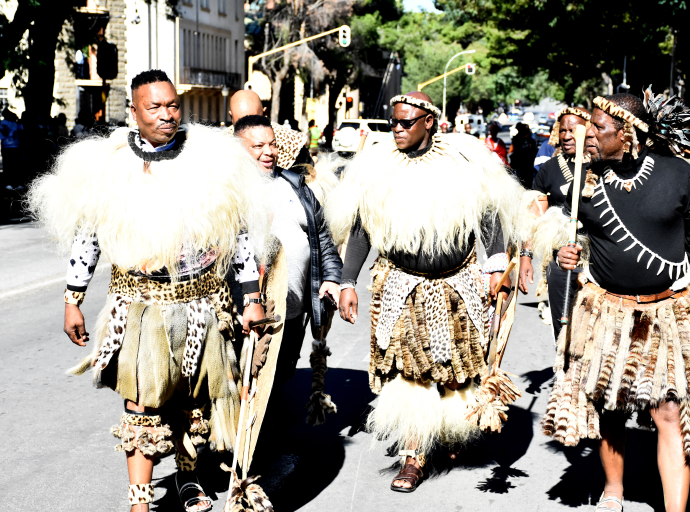
BLOEMFONTEIN - The Supreme Court of Appeal in Bloemfontein on 28 and 29 May heard arguments in the long-standing dispute between King Misizulu ka Zwelithini of the AmaZulu nation and his older brother, Prince Simakade.
The case revolves around the validity of President Cyril Ramaphosa's recognition of King Misizulu, which was declared invalid by the Pretoria High Court in December 2023.
Prince Simakade contests the president's recognition, citing failure to follow correct procedures. The president's legal team counters that the prince was not a party to the previous court case in KwaZulu-Natal and that the traditional and legal processes were properly followed.
He says the president's recognition of King Misizulu was flawed due to non-compliance with customary law and customs.
Both parties are expected to submit further applications to the Supreme Court of Appeal by June 4. Despite the high stakes, Chief Commander Sipho Mhlongo, representing the king, has assured that the situation will remain peaceful regardless of the outcome.
The outcome of this case will have significant implications for the AmaZulu nation and the broader traditional leadership landscape in South Africa. As the court deliberates, the nation waits with bated breath for a resolution to this protracted dispute.


 Minister of Cooperative Governance and Traditional Affairs, Velenkosini Hlabisa preparing to launch the state customary initiation awareness campaign. PHOTO: Abigail Visagie