Free State Targets Surgical Backlogs
The three-day Cataract Marathon, held over the weekend at Boitumelo Regional Hospital in Kroonstad, was a great success, with over 100 patients receiving treatment.
Screening was conducted last week Friday with cataract operations scheduled for Saturday and Su...
Five weeks ago, in a move that surprised no one but still carried heavy symbolic weight, Dr Zamani Saul retained his seat unopposed as the African National Congress (ANC) North ern Cape Chairperson. This victory marks Saul’s third term at the helm of the province's party structures and signals a continued effort to unify a fractured movement under his leadership—especially as the ANC grapples with waning support ahead of crucial upcoming local elections.
Saul, who has served as Premier of the Northern Cape since May 2019, has long positioned himself as a pragmatic reformer within the ANC, blending technocratic governance with the liberation party’s traditional rhetoric. At the recent State of the Province Address (SOPA), Saul made it clear that his administration is not just about legacy, but about progress with a purpose.
“This Seventh Administration must attend to these challenges with greater urgency and speed,” Saul declared, referencing the triple burdens of unemployment, poverty, and in equality, alongside persistent crises like gen der-based violence and climate change. In aligning the provincial government's roadmap with the Government of National Unity’s (GNU) three critical pillars—inclusive growth and job creation, tackling the high cost of living, and building a capable, ethical state—Saul appears to be echoing national reformist tones while grounding them in tangible provincial progress. And the progress is indeed tangible. Under his leadership, the province has seen notable service delivery improvements:
●Access to formal dwellings increased from 78.3% in 1996 to 85.9% in 2022.
●Households with piped water rose from 74% to 82%.
●Electricity access for lighting soared to 92.5%.
●Internet access skyrocketed from 16.2% in 2010 to 68.5% in 2022.
These gains, while incremental, are significant in a region often sidelined in the national discourse. Economically, Saul’s administration has overseen R35 billion in growth over five years. Job creation figures are encouraging: 27,000 new jobs, a historic employment high of 355,000 people, and the second-lowest unemployment rate nationally. Infrastructure spending reached R24.7 billion, delivering modern schools, clinics, roads, and libraries.
The matric pass rate jumped from 66% in 2019 to an impressive 84.19% in 2024. Crucially, Saul has emphasized governance and accountability, achieving 8 clean audits out of 13 over the last term—an achievement rarely seen in provinces mired in fiscal mismanagement. And yet, for all this success, a question looms large: can Saul’s technocratic excellence and steady hand salvage the soul of the ANC?
In an interview with the SABC, Saul described his uncontested re-election as a sign of unity in the province: “I'm certain if you check the report of the SG, when we went to the last national conference of the ANC, he said in the organisational report that the Northern Cape is one of the most united provinces of the ANC in the country. The province is rock solid.” This sentiment was echoed by ANC Secretary-General Fikile Mbalula, who has frequently cited the Northern Cape as a model of stability. But unity alone is not enough. The ANC is not merely a political party—it is a liberation movement bearing the weight of history.
In recent years, it has stumbled under the burden of that legacy, beset by factionalism, corruption scandals, and growing public disillusionment. Saul’s leadership—disciplined, ethical, and results-driven offers a compelling counter-narrative. But saving the ANC’s soul will take more than clean audits and high matric pass rates. Saul has proven that good governance is possible within the ANC. He has shown that reform, when pursued with integrity and de termination, can yield real results. The question now is whether the rest of the party is ready to follow his example—or if Saul will remain a solitary beacon in a party still at war with itself.
As local elections approach, and with internal calls mounting for deeper organisational reform, another question emerges: Should the ANC structures call for Zamani Saul to position himself for the role of the party's national Secretary-General, would he rise to the occasion? If he does, it may be more than just an internal reshuffle. It may be the beginning of a deeper restoration of the ANC’s soul—one led by those who govern not with slogans, but with results. Whether Saul will accept that mandate, and whether the party will rally behind him, could determine the future not just of the ANC, but of South Africa’s democratic promise.
Mashatile was again forced to address claims of corruption and media reports in Parliament, dismissing them as mere allegations.
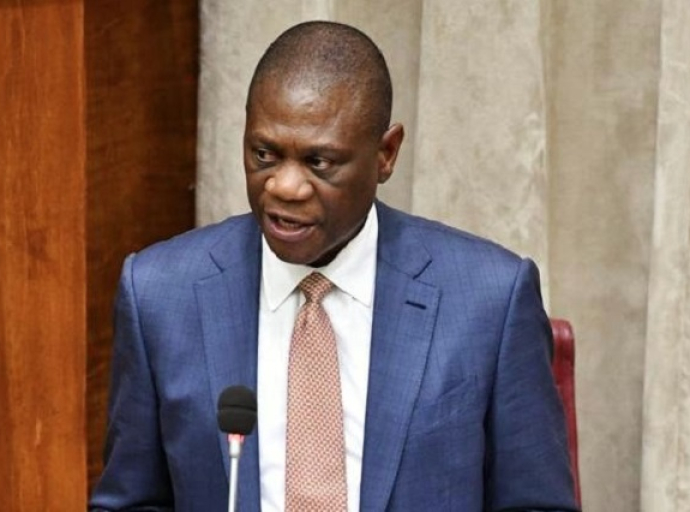
Deputy President Paul Mashatile says he has no hidden financial and private interests and has declared everything to Parliament.
Mashatile was again forced to address claims of corruption and media reports in Parliament, dismissing them as mere allegations.
He said he's more than willing to subject himself to Parliament's Ethics Committee, saying it's already questioned him about allegations of nepotism and failing to declare certain multi-million-rand properties linked to him.
Mashatile was responding to oral questions in the National Council of Provinces on Thursday.
The Deputy President was previously questioned about corruption allegations when he appeared in the National Assembly recently, where he said only the truth would prevail.
Mashatile said he's gone as far as appointing an official in his office to ensure that all his interests are regularly updated and declared to Parliament.
He said he's been a Member of Parliament for years and has always declared his personal interests, including his residence and his bank balance.
*This article was first published by Eye Witness News
Anger, frustration, depression, hopelessness, anxiety, hypervigilance, and loss of trust in law enforcement and legal institutions are common emotional responses victims exhibit due to delayed justice, which often stems from forensic lab delays.
The South African Police Service (SAPS) is currently battling a backlog of more than 140,000 cases in DNA, which has been blamed for slowing down justice for victims of crime in the country.
Nqobile Kweyama, an educational psychologist and lecturer at the University of Johannesburg, said that victims’ emotional responses worsen when the delays result in acquittals or dropped cases, leading to a feeling that their suffering has been ignored or invalidated.
“Prolonged forensic delays often force victims to live in a state of limbo, with no closure or justice. This uncertainty can exacerbate feelings of anxiety, helplessness, and fear. For many survivors, particularly of violent crimes or sexual violence, the delay reopens emotional wounds each time the case resurfaces without resolution. It not only impedes their healing process but can also undermine their trust in the justice system,” Kweyama said.
She added that South Africa has some of the highest rates of gender-based violence and violent crime globally. Victims, many of whom already struggle with socioeconomic vulnerability, are doubly burdened by the systemic delays.
“These backlogs can result in perpetrators remaining free in communities, which can lead to intimidation of victims and secondary victimisation. Furthermore, when key forensic evidence is delayed, cases may be thrown out or significantly weakened, undermining the credibility of the justice system,” she said.
There is an urgent need for a multi-pronged approach, she said.
“Invest in forensic infrastructure by improving the capacity and efficiency of forensic laboratories through increased funding, staffing, and technology. Establish clear turnaround targets by implementing and monitoring strict timelines for forensic testing to ensure accountability.
“Enhance victim communication by keeping victims informed about case progress and expected delays, as silence breeds distrust. Strengthen trauma-informed support services. Psychological and legal support must be made more accessible, particularly for vulnerable groups. Finally, improving interdepartmental collaboration for better coordination between police, labs, courts, and victim support units can reduce systemic bottlenecks,” Kweyama said.
Ian Cameron, chairperson of the Portfolio Committee on Police, recently warned that the DNA backlog exceeding 140,000 cases means that thousands of victims might never see the justice they are entitled to, while violent criminals remain free to continue terrorising innocent people.
“The committee has always maintained that DNA evidence represents the only lifeline for rape survivors and other victims of violent crime, yet SAPS’s continued mismanagement of forensic services has created an environment where justice is delayed, denied and outright sabotaged,” Cameron said.
He added that this crisis is a direct threat to an effective criminal justice system that can process and prosecute criminals and efforts to combat gender-based violence.
“It is inconceivable that despite various interactions and interventions, as well as reprioritisation of funding to resolve the backlog and ensure science-based prosecution of cases, the backlog remains stubbornly high, which could lead to the removal of cases from the courts’ roll. Those in positions of authority must be held accountable for this mess, as it represents a clear case of dereliction of duty,” Cameron said.
Brigadier Athlenda Mathe, SAPS national spokesperson, said the SAPS's heightened operations caused the influx of exhibits material.
“The current challenge is a high influx of buccal samples for intelligence purposes, due to heightened policing strategies. It is projected that 30,000 cases are finalised per month. The normal expected turnaround times for DNA analysis are 90 calendar days, and urgent cases are processed within 14 working days.
“Personnel needs have been submitted for the capacitation of the laboratory. The Forensic Science Laboratories are equipped with modernised equipment/instruments, and the laboratory is continuously replacing equipment/instruments as and when the need arises in line with the equipment replacement strategy,” Mathe said.
The SAPS has four laboratories in the country, of which three are fully operational in Gauteng, Western Cape, and the Eastern Cape. The KwaZulu-Natal Laboratory is currently not being utilised optimally due to flooding. The analysis of exhibits for Biology and Chemistry is conducted in Gauteng and Western Cape, she said.
Mathe added that the servicing of equipment is currently done on a quotation basis. The relevant specifications were submitted to supply chain management for evaluation. The laboratory has also submitted a proposal for the full implementation of the equipment replacement strategy.
Professor Nirmala Gopal, a senior criminology lecturer at the University of KwaZulu-Natal, said the SAPS must start with the basics, employ personnel with skills, and get away with jobs for pals and nepotism if it wants to enhance efficiency and accountability within the Forensic Science Laboratory.
Gopal stated that poor management is the largest contributor to ineffective services at the SAPS’ Forensic Service Laboratories, coupled with employing incorrect skills.
She said there must be greater accountability and the Police Department must account to Parliament quarterly.
Cabinet has approved the National Labour Migration Policy white paper.
Cabinet has approved the introduction of a new bill that seeks to limit the number of foreign nationals that can be employed in the country.
At the same time, it also approved the National Labour Migration Policy White Paper, which introduces quotas on the total number of documented foreign nationals that can be employed in major sectors such as agriculture, hospitality, tourism, and construction.
Providing an update on Cabinet decisions at parliament on Thursday, Minister in the Presidency Khumbudzo Ntshaveni said the policy is aimed at achieving balance across the sectors, including addressing South Africans' expectations for job prospects amid rising unemployment.
"The policy complements other interventions such as the enforcement of a list of sectors where foreign nationals cannot be allocated business visas and amendments to the National Small Enterprise Act, 1996, which limits foreign nationals establishing Small, Medium and Micro Enterprises, and trading in some sectors of the economy."
*This article was first published by EyeWitnessNews
Mangaung Metro Municipality is on the brink of transformation, but service delivery challenges continue to haunt residents. Power outages, water interruptions, sewer overflows and procurement issues are some of the service delivery challenges faced by the municipality.
When Mayor Gregory Nthatisi took the helm in April 2023, he took over a metro in crisis, placed under administration on Section 139(7) intervention since 2019, but he was determined to take the hot seat and excel in it.
Nthatisi says he was called to the municipality by his political party, the ANC, mainly to stabilise the municipality along the four cardinal points as expressed in the Financial Recovery Plan (FRP), which are to stabilise governance, to address service delivery, to look into finances, and to stabilise the institution.
He says the metro was under a series of instabilities with regards to governance and financial discipline, which affected service delivery to the communities which are served by the metro.
He says the decision to put him in this hot seat was informed by several infighting between political parties.
“The scramble was the control of the metro, not based on the party that won the election, but on buttering and collaboration of individuals beyond party alliance and party mandate.
“I was called to come and deal with those issues, and upon my arrival, the metro was subjected to Section 139 intervention (7) emerging from Section 139(5)”, said Mayor Nthatisi.
He explains that subsection five deals with intervention from the province and subsection seven deals with interventions from the national government.
“There were two teams that were sent from the national government, one was from the Department of Cooperative Governance and Traditional Affairs (Cogta), and the other one was from the National Treasury.
“Unfortunately, those teams could not do their work as sent by their respective bodies, mainly because those that were rep-resenting political parties as councillors were fighting the intervention and fighting the team.
“They did not allow them to do their work. They threatened them and confined them to their offices and to their homes.
“But also some of the members in the intervention team, were not equal to the challenges that the metro had.
“They left their areas as junior officials and they were elevated to act as heads of departments (HODs), so the knowledge economy was not equal to the demand on the ground, particularly at the level where the crisis was, and that is why I am here”, said the mayor.
Upon his arrival, Nthatisi says he had to stabilise the metro and the first thing he had to do was to clean up to ensure that ANC councillors work together and carry their mandate as sent by their organisation and equally so, ensure that the council does its work through its committees and they cooperate in ensuring that the work of the government is done.
Nthatisi says he can confirm that that aspect of governance is fully attended to.
“Committees are doing their work, politicians are doing their work, the council seating procedures are followed, and the implementation of regulations is in place,” Nthatisi said.
AG Report and Leadership Instability
However, the Auditor General of South Africa (AGSA) during a Standing committee on public accounts (SCOPA) presentation gave a dire picture of the state of the municipality.
Despite ongoing interventions and a recovery plan the municipality faced persistent problems which include R278 million in irregular expenditure, R123 million in wasteful expenditure, and a total of R297 million grant was withheld by the national treasury due to slow project implementation. Another issue highlighted by the AG is the procurement processes, with unsupported performance reports and material irregularities.
“A cyber-attack caused by poor information technology safeguards had disrupted billing and worsened the municipality’s financial crisis.
“Infrastructure projects such as Thaba Nchu wastewater treatment works faced severe delays with poor project management leading to an environment damage, the report states.
Despite external support, Mangaung continued to operate with ineffective leadership which affected ser-vice delivery.
In response to the report, Nthatisi says the next step he had to take was to stabilise the administration.
“When I arrived here, the municipal manager and HOD were acting in those positions.
“In the current administration between 2021 and 2023, the metro had seven acting municipal managers. A city manager is ap-pointed for five years, but in Mangaung, we have had seven city managers in two years.
“Now that is the level of instability that I found when I came into this municipality.
“We had people acting in senior positions that they did not qualify for, not only in terms of qualifications but also in terms of experience, because in order to be an HOD, you have to pass certain stages and I can safely say that situation is stabilised as we speak,” he said. Nthatisi says he had to appoint HODs and within six months of his period as acting mayor, he was dragged to court by mem-bers of smaller political parties and some members of the ANC to try and nullify the appointment of some individuals like the speaker, Lawrence Mathae, including himself as the mayor had to be fought in court for 6 months.
He says it took another 6 months in court fighting with opposition parties on how the procedure was to be followed for appointing the city manager, saying that even though he came in 2023, it took 2024 to appoint a city manager.
Addressing the discrepancies in middle management.
“The metro does not have enough professionals in their discipline to ensure that the nuts and bolts of what the metro must attend to is done. “Here I am talking about engineers, administrators, and legal experts. People who must serve in a particular space to ensure that service is delivered.
“In the system as we speak, we do not have middle management, because a number of the people in these positions are acting in the interim.
“Some of those who are acting are not qualified in the areas in which they are acting.
“Some of these areas need people with specialties in administration, engineering, architecture, and town planning, and those are professions that we need to bring into the metro to ensure that the metro does well.
“Now the people in these positions currently either do not have the qualifications, or they do have qualifications but not hold the relevant positions. “Currently, we have developed a company organogram which will go to the next council for approval, so that we can place people according to their ability, then recruit and appoint people whose specialties we need, with the cognisance that the mar-ket is scarce.
“We have engaged institutions of higher learning and some professional bodies to help source the people that we need to complete the structure that the metro needs to address the matter on the ground, which is that of service delivery,” he said.
Nthatisi says the metro’s focus area when it comes to service delivery is to prioritise issues such as water, housing, sanitation, and crime prevention.
“Water is life”
Nthatishi says an R8 billion water pipeline will be erected, bringing water from the Xhariep dam to Mangaung. He says due to Mangaung being a water-scarce area, this is the best solution to ensure that people do not encounter water problems.
“Sanitation is health and gives dignity”
Nthatisi says the municipality needs about R3.1 billion to attend to sanitation challenges.
He says 79 000 of the 300 000 households in Mangaung are non-waterborne. He explains that 50 744 households of the 79 000 are Pitlarene toilets, 17 000 are bucket systems, and 11 256 are those that are not accounted for because the residents have erected shacks in informal settlements.
Roads
“Mangaung has 1 600 km of tarred roads and the metro needs R8 billion to address this issue.
Seven thousand people in need of homes
Moving forward, we are not going to allow people to take land by force or locate themselves. With the understanding that people must get land. “We will use scientific discipline and ensure that we take our people to habitable places so that their lives will not be in danger, where development will take place and principles of town planning have taken place.
“We are in talks with Cogta, Public Works, and Human Settlements to give us land so that we can accommodate our people.
“We will also buy buildings from the private sector and convert them into rental housing in the city.
Safety
We are planning to employ over 50 safety officers and temporary staff to ensure that the safety in all seven towns of the met-ro is up to standard. “Lastly, we will be having a safety indaba where all layers of the community will be present to develop a modality on how to take care of ourselves in the community,” Nthatisi said in an interview with Journal News.
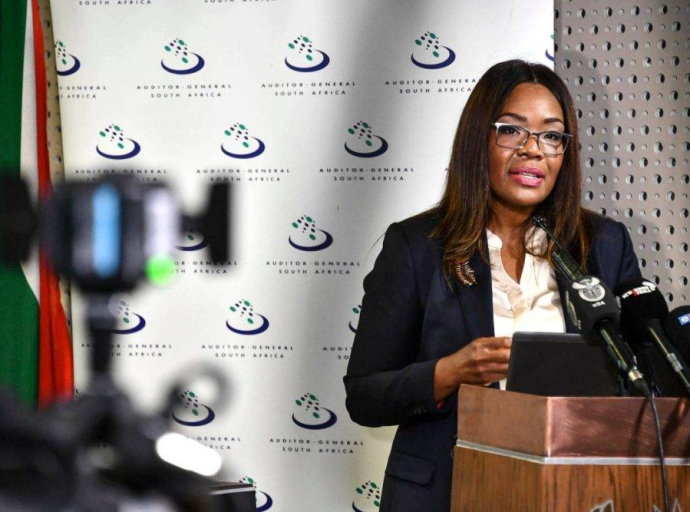
Auditor general Tsakani Maluleke has delivered a damning indictment on the state of municipal finances and lack of accountability, manifested in crumbling service delivery.
This is despite an uptick in the number of clean audit reports for the 2023-24 financial year.
Maluleke painted a dire picture of the widespread poor quality of financial reporting and mismanagement in a briefing to parliament’s cooperative governance portfolio committee on local government audit outcomes for the financial year.
“The good news is that we are back to 41 clean audits [out of 275 municipalities], which is where we started back in 2021. So we’re no more at the 34 that I talked about last year. However, that makes up 15% of the municipalities across the country,” she said.
“It’s great that we are reversing this trend around disclaimers of audit opinion. However, the state of financial and performance management disciplines in local government still leaves much to be desired, and so the story, in many ways, is similar to what I would have shared before. I worry … that I will sound like a stuck record.”
Her office’s assessment underscored a profound crisis in municipal governance that extends far beyond mere administrative inefficiency.
She said 14 municipalities received disclaimer audit opinions — when an auditor is unable to obtain sufficient audit evidence to form an opinion — while seven had adverse audit opinions, and 35 had qualified audit opinions — meaning the financial statements contained material misstatements in specific amounts, or there was insufficient evidence to conclude that specific amounts included in the statements were not materially misstated.
Ninety-nine municipalities had unqualified opinions and 41 municipalities achieved clean audits.
Maluleke said the metropolitan landscape was particularly alarming.
“The eight metros across the country look after half of the expenditure budget for local government. They look after service delivery that affects 46% of households across the country. Their budgets are quite significant,” she said.
“They sit in the centres of economic activity, and so, given the scale of their operations, the complexity thereof, but also the resources that they manage and even their location, they should have no difficulty attracting the skills that they need to run their environment.
“Unfortunately, out of the eight, we’ve got only one clean audit, which is the City of Cape Town. It was the only clean audit last year as well.”
Ekurhuleni, Johannesburg and eThekwini were the only metros to achieve unqualified audits with findings.
Maluleke’s office was also concerned about the quality of financial statements of the big metros and municipalities, noting that when the audit started only 63 out of 275 municipalities provided quality financial statements.
“By the time we finished, we managed to get 140 credible financial statements through corrections during the audit process,” she said.
“The City of Joburg didn’t give us quality financial statements when we began our audit. Now that’s a big city, the biggest in the country, the biggest on the continent. There should be no difficulty in ensuring that you’ve got the skills and the capability to do what you’re supposed to do, just on compiling financial statements.”
The audit exposed shocking institutional decay across infrastructure projects.
“We selected projects mostly in the metros and in those that have disclaimers of audit opinion. We found that the majority of projects had problems — 77% of the projects we visited had problems. Either they were delayed, there was poor quality work and then we also identified matters around the inadequate maintenance of infrastructure,” she said.
“The reason this exists, in our view, is that even if performance agreements are done as a tick-box exercise, they are not monitored. Contractors are appointed poorly through a procurement process that is not in compliance with the law and one that does not lead to the best decision. So the contractor that’s appointed is one that’s not equal to the task, then they are not managed — contract management capability is not there.
“The municipality doesn’t have employees within it that have a set of standard operating procedures, a set of disciplines and even a set of skills to monitor the performance of these contractors, and we’re seeing even once they’ve seen problems with the performance of the contractor, they don’t hold them accountable.
“Other than the municipalities that have got clean audits, you’ve got the majority of municipalities with material compliance findings, mostly in the area of procurement and contract management. In a nutshell, it tells us that we do not yet have a culture, a state of control, procedures and even accounting mechanisms.
“Metros are not any better. And given their significant budgets, one would have thought that this area of procurement would enjoy tremendous attention by the people that hold the purse.”
Buffalo City’s engineering crisis epitomised municipal dysfunction, the auditor general said, telling MPs: “They have had a vacancy for a district engineer responsible for electricity for 80 months — that’s six years and eight months.”
An identical vacancy for sanitation engineering had remained unfilled for 24 months.
Maluleke said the financial mismanagement is systemic and deeply entrenched.
“This year 219 municipalities spent together R1.47 billion on consultants purely for the purpose of helping them compile financial statements. Last year we reported R1.37 billion so the number is not really changing.
“This is when there are CFOs [chief financial officers] in place and there are finance functions that are populated with people that have been appointed. We also note that municipalities that get disclaimers of opinion also still spend on consultants on average R6 million.
“Municipalities with adverse findings also spend on consultants. The ones with qualified audits also spend on consultants. It tells us then that the key question is: why is it that even when there’s consultants being appointed, we still get bad quality submissions?”
She said her office had been asking this question for the past 10 years.
“The answer is that in most instances, the work of the consultant is not being reviewed. They say, well, there’s 2% [of cases] where the consultants didn’t deliver. But much of the problem is either consultants are appointed late, the underlying documents are not available or that their work is not being managed properly by the people that appointed them,” she said.
“What it tells you is that you’ve got CFOs and finance staff in place. They appoint consultants every year, and then once the consultant is there, they basically leave their desks. And so the consultant must engage with the auditors, which, in our view, tells a story about the culture and discipline more than even skills.”
“There is an element where the people under the CFO, there are some who are appointed and don’t have the skill to do the basics. However, much of the problem, we believe in local government, especially in this area of overusing consultants, relates to discipline.”
Municipal debt continues to spiral out of control as many municipalities approve unfunded budgets.
“We see unauthorised expenditure, meaning that where you’ve got expenditure levels approved, people are spending beyond that … And of course, that then compromises the financial health of those municipalities. Many ended up with a deficit situation, and many have got major creditors that they don’t pay, such as Eskom and the water boards,” said Maluleke.
She said suppliers and creditors to municipalities were waiting 286 days on average to receive money due to them, because cash flow had become very tight across many municipalities. Many of the suppliers then charged interest and penalties, much of which ended up as fruitless and wasteful expenditure.
The treasury’s Eskom debt relief programme aimed at helping municipalities enter into a settlement arrangement with the power utility had failed.
“It’s not working — 84% of the municipalities that participate in that programme are not complying with the conditions that they subscribed to. Again, in many instances, that’s a discipline issue,” Maluleke told members of parliament.
The auditor general’s report noted that Cooperative Governance and Traditional Affairs (COGTA) MECs, the minister, and provincial legislatures were not doing their jobs in overseeing municipalities.
“The Municipal Systems Act provides that the MEC of COGTA must compile a report that analyses the performance of each municipality, and that report must include remedial action that the MEC or municipality is undertaking and provide a report to the provincial legislature every year on how the municipality is responding,” Maluleke said.
“We have found that those reports are either not done or if they are done, they are done late; they are also either not tabled in the legislature or if tabled, they are not dealt with in the legislature.
“We believe wholeheartedly that if MEC did their part, they would not be lurching from crisis to crisis, and if the legislature played their part, they wouldn’t be waiting for the AG to say there is a disclaimer here; they would be monitoring these movements as a matter of course.”
She said the Minister of Cooperative Governance and Traditional Affairs compilation report was often not done or done late.
“We have to get every single player in the ecosystem of accountability doing their part otherwise we will not arrest the decline of local government,” Maluleke said.
*This article was first published by Mail & Guardian