Free State Targets Surgical Backlogs
The three-day Cataract Marathon, held over the weekend at Boitumelo Regional Hospital in Kroonstad, was a great success, with over 100 patients receiving treatment.
Screening was conducted last week Friday with cataract operations scheduled for Saturday and Su...
There are not enough beds in South Africa’s 13 psychiatric hospitals.
People who are found unfit to stand trial or be held criminally liable for a crime due to their psychiatric state are supposed to receive specialised care in the health system. But hundreds are being kept in prisons.
And while the Department of Correctional Services and the Department of Health haggle over who should take responsibility, the number of these state patients is increasing.
In Parliament earlier this month, Correctional Services Minister Pieter Groenewald said he had sent multiple letters to the Minister of Health, requesting the department to make room for the state patients in designated health facilities.
“If the minister responds tomorrow and says, ‘send them’, we will send them almost that same day,” said Groenewald.
He said that much of the Department of Correctional Services’ (DCS) overspending — about R690-million in 2023/24 — was due to legal obligations such as caring for state patients, for which the overcrowded system does not have the budget. “I will continue to follow up with the minister of health again, but unfortunately, I can’t just take [the patients], go to a facility and offload them as if they are not my responsibility.”
Health Department spokesperson Foster Mohale said correspondence from the DCS had been received and responded to.
Mohale said “ideally” a state patient should be transferred to a psychiatric hospital within 30 days. This is the time it takes to complete the required paperwork if it is initiated as soon as the person is declared a state patient by the court.
But the law is unclear about who is responsible for state patients and how long they need to remain in state care. According to the Mental Health Care Act, state patients should be transferred to healthcare facilities within two weeks of their designation. But a 2017 amendment to the Criminal Procedure Act (CPA) states they can be held in prisons, possibly indefinitely, or temporarily in the prison’s health wing.
PRISON RATES RISING
Regardless of how the responsibility is supposed to be shared, the current number of state patients in prisons appears to be increasing significantly.
Groenewald said there were 331 state patients in prisons as of 7 May. The figure has been confirmed by the Judicial Inspectorate for Correctional Services (JICS). The health department puts the number of state patients in prisons at around 400.
This is a massive increase from March last year, when the number was about 200, according to the DCS annual report. It is also the highest number of state patients in prison since statistics were first published in 2019.
But these numbers are constantly in flux. In the 2023/24 reporting year, 185 state patients were transferred to health department psychiatric hospitals, but the number of new patients declared mentally unfit to stand trial was higher. The DCS annual report noted that state patients were remaining in prisons because there are not enough psychiatric hospitals, all of which have long waiting lists.
Mohale says there are currently 3,765 declared state patients nationally. This implies about 10% or less are in prisons. The rest were housed across 13 psychiatric hospitals that have a total of 1,937 beds. The shortfall of about 1,500 beds in health department facilities is due to psychiatric hospitals admitting more patients than they have space for, and state patients being deemed stable enough to leave the hospital under particular guidelines.
The health department states there has been an overall increase in psychiatric patients.
“These facilities were able to cater for the need in the past,” said Mohale. He said there are now more state patients overall, and fewer of them are being reintegrated into their communities.
TREATMENT VS PUNISHMENT
Figures gathered by JICS, obtained from a source, show that while some state patients are held in prisons for a few days or weeks, the vast majority have been kept in prison for months or even years. Three patients have been kept in prison for more than four years.
Whether or not this is within the bounds of the law is unclear, as Parliament’s subcommittee on correctional services noted three years ago.
Keeping a state patient in prison may not be best for patients or prisons.
“The purpose of referral of state patients to a psychiatric institution is not punishment, rather treatment and rehabilitation, while simultaneously monitoring and managing their potential risk to the community,” states the DCS in its annual report.
A 2015 study found that the majority of state patients who received treatment over three years at Sterkfontein Hospital in Gauteng were reintegrated into communities and did not reoffend, although a quarter of patients absconded. Similar studies on state patients in prisons have not been conducted.
“If the Department of Health knows of [state patients], they must make space, but obviously, a plan has not been made,” said Janho Engelbrecht, DA MP on the Portfolio Committee on Correctional Services.
PLANS IN PLACE
Mohale said the health department is trying to remedy the situation, with infrastructure projects being implemented at some psychiatric hospitals — some of which are more than 100 years old — and plans to build a new facility in Mpumalanga.
The department is also looking to contract non-profit organisations to accommodate state patients when they are reclassified from state patients to outpatients, and to match state patients with custodians early to facilitate their reintegration.
A significant step is also to address the shortage of psychiatrists at Eastern Cape facilities. “This is largely due to the rural nature of the province, resulting in fewer psychiatrists willing to work there, especially at Komani Hospital,” Mohale says.
He said two additional psychiatrists have been appointed to the province through international recruitment.
The department is also considering joint appointments with universities to increase the number of psychiatrists working in some capacity with state patients. Along with expanding the capacity of psychiatric hospitals, this may address current gaps in the system.
*This article was first published by Eye Witness News
Keneilwe Shalaba appeared in the Vanderbijlpark Magistrates Court on Monday, alongside Sebokoana Khoanyana, the man who allegedly bought her child.
A mother who allegedly sold her two-year-old son to a sangoma for R75, 000 will remain behind bars.
Keneilwe Shalaba appeared in the Vanderbijlpark Magistrates Court on Monday, alongside Sebokoana Khoanyana, the man who allegedly bought her child.
The case has been postponed to Thursday to allow the second accused to apply for legal representation.
Both accused face charges of human trafficking and premeditated murder.
In November last year, Keneilwe Shalaba reported that her child had been kidnapped.
She was arrested three days later, after confessing to selling him to a sangoma.
After further investigation, cellphone records led police to Khoanyana.
And when he was arrested, he confessed to playing a part in his disappearance and pointed out where the child was buried.
They both face charges of human trafficking, premeditated murder, while she faces an additional charge of making a false statement to police and conspiracy to commit robbery.
“The State is opposed to the release of accused number two, your worship, may we remand the matter to the 5th of June as per the arrangement with Mr Khoanyana for legal aid application,” said State Prosecutor Moses Raditsela.
Both accused will remain in custody until their next court appearance on Thursday.
*This article was first published by Eye Witness News
Transport minister Barbara Creecy’s department invites shipping companies to participate in steering the initiative
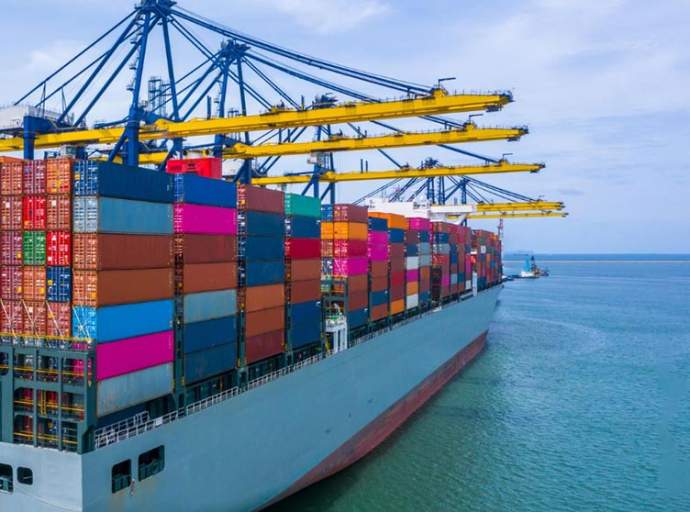
Transport minister Barbara Creecy is forging ahead with plans to create a national shipping carrier — 25 years after the state sold Safmarine to logistics major Maersk.
The department on Friday invited shipping companies to take part in a steering committee to establish a model for a national shipping company, with the Development Bank of Southern Africa (DBSA) set to play a prominent role in the process...
Authority needs to restore its battered image after losing several high-profile cases
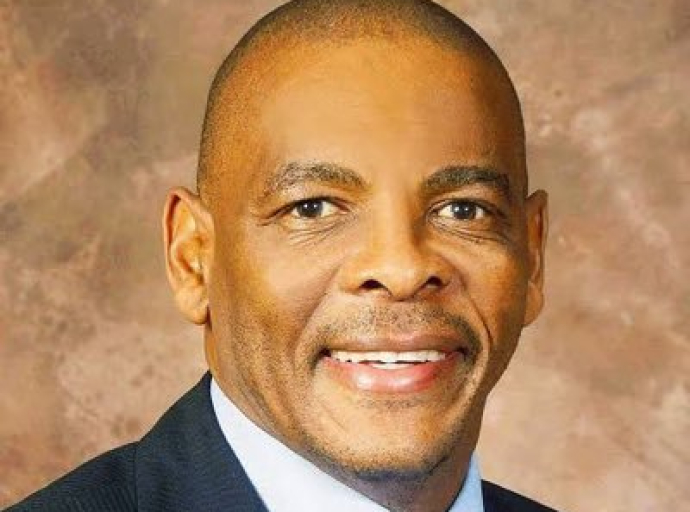
Having suffered several blows in high-profile cases, the National Prosecuting Authority (NPA) is under pressure to successfully prosecute the case against Ace Magashule and his co-accused facing corruption charges related to a R255m housing tender.
The controversies about the tender took centre stage at the state capture commission chaired by former chief justice Raymond Zondo that investigated irregular state tenders worth billions of rand...
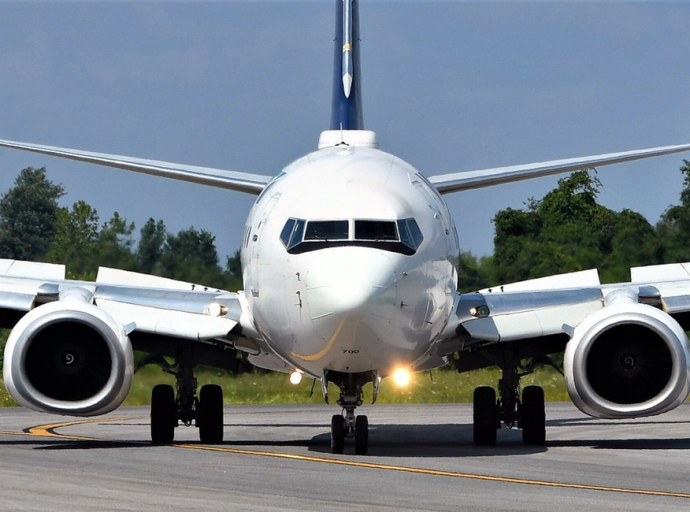
African airlines saw a 13.6% rise in international passenger demand in April 2025 compared to April 2024, showing steady recovery and growth in Africa’s aviation market amid a global rebound.
This data was obtained from the International Air Transport Association (IATA)’s April 2025 report, which also showed African carriers increased international passenger capacity by 8.9% year-on-year.
Despite this growth, Africa recorded the lowest load factor among regions at 76.3%, meaning fewer than eight in ten seats on international flights were filled. Passenger demand measures paying passengers multiplied by distance flown, capacity counts available seats times distance, and load factor is the percentage of seats occupied—a key measure of airline efficiency and profitability.
The report noted, “African airlines saw a 13.6% year-on-year increase in demand. Capacity rose 8.9% year-on-year. The load factor reached 76.3%, a 3.1 percentage point increase from April 2024.”
Following two months of decline, this rebound signals a positive recovery for African carriers. However, the region’s comparatively low load factor points to continued opportunities for market growth and improved operational efficiency.
Looking at the global landscape, international passenger demand grew by 10.8% in April 2025, with every region showing growth except Latin America, which experienced a slight dip in its load factor.
The Asia-Pacific region led this expansion, posting a remarkable 14.4% increase in international passenger demand, supported by a 12.7% capacity rise and an 85.3% load factor—one of the highest worldwide. European carriers followed, with a 9.4% increase in demand and an 84.5% load factor.
Middle Eastern airlines also performed strongly, growing international passenger demand by 11.2%, capacity by 6.6%, and improving their load factor by 3.4 percentage points to 83.1%. North American carriers recorded a 5.4% increase in passenger demand but faced challenges in premium travel segments, evidenced by a 26% drop in First and Business class demand. Nevertheless, their load factor increased to 83.4%. Latin American airlines saw a 13.9% rise in international passenger demand, with capacity growing even faster at 14.6%, though their load factor fell slightly by 0.6 percentage points to 83.2%. Willie Walsh, IATA’s Director General, highlighted the positive momentum for airlines worldwide, noting that April was a strong month for travel with growth strengthening, particularly in international demand and record load factors for the month.
He pointed out the encouraging return of growth in the transatlantic market but also cautioned about signs of fragile consumer and business confidence, highlighted by continued weakness in the US domestic market and a sharp decline in North American premium class travel.
*This article was first published by Breaking Travel News
Treasury expects significantly more tax to be raked in this year.
The SA Institute of Chartered Accountants (Saica) has warned of the danger of “heavy-handedness” by the SA Revenue Service (Sars) in its treatment of taxpayers as it prepares to ramp up revenue collection.
Sars has been allocated R7.5bn over the next three years — R4bn for debt recovery and R3.5bn for its modernisation programme — and the Treasury expects to collect an additional R20bn-R50bn per year from its debt collection efforts...
*This article was first published by Business Day News