Free State Targets Surgical Backlogs
The three-day Cataract Marathon, held over the weekend at Boitumelo Regional Hospital in Kroonstad, was a great success, with over 100 patients receiving treatment.
Screening was conducted last week Friday with cataract operations scheduled for Saturday and Su...
The water utility will roll out a series of projects from Thursday until 21 July, which will see reduced pressure and taps run dry in some parts.
Residents of Tshwane, Emfuleni and Midvaal will be the first to feel the impact of planned maintenance work by Rand Water.
The water utility will roll out a series of projects from Thursday until 21 July, which will see reduced pressure and taps run dry in some parts.
In Tshwane, there will be a complete water outage for four and a half days while work is done on its Mapleton system.
The work being done on the system includes the replacement of infrastructure and the repair of old pipes.
The project is part of the winter period maintenance of Rand Water's systems in Gauteng, North West, Mpumalanga and Free State.
Speaking at a media briefing on Tuesday, Rand Water chief operating officer, Mahlomola Mehlo, said the areas that would be impacted were in the east of Tshwane.
"In the City of Tshwane, we have two separate systems that supply, we have Mapleton and Palmiet. Palmiet supplies more to the west of Tshwane, Atteridgeville, Soshanguve, Mabopane and those areas will not be impacted by line one."
*This article was first published by EyeWitness News
The Valencia community near the town of Addo in the Eastern Cape remained tense on Tuesday night after three foreign nationals were killed. Hundreds of foreign nationals have been evacuated from the area.
“For many years we have been living in peace,” said Valencia resident Gerald September on Tuesday as he grieved his son Juanne, who was fatally stabbed, allegedly by foreign migrant workers, in the early hours of Saturday morning.
“This year, bad people came with the workers. Now we have decided that we won’t want one of them here anymore,” said September.
Valencia, near Addo, is in the heart of the Sundays River Valley’s citrus district. Every year, thousands of migrant workers, most of them foreign nationals, come to the small town to assist with the citrus harvest.
“People make money when they are here because they are renting hokkies [shacks] and they live in flats and pay rent,” said September. But this year has been different.
“I think bad people came here with the workers,” he said.
“My son was 22. He was an operator at a fruit packhouse. He worked late sometimes, and on Friday he worked late again. He was not someone who went out a lot. Even in the last few months, he was very quiet. He was always at home.
“But on Friday, his brother said he must go out with them. At 10 pm, he wanted to come home. But they convinced him to stay,” said September.
Juanne, his brother, Gerano, and his cousin Shandre Adonis stayed at the tavern, and in the early hours of the morning, a fight broke out. Some community members said it was over a game of pool and that the initial altercation was with a migrant labourer who was not a foreign national.
*This article was first published by Daily Maverick
Roger Smith sold his land under the threat of expropriation. Nearly two decades later, he won it back, and a scathing court judgement against the Buffalo City Metropolitan Municipality.
An East London attorney has, after a long legal battle, won back ownership of a farm in Buffalo City (East London) that he was forced to sell to the municipality under the threat of expropriation.
The attorney, Roger Smith, bought Wembley Farm in 1985. In 1999, facing the threat of the property being expropriated for use as a municipal cemetery, he reluctantly agreed to sell it to the municipality for R670,000. He was also paid a consolation fee of R35,100, removal costs of R5,000 and transfer duty of R43,700.
But the cemetery was never built. The farm, left abandoned, fell into disrepair.
“The house, outbuildings, reservoirs and other infrastructure … have been vandalised and destroyed,” noted Judge Mbulelo Jolwana in his judgment.
Smith first approached the court in 2008, arguing he had been coerced into the sale under a false pretext — that the land had been designated for use as a cemetery. When it was later found unsuitable for that use, he claimed the original agreement had no legal standing. That case was dismissed on the basis that his claim had prescribed, but he was granted leave to appeal.
The parties then tried to settle the case. The agreed terms of the settlement included that the ownership of the property would be restored to Smith if he paid the municipality R3.6-million — the sale price plus interest.
“It was further agreed that Smith would pay an additional amount of R4.3-million as a contribution to the costs incurred by the municipality in the litigation before it was settled.”
The municipality also made it a condition of settlement that one hectare of the land would be used to build a fire station.
This was ratified by the Buffalo City council only in 2021, mostly due to delays brought about by the Covid-19 pandemic.
Smith then went to court to have the settlement made an order of court.
On 6 June 2023, his attorney wrote a letter to the municipality’s attorney, attaching the revised settlement agreement and requesting that it be signed and returned to him to facilitate its implementation.
Smith’s attorney further confirmed that he was holding in trust an amount of R7.4-million to be paid to the municipality in settlement.
However, the municipal manager would not sign the settlement agreement. Smith went back to court, complaining that he had been prejudiced by ongoing delays and the municipality’s failure to comply with the terms of the revised settlement agreement.
‘Invalid’
Buffalo City’s municipal manager, Mxolisi Yawa, stated in papers before the court that the municipality was obliged to oppose the application to make the settlement an order of court. He said the council resolution confirming the settlement was “invalid” because it did not comply with the Municipal Finance Management Act.
Yawa argued that the only way Smith could get his farm back was to successfully sue the municipality. He said the council had to consider the fair market value of the property before arriving at a decision.
“It is important to point out that at no stage during the protracted settlement negotiations did [Yawa] communicate to Smith or his attorney that he questioned the validity of the settlement agreement or that he doubted its lawfulness,” said Judge Jolwana.
“It does not appear that he communicated his discomfort about the alleged non-compliance even with the municipality’s own attorney. Instead, there was an unexplained failure to sign the settlement agreement, notwithstanding its formal endorsement thereof through a council resolution that to date is still extant.
“It was only when these proceedings were instituted that, in the answering affidavit, Yawa raised, for the very first time, his concerns about non-compliance with the Municipal Finance [Management] Act.”
The judge said that in the documented history of the case, it had been pointed out that the property could not be used for the purpose for which it was acquired — the construction of a cemetery.
He said the municipality has not made a case that it needed the property, apart from the portion for the establishment of a fire station.
He said this was a restitution of the property and not a transfer as specified in the Municipal Finance Management Act.
“That any property may be expropriated for a legitimate public purpose is not controversial, at least if regard is had to the Constitution,” said Judge Jolwana.
“That legitimate public purpose was the establishment of a municipal cemetery in this case. It is common cause that it later transpired that the property was not suitable for that purpose after the registration of the transfer of the ownership of the property to the municipality had been finalised.
“The property was acquired by the municipality to alleviate its need for land that is suitable for the establishment of a municipal cemetery. Put differently, Smith was deprived of his right to ownership of the property through expropriation or threat thereof for that legitimate public purpose. The legitimate public purpose for which the applicant’s right to have, to use and to keep the property was therefore infringed for a justifiable and legitimate public purpose and in the public interest.
“That was the understanding at the time Smith’s property rights were infringed. Once that public purpose became unattainable, the consequent unlawfulness of Smith’s deprivation of his property rights and the unconstitutionality of that entire process became fatally indefensible, leading to the entire edifice and rationale for the expropriation collapsing.”
Judge Jolwana ordered that the settlement be made an order of court.
He also made a punitive costs order against the municipality, reasoning that, “[Yawa] lamentably chose opaqueness when transparency was required. [He] decided to attempt to renege from the settlement agreement only when he received papers for this application, which it was agreed should be instituted. This he seems to have done without even presenting his views to the Buffalo City council. This, in circumstances in which the municipality’s legal department had no difficulties with the lawfulness of the agreement.”
He ordered that Smith be allowed to claim the maximum in recoverable costs from the municipality.
*This article was first published by Daily Maverick
Mr Eugene Modise has secured two multimillion-rand tenders from municipalities run by the ANC - Madibeng and Lephalale Municipalities. This is a developing story.
*This article was first published by Business Tech
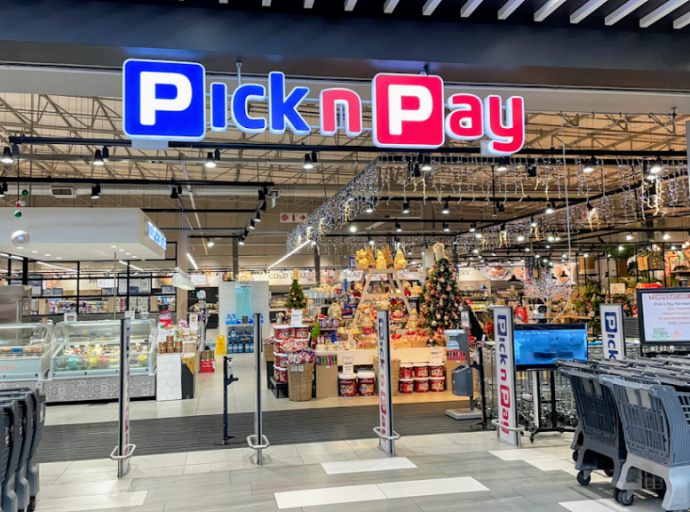
South African retailer Pick n Pay is continuing with its recovery strategy, which focuses on closing or converting loss-making stores in the country.
Reporting its latest results for the year ended 2 March 2025, the group’s strategy appears to be paying off, with headline losses narrowing by over 60%.
It said this includes like-for-like turnover at company-owned supermarkets increasing by 3.3% year-on-year, with positive like-for-like volume growth.
“Steady progress has been made over the past 18 months, with like-for-like growth improving from -0.5% in H2 FY24 to 3.1% in H1 FY25, and 3.6% in H2 FY25,” it said.
Pick n Pay noted that a total of 40 loss-making Pick n Pay supermarkets were closed or converted.
25 company-owned supermarkets were closed, seven were converted to franchise stores, and eight were converted to company-owned Boxer stores.
Boxer’s results, reported earlier this month, noted that a total of 15 Pick n Pay stores were converted to Boxer stores during the year, including the aforementioned eight supermarkets and seven liquor stores.
Notably, Boxer said it experienced an uptick in business in these stores after being converted, showing that the strategy is working in the group’s favour.
As a result, the total number of Pick n Pay supermarkets, both company-owned and franchise stores, declined by a net of 45 stores to 570 supermarkets as of March 2025.
This includes 289 company-owned supermarkets and 21 hypermarkets, and 260 franchise supermarkets.
Another sign that the strategy is paying off for Pick n Pay is the reduction of about R1 billion in trading losses from the segment.
The Pick n Pay segment’s FY25 trading loss reduced to R549 million on a -0.7% trading margin from R1.5 billion on a -2.0% trading margin in FY24.
The entire FY25 trading loss reduction was driven by a significant H2 FY25 improvement, with the trading result swinging from a R864 million loss in H2 FY24 to a R170 million profit in H2 FY25.
While business seems to be picking up in other segments, Pick n Pay’s traditional stores are still under pressure, the group is seeing significant growth in other parts of the business, including in digital and clothing.
Pick n Pay Clothing saw a net opening of 30 stores over the period, with like-for-like sales increasing 7.7%.
This brought the total to 415 stores, consisting of 396 company-owned and 19 franchise stores.
FY25 Clothing turnover growth from standalone stores was 11.6%. For the first 52 weeks of the year, turnover growth was 9.9% and 2.0% like-for-like.
Pick n Pay noted that port delays and a late start to winter drove a soft start to the year, but performance improved in the latter part of the year, with H2 like-for-like sales growth of 3.8%.
“Considering the high base, the group is pleased with the second half performance,” it said.
The group also saw a marked improvement in its online business, especially its Asap mobile app and its partnership with Mr D.
FY25 Online retail turnover, reported within PnP SA Supermarkets, grew 48.7% year-on-year (53-week basis). Turnover growth for the first 52 weeks of the period was 44.6%.
The scale gains achieved have resulted in the online business now being profitable on a fully costed basis,” Pick n Pay said.
While Online turnover growth was initially mostly driven by company-owned stores, Asap is now being increasingly adopted by franchisees, with triple-digit FY25 growth in franchise, it said.
“The Asap technology has been completely re-platformed over the last 18 months, and a new and upgraded Asap app was launched in April 2025,” it stated.
The app now integrates Asap with Smart Shopper, along with value-added services and AI-driven functionality.
The group said that it will be rolling out a host of new features to fuel growth in the segment in FY2026. Pick n Pay’s website will also relaunch with the Asap on-demand service rolling out from 1 June 2025.
*This article was first published by Business Tech
A bird flu outbreak hits Brazil, prompting the Department of Agriculture to suspend all import trades. This action follows the announcement by the Brazilian Ministry of Agriculture reporting an avian influenza (Bird Flu) case in the Rio Grande do Sul area.
This particular outbreak impacts the South African chicken industry since Brazil is the country’s largest poultry supplier to date.
The Department of Agriculture noted that only heat-processed poultry products, where the risk of transmitting the virus has been mitigated, will be allowed in South Africa, while other poultry products remain suspended until further notice.
The suspension of poultry imports adversely affects the South African Association of Meat Importers and Exporters (AMIE). The Chief Executive Officer of AMIE stresses that the suspension could potentially create food insecurity in the country.
He emphasizes, “A full ban on Brazilian poultry imports to South Africa will have devastating consequences for the South African poultry meat processors and consumers, particularly the most vulnerable in our society. Imported poultry not only fills the country’s poultry consumption gap but also provides the necessary competition to ensure that prices are kept in check.” He also emphasizes that chicken is the most affordable protein source for many South Africans, and that the disruption in the supply of poultry products, including bone-in and mechanically deboned meat (MDM), will significantly drive up prices and impact food security.