Free State Targets Surgical Backlogs
The three-day Cataract Marathon, held over the weekend at Boitumelo Regional Hospital in Kroonstad, was a great success, with over 100 patients receiving treatment.
Screening was conducted last week Friday with cataract operations scheduled for Saturday and Su...
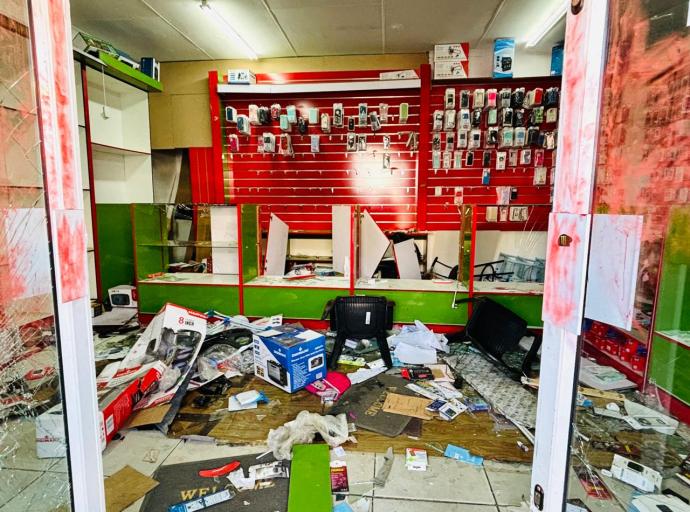
What began as social media calls for a shutdown against foreign nationals in Mangaung escalated into overnight unrest across parts of Bloemfontein and Botshabelo, leaving businesses damaged, schools disrupted and communities trying to recover after hours of violence.
Posters calling for a shutdown started circulating on social media on Sunday, 24 May, with messages linked to action against foreign nationals.
While some residents later shared messages claiming the shutdown would not go ahead, tensions rose as the night unfolded.
By Sunday evening and into the early hours of Monday, unrest had spread through several communities in Mangaung.
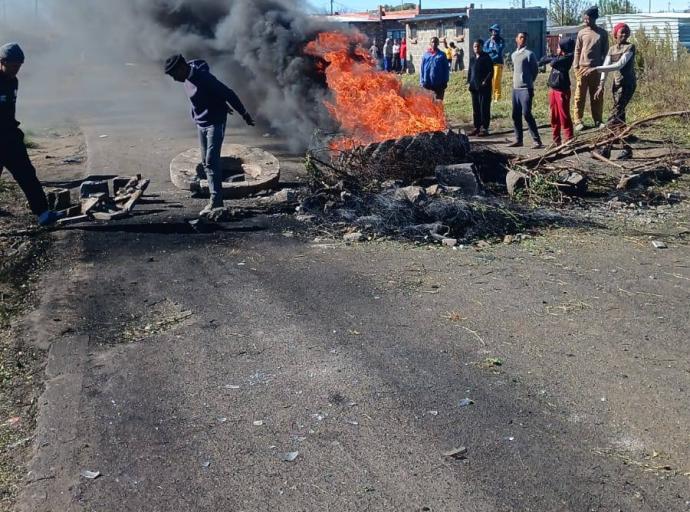
Residents reported looting and vandalism targeting shops owned by foreign nationals, while protesters clashed with police, throwing stones and burning tyres on roads in some areas as law enforcement worked to contain the unrest.
The impact was felt across the metro by Monday morning.
Some schools remained closed for the day, scholar transport services were disrupted and parts of interstate bus routes were temporarily halted as authorities monitored the situation and residents assessed damage.
For many people, the effects were immediate and deeply personal. Business owners whose shops were targeted were left cleaning up damaged property and trying to salvage what remained of stock lost during the night.
Workers employed at affected businesses were also left uncertain about what comes next.
A community member at the Rocklands shopping centre, who asked not to be identified, said he now faces an uncertain future after the shop where he worked was damaged.
“These same foreign business owners gave me a job,” he said. “Now I don’t know how I’m going to provide for my family, he said.
Amid the unrest, Mangaung Metro’s Executive Mayor Gregory Nthatisi issued an appeal for calm.
“We condemn the violence. Destruction and intimidation will worsen already difficult conditions in our communities.
“The Municipality wishes to state unequivocally that no grievance, irrespective of its nature, justifies lawlessness, violence, looting, intimidation, destruction of property, or the disruption of schooling and essential public services, Ntatisi said in a media statement issued today.
He says ongoing unrest threatens community safety, economic activity and service delivery, particularly in working-class communities where damage to infrastructure and business closures often have the deepest impact.
The mayor also called on residents to reject vigilantism, xenophobia and mob justice, saying matters involving immigration and criminal conduct must be handled through lawful state institutions.
The municipality confirmed it is working closely with law enforcement and other stakeholders to monitor affected areas and reduce further disruption, while police remain visible in several parts of Mangaung.
For people to stand for the political leadership positions like ward counsellor, mayor, it is for the good of the public and to serve the people.
South Africa has been a witness of many political infights that has brought a lot of people to question whether they are in these positions for personal gains or for the job is actually about.
According to a political analyst Professor Sethulago Matebesi in most instances in South Africa, some people stand for these positions because they carry power and status that at times does not serve in the interest of the people.
“Unfortunately the power that these people get out of these positions, the acquired status of being a mayor and a counsellor, leads to many other issues, which unfortunately doesn't serve the public good. That is too much power, access to resources, like for instance, now suddenly a counsellor can manipulate appointments, a counsellor will have input into appointments, but also where some of these political appointees play a critical role in directing where certain tenders can go and all that,” he said.
Adding that this also happens as a result of the high unemployment rate that the country is currently battling.
“its just perhaps an opportunity, a genuine opportunity for employment. So we cannot say all people join, or want to become counsellors because they are corrupt, or they want to advance their own.”
Matebesi also menstioned that others join these kinds of positions, or raise their hands, because they want to improve the well-being of the residents.
He emphasized that this has inherent challenges, for the local government elections, because it then creates an unstable environment.
“Political parties must be explicit, in terms of how they will navigate, around this particular issue, its one thing to have rules and regulations, which is in any case on paper, but you also need the caliber of leaders, that demonstrates to their followers, that they forever are respecting, the principles of democracy.”
According to another political analyst, Ongama Mtimka, intraparty rivalry has been biggest source of concern.
“Although South Africa holds generally free, fair, and peaceful elections, unfortunately intraparty rivalry has been biggest source of concern in particular hotspots as a result of, unemployment in general and lack of opportunities and also as a result of the highstakes that the offices of councilors hold as points of distribution for patronage networks,” he said
Adding that for the internal fights that take place, some of them are enabled by parties that have a facade of democracy.
To survive the high unemployment rate in the country, it seems that for some, the only way out is to become a political leader and assume power that would open doors for them and guarantee a safe future.
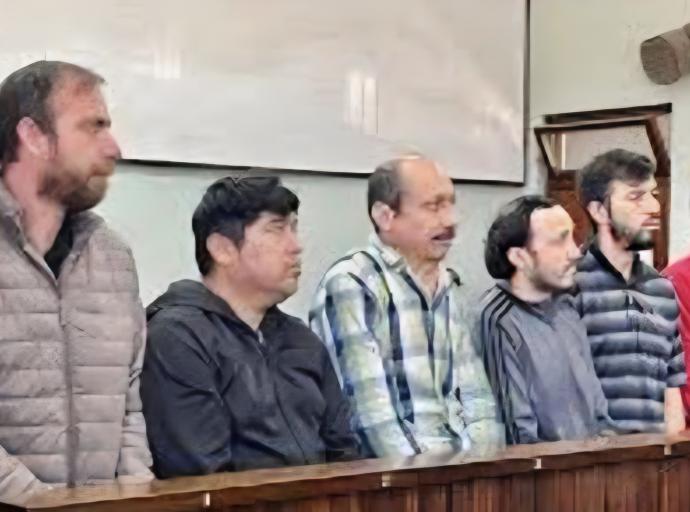
Thirteen accused linked to the multimillion-rand methamphetamine laboratory uncovered near Swartruggens in North West have appeared in the Swartruggens Magistrate’s Court, with the matter postponed to 12 June for formal bail applications and further investigations.
The case, already regarded as one of the largest drug busts in the province in recent years, expanded after farm owners Chantel Adele Schutte and Johann Louis Schutte handed themselves over to authorities before joining the growing list of accused.
According to Hawks spokesperson Colonel Katlego Mogale, the pair face charges relating to the manufacture of illicit drugs, illegal possession of hazardous chemicals, and illegal possession of precious metals.
The accused appeared alongside Tyron John Schutte, Kyle Schutte, Ismael Afiado Massingue, Lourenco Constantino Cumbane, Tobias Soyani, Vusi Amos Mkambi, Naome Jacquelin Lopez Madrid, Fabian Astorga Ramirez, Jesus Alonso Medina Astorga, Luis Alberto Ramirez Rios and Jose Andres Medina Astorga.
Several of the accused, including five Mexican nationals, are also facing charges under the Immigration Act after preliminary investigations allegedly revealed they were in South Africa illegally.
Authorities previously confirmed that approximately 481kg of methamphetamine, commonly known as tik, was seized during the Hawks-led operation conducted on a farm outside Swartruggens. Investigators also confiscated manufacturing equipment, large volumes of chemicals and three firearms believed to be linked to the operation.
Mogale said the quantity of drugs seized could still increase as forensic experts continue processing the extensive crime scene.
The estimated street value of the confiscated drugs is believed to exceed R100 million, while the laboratory infrastructure itself could be worth more than R1 billion.
Four of the accused have indicated their intention to apply for bail once proceedings resume next month.
Anger boiled over in Hennenman this week as frustrated residents of Phomolong brought the township to a standstill, demanding jobs from a multi-million-rand solar energy project they say has excluded the very community it was meant to uplift.
The unrest, linked to recruitment disputes surrounding the Middelpunt PV Solar Project, triggered a full-scale shutdown that disrupted schools, healthcare services and daily life as residents accused contractors of hiring workers from outside the township while locals remained unemployed.
For many residents, particularly unemployed youth, the solar project had represented a rare opportunity for economic relief in a community battling severe poverty and soaring unemployment levels. But tensions exploded after allegations surfaced that recruitment processes were unfair and lacked transparency.
Roads were barricaded, businesses were affected and access to clinics became increasingly difficult as the protest intensified. Anxiety also mounted over matric learners preparing for critical mid-year examinations amid the instability.
The escalating crisis forced urgent intervention from the Free State Provincial Government.
Premier MaQueen Letsoha-Mathae first met with residents on 15 May, assuring the community that the government would return after consultations with all parties involved.
By 19 May, Acting Premier Jabu Mbalula convened a high-level stakeholder meeting in Hennenman involving representatives from Middelpunt PV Solar, the Matjhabeng Local Municipality, provincial officials and community leaders in a bid to calm the situation.
Also present were Health MEC Monyatso Mahlatsi and councillors Maxie Badenhorst and Phehello Nthuba.
During tense engagements, community leaders reportedly rejected a proposed 60/40 recruitment model, insisting that Phomolong residents should be prioritised for jobs linked to the project.
Residents further demanded that hiring processes be managed through a verified local database to prevent alleged favouritism, manipulation and the recruitment of outsiders.
Mbalula acknowledged the community’s frustrations, saying their concerns were legitimate.
“We have always said that local communities must be the primary beneficiaries of projects in their towns and we stand by that,” he said.
At the same time, he warned against individuals attempting to exploit the unrest for personal agendas and appealed for calm.
“Despite the differences between different parties, the education and future of learners must not be compromised,” Mbalula said as concerns grew over matric pupils scheduled to write exams.
After marathon negotiations, a breakthrough was finally reached on 20 May when a Memorandum of Demands was signed between the provincial government, Middelpunt PV Solar investors and community representatives, officially ending the shutdown.
The agreement commits the company to implementing a more transparent and inclusive recruitment process, with local residents expected to receive priority consideration for employment opportunities.
Mbalula welcomed the resolution and praised residents for protesting peacefully despite heightened tensions.
“I commend the community for maintaining peace and not vandalising state property. Their demands are reasonable, and residents must be prioritised in projects implemented in their area,” he said.
With calm restored, schools, clinics and other essential services have resumed operations. However, the standoff has once again exposed growing tensions around large infrastructure and renewable energy projects across South Africa, where communities increasingly demand direct economic benefits from developments taking place on their doorstep.
For Phomolong residents, the message was unmistakable: development means little if local communities are left behind.
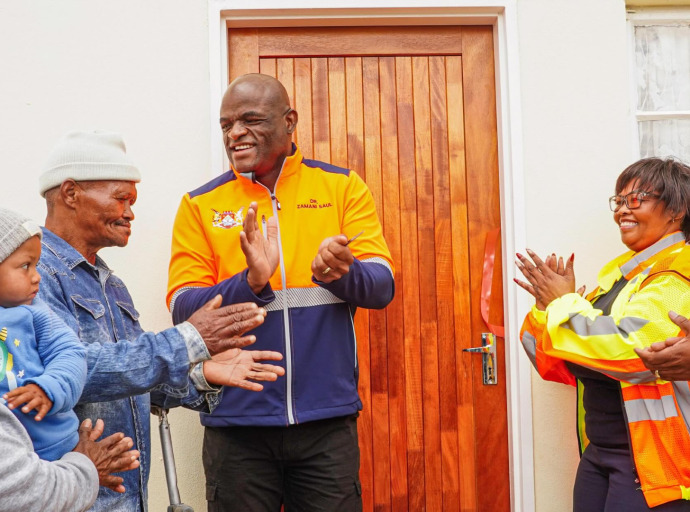
Northern Cape Premier, Dr Zamani Saul, is drawing national attention for measurable service delivery progress following the handover of 50 newly built homes under the Calvinia 200 Housing Project in Hantam Local Municipality.
Delivered alongside the Northern Cape Cooperative Governance, Human Settlements, and Traditional Affairs (Coghsta) MEC, Bentley Vass, the latest phase brings the completed total to 100 homes, with another 100 units expected to be finished by the end of 2026. The Calvinia project forms part of the province’s broader R1 billion housing programme aimed at reducing backlogs and restoring dignity in underserved communities.
At a time when many provinces continue to battle collapsing municipalities and financial instability, the Northern Cape is increasingly positioning itself around implementation-driven governance.
Beyond housing, the provincial government has expanded investment into roads, healthcare, water security, and renewable energy, treating youth development and solar energy initiatives as central pillars to stimulate local economic activity.
Saul has consistently linked these interventions to stronger governance systems and tighter municipal oversight. He recently confirmed a Section 139 intervention in Sol Plaatje Municipality as part of a 10-point turnaround strategy designed to restore administrative capacity and rebuild public confidence.
Saul also highlighted improved municipal financial performance across the province, noting that Northern Cape municipalities achieved an 87% expenditure rate on the Municipal Infrastructure Grant during the 2024/2025 financial year. According to Saul, this reflects marked improvements in local planning and implementation capacity.
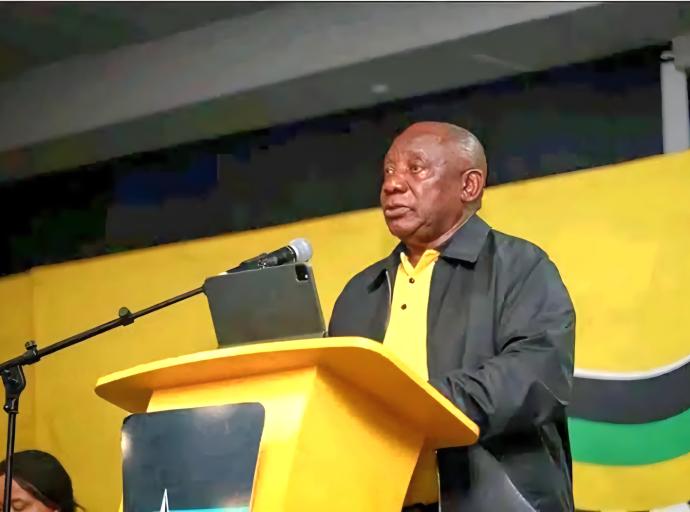
During the recent Taking Parliament to the People programme hosted by the National Council of Provinces, Saul argued that South Africa is moving in the right direction under President Cyril Ramaphosa, particularly where coordinated interventions are used to stabilise struggling councils.
He stressed that turnaround plans are not simply about administrative recovery, but about rebuilding functional service delivery systems.
Political analyst, Sanet Solomon-Madonsela, a lecturer at the University of the Free State (UFS), believes the ANC in the Northern Cape has adopted a noticeably more responsive approach to infrastructure implementation. She points to large-scale developments across Kimberley and surrounding townships as visible examples of investment that have helped the party maintain political support.
According to Solomon-Madonsela, struggling provinces like the Free State and North West - which frequently rank among the country's weakest municipal performers in Auditor-General reports - could draw valuable lessons from this approach.
She notes that several Free State communities continue to consist largely of informal housing, highlighting the urgent need for improved planning. She argues that political parties strengthen themselves when they focus on governance and respond directly to community needs.
As construction continues on the remaining units, Saul’s administration continues to position itself around a delivery-driven agenda, turning policy commitments into visible change on the ground.
For residents in Calvinia, the housing development represents far more than governance reports or political targets. It stands as a visible sign of delivery, offering dignity, stability, and proof that government programmes can translate into meaningful improvements.
The embattled Matjhabeng Local Municipality is positioning itself for a major economic revival, with more than R40 billion in investments secured since 2022 and fresh multi-billion-rand projects expected to reshape the region’s economy and infrastructure.
Executive Mayor Thanduxolo Khalipha said the municipality is intensifying efforts to attract investors, create jobs, and rebuild confidence in Matjhabeng as a competitive destination for business and development.
“As part of these efforts, the municipality will host an Investment Summit in July 2026, bringing together government, business leaders, investors, development agencies, and strategic partners to explore economic opportunities within Matjhabeng,” said Khalipha when briefing the media on Sunday.
The summit is expected to showcase opportunities in mining, agriculture, infrastructure development, tourism, and industrial expansion, while also promoting investment-ready projects across the municipality.
According to Khalipha, the initiative aims to stimulate economic growth, support small businesses, create employment, and restore investor confidence in the municipality.
He stressed that partnerships between government, business, and communities remain critical to unlocking inclusive growth and improving living conditions for residents.
Among the municipality’s key priorities is the revival of the Liberty Centre, a once-popular shopping complex whose decline left many residents frustrated.
Khalipha revealed that investors have already expressed interest in redeveloping the site, with a proposed investment of R250 million expected to transform the area.
“They have already informed us that they want to invest an amount of R250 million, and if everything goes well, construction will start between September and October,” he said.
The mayor added that developers have already presented plans that could significantly change the economic landscape of Matjhabeng.
“In the next two weeks, we will be interacting with organisations dealing with hotels and urging them to come and build hotels here in Matjhabeng,” Khalipha said.
Another major development being considered is a R1.2 billion mixed-use investment near the former Vista University site, focused on student accommodation and retail infrastructure.
“It’s not only student accommodation, but also a mall and several other developments that they are going to build on that piece of land,” the mayor said.
Khalipha appealed to investors to continue backing the municipality’s recovery plans and called for stability within local government structures.
“We are aware that there are people who want to destabilise this municipality,” he said.
He accused certain individuals of attempting to disrupt the administration for personal gain.
“What they want to do in this municipality is loot, which is what they have been doing in the past. So we are people who are disturbing them,” Khalipha added.
Despite ongoing political and financial challenges, the municipality believes the planned investments could mark the beginning of a major turnaround for Matjhabeng’s economy and infrastructure.