Free State Targets Surgical Backlogs
The three-day Cataract Marathon, held over the weekend at Boitumelo Regional Hospital in Kroonstad, was a great success, with over 100 patients receiving treatment.
Screening was conducted last week Friday with cataract operations scheduled for Saturday and Su...
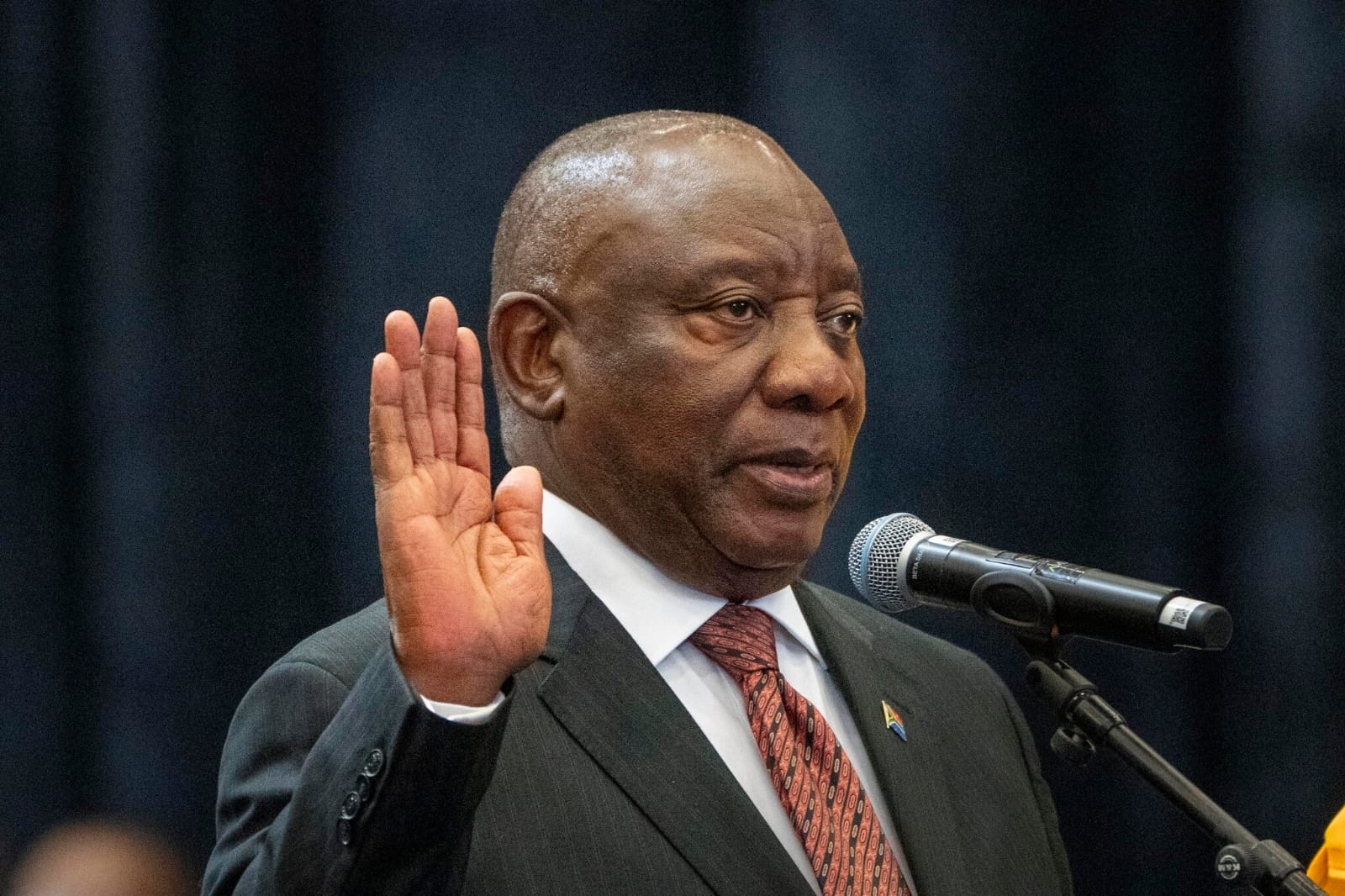
The Constitutional Court’s judgment on 8 May 2026, has fundamentally altered the trajectory of South African politics. By declaring the National Assembly’s previous handling of the Phala Phala report unconstitutional, the apex court has stripped away the procedural armour that once shielded President Cyril Ramaphosa post the 2020 burglary at his farm.
The core of this judicial intervention lies in its critique of legislative and party gatekeeping which occasionally amounted to the subversion of transparency.
In late 2022, the ANC used its then-commanding majority to vote down the Section 89 Independent Panel report. That report had found prima facie evidence of serious misconduct regarding foreign currency concealed within the President's private furniture.
Now the African Transformation Movement (ATM), which originally instituted the impeachment process, has scored a very important victory and subsequently hailed the recent ruling as a victory for the country's founding principles.
“By declaring Rule 129 (i)(b) inconsistent with the Constitution, setting aside the National Assembly vote on December 13, 2022, and directing that the independent panel’s report be referred to an impeachment committee, the Court has restored the accountability process required by our constitutional order,” ATM national spokesperson, Zama Ntshona, said.
Chief Justice Mandisa Maya’s ruling has now struck down Rule 129I for being unconstitutional. The court found that Parliament cannot simply vote away a finding of substance without a public ventilation of the facts.
The Economic Freedom Fighters (EFF) - co-litigants in the application - described the judgment as a definitive end to the use of parliamentary numbers to bypass the law.
“The EFF correctly argued before the Constitutional Court that this discretion was unconstitutional because it allowed Parliament to arbitrarily override the findings of an independent panel and frustrate the constitutional purpose of the impeachment process,” the party stated in a statement.
In the previous administration, the ANC acted as a protective shield for Ramaphosa. However, in the current 2026 Parliament, that protective barrier has effectively shattered. The most significant threat to the Ramaphosa is the loss of the ANC’s outright majority.
Without the 201 seats required to unilaterally block proceedings, the Ramaphosa is left without a numerical buffer.
The EFF further contended that the ruling validates their long-standing position that state institutions were manipulated to protect the executive.
“This judgment is a decisive victory for constitutional accountability and confirms what the EFF has maintained from the onset of this scandal: that the institutions of the state, including Parliament, were manipulated to protect Cyril Ramaphosa,” the statement continued.
ATM, on the other hand, remains steadily on the offensive against Ramaphosa, whilst emphasising that the revival of the case transcends partisan interests to focus on the integrity of the state.
“For ATM, the Phala Phala matter has never been about personalities, factions, or political theatre. It has always been about moral governance, the rule of law, and the protection of the people’s trust,” Ntshona said.
Government of National Unity (GNU) dynamics have further increased this political exposure, with senior coalition partners like the Democratic Alliance (DA) having indicated that they will not shield the Ramaphosa from accountability.
Meanwhile, the Presidency has responded by reiterating a commitment to the legal frameworks governing the republic. Spokesperson, Vincent Magwenya, noted that the Ramaphosa remains ready to engage with the revived proceedings.
“The president has been consistent in providing his full assistance to the various enquiries into this matter. President Ramaphosa maintains that no person is above the law and that any allegations should be subjected to due process without fear, favour or prejudice,” said Magwenya.
The revived impeachment process will follow a rigorous, three-stage constitutional path. Parliament must first amend its internal rules to allow for an automatic referral to an inquiry.
An ad hoc impeachment committee will then be established to lead the investigation. Unlike previous panels, this body has the power to summon witnesses under oath and prioritise the examination of financial records.
This process, which will probably be televised, will strip away the privacy Ramaphosa has maintained since the scandal broke. It forces a level of public scrutiny that was previously avoided through parliamentary manoeuvring.
Once the committee completes its investigation, the National Assembly will vote on a final motion of removal. While a two-thirds majority is required for removal, the political damage may prove fatal for the ANC leading to the local government elections on 4 November 2026.
The North West Provincial Legislature’s Ad Hoc Committee investigating allegations of interference involving Clifton J Groep has recommended that possible cases of perjury uncovered during its hearings be referred to the National Director of Public Prosecutions for further consideration.
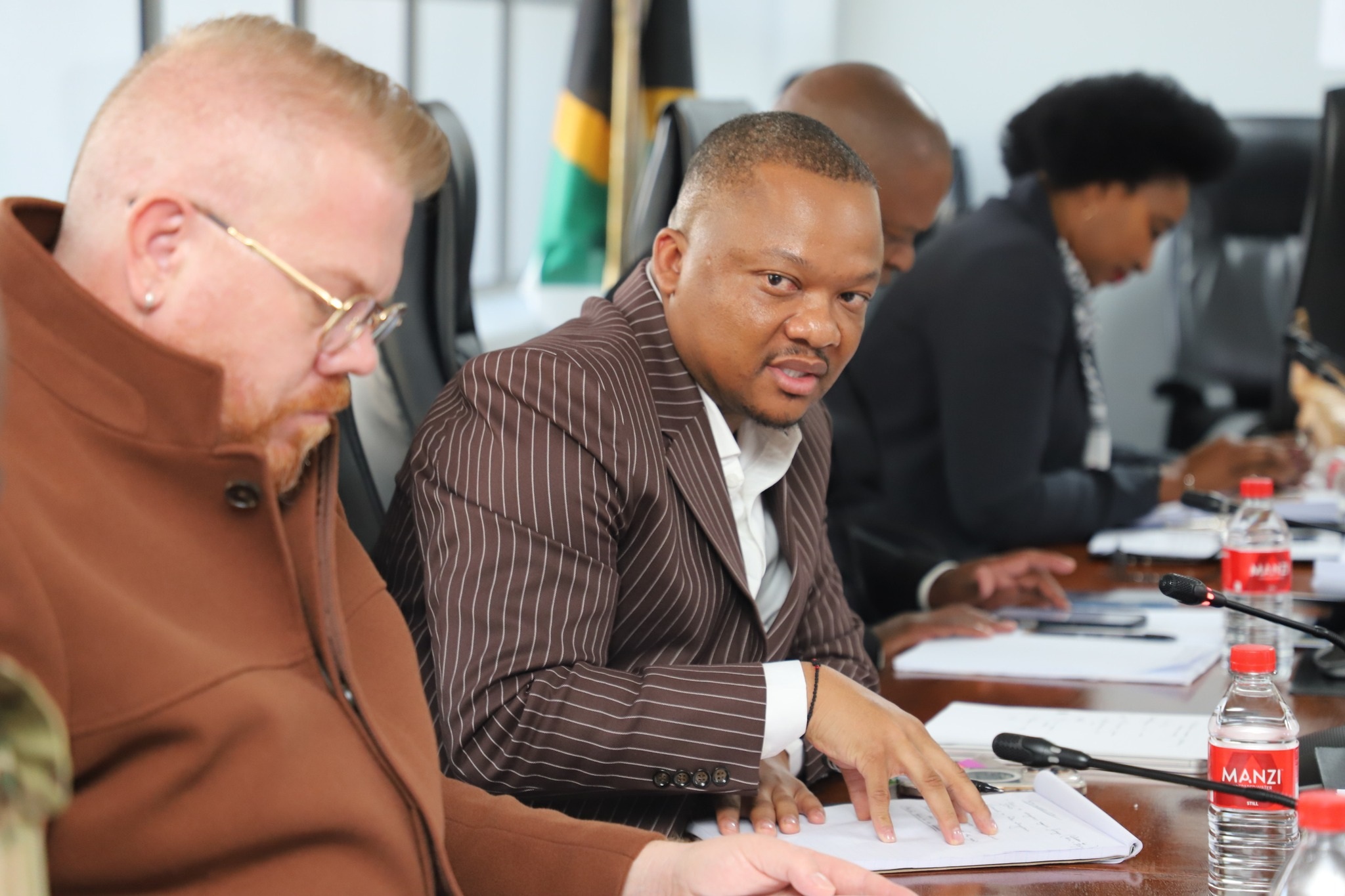
Addressing the media in Mahikeng on Thursday, committee chairperson Nathan Oliphant confirmed that the committee had entered the deliberation phase of its investigation after concluding months of public hearings into allegations involving members of the North West Provincial Legislature and the Naledi Local Municipality mayor.
The Ad Hoc Committee was established under Rule 186 of the Standing Rules of the North West Provincial Legislature to investigate allegations of interference against members of the legislature by Groep.
Oliphant said the committee received an analysis report from its legal team, led by senior counsel Pule Seleka, outlining “multiple contradictions” in witness testimonies presented during the hearings process.
According to the committee, the legal report identified possible instances of perjury arising from conflicting evidence provided by several witnesses who testified before the inquiry.
“Following deliberations on the contents of the report, the Committee adopted the report with recommended amendments arising from its deliberative processes,” Oliphant said.
The investigation, which began in November 2025, heard testimony from a wide range of witnesses, including current and former municipal officials, provincial government representatives and political figures connected to the matter.
Those who appeared before the committee included former Naledi Local Municipality municipal manager Modisenyane Thompson Segapo, former director of corporate services Thabo Appolus and North West Premier Lazarus Kagiso Mokgosi.
The hearings were held at the Sun City Convention Centre and streamed publicly on the legislature’s Facebook platform as part of efforts to ensure transparency and public participation.
Oliphant stressed that the committee’s work had been guided by principles of fairness, impartiality and natural justice, adding that the next phase of proceedings would focus on finalising procedural processes and recommendations before reporting back to the House.
This was originally posted on The North West Provincial Legislature Facebook page
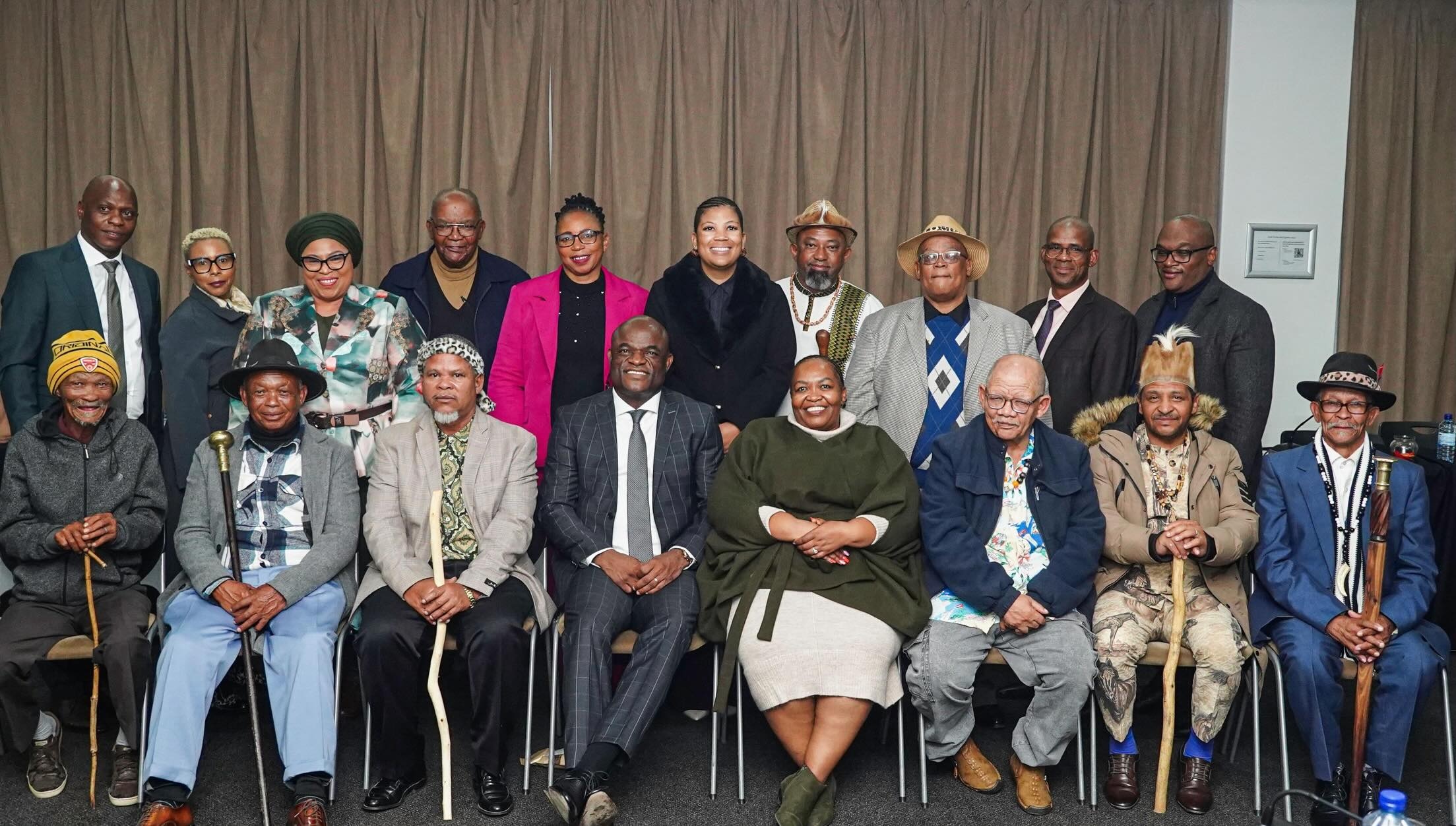
The Premier Dr. Zamani Saul, together with Members of the Executive Council and the Chairperson of the Northern Cape Provincial House of Traditional and KhoisSan Leaders Kgosi Pelonomi Toto have today met with leaders of the KhoiSan in the Northern Cape.
The meeting was convened by Premier Saul in an effort to strengthen relations between the Provincial Government and the KhoiSan Leaders while the KhoiSan commission concludes its work.
This session was well received by the KhoiSan Leadership in attendance who saw this as a landmark re-purposing of the relationship between Government and themselves.
The Premier expressed appreciation to the KhoiSan leaders for the work that they continue to do in the various communities which they serve.
Provincial Government has made a commitment to meet bi-annually with the KhoiSan leaders.
A convicted murderer serving a life term behind bars for allegedly shooting his ex-girlfriend, walks away a free man after he successfully appealed to the High Court in Mahikeng.
Johannes Demcy Dielele was convicted of the murder of his former girlfriend and mother of his child, and sentenced to life imprisonment by a lower court; however, the High Court of South Africa, North West Division, Mahikeng, found that the State had not proven its case beyond a reasonable doubt.
It was the State’s case that Dielele, who was sentenced in October 2023, shot and killed his ex-girlfriend at an outside toilet in the presence of her cousin, who accompanied her.
The cousin - being the only other eye witness of the alleged shooting incident - died before the commencement of trial in an unrelated accident.
The State’s version was that Dielele, after contacting the deceased’s mother and sister when she broke contact with him due to their relationship having broken down, drove to their home on the evening of August 4, 2018, in Verdwaal, Itsoseng.
The deceased and her cousin had gone to the outdoor toilet on his arrival, and Dielele followed them outside.
“Shortly thereafter, (the deceased’s mother and sister) heard the cousin screaming. They ran outside. The deceased’s mother saw Dielele walking backwards from the direction of the toilet towards his vehicle. She asked him what had happened; he did not respond.
“He drove off, colliding with the gate as he left. The deceased was found near the toilet with a gunshot wound to the right side of her head. She was declared dead by paramedics. The post-mortem report by Dr Maleka Samuel Letebele confirmed the cause of death as penetrating head trauma due to a gunshot to the head. The fatal projectile was discharged from a 7.65mm calibre firearm,” court documents read.
No eyewitness observed the actual shooting. Neither the deceased’s mother nor the sister saw Dielele in possession of a firearm at any time.
He was arrested some days after the incident. A 9mm pistol and three rounds of 9mm ammunition, different to the ballistic evidence of the murder weapon, were found in a school bag in the vehicle in which he was travelling.
During the trial, Dielele did not testify and called no witnesses in his defence.
The State sought to introduce the cousin’s account through hearsay evidence.
The High Court held that the balancing exercise conducted in the hearsay ruling was insufficient in that the cousin’s oral statements to the mother and sister were not contemporaneously recorded and that the cousin was under emotional stress.
Acting Deputy Judge President Andre Petersen said: “The circumstances attending the making of these statements do not provide the hallmarks of trustworthiness that would warrant their reception over the objection of an accused who cannot cross-examine the declarant… the prejudice to Dielele is severe.
“Her statement, if accurate, is the only eyewitness account placing the appellant as the shooter. The accused is unable to challenge her perception, test her proximity to the events, probe her state of mind, or expose any motive to falsify… the court a quo found that the hearsay was ‘corroborated’ by the evidence of the deceased’s mother and sister. That finding misdirected the enquiry. Corroboration must be independent evidence going to the critical fact that Dielele was the person who fired the weapon.”
Petersen, arriving at the acquittal decision, said with the hearsay excluded and the ballistic evidence positively disconnecting Dielele from the murder weapon, other inferences remain reasonably possible.
“While this evidence creates a strong suspicion, however grave, is not proof beyond a reasonable doubt,” said Petersen.
Dielele was acquitted of murder, unlawful possession of a firearm, and unlawful possession of ammunition.
The police have announced the seizure of counterfeit and illicit goods worth more than R17 million, following a series of coordinated nationwide operations carried out in April 2026.
The operation was led by the South African Police Service (SAPS) Counterfeit and Illicit Goods Units, working with partner law enforcement agencies, and involved 33 raids across the Free State, Gauteng, KwaZulu-Natal, Mpumalanga and the Western Cape.
Police Spokesperson Lt Col Amanda van Wyk said the police are continuing efforts to stop the sale of fake goods, which harm consumers, damage businesses, and break the law.
"These operations resulted in the seizure of large quantities of counterfeit and illicit goods, including branded clothing, sports apparel, cellphone accessories, toys, pharmaceuticals, consumables, as well as counterfeit liquor and cigarettes", van Wyk said.
"Police arrested sixteen suspects in total, of whom nine were arrested for contravening the Immigration Act, five for contravening the Counterfeit Goods Act, and two for contravening the Liquor Act".
She also urged members of the public to think twice before buying counterfeit goods, warning that they are often unsafe, unregulated, and illegal.
"These products are often manufactured and distributed outside regulated systems, with no regard for quality standards, safety, or lawful trade practices.
"Legitimate manufacturers and retailers lose market share to illegal traders, leading to reduced production and job losses. Counterfeit goods infringe on the intellectual property rights of legitimate brand owners".
The police also thanked all partner departments, law enforcement agencies, and stakeholders for their continued support in fighting the illegal trade in counterfeit and illicit goods across the country.
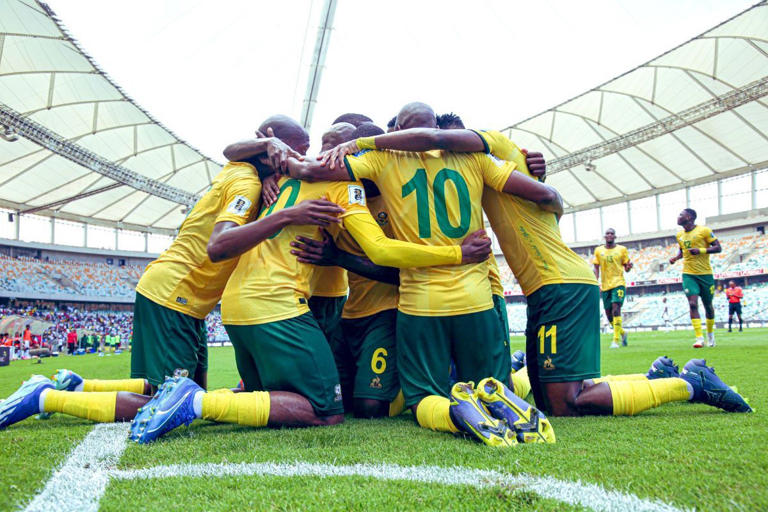
With less than 35 days before South Africa national football team begin their FIFA World Cup campaign against hosts Mexico at the iconic Estadio Azteca, head coach Hugo Broos is still wrestling with several key selection decisions ahead of naming his preliminary squad by 11 May.
Despite securing qualification, Bafana are yet to fully settle combinations in defence, midfield and attack following an underwhelming Africa Cup of Nations campaign earlier this year.
One of Broos’ biggest concerns remains central defence, where Mbekezeli Mbokazi still lacks a fixed partner. Both Ime Okon and Siyabonga Ngezana have been tested alongside him, although experienced defender Grant Kekana could still emerge as the preferred option because of his leadership and experience.
Competition in midfield is equally intense. Bathusi Aubaas now faces a fight to secure a place in the final squad, with Siphesihle Sithole, Jayden Adams, Teboho Mokoena and Thalente Mbatha all strengthening their claims for inclusion.
Broos is also weighing up options in the creative number 10 role, where rising star Relebohile Mofokeng has been tested alongside Sipho Mbule, although Mbule is reportedly unlikely to make the final cut.
Veteran playmaker Themba Zwane has also returned to the conversation. While “Mshishi” remains one of South Africa’s most gifted attacking players, concerns over his recent form and age could influence Broos’ final decision.
According to FIFA regulations, nations must submit preliminary squads by 11 May, while final squads of between 23 and 26 players are due on 1 June. Broos is expected to announce an initial squad of between 37 and 50 players in the coming days as preparations intensify for South Africa’s return to football’s biggest stage.
This article was originally posted by THE SOUTH AFRICAN