Free State Targets Surgical Backlogs
The three-day Cataract Marathon, held over the weekend at Boitumelo Regional Hospital in Kroonstad, was a great success, with over 100 patients receiving treatment.
Screening was conducted last week Friday with cataract operations scheduled for Saturday and Su...
is now set to face an impeachment process in Parliament after the Constitutional Court ruled that the National Assembly acted unlawfully when it blocked proceedings linked to the Phala Phala scandal in 2022.
In a landmark judgment delivered on Friday, the Constitutional Court declared Rule 129I of the National Assembly unconstitutional and invalid, effectively reopening the Section 89 impeachment process against the president.
The apex court also overturned Parliament’s December 2022 vote in which ANC MPs used their majority to reject an independent panel report that found Ramaphosa had a case to answer regarding serious constitutional violations linked to the theft of US$580,000 from his Phala Phala farm.
The independent panel had previously found prima facie evidence suggesting Ramaphosa may have exposed himself to a conflict of interest, conducted outside paid work and potentially violated anti-corruption laws.
By order of the court, the report must now be referred to a formal impeachment committee established under parliamentary rules, where public hearings are expected to take place.
The judgment marks a major political victory for Julius Malema and the EFF, alongside the African Transformation Movement, who challenged both the parliamentary vote and the rule that allowed MPs to halt the impeachment process before a full inquiry could begin.
Chief Justice Mandisa Maya stated that accountability lies at the heart of the Constitution and that Parliament carries a responsibility to ensure the president is properly held accountable.
The court found Rule 129I unconstitutional because it allowed MPs to effectively “gatekeep” the impeachment process before evidence could be fully tested in a transparent public hearing.
“Rule 129I subverts this requirement of transparency,” the judgment stated, adding that Parliament had terminated the process before the factual issues were publicly ventilated in a structured and comprehensive manner.
Despite the ruling, Ramaphosa’s removal is not automatic. Any recommendation for impeachment would still require support from two-thirds of the National Assembly.
In a statement issued through spokesperson Vincent Magwenya, Ramaphosa said he respects the judgment and remains committed to the Constitution, judicial independence and the rule of law, maintaining that no person is above the law and that all allegations must follow due legal process.
This article was originally posted by Daily Maverick
That was the blunt message from Julius Malema after the Constitutional Court ruled that Parliament must establish an impeachment committee to determine whether Cyril Ramaphosa is fit to hold office over the long-running Phala Phala scandal.
Speaking outside the Constitutional Court in Braamfontein on Friday, Malema called on Ramaphosa to resign immediately following the landmark judgment delivered by Chief Justice Mandisa Maya.
The ruling overturned the National Assembly’s 2022 decision to reject findings from the Section 89 Independent Panel, which had found prima facie evidence that Ramaphosa may have violated the Constitution by failing to declare the theft of US$580,000 allegedly hidden at his Phala Phala farm and by not reporting the incident to relevant authorities.
“With this judgment, if we had a responsible president, he should be resigning,” Malema said, arguing that a sitting president cannot effectively govern while simultaneously preparing for impeachment proceedings.
The EFF leader also challenged Parliament Speaker Thoko Didiza to urgently establish the impeachment committee, while taking aim at the Democratic Alliance’s position within the Government of National Unity.
“Let us see the hands of the DA,” Malema said, questioning whether the party would still support impeachment now that it shares governance responsibilities with the ANC.
Meanwhile, the African Transformation Movement warned that Ramaphosa resigning before the process concludes could complicate efforts to hold him accountable. ATM spokesperson Zama Ntshona argued that impeachment proceedings require a sitting president and said South Africans still deserve answers about the scandal and those allegedly involved in shielding Ramaphosa from accountability.
The Democratic Alliance, through Cape Town Mayor and senior DA leader Geordin Hill-Lewis, said the party respects the judgment and would not protect wrongdoing for political convenience.
ANC spokesperson Mahlengi Bhengu defended Ramaphosa, insisting that predictions of impeachment were premature and reaffirming the governing party’s confidence in the president’s leadership despite the Constitutional Court ruling reopening one of the country’s most politically damaging scandals.
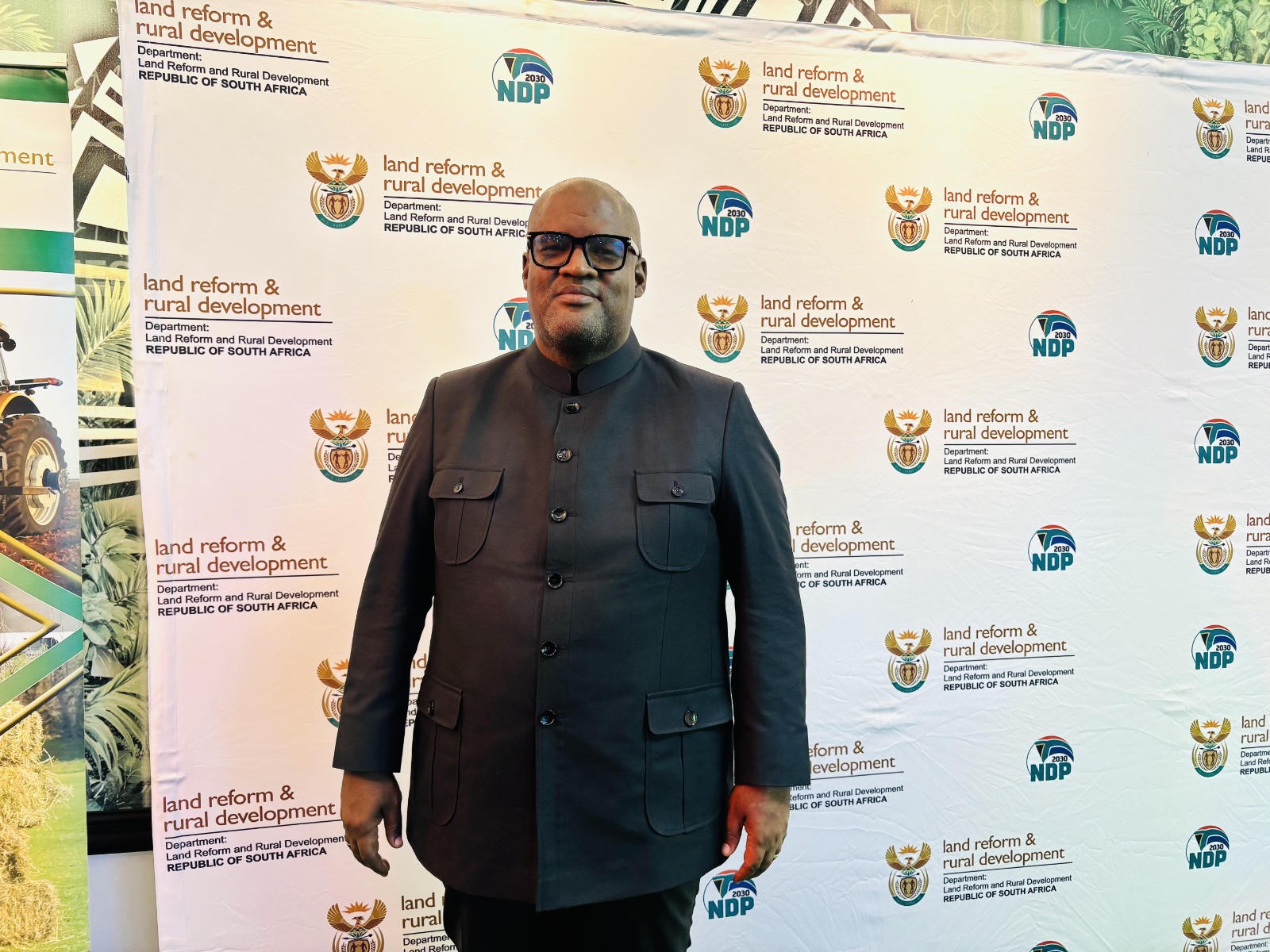
South Africa’s land reform programme is under renewed scrutiny after Minister Mzwanele Nyhontso conceded that many redistributed farms and communal land projects are failing to generate jobs, improve food security, or build sustainable rural economies long after land has been handed over to beneficiaries.
“If land reform is meant to restore dignity and economic freedom, why do so many redistributed farms and communal land projects still struggle to create jobs, improve food security, and build sustainable rural economies years after transfer?”
That was the pointed question posed by Journal News to Nyhontso during a departmental engagement focused on the future of South Africa’s rural land development reform programme.
Addressing stakeholders during an update session on land reform processes and rural development initiatives, Nyhontso acknowledged that many redistributed farms and communal land projects across the country continue to face severe operational and financial difficulties long after transfer.
“Today, I am here to provide an update on the ongoing work within the department,” the minister said, explaining that discussions began the previous day and were continuing as government prepared for further land transfer processes and engagements with affected communities and stakeholders.
He said government hoped the engagements would help “move the programme to the next level” and strengthen implementation across rural areas.
Responding directly to concerns over the poor performance of some land reform projects, Nyhontso admitted that beneficiaries often struggle because they lack sufficient capital, infrastructure, equipment, and technical support to sustain farming operations and rural enterprises.
“This is a challenge affecting many parts of South Africa,” he said. “We are operating under very difficult conditions.”
The minister further acknowledged that government is facing “serious issues” in ensuring long-term sustainability within the sector, while stressing that interventions are being developed to support communities and improve productivity on transferred land.
The discussion again spotlighted growing concerns over whether land reform is producing meaningful economic outcomes, as pressure mounts on government to ensure redistribution programmes create real opportunities rather than simply transferring ownership on paper.
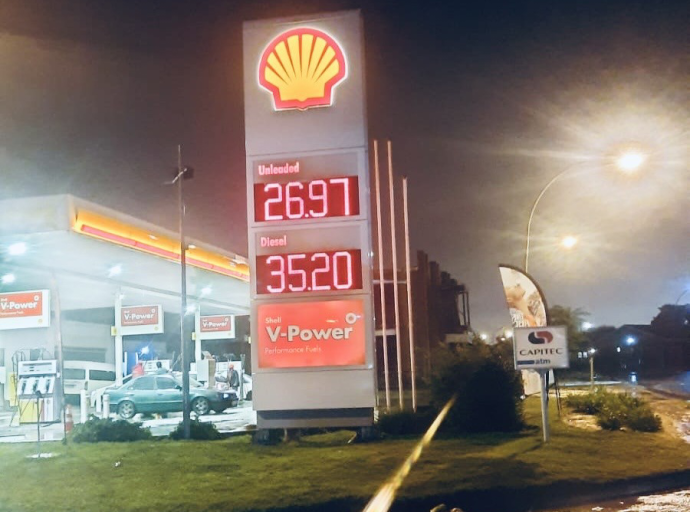
A steep fuel price hike is squeezing Free State taxi operators from both ends — forcing fare increases while driving cash-strapped commuters toward cheaper transport alternatives.
With diesel rising by R6.19 per litre and petrol by R3.27, operators across Bloemfontein, Botshabelo, Thaba Nchu and Excelsior say they are already losing passengers to buses and informal “four-plus-one” taxis as households cut back on transport costs amid mounting financial pressure.
Taxi fares on some routes have already increased from R15 to R18, a move the Greater Bloemfontein Taxi Association (GBTA) says was unavoidable as operators battle rising fuel, maintenance and insurance costs. According to Heidedal Route 031 chairperson Solly Julius, taxi owners have absorbed fuel increases for years, often keeping fares unchanged for up to four years despite fluctuating prices.
“We’ve reached a point where it is no longer sustainable,” the association said, describing the latest fare adjustments as the result of years of mounting operational pressure rather than a once-off response.
But the increases are already changing commuter behaviour. For many workers and students who rely on public transport daily, even a R3 increase per trip can add more than R100 to monthly travel expenses — pushing them to seek cheaper alternatives.
Taxi owner Tom Klassen said the impact is already visible.
“People are looking for cheaper ways to travel now,” Klassen said. “If buses or four-plus-one taxis are more affordable, commuters will choose them. That directly affects our business.”
Bus operators are among those seeing increased demand. Interstate Bus Lines (IBL), which services routes between Bloemfontein, Botshabelo and Thaba Nchu, offers commuter packages ranging from about R155.50 weekly to roughly R684 monthly — making buses a more predictable and often cheaper option for regular passengers.
Interstate Bus Lines chief executive officer George Mokgothu said commuters tend to reassess their transport choices when costs rise.
“When transport costs increase, commuters naturally begin looking at more affordable options,” he said. “Bus services offer stability because passengers know what they will pay over a week or month.”
He added that fuel hikes often trigger immediate shifts in commuter patterns.
“We usually see an increase in demand for bus services during sharp fuel price hikes. It shows how quickly commuters respond when costs rise.”
Meanwhile, informal “four-plus-one” operators are also attracting commuters by offering flexible fares that often undercut traditional taxi routes.
For taxi operators, that growing competition presents a difficult balancing act — raise fares and risk losing more commuters, or absorb rising costs and operate at a loss.
Molefi Edward Goai, a taxi operator on the Thaba Nchu-Excelsior route, said the pressure is becoming unsustainable.
“It is going to have a negative impact because we’ll be forced to increase fares, and we know our customers are already struggling,” he said.
Goai said some operators may soon be forced to prioritise only their most profitable routes.
“We are now going to focus on routes that can sustain the business so we can maintain our vehicles. We are already spending a lot fixing taxis because of poor road conditions.”
He added that regulatory compliance is another financial burden.
“We have to take taxis for roadworthy tests every six months, and minibuses every year. That also costs money.”
The GBTA has warned that failing to increase fares could push some operators out of business entirely, reducing transport options and threatening jobs across the sector.
The ripple effects are also being felt beyond transport. In the Free State’s agricultural sector, where diesel powers machinery, irrigation systems and logistics, farmers warn that higher fuel costs could soon translate into rising food prices.
Economist Dr Thabang Ndlovu from the University of the Witwatersrand said the increase reflects a broader cost-push inflation problem.
“When diesel rises this sharply, those costs move through supply chains and eventually reach consumers,” he said.
With the Free State heavily dependent on road transport, the impact is expected to spread quickly — from commuting costs to grocery bills — leaving households to absorb yet another financial blow.
Torrential rains have left a trail of devastation across the Free State, North West, and Northern Cape, displacing hundreds of families, damaging homes and infrastructure, and forcing children out of school as floodwaters continue to rise in several communities.
The severe weather follows a Level 6 warning issued by the South African Weather Service on April 27 for disruptive rainfall, which triggered widespread flooding in parts of the country.
According to a situational report compiled by South African Red Cross Society official Claudia Mini, at least 115 households in Bloemfontein were affected by flooding, with homes submerged and informal settlements suffering extensive damage. Areas hardest hit include Bergman Square, Peterswart, Phomolong informal settlement, and MK Square.
In Welkom, the impact was even more severe, with 212 households evacuated to places of safety on May 1 after heavy rains and overflowing water systems worsened flooding conditions in Wards 16 and 25.
The floods have also dealt a blow to local agriculture, with two soya bean farms reporting significant crop losses due to inundation. Relief efforts in the area are being coordinated through the Lejweleputswa Municipality Disaster Centre, the Department of Cooperative Governance and Traditional Affairs, and the Department of Social Development.
In the Northern Cape, wards 13, 14, and 15 in Joe Morolong Local Municipality were among the hardest hit, with villages such as Heiso, Dikhing, Bojelapotsane, and Skerma affected by rising floodwaters.
An early childhood development centre was damaged, while some residents were left stranded as floodwaters cut off access routes and surrounded homes. Authorities also reported eroded roads and damage to a bridge in the area.
Response teams have faced challenges reaching some communities because floodwaters have made several roads inaccessible, delaying damage assessments.
In the North West, homes in Ramochana and Seraleng were damaged, while at least 33 houses were destroyed in Mamerotse village.
Further storm-related destruction was reported in Matlosana, where strong winds damaged homes in Khuma by ripping roofs off both formal and RDP houses. Hailstorms also shattered windows and damaged walls in Verdwaal and Mahikeng.
While no fatalities have been reported in the three provinces, hundreds of residents have had to be evacuated as authorities continue monitoring conditions.
The South African Red Cross Society has warned of serious health risks in the aftermath of the floods, particularly due to sewage contamination and disrupted sanitation systems.
The organisation said communities could face outbreaks of waterborne diseases such as cholera, diarrhoea, and typhoid as contaminated floodwaters seep into water supplies. Cases of leptospirosis and hepatitis A could also increase in areas where stagnant water remains.
Secretary General of the South African Red Cross Society, Molefi Takalo, said ahead of World Red Cross Day that the organisation remains committed to supporting affected communities.
“Our teams and volunteers remain on the ground, working with government and local partners to conduct assessments, provide psychosocial support, and distribute relief items to affected families during this difficult period,” said Takalo.
He also appealed for donations of essential supplies and financial support to help expand emergency relief operations as the scale of devastation continues to grow.
The South African Red Cross Society said assessments are ongoing as rainfall persists and communities brace for further flooding.
With the ANC Mangaung regional conference hanging in the balance following its dramatic collapse over the weekend, intense behind-the-scenes lobbying has shifted into overdrive as factions scramble to reconfigure their slates — and an unexpected dark horse has emerged as a serious contender for the influential position of regional secretary.
Multiple party insiders told Journal News – this week – that negotiations have intensified among branch delegates and power brokers since the conference was nullified, with alliances being reshaped amid uncertainty over when the gathering will reconvene.
While frontrunners had dominated discussions ahead of the aborted conference, a lesser-expected candidate has arisen from the plenary flow during the nomination process on Saturday and is now gaining momentum as some delegates push for a compromise figure capable of uniting fractured blocs within the region.
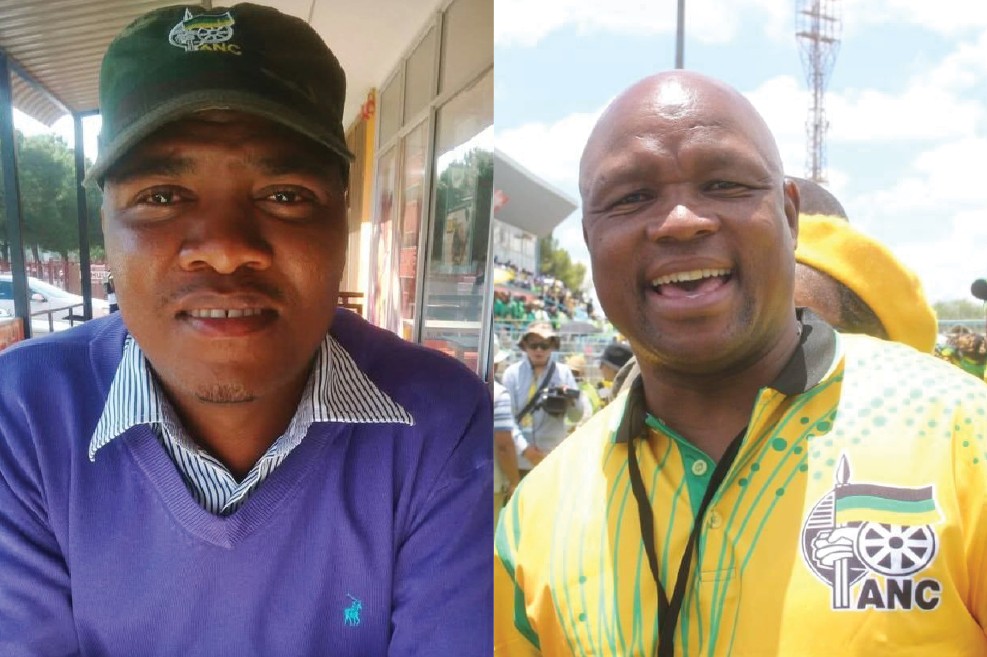
With about 30 voting delegates backing him ahead of the conference, former provincial and regional secretary, Paseka Nompondo, shifted the dynamics and tightened the contest between the two factions, with deputy chairperson, Vusi Soqaga, was poised to topple incumbent chairperson, Lawrence Mathae, for the region’s top position.
Backed for his “experience and love for the organisation,” according to party insiders, Nompondo is said to have leveraged his support base to bolster Soqaga’s faction while effectively ending regional spokesperson Ncamile Nxangisa’s bid for the regional secretary position.
“It was interesting to see how comrade Nompondo manoeuvred his way onto the Soqaga slate using his numbers. He quickly moved from being a dark horse to a compromise frontrunner for the position in just one late-night meeting. A decision had to be made within a split second to make way for him and withdraw comrade Nxangisa from contesting against incumbent regional secretary Sabelo Pitso,” said a party insider.
She expressed confidence that while discussions over other positions continue ahead of the rerun conference, reportedly set for next week, the names of Nompondo and Setjhaba Machakela remain dominant in internal conversations.
However, according to another source close to the developments, questions are emerging over Machakela’s sudden rise, as he would have been elected unopposed for the position of regional treasurer, had the conference not collapsed.
“It is difficult at this stage to say with certainty whether comrade Machakela will return when the conference is reconvened. But things are not looking good for him as lobbying intensifies,” the source said.
As lobbying intensified and shifts were made within the Soqaga faction, a series of consultation meetings followed, prompting the Mathae grouping to level the playing field by removing Lulama Titi-Odili from the chairperson race and repositioning her as a candidate for deputy regional secretary against Deliwe Mei.
Titi-Odili previously held the same position in the last Regional Executive Committee (REC), whose term has since expired and was replaced by the current Regional Task Team (RTT).
“It was then realised that the Mathae slate was on the verge of losing the conference by about five votes or a few more and needed to consolidate the support bases of both Mathae and Titi-Odili. That ultimately gave their slate the upper hand during the nomination process … it was a very tight lead,” said another source.
During the nomination process in plenary, conducted through a show of hands, delegates also nominated Vumile Nikelo, to deputise Mathae, while Manthuse Letawana was put forward by the Soqaga faction for the deputy chairperson position.
ANC provincial spokesperson, Thabo Meeko, says the PEC is awaiting the green light from national leadership to reconvene the regional conference.
“The PWC, followed by the PEC, met on Monday and received reports from deployees at the conference, which indicated that no foul play was committed during the conference. As a result, we are now awaiting national leadership to give the go-ahead to reconvene the conference,” said Meeko.

![[He] maintains that no person is above the law and that any allegations should be subjected to due process without fear, favour or prejudice,” read the statement from his office.](/images/cyrij.jpg)