Free State Targets Surgical Backlogs
The three-day Cataract Marathon, held over the weekend at Boitumelo Regional Hospital in Kroonstad, was a great success, with over 100 patients receiving treatment.
Screening was conducted last week Friday with cataract operations scheduled for Saturday and Su...
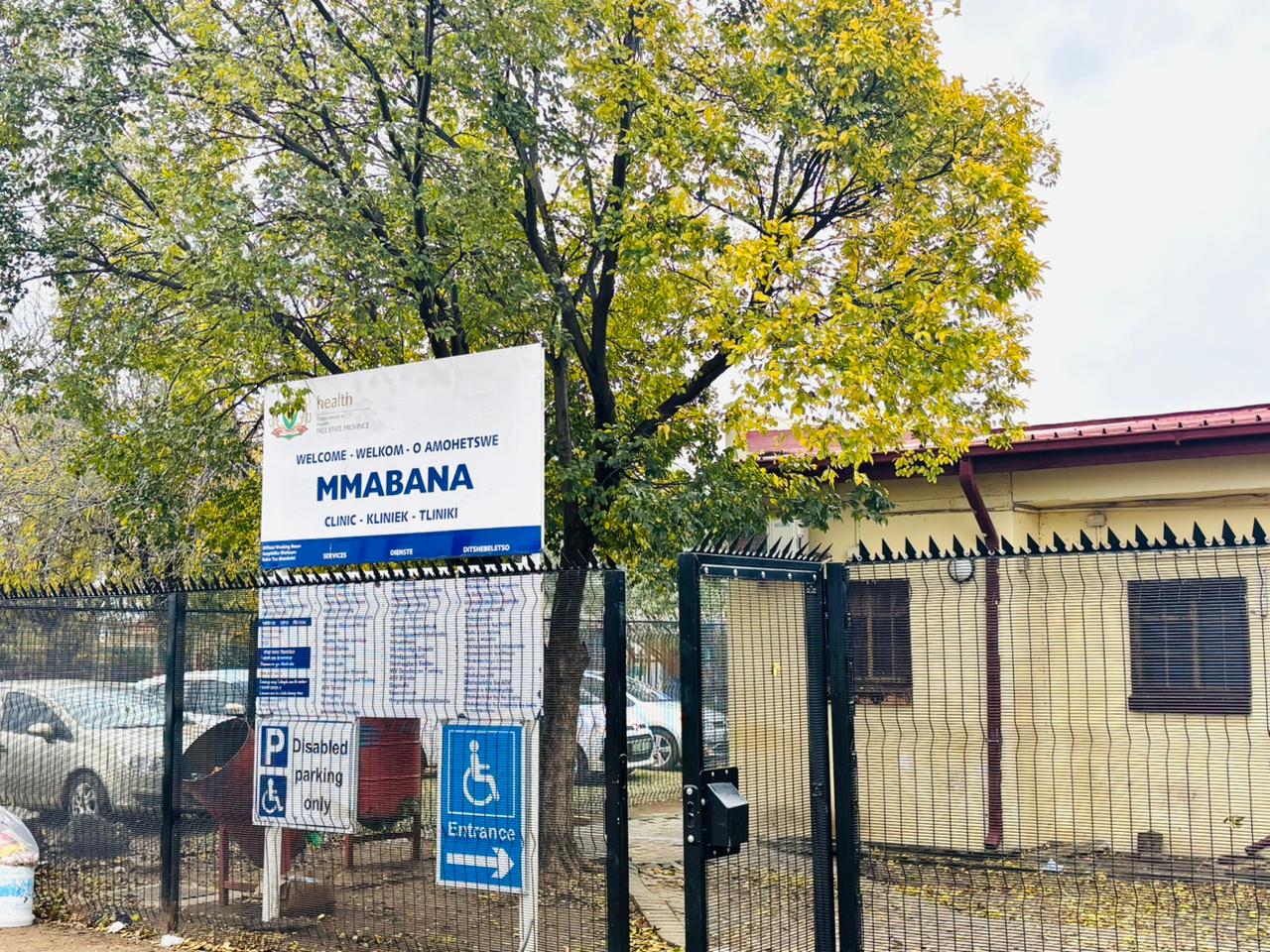
For more than a month, residents of Phahameng and surrounding communities have been forced to endure long queues, delayed treatment and hours of frustration as Mmabana Clinic continues operating without electricity — leaving patients and staff scrambling to cope in the dark.
Community members say the outage has slowed services to a crawl, with nurses forced to retrieve patient files manually because computers are offline.
Patients often arrive before sunrise in hopes of being helped quickly and returning home, but many say they spend most of the day waiting for assistance.
One frustrated resident, Mantoa Moloi, who visits the clinic regularly for chronic medication, said the situation has become unbearable — especially as winter approaches and temperatures continue to drop.
“We queue for a very long time because they still have to go look for our files manually, as they cannot use the computer because of this very issue.
“This has been our reality since March, and what is frustrating is that no one is saying anything to us; we are just left in the dark,” she said.
Moloi said patients are often made to wait for hours despite arriving early, adding that services usually run smoothly when electricity is available.
Another patient, who asked to remain anonymous, said she was shocked to find the clinic without power and little explanation from officials.
“We don’t know what is happening. One day we came here and found the clinic dark. After that, we were just told the computers were off — nothing more.
“We bring our young and sick children here, but sometimes you wait until knock-off time hoping to get assistance,” she said.
She questioned why the clinic does not have backup generators to ease disruptions during outages.
“They would make things easier because it is not nice camping here the whole day while sick or with a sick child, like you are going to work.”
Another resident, identified only as Pulane, said the outage has also affected medical processes at the facility.
“This has made things hard for everyone, including the nurses, because it slows everything down. Sometimes we are not able to get results for tests done here, and they are always blaming the electricity,” she said.
Pulane also alleged that some patients have complained about missing files.
Free State Department of Health spokesperson Mondli Mvambi confirmed that officials are aware of the issue, saying it emerged at the end of the financial year.
“The interruption in electricity supply is due to the electricity DB board that burned inside the clinic. This affected the whole wiring and, hence, the electricity supply interruptions. The procurement process to restore electricity is in the final stages,” he said.
Mvambi said despite the outage, all primary healthcare services have continued.
Meanwhile, Free State Health MEC Menyatso Mahlatsi recently announced a major infrastructure drive during the department’s budget vote, highlighting plans to improve healthcare facilities across the province.
“In 2026/27, we will fund 138 projects with a total budget of R647.9 million, primarily supported by the Health Facility Revitalisation Grant and Infrastructure Enhancement Allocation,” Mahlatsi said.
The programme includes upgrades to clinics, hospitals, EMS infrastructure, mortuaries, nursing schools, health technology and maintenance contracts.
The Mangaung Metropolitan Municipality is entangled in a scandal with the Auditor General of South Africa (AGSA) this week that revealed damning evidence of financial mismanagement while the Special Investigative Unit (SIU) uncovered corruption allegations within the metro police and the Integrated Public Transport Network (IPTN), dating back to 2017.
What was once touted as a “rescue plan” has now spiraled into criminal probes, exposing the torrid situation probing further scrutiny over persistent service delivery failures, and exhibiting a city on the brink of collapse.
On Tuesday 5 May, Mayor Gregory Nthatisi, City Manager Sello Moroe, and Chief Financial Officer Zuziwe Thekisho appeared before Parliament's Standing Committee on Public Accounts (SCOPA) to defend the municipality from the findings of the AG and the SIU investigations.
The municipality is under fire for spending 113% of its budget while only 50% of its service delivery targets were met.
Mangaung has been under provincial intervention since January 2020 and was escalated to national intervention in April 2022. A financial recovery plan (FRP) was approved in September 2023 to stabilize finances and restore governance.
According to AGSA, the municipality spent R1.3 billion on unauthorized expenditure, R324 million on irregular expenditures, R67 million on fruitless and wasteful expenditure, R192 million on underspending on conditional grants, and as a result the National Treasury withheld R140 million in funding due to slow project implementation which impacted infrastructure projects.
The report states that only 26% of a water project valued at over R106 million is complete.
It also states that Mangaung owes R642 million for bulk water, while losing nearly half of its water supply through leaks, burst pipes, and illegal connections amounting to R495 million.
This is a bleak picture of what the municipality’s financial management and performance looks like.
The AG says it could not verify critical information such as water revenue, overtime payments, and whether some goods and services paid for were delivered.
Based on the hearings that were raised, SCOPA raised concerns regarding the mismanagement of finances and poor service delivery at Mangaung.
However in his presentation before SCOPA, Nthatisi said the period under review by the AG, accounts for 2021/22, 2022/23, and mainly 2023/24.
“Now without any excuse, we came into the municipality, effectively from October 2023 when budgets and all processes were run
SCOPA Committee Chairperson Songezo Zibi says the AG findings and SIU ongoing investigations at Mangaung show what can happen in just a short period of five years in a municipality.
“There is a level of financial recklessness that we often see in local government that we do not often see elsewhere.
“Politicians in local government cannot make the right call on how to spend money correctly.
“What we see in these municipalities is that the officials make poor financial decisions, and this is often the result of political incompetence.
“We find that mostly the decisions are not malicious, but they are just terrible decision-making from politicians, said Zibi.
Zibi also says however the current problems in Mangaung largely emanate from the previous administration.
“I am not saying that the current leadership is innocent, but if we have to be honest, the current leadership has only been there for three years most of these crimes were committed way before they took office at the municipality,” he said.
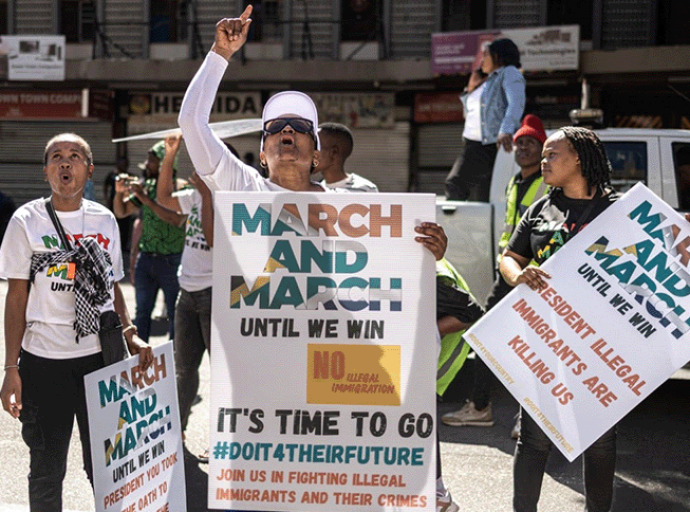
A growing number of South Africans are mobilising in open defiance of what they see as a failed migration system. This wave of activism, associated with problematic figures like Ngizwe Mchunu, is not emerging in a vacuum. It is a signal that ordinary South Africans have lost faith in the ability of our government to enforce migration laws and protect communities from acts of criminality linked to undocumented immigrants.
And then comes the story of Mazwi Kubheka, a 27-year-old South African businessman from Vosloorus who was abducted after refusing to submit to intimidation linked to spaza shop networks controlled by foreign nationals. This is a flashing red light. It tells us that the law has gone missing and something far more dangerous is taking place.
Kubheka is not alone. Xolani Lamani, another South African businessman from Orange Farm, watched his supermarket go up in flames after receiving endless threats allegedly linked to the same ecosystem. These are not isolated incidents of crime; they point to a pattern of intimidation and mutilation of South Africans by foreign nationals.
Now, this movement led by Ngizwe presents us with yet another opportunity to deal with the issue of illegal immigrants without pretending that complexity does not exist.
Perhaps the starting point is to acknowledge that not all migrants are a problem. Many come here legally, work hard, contribute to communities and respect South African laws. They are not the target of frustration, nor should they be. The real problem begins when people enter the country illegally and operate outside the framework of the law. That is where the line must be drawn without apology.
Because once the first law is broken at the border, it becomes much harder to enforce the rest. This is not about hatred. It is about governance.
Since 2008, when the first eruption happened, a tendency has arisen to shut down any concern about undocumented foreign nationals by shouting “xenophobia”. Quite frankly, this is intellectually lazy and dastardly dishonest.
Every country has immigration laws and expects those laws to be respected. South Africa cannot be the only country where asking for compliance with the rule of law is treated as a moral failure. Insisting that people must enter, live and trade legally in this country is not xenophobia. It is the most basic function of a sovereign state.
What is often conveniently ignored is who bears the real cost of a poorly managed migration system. It is not we people who live in gated estates. It is not people who use private healthcare, take their kids to private schools, and enjoy a comfortable distance from the township where the real impact is. No, the pressure is felt by the working class and the poor; people who stand in long queues at public hospitals, fight for space in already overcrowded schools and struggle to find economic footholds because they compete with undocumented foreign nationals.
It is easy to preach open borders when your children will never sit in a classroom of 60 learners. It is easy to speak of “African unity” when you will never have to compete for a basic job opportunity and/or access to public healthcare. For many of us, the consequences are only theoretical.
Unbelieving Thomases must visit communities that sit along the border with Lesotho. There, the conversation is not about ideology but survival. Families wake up to find their livestock gone overnight, and everything vanished without a trace. These are livelihoods and dignity wiped out in a single night by the cruelty of a failing migration system that privileges foreign nationals over South Africans.
The border, in these instances, becomes less of a line of control and more of a corridor of escape for unflinching foreign nationals. No wonder our communities are starting to feel exposed, abandoned and unheard. It is difficult to preach patience and process to a family that has lost everything and sees no consequence for those responsible.
Where the argument goes wrong is when we confuse the moral history of African solidarity with the present-day responsibility of governance.
Yes, South Africa benefited from widespread support during the liberation struggle against the repugnant system of apartheid. Yes, our freedom fighters were trained in different parts of the African continent. But that was a political and military context, shaped by deliberate decisions of governments and liberation movements. It was not an open invitation for lawlessness in a democratic South Africa.
Gratitude does not cancel governance. Solidarity does not replace the rule of law.
There is no widespread pattern of South Africans entering other African countries, dominating informal retail sectors, and displacing locals in the same way tensions are now emerging in most of our communities. South Africans are not in the habit of selling drugs and turning young girls into prostitutes, hijacking buildings and running widespread criminal networks in other countries.
Yes, we must resist the temptation to paint all foreign nationals with one brush. But refusing to generalise does not mean we must refuse to act. The state has a responsibility to enforce immigration laws, secure our borders, regulate economic activity and dismantle criminal networks led by foreign nationals.
Right now, that responsibility is not being met with the urgency the situation demands. And when the state fails, charlatans like Ngizwe will find a gap to respond in ways that are dangerous, uncontrolled and unjust.
That is the real risk we face.
South Africa does not need inebriated arguments dressed up in Pan-Africanist and Black Consciousness discourse. We need a functioning system that welcomes those who come here legally and respect the laws of our country.
In the end, this is not about South Africans versus foreign nationals.
It is about whether the law means anything at all.
*Tshediso Mangope moonlights as a social commentator in his spare time and writes in his personal capacity…
**The views expressed do not necessarily reflect those of this publication (Journal News).
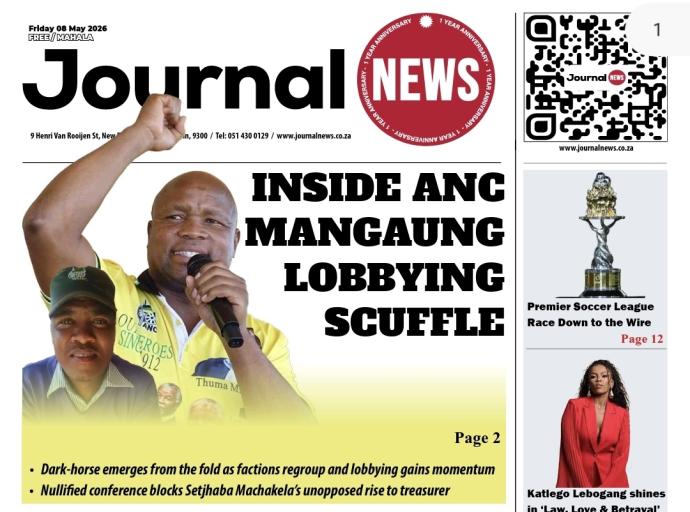
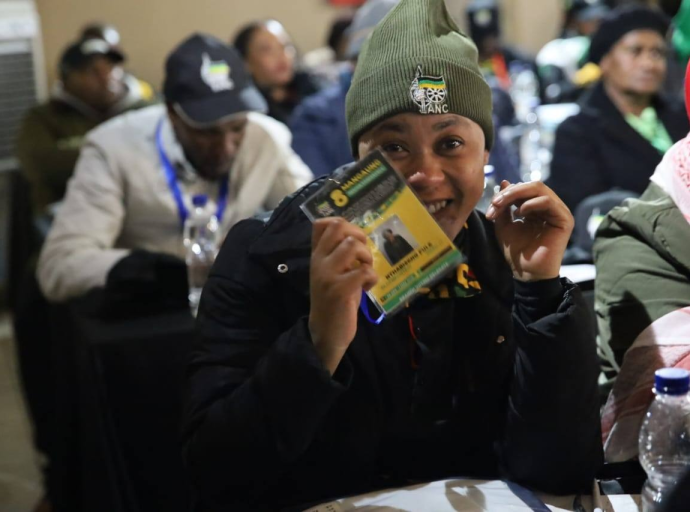
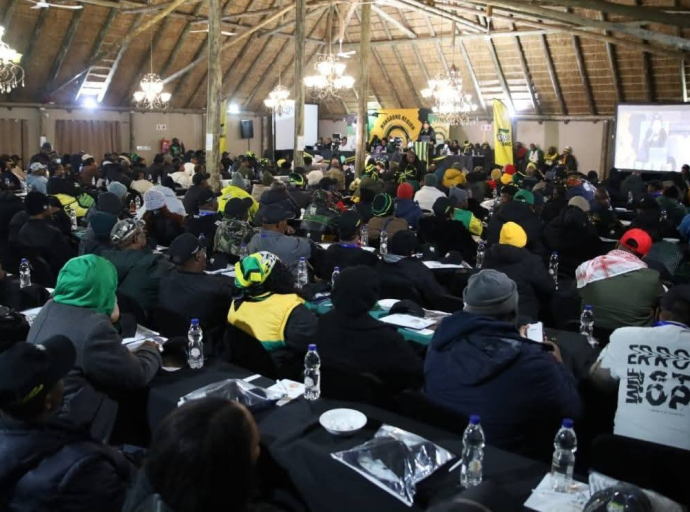
The ANC in Mangaung is preparing to seek yet another waiver from the party’s national leadership after its long-awaited regional elective conference dramatically collapsed at the eleventh hour on Saturday.
Marred by delays and credential disputes, the conference was nullified just hours before the announcement of new leadership, forcing national deployeeThandi Moraka to abandon proceedings at the Bloem Spa Hotel in Bloemfontein and leaving the region without elected leadership once again.
Journal News has reliably learned that the Provincial Executive Committee (PEC) has launched a fresh bid to reconvene the regional conference as early as next week.
According to a PEC member who attended Monday’s meeting, a call has been made to Secretary-General, Fikile Mbalula, seeking approval to reconvene the conference within the next seven days.
“I can confirm that the PEC is now awaiting the green light from the SG, and once that happens, it will be all systems go,” said the PEC member, who requested anonymity as he is not authorised to speak to the media.
“The concern is that the party in the region cannot afford to head into the local government elections under the leadership of a task team, although some members within the regional task team are contesting that decision,” the source said.
Moraka nullified the regional conference after her team uncovered credential irregularities after the voting process had concluded.
Amongst the concerns were allegations that about eight additional ballot papers were inserted into the ballot box by unknown individuals after voting had ended on Saturday morning.
Attempts to reach provincial spokesperson, Thabo Meeko, were unsuccessful.
One cold morning in my hometown of Botshabelo, I chanced upon a group of young men sitting outside a modest RDP house around a fire made of broken crates and old campaign posters that adorned the faces of ANC leaders.
One of them, probably younger than twenty-five, spoke with the confidence of a seasoned politician. He had never held a job, never completed a qualification, never run even the smallest community initiative, but that morning, he was explaining how he would “take the region forward” once his slate wins.
Inside the house, his grandmother was boiling water on a paraffin stove. She has voted in every election since 1994. She still believes in the promise of the ANC, but she no longer attends branch meetings. “Ba a lwana bana baa,” she says. Not about ideas, not about the community interests; they fight for positions.
That, perhaps, is where the story of the ANC in Mangaung must begin, not in conference halls or party statements, but in the lived contradiction between the hope of the people and the movement that refuses to listen.
The decision by the ANC NEC to nullify the Mangaung regional conference this weekend is not simply an organisational correction. It is a diagnosis. A particular signal that something deeper is broken.
The real crisis in Mangaung is that we have mistaken ambition for leadership. We have created a political culture where everyone wants to lead, but very few are prepared to develop the ethic of building. Even those who would never qualify to be class representatives in primary school now see themselves as leaders of the ANC. Not because they have developed politically, but because the movement has, over time, lowered its own threshold for what constitutes leadership.
And so, conferences become theatres of irrationality. Branches appear and disappear like schedules of load shedding. Delegates materialise in numbers that defy logic, and credentials are reduced to bargaining chips in factional manoeuvring.
When the NEC intervenes, it is not disrupting a healthy process; it is interrupting a well-rehearsed chaos. But even this chaos is a symptom, not the disease.
The deeper problem is the absence of political coherence in the province. We no longer share a common understanding of what constitutes an ANC cadre, what the ANC stands for and where it is going. We invoke “unity” as a slogan, but unity without ideological clarity is just a temporary alliance of convenience. We speak of “renewal,” but renewal without confronting these uncomfortable truths is meaningless.
What we are seeing, increasingly, is the emergence of a cadre not shaped by struggle, discipline and/or intellectual development but by survival instinct. The ANC has become the default destination for those who have failed elsewhere. When school does not work, when business collapses, when even the SGB says “ntate sekete re kopa o emelle ka thoko; then the ANC becomes Plan B.
And once inside, politics is no longer about service but about access. Access to opportunities, to networks, to the possibility of economic relief. This is why the battles are so fierce. It is not just about leadership; it is about livelihood.
Now, let us be clear. The ANC was built by the poor. It has always been a home for those on the margins. But it was never designed to be an escape route from personal failure. It was meant to be a school of political development, a site of collective discipline and a movement grounded in ideas.
What we have instead is something almost comedic, if it were not so tragic. The comrade who cannot organise a family meeting without conflict suddenly becomes a champion of “organisational unity.” That one person who has never managed a spaza shop confidently outlines a provincial economic strategy. And of course, this would be hilarious if it were not happening in the people’s movement.
And so, the nullification of the Mangaung conference must be understood as something more than just a procedural matter. It is a moment of reckoning. A chance to confront the uncomfortable reality that the ANC in this region is struggling not just with processes, but with political purpose.
The grandmother in Botshabelo still votes. She still hopes. But her quiet withdrawal from branch meetings is a warning. When the faithful retreat, the opportunists advance. And when that happens, the movement loses both its soul and credibility.
So, as Mangaung prepares again for a conference, the question we must ask ourselves is not whether the credentials will be correct this time but whether the character of the organisation will survive beyond the conference.
Until we resolve the deeper crisis of too many leaders and too little leadership, of survival masquerading as service, we will remain trapped in this cycle.
A movement of everyone leading and no one going anywhere.
*Tshediso Mangope is an ANC member in Mangaung and writes in his personal capacity.
**The views expressed do not necessarily reflect those of this publication (Journal News).