Free State Targets Surgical Backlogs
The three-day Cataract Marathon, held over the weekend at Boitumelo Regional Hospital in Kroonstad, was a great success, with over 100 patients receiving treatment.
Screening was conducted last week Friday with cataract operations scheduled for Saturday and Su...
Learners speak out despite alleged threats from school Principal
By: Abigail Visagie
Tensions continue to at St. Bernards’s High School in Bloemfontein, where more learners have emerged to lay complaints and sexual harassment charges against predatory educators. One such learner is 19-year-old Lesedi Mohlakoa na who was sexually harassed by an educator while at her matric camp back in 2024. The educator in question allegedly requested Mohlakoana to send him naked images of herself. After declining the educator’s requests and inap propriate advances multiple times, the educator al legedly resorted to sending naked photos of himself to the pupil. His persistence pushed Mohlakoana to take matters into her own hands and she posted about this incident on 10 August 2025, urging other girls to speak out against predacious teachers. “I saw he was surrounded by a lot of children and seemed to be a (normal) teacher, so I decided to break this cycle before it happens to another child,” she told Journal News. Mohlakoana now fears to enrol at university as she now believes that this inappropriate behaviour by educators is probably a norm everywhere. Another pupil, Kgomotso Mokobe, who was in grade 12 at the St Bernard’s received a direct message on social media from the same educator confessing his undying love and feelings for the pupil. “He once called me to his office and asked me to close the door. When I refused to, he closed it himself and confessed his feelings directly to me, mentioning that he felt this way about me since I was grade 8. I only decided to act upon his feelings now because it was the right time,” said Mokobe. Emotions of disgust flushed through Mokobe as she recalled this incident. “I was very uncomfortable and just wanted to exit the room, but he forced the door close and begged to speak to me,” said Mokobe. On 21 August 2025, Mapaseka Feldman, was also followed on social media by the very same educa tor who harassed Mokobe. inappropriate for a teacher to send learners such derogatory content, my friend said maybe he mis took the girl in the video for me, but I still believed that it did not give him the right to send such sexual content to me.” Feldman briskly escaped a horrible experience with the educator by immediately blocking his messages and his profile. Ntswaki Mohlakoana, the mother of Lesedi, takes pride in her daughter speaking out against such violations and being a beacon of hope to other girls who might be afraid to speak up. the PEC had resolved to prioritise urgent intervention in Mafube, Moqhaka, Letsemeng, Nketoana, Nala and Masilonyana local municipalities, as well as the Lejweleputswa District Municipality — areas plagued by persistent audit disclaimers, weak leadership, and corruption allegations that have crippled service de livery. This decision followed an oversight visit by Parlia ment’s Portfolio Committee on Cooperative Govern ance and Traditional Affairs (COGTA), which exposed widespread dysfunction in municipalities, including billions in missing funds, sewage spills, illegal tenders, and critical staff shortages. Parliamentary committee chairperson Dr Zweli Mkhize described the state of Free State munici palities as “disastrous,” a view echoed in the Audi tor-General’s latest report, which flagged rampant irregular expenditure, lack of accountability, and nu merous audit disclaimers across the province. Yet, according to sources within the ANC’s pro vincial leadership, the removal of municipal troikas is less about governance and more about factional battles ahead of the party’s looming national general council (NGC) in December. “We are facing difficult times now where two fac t ions are looking to position themselves in the prov ince. Comrade Polediso is not going to win this fight “I am afraid we are going to witness yet another scenario where the ANC’s internal battles play out in public, dragging the party’s name through the mud for a long time. The question is, will they take the party to court if the secretary general’s response is not in their favour? That, I fear, will damage the party even further.” The unfolding dispute in the Mafube region under scores the deepening cracks within the ANC’s provin cial structures, where governance failures and politi cal manoeuvring increasingly collide. As the NGC approaches, the ANC faces a critical test. The first test pertains to whether the party can restore stability and credibility in troubled municipal ities or allow internal battles to further erode public trust. “I was surprised that he followed me, but I was more shocked after he sent me a video of a girl twerking,” said Feldman. She added: “I asked my friends whether it is “My daughter makes me so proud and for her sake, I hope that justice will prevail,” stated the mother. The girls appeared in the Bloemfontein High court after opening cases against the educator and will appear in court again in October. Learners from the St Bernard’s high school spoke to Journal News about the injustices happening at the school and mentioned that their pleas or complaints simply falls on deaf ears. Ntswaki Mohlakoana, mother of sexually harassed learner. Picture: Baagedi Setlhola “Our principal threatened us that if we were to speak out against our teachers no matter how un comfortable they make us feel, our case will simply FRIDAY Saturday die,” said one learner. Another learner mentioned that there were no longer religious activities taking place since January because the principal allegedly fought with the fathers, causing disruptions in the school. “I no longer feel safe to be at the school, I don’t even want to interact with teachers, nor do I want them to interact with me because I am afraid that I might be one of the educators’ next targets,” said a grade 11 pupils.
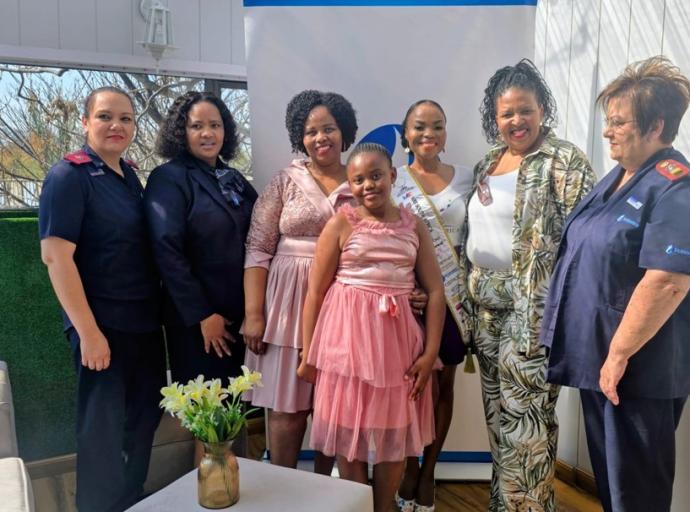
To close women’s month, Busamed Bram Fischer Private Hospital hosted a mother and daughter breast-health awareness outreach at Hide Inn Guest House in last week Saturday in Bloemfontein. The main aim of the event was to promote early detection and proactive health practices among women. This event focused on encouraging women to have regular self-exams and mammograms em phasising that early detection is a critical factor for successful treatment outcomes. Amongst other speakers was Mrs South Africa f inalist Siyasanga Mophethe who addressed the common misconceptions surrounding cancer. Speaking to Journal News, Mophethe said there is a misconception that children don’t get breast cancer. “There is a misconception that men do not get breast cancer. It may not occur as often as it does in women, but men are still at risk. She said that being educated about these chronic illnesses helps people to know how to react when they get cancer scares,” Mophethe said. A breast and cervical cancer survivor from Breast Health Foundation, Louise Turner also shared some insight on how different the breasts look like as people age. “Younger women often have denser breast tis sue, which makes it difficult to get clear imaging in young girls. “Because of the density of their breasts, it is a bit difficult to get clear imaging in young wom en, but they are still encouraged to undergo scans. She also encouraged older women to undergo regular self-exams which will help them to no t ice when there are changes in their breasts that you can take necessary precautions,” she said. Turner also touched on cervical cancer and how now there’s a home swap kit, which will help women to swap from the comfort of their homes instead of going to the doctor.
Officials have sought intervention from Luthuli House while they remain in office
By: Abigail Visagie
Seven recently dismissed municipal troikas in the Free State are defying the African Nation al Congress (ANC) by refusing to vacate office as directed by the party provincial leadership, thus sparking a governance standoff in key municipalities in the province. Two weeks ago, the ANC provincial leadership an nounced the removal of seven troikas -comprising mayors, speakers, and chief whips - citing poor per formance and undermining service delivery. Journal News can confirm that disposed officials have not yet vacated the respective offices, despite their deadline to do so having lapsed at midday this past Wednes day. Instead, the affected parties have written to ANC secretary general Fikile Mbalula appealing for inter vention - a move that is believed will trigger a series of legal and political battles. A letter allegedly penned to Mbalula by Mafube Lo cal Municipality mayor Tlhoare Motsoeneng confirms that the disposed mayor received a communiqué from provincial secretary Polediso Motsoeneng on Tuesday, notifying him of his immediate redeploy ment from his mayoral position. The letter further reveals that the provincial leadership instructed him to submit his resignation by Wednesday, no later than 12h00. Tlhoare has accused the provincial leadership of failing to support the municipality during well-docu mented challenges. “There has never been a situation where the pro vincial leadership had to institute disciplinary action against me, nor have I been confronted about any incapacity. “The only engagements arose from clashes be tween the Chief Whip and myself. Earlier this year, when we were summoned before the PWC, the Chief Whip claimed he had issues with me because I was allegedly orchestrating the removal of his wife from the municipality,” Tlhoare wrote in the letter. He added that he could not understand the letter from Motsoeneng, which instructed him to resign with immediate effect, therefore questioning what had informed the decision. Nala LM, Mayor Nozililo Mashiya Mafube LM Mayor, Thloare Motsoeneng because his decision will be overturned by comrade Mbalula, and there is nothing he can do,” said one source. Speaking to Journal News yesterday, Political ana lyst, Professor Sethulego Matebesi, stated that mem bers instructed to resign should not be branded “de f iant,” but allowed to exercise their democratic right by engaging the ANC’s national leadership. Matebesi, however, also warned that such appeals risk further tarnishing the ruling party’s image ahead of next year’s fiercely contested election. “I therefore submit my appeal to the SG (Mbalula) so that the matter can be dealt with accordingly. I am available to be called and to respond in person where clarity is required,” pleaded Tlhoare. The provincial secretary, Polediso Motsoeneng, announced in August during a post-Provincial Exec utive Committee (PEC) briefing that seven municipal troikas in the Free State would be reshuffled. He said St. Bernard’s Sex Predator… Learners speak out despite alleged threats from school Principal Continues from Page 1 norm everywhere. Another pupil, Kgomotso Mokobe, who was in grade 12 at the St Bernard’s received a direct message on social media from the same educator confessing his undying love and feelings for the pupil. “He once called me to his office and asked me to close the door. When I refused to, he closed it himself and confessed his feelings directly to me, mentioning that he felt this way about me since I was grade 8. I only decided to act upon his feelings now because it was the right time,” said Mokobe. Emotions of disgust flushed through Mokobe as she recalled this incident. “I was very uncomfortable and just wanted to exit the room, but he forced the door close and begged to speak to me,” said Mokobe. On 21 August 2025, Mapaseka Feldman, was also followed on social media by the very same educa tor who harassed Mokobe. inappropriate for a teacher to send learners such derogatory content, my friend said maybe he mis took the girl in the video for me, but I still believed that it did not give him the right to send such sexual content to me.” Feldman briskly escaped a horrible experience with the educator by immediately blocking his messages and his profile. Ntswaki Mohlakoana, the mother of Lesedi, takes pride in her daughter speaking out against such violations and being a beacon of hope to other girls who might be afraid to speak up. the PEC had resolved to prioritise urgent intervention in Mafube, Moqhaka, Letsemeng, Nketoana, Nala and Masilonyana local municipalities, as well as the Lejweleputswa District Municipality — areas plagued by persistent audit disclaimers, weak leadership, and corruption allegations that have crippled service de livery. This decision followed an oversight visit by Parlia ment’s Portfolio Committee on Cooperative Govern ance and Traditional Affairs (COGTA), which exposed widespread dysfunction in municipalities, including billions in missing funds, sewage spills, illegal tenders, and critical staff shortages. Parliamentary committee chairperson Dr Zweli Mkhize described the state of Free State munici palities as “disastrous,” a view echoed in the Audi tor-General’s latest report, which flagged rampant irregular expenditure, lack of accountability, and nu merous audit disclaimers across the province. Yet, according to sources within the ANC’s pro vincial leadership, the removal of municipal troikas is less about governance and more about factional battles ahead of the party’s looming national general council (NGC) in December. “We are facing difficult times now where two fac t ions are looking to position themselves in the prov ince. Comrade Polediso is not going to win this fight “I am afraid we are going to witness yet another scenario where the ANC’s internal battles play out in public, dragging the party’s name through the mud for a long time. The question is, will they take the party to court if the secretary general’s response is not in their favour? That, I fear, will damage the party even further.” The unfolding dispute in the Mafube region under scores the deepening cracks within the ANC’s provin cial structures, where governance failures and politi cal manoeuvring increasingly collide. As the NGC approaches, the ANC faces a critical test. The first test pertains to whether the party can restore stability and credibility in troubled municipal ities or allow internal battles to further erode public trust.
The Gqeberha Specialised Commercial Crimes Court has sentenced 54-year-old Leonie Stella Stiemie to an effective six years’ imprisonment for two counts of theft.
The court's decision comes after Stiemie, a former branch administrator at FNB Kirkwood, was found guilty of stealing over R800,000 from an elderly client.
Stiemie was sentenced to six years for each count, with the sentences ordered to run concurrently. Additionally, the court has mandated that she repay First Rand Limited a staggering R270,000, declared her unfit to possess a firearm, and authorised the search and seizure of any firearms, ammunition, and relevant permits currently in her possession.
Spokesperson for the National Prosecuting Authority (NPA), Luxolo Tyali, said the case centres on 87-year-old Andries David Renken, a lifelong farmer from Kirkwood, who tragically passed away during the protracted legal proceedings.
Renken had entrusted Stiemie with R400,000 in cash to be securely stored in a bank-managed Deeds Box between 2011 and February 2015. In an appalling breach of trust, Stiemie not only failed to provide Renken with the required keys and custody agreements but also exploited his trust in ways that left him vulnerable.
In August 2014, upon Renken’s enquiry about his funds, Stiemie deceitfully claimed she had invested half of the money on his behalf. By early 2015, she had left FNB, and following Renken’s visit to the bank, she visited him, first fabricating a tale about the funds being stolen in a bank robbery—a claim that was later disproven.
Ultimately, Stiemie confessed to taking the money but offered to repay the debt in small monthly instalments of R666, which Renken refused, deeming the amount emblematic of the “devil’s number.” Stiemie only managed to refund R21,000, while a forged deposit slip with her own signature, confirmed by handwriting analysis, sealed her fate in court.
Throughout the trial, Stiemie denied having organised repayment, attributing her actions to the influence of heavy medication at the time of her visit to Renken. Nevertheless, the court found Renken’s testimony credible, emphasising that it represented the only plausible version of events amid the complexity of the case. Further complicating the trial were various delays, including the unfortunate passing of a vital handwriting expert and the trial’s original prosecutor in 2021.
In response to the court's decision, Eastern Cape Director of Public Prosecutions, Barry Madolo, expressed satisfaction, stating, “This outcome demonstrates that justice will be served, even in cases delayed over many years. We commend Advocate Leigh-Anne Pillay-Selahle of the Specialised Commercial Crime Unit for her perseverance and dedication.”
He reinforced the National Prosecuting Authority’s commitment to holding those in positions of trust accountable, especially when it comes to protecting the most vulnerable members of society.
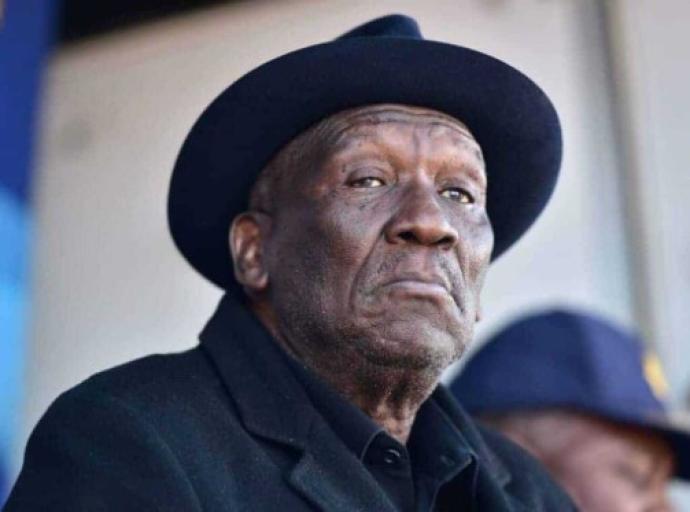
Former Police Minister Bheki Cele has been added to the names of witnesses expected to testify before Parliament’s ad hoc committee probing serious allegations of corruption, political interference, and mismanagement within the South African Police Service (SAPS).
The committee was established following bombshell allegations made on 6 July 2025 by KwaZulu-Natal Provincial Commissioner Lieutenant-General Nhlanhla Mkhwanazi, who publicly accused senior political and police officials of obstructing sensitive investigations and attempting to dismantle the Political Killings Task Team in KZN
During his briefing, Mkhwanazi presented digital evidence, including WhatsApp chats allegedly extracted from mobile devices, which he claimed revealed coordinated interference by high-ranking individuals.
He specifically named suspended Police Minister Senzo Mchunu, his associate Brown Mogotsi, and businessman Vusumuzi “Cat” Matlala as central figures in the alleged effort.
In a media briefing held on Friday, ad hoc committee chairperson Lekganyane Molapi confirmed Cele’s inclusion in the witness list.
“The chairperson signed seven letters to the seven persons that have been named,” Molapi said. “Secondly, in the invitation, there is no person who has been given a date of appearance before the committee.”
The list of invitees includes Mchunu, Mkhwanazi, National Commissioner Fannie Masemola, Deputy National Commissioner Shadrack Sibiya, Deputy Ministers Polly Boitshelo and Cassel Mathale, and Acting Minister of Police Firoz Cachalia
Molapi emphasised the urgency of the process, saying, “We had planned that the committee would start its work by the 10th of September.”
While no formal schedule has been communicated to the witnesses, Molapi confirmed that the committee has decided the order in which testimonies will be heard. “The order still stands that the first person who will appear before this committee is General Mkhwanazi,” he said.
However, Mkhwanazi has requested a deferral of his appearance due to prior commitments with the Judicial Commission of Inquiry into Criminality, Political Interference and Corruption in the Criminal Justice System, chaired by retired Constitutional Court Justice Mbuyiseli Madlanga.
“With regards to Mkhwanazi, he requested the committee to allow him to continue with other engagements he's already in with the Commission until 24th September. That is when he said he will be available to come and appear before the committee, anytime from the 25th of September,” Molapi said.
The Madlanga Commission was expected to commence its public hearings on 1 September. That date was missed due to ICT issues, with the Commission later announcing that hearings would begin on 17 September instead.
The delay, according to the Commission, was caused by technical and logistical preparations that had not yet been finalised.
In a statement last week, the Commission said: “Significant progress has been made by the appointed service providers to set up the various services in accordance with the Commission’s requirements.
''It is anticipated that all work in this regard will be finalised in time for the Commission’s hearings to commence without any further delays.”
The overlap between the Commission’s preparatory work and the parliamentary process has necessitated flexibility in scheduling, particularly for witnesses such as Mkhwanazi who are involved in both processes.
Molapi also confirmed that the committee had begun receiving responses to its formal invitations. “Responses have so far been received from Mchunu and Cachalia,” he said, adding that National Commissioner Masemola and Deputy Commissioner Sibiya have requested consultations with senior counsel before submitting their sworn statements.
“The senior counsel has met with Masemola to do consultations before members,” Molapi said.
To assist in managing the legal and evidentiary complexities of the investigation, the committee has appointed a team of experienced legal professionals.
Advocate Norman Arendse SC has been named as the committee’s evidence leader, supported by Advocate Maria Mokhaetsi and Advocate Lerato Zikalala.
Hearings are expected to take place in the Good Hope Chamber at Parliament in Cape Town.