Free State Targets Surgical Backlogs
The three-day Cataract Marathon, held over the weekend at Boitumelo Regional Hospital in Kroonstad, was a great success, with over 100 patients receiving treatment.
Screening was conducted last week Friday with cataract operations scheduled for Saturday and Su...
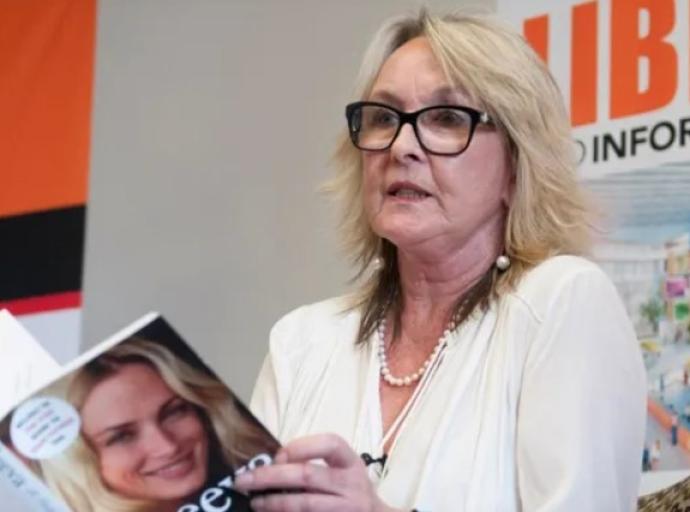
June Steenkamp, the mother of murdered model Reeva Steenkamp, has suffered a stroke and requires funds to undergo rehabilitation, her family said.
June suffered a stroke earlier this week and is recovering in a public hospital.
Her family said she now faces a lengthy and difficult recovery process.
"She is facing a long road to recovery and in need of considerable rehabilitation."
To help ensure she receives the care she needs, her family and supporters have launched a dedicated rehabilitation fund.
According to the statement, the fund will be strictly managed, with 'all payments approved by two independent attorneys and audited' to maintain full transparency.
Should the money raised not be fully used for her recovery, the family has pledged that the remaining funds will be donated to the Reeva Rebecca Steenkamp Foundation.
The foundation, established in memory of Reeva, is dedicated to tackling gender-based violence in South Africa, a cause June has long championed. The family said this commitment reflects June’s values and the work that has defined much of her life since her daughter’s death.
"We give thanks to all the angels out there who will keep June in their hearts and prayers and walk this journey with June," the family added.
Steenkamp has been a central public figure since the killing of her daughter Reeva in 2014. Reeva, a law graduate and model, was shot and killed by Paralympic athlete Oscar Pistorius at his Pretoria home on Valentine's Day. Pistorius, who claimed he mistook her for an intruder, was later convicted of murder and sentenced to prison.
Since then, the mother has spoken out on issues of violence against women and has continued to keep her daughter’s memory alive through the foundation. The organisation runs outreach and educational programmes aimed at preventing gender-based violence, supporting survivors, and advocating for systemic change.
South Africans are likely to see their medical aid contributions increase in 2026, with the Council for Medical Schemes (CMS) recommending a guideline increase of 3.3%.
In its guidelines published on Monday, CMS explained that the recommended increase is aligned with expected inflation and aims to keep medical aid costs affordable despite rising living expenses.
CMS also highlighted that medical aid contributions have been rising faster than consumer inflation, adding pressure on already stretched household budgets facing steep increases in electricity and food costs.
"To ease the financial strain on members of medical schemes and the risk of losing health insurance, the CMS hereby recommends that the contribution increase and cost assumptions for tariff increases for the 2026 benefit year be limited to 3.3% plus reasonable utilisation estimates," CMS said.
"The recommendation is in line with the Reserve Bank's 2026 CPI forecast, as outlined in the July Monetary Policy Committee statement. The CMS uses salary inflation as a proxy measure for the affordability of annual contribution increases".
However, CMS also noted that some medical schemes might require contribution increases higher than the recommended 3.3%.
"In such cases, the Trustees must provide the Registrar with a comprehensive business plan with clear financial and actuarial justification.
"The business plan must fully comply with the stringent requirements of the Advisory Practice Note (APN303) on the adequacy of contribution increases, as prescribed by the Actuarial Society of South Africa (ASSA)".
The Council also recommended that increases in non-healthcare expenditure, such as administration and managed care fees, be limited to 3.3% in line with inflation.
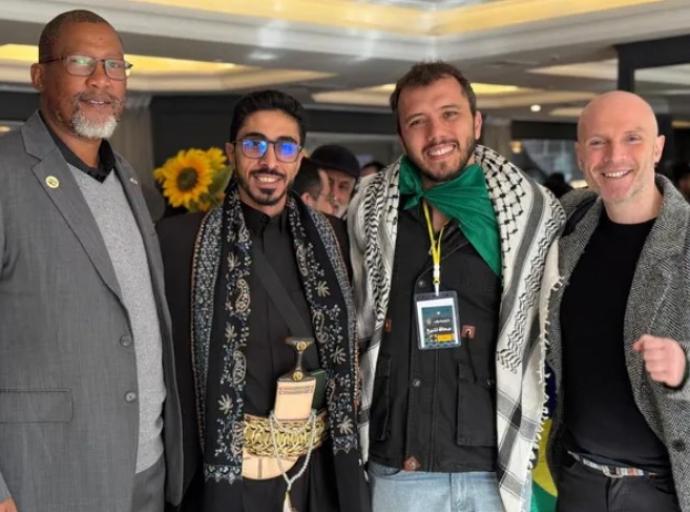
Activist and grandson of Nelson Mandela, Mandla Mandela, has expressed pride in being part of the largest civilian flotilla to date to break Israel's siege on Gaza, along with nine other South Africans.
The first boats in the Global Sumud Flotilla officially set sail on Sunday and will bring together more than 50 vessels from at least 44 nations in the Mediterranean by Thursday.
From there, the flotilla, which activist Greta Thunberg will be bound for Gaza to break the siege and deliver much-needed aid to Palestinians.
"Comrades, we are proud to say that we have over 40 boats that we have been able to mobilise with 44 countries that have come together. Ours (mission) is to end the blockade and break the siege on Gaza," Mandela told the Middle East Eye on Sunday.
He went on to say that a million Palestinians are being starved to death.
"Who is the one who is perpetuating the violence? Who is the one that is a threat, not only to Palestinians but to you and me and the entire global population? Apartheid Israel."
Ahead of the flotilla launch, Thunberg called out Israel and the world for dehumanising Palestinians.
"Palestinians have been dehumanised to such an extent that they are only spoken of in terms of numbers and United Nations (UN) resolutions," she said.
She pointed out that it is not antisemitic to say that people should not be bombed, that individuals should not be living under occupation, that everyone should have the right to live in freedom and dignity, regardless of who they are.
Amnesty International concluded that Israel is committing genocide against Palestinians in Gaza in December of 2024, along with numerous other humanitarian organisations.
"Israel has carried out acts prohibited under the Genocide Convention, with the specific intent to destroy Palestinians in Gaza. These acts include killings, causing serious bodily or mental harm, and deliberately inflicting on Palestinians in Gaza conditions of life calculated to bring about their physical destruction.
"Month after month, Israel has treated Palestinians in Gaza as a subhuman group unworthy of human rights and dignity, demonstrating its intent to physically destroy them," said Agnes Callamard, Secretary General of Amnesty International.
The South African National Defence Force (SANDF) has moved to assure the public that no arms or combat systems were stolen during a break-in at the Bloemspruit Air Force Base in Bloemfontein last month.
This follows media reports suggesting that ammunition had allegedly been stolen from the facility — prompting the Democratic Alliance (DA) to demand urgent answers from Defence Minister Angie Motshekga.
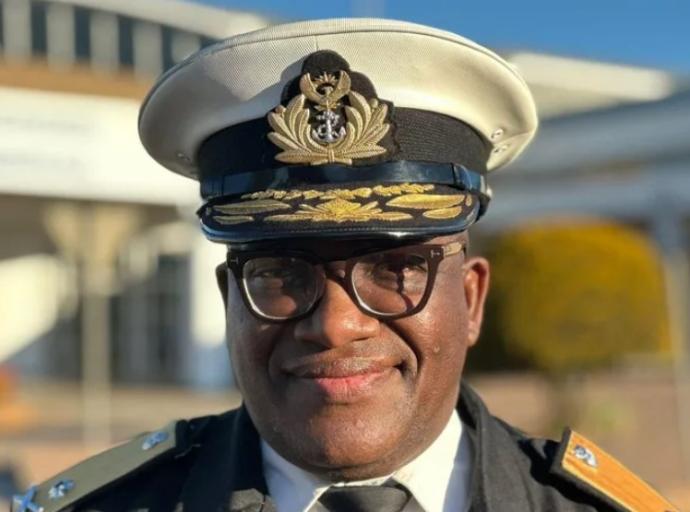
In a response, SANDF national spokesperson Rear Admiral Prince Tshabalala confirmed that a case of housebreaking and theft was reported at the base on 13 August and is now under investigation by the Military Police.
“For operational security reasons, further specifics cannot be disclosed at this stage,” Tshabalala added.
The SANDF also distanced the incident from a separate case reported earlier this year involving the theft of a bus engine.
“The SANDF strongly refutes attempts to link this incident with the unrelated matter concerning a bus engine previously reported,” said Tshabalala.
“The SANDF wishes to place on record that no arms or combat weapon systems were stolen, contrary to the claims published in some media reports,” said Tshabalala.
“Such reporting is misleading, irresponsible, and has the potential to cause unnecessary alarm.”
He explained that the items interfered with were of “limited tactical value” and did not compromise national security or public safety.
“The said engine was old and earmarked for auction. The engine was allegedly stolen on 6 May 2025. These are separate incidents, and any suggestion of a connection is both inaccurate and unfounded.”
Tshabalala said security at the base has since been reinforced and investigations are ongoing.
“The SANDF reassures the public that the integrity of South Africa’s defence capability remains intact, and the organisation remains resolute in safeguarding the nation and its citizens,” he said.
Earlier this week, IOL reported that DA spokesperson on Defence and Military Veterans Chris Hattingh condemned the latest break-in as “not an isolated incident” but the “predictable result of rotten perimeter security, dead alarms, unmonitored CCTV and broken lighting.”
He said the theft, which went unnoticed by roving guards, occurred while ammunition was being stored in a hangar because the main ammunition store was considered insecure.
Hattingh added that the party has formally requested the chairperson of Parliament’s Portfolio Committee on Defence to summon Motshekga, the Chief of the SANDF, the SANDF Chief of Logistics, and the Chief of the Air Force.
The party is demanding that, within seven days, the officials table “a dated, costed and funded base-security recovery plan with named responsible officers, deadlines and deliverables,” along with outstanding reports ordered by the committee on 28 May 2025.
New data, released by Statistics South Africa’s Quarterly Labour Force Survey, reveals a staggering loss of 291,000 jobs in the first quarter of 2025.
The formal sector was hit hardest: trade shed 194,000 jobs, construction lost 119,000, mining declined by 35,000, private households cut 68,000 positions, and community and social services fell by 45,000.
Some sectors defied the trend, with the informal sector adding 17,000 jobs and agriculture growing by 6,000.
As a result, the official unemployment rate jumped one percentage point to 32.9%, leaving 8.2 million South Africans without work.
The expanded unemployment rate, which includes discouraged job seekers, climbed to 42.9%, leaving more than 8.3 million people officially unemployed and a staggering 25 million working-age South Africans currently not in any form of employment.
Youth unemployment remains particularly alarming, reaching 46.1% in 2025, with around 4.8 million young South Africans aged 15–34 out of work.
When including discouraged work-seekers, the expanded unemployment rate has climbed to 43.1%, indicating that nearly half of the working-age population is either unemployed or not actively seeking employment.
Economist Azar Jammine attributes the surge in unemployment to years of stagnant growth and persistent structural issues.
“They don’t just leave after a bad year or two,” he said, referring to the increasing exit of multinational companies. “But when there’s no light at the end of the tunnel, companies eventually decide it’s time to go.”
Jammine cited long-standing issues like government interference, excessive regulation, crime, failing municipalities, and low productivity as key barriers to business growth. He warned that mass retrenchments reduce consumer spending and shrink the tax base, placing more pressure on government finances.
“It becomes a vicious circle, a downward spiral,” he said.
The scale of job losses has been significant. Formal non-agricultural employment fell by 74,000 jobs in the first quarter of 2025, dropping from 10.65 million in December 2024 to 10.58 million in March 2025.
On a year-on-year basis, 95,000 jobs were lost between March 2024 and March 2025. The hardest-hit sectors include trade (-52,000 jobs), community services (-17,000), and mining (-4,000). Construction, electricity, and business services also recorded smaller job losses.
Major companies are scaling back or shutting down entirely. ArcelorMittal South Africa (AMSA) is preparing to close by the end of September, resulting in 3,500 direct job losses and up to 100,000 more jobs at risk in related industries.
Despite attempts by the Department of Employment and Labour and the Department of Trade, Industry and Competition to intervene, AMSA cited funding constraints and is proceeding with its wind-down.
Ford South Africa has also announced 474 job cuts at its Silverton and Gqeberha plants, while Goodyear South Africa closed its Kariega tyre plant, resulting in 900 layoffs as part of a global restructuring plan.
With job losses mounting, questions have been raised about whether companies are complying with labour laws during mass retrenchments. Kenneth Coster, a partner at law firm Webber Wentzel, believes the answer is yes.
“It is highly unlikely that the abovementioned companies would not be compliant with the letter and spirit of the retrenchment process,” said Coster.
“The risks of non-compliance are simply too great.” He explained that large-scale retrenchments are subject to strict legal requirements, including a minimum 60-day consultation period and the possibility of a CCMA-appointed facilitator to oversee the process.
Coster noted that under Section 189A of the Labour Relations Act, retrenchment is not a negotiation but a consultation process.
“Provided an employer has a fair, reasonable and objective explanation to retrench, unions and employee representatives have limited recourse,” he said. Although strikes are permitted at the end of such processes, he argued they are “mostly ineffective” in changing outcomes.
While the Department of Employment and Labour has expressed concern about the social impact of retrenchments, its legal role in such processes is minimal. “This is more a matter for employers, employees, and the courts,” Coster added.
Employment and Labour Minister Nomakhosazana Meth said she was “deeply concerned” about the impact of job losses on South African families. “These are not just numbers, but people with families and children to support and put through school,” she said.
In response, the government has introduced support measures such as the Temporary Employer/Employee Relief Scheme (TERS) through the Unemployment Insurance Fund (UIF).
Earlier this year, the Department secured R416 million in funding to assist nearly 3,000 AMSA employees. However, the deal collapsed when the company could not guarantee it would avoid retrenchments. Other companies, like the South African Post Office, have received relief. SAPO was granted R381 million to support nearly 6,000 employees as part of a turnaround plan.
The Presidential Youth Employment Initiative has also received over R4 billion, enabling the government to place more than 140,000 young people in schools as education and teacher assistants. But both Jammine and Coster have warned that such interventions are only stopgaps and cannot address the root causes of the employment crisis.
“Eventually the government will run out of money to keep funding temporary relief,” Jammine said.
He added that deeper, structural reform is urgently needed, including improving education and skills development, addressing criminal syndicates, and creating a more enabling environment for small businesses, which remain a crucial but underdeveloped engine of job creation.
Coster agreed, adding that South Africa’s labour laws are not the core issue. “The Labour Relations Act is not the problem. The real issue lies in the economic environment created by government policies.”
With global economic pressures compounding the country’s domestic challenges, Meth said the Department remains committed to promoting employability, upskilling and long-term job creation.
Meth warned that broader global challenges are weighing heavily on South Africa’s economic recovery.
“The sluggish economy due to global factors such as trade wars, higher tariffs and reduced manufacturing presents huge challenges for the creation and sustainability of jobs,” she said.
“As Employment and Labour, we are committed to our mandate of promoting employability, job creation, and upskilling, which will ultimately contribute to economic development.”
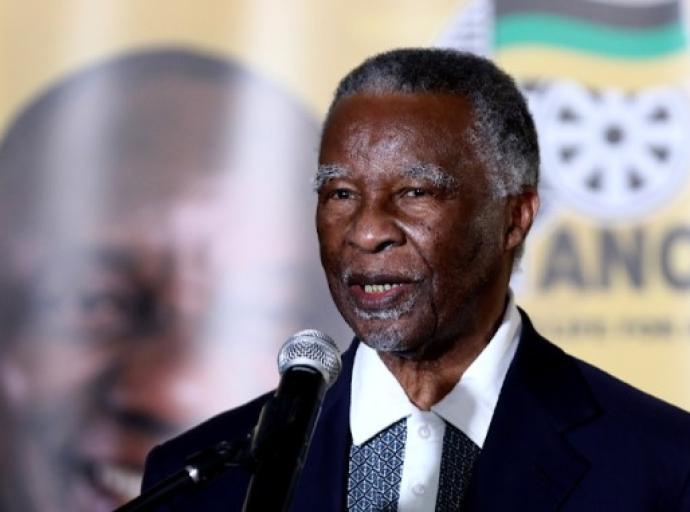
The former Deputy Minister of International Relations and Cooperation, Marius Fransman, has issued a crucial warning to the Thabo Mbeki Foundation, urging it to protect itself from being misappropriated by former Democratic Republic of the Congo (DRC) President Joseph Kabila.
This caution follows the DRC's refusal to participate in a peace and security dialogue organised by the foundation, with Congolese officials accusing Mbeki of bias in favour of the M23 rebels as well as Rwanda, particularly due to his past comments concerning the ongoing conflict in eastern DRC.
Fransman said Kabila's history cannot be rewritten.
He noted that the Kabila era was characterised by one of the most harrowing humanitarian crises since World War II. He pointed to the two widely contested elections held in 2006 and 2011, which he claims robbed the Congolese populace of their democratic voice.
“Under Kabila, we witnessed 18 years of authoritarianism and political unrest that yielded atrocious human rights violations, war crimes, and mass killings,” Fransman added.
He described Kabila's regime as profoundly corrupt, invoking terms such as "systematic looting of state resources," illicit mining contracts, and collusion with rogue factions from Rwanda that exacerbated violence and deprivation within the eastern regions of Congo.
"This is the true legacy of Kabila: a regime of bloodshed, corruption, and betrayal of the Congolese people," said Fransman.
The effort to portray Kabila as an “innocent statesman” or a “reflective elder” is, he insists, not just historical revisionism, but a “direct threat to truth and accountability.”
He added that the Thabo Mbeki Foundation, known for its respected Pan-African stance, must ensure it doesn’t unwittingly provide a stage for Kabila’s misleading narrative of peace.
Fransman highlighted the stark contrast between Kabila and current DRC President Félix Tshisekedi, who he believes represents a clear departure from the tumultuous past.
He said Tshisekedi has embraced democracy, accountability, and reform, stabilised Congo and opening it to peace, development, and cooperation.
"The Congolese people are rebuilding, and their story should not be undermined by recycled propaganda that attempts to absolve those responsible for genocide, war crimes, and looting," Fransman said.
"I therefore urge the Thabo Mbeki Foundation and former President Mbeki himself to remain vigilant and uncompromising in the face of Kabila’s attempts at whitewashing. True African solutions must rest on truth, accountability, and justice; not to allow architects of instability to masquerade as peacemakers.
"Africa cannot afford to forget the lessons of history, nor can we allow the victims of Kabila’s reign of terror to be silenced under the banner of false reconciliation," Fransman said.
At the time of publication, attempts to obtain a response from the Thabo Mbeki Foundation's spokesperson, Anga Jamela, were unsuccessful.
This story will be updated as soon as a response is received.