Free State Targets Surgical Backlogs
The three-day Cataract Marathon, held over the weekend at Boitumelo Regional Hospital in Kroonstad, was a great success, with over 100 patients receiving treatment.
Screening was conducted last week Friday with cataract operations scheduled for Saturday and Su...
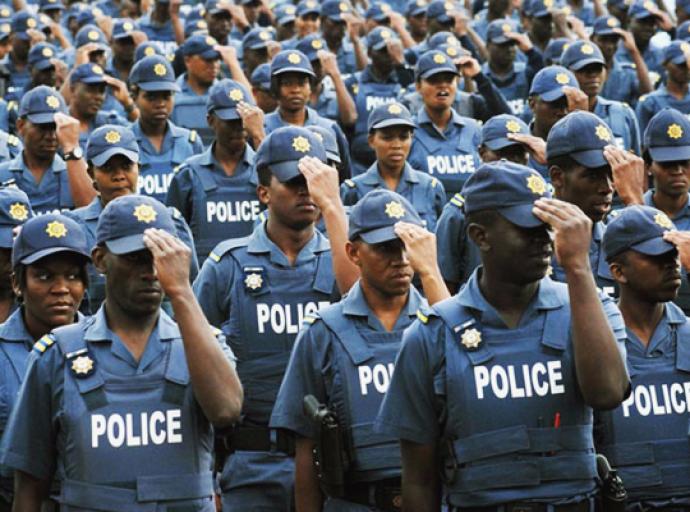
Gauteng Police Commissioner General Fanie Masemola says they will intensify the search for the suspects who killed police officer in the line of duty.
He spoke at the annual South African Police Service Commemoration Day at the Union Buildings in Pretoria on Sunday.
Twenty-seven police officers who died in the line of duty between April last year and March this year were remembered and honoured.
Masemola says the fallen heroes served the country with integrity and pride.
He says, “Let the memory of our 27 fallen heroes of the nobility of the calling and the imperative to serve with integrity and honour, and lets intensify the search for all suspects who have killed our police officers who are still out there at large.”
The trial of a South Korean woman accused in New Zealand of killing her children, stuffing their bodies in suitcases and leaving them in a storage locker began on Monday.
The case caused widespread shock in New Zealand when the bodies of Minu Jo, 6, and Yuna Jo, 8, were found in an abandoned storage locker by an Auckland family in August 2022.
Police believe Hakyung Lee killed her children in June or July 2018, a year after her husband's death, and then returned to South Korea.
She was extradited from South Korea in November 2022 at the request of the New Zealand police.
Appearing before the Auckland High Court on Monday morning, New Zealand media reported Lee refused to answer Justice Geoffrey Venning's calls for a plea.
Despite the silence, Venning said he took Lee's actions to be a not guilty plea, and continued with the case. He told jurors he expected an insanity defence to be presented.
Lee has elected to represent herself in the trial.
Two defence lawyers, Lorraine Smith and Chris Wilkinson-Smith, are serving as standby counsel.
The prosecution is expected to open its case on Tuesday.
In a joint statement with the South African Guild of Actors, the union raised concerns about the continued financial struggles faced by many artists, citing a lack of labour protections and industry standards.
The National Union of Metalworkers of South Africa (NUMSA) has joined calls for the formal recognition and regulation of the country's creative sector.
In a joint statement with the South African Guild of Actors, the union raised concerns about the continued financial struggles faced by many artists, citing a lack of labour protections and industry standards.
The two organisations said transformation is urgently needed to end the exploitation and marginalisation of creatives, calling for fair contracts, job security, and proper working conditions across the sector.
NUMSA spokesperson Phakamile Hlubi-Majola said artists deserve the same rights as all workers and should not be treated as disposable.
"Since 1994, the labour movement has fought for rights across sectors from mining to domestic work, but creatives remain excluded. Actors, writers, directors, and crew have no recognition under the law, and this must change.
“Mam Nyembe's death must mark a turning point. She must be the last creative worker to suffer so much indignity. We call on all creative workers to unite, mobilise, and to fight for their rights. The industry must be transformed, not in name, but in substance."
*This article was first published by Eye Witness News
Today marks the final day of the weeklong Mangaung African Cultural Festival (MACUFE), which is currently taking place in Bloemfontein under the theme “Back to Our African Heart and Soul.”
After a two-year hiatus, Macufe has returned with a vibrant and refreshing approach, featuring 90% local Free State artists and service providers, significantly boosting the local economy.
The festival concludes today with a spectacular gospel event headlined by the Soweto Gospel Choir, Teboho Moruti, Jabu Hlongwane, Ayanda Ntanzi, and many others.
The festival officially launched on 1 August at the Wesleyan Church in Waaihoek.
According to the MEC for Sport, Arts, and Culture, Zanele Sifuba, Macufe's return was a commitment made by Premier MaQueen Letsoha-Mathae during her State of the Province address.
Sifuba emphasised that the main goal of reviving Macufe was to create a more inclusive and beneficial environment for all. This year’s vision focused on empowerment, heritage, and unity.
The main festival took place yesterday at the Mangaung Rose Garden, showcasing artists such as Semito, Press, Sannere, and the Afro-pop group Kaya. The week-long program included a variety of events, such as theatre plays, film screenings, an Amapiano and hip-hop festival, a jazz festival, and a gospel show.
Festival-goers attended in large numbers and expressed their love of Macufe.
Journal News interviewed some attendees at the main festival yesterday, and they shared their eagerness for next year’s event.
Pheladi Mangope, who travelled from Gauteng, described Macufe as a movement.
She said, “I have been attending Macufe every year, and the two-year gap was painful for me.
“ Today, I am very excited to be back at the festival. I really missed it, and I will be back again next year.”
Another attendee, Lerato Mokotjo from Bloemfontein, mentioned her appreciation for the spaciousness of the Rose Garden.
“I have enough space to move around. It’s not too crowded, and I really love that I can enjoy the show without bumping into people,” she said.
A joint parliamentary delegation, comprising members of the portfolio committee on Cooperative Governance and Traditional Affairs (COGTA), the Standing Committee on Public Accounts (SCOPA), and the Standing Committee on the Auditor-General (SCOAG), along with the North West provincial legislature, completed its three-day oversight visit to underperforming municipalities on Wednesday.
Taung, Moretele, and Ramotshere Moiloa Local Municipalities were among those that appeared before the delegation due to various governance challenges, including increasing debt, poor governance, and poor service delivery.
Dr. Zweli Mkhize, who led the delegation and chairs the COGTA portfolio committee, urged the North West provincial government to use its authority to prevent these municipalities from collapsing.
“You have the authority given to you by the Constitution, and we expect you to use it,” Mkhize stated. “The people of the North West are being denied basic services because of criminality and political dysfunction.”
“Municipalities cannot continue to function effectively without clean audits, effective financial management, and political stability. Residents deserve reliable services and accountable leadership, not dysfunction and neglect,” Mkhize asserted.
North West Premier Lazarus Mokgosi was further advised to create an action plan to address all ongoing governance issues. Members of his executive (MECs) were also instructed to closely monitor council decisions, ensure that investigations into maladministration are completed, and intervene decisively where councils fail to act.
Additionally, the committees demanded that detailed reports - which must include timelines and measurable targets - be submitted to parliament and the provincial legislature. They warned that continued non-compliance would lead to further interventions.
The delegation also assured that it would monitor all developments related to the directives and committed to ensuring that consequence management would be enforced so that communities receive the services they are due and to generally restore stability.
Factional battles and instability in the ANC's North West province were evident during a Regional General Council (RGC) special meeting held on Sunday, 31 August, at the Carousel Hotel in Rustenburg.
ANCYL Bojanala regional task team (RTT) strongly condemned the ill-disciplined behaviour displayed by members of the Moses Kotane sub-region, led by the region’s ANC Caucus Whip, during a meeting that undermined the leadership of the NEC, PEC, and REC, who were present.
According to eyewitnesses, the disruption started when a group of comrades from the Moses Kotane Sub-region entered the conference room, causing chaos during the meeting.
RTT coordinator, Pako Mokua, says the situation escalated when comrades booed ANC regional chairperson, Shiela Mabale-Huma, upon her arrival to welcome leadership and members.
He says the provincial secretary, Louis Diremelo, had to intervene, calling out the Whip for unruly behaviour.
Mokua expressed disappointment over the incident, saying it was disappointing to see comrades led by the Single Whip booing the regional chairperson.
“We are calling for immediate disciplinary processes to be initiated towards the Caucus Whip and other comrades who were rowdy during the interaction."
She says this was a staged, well-organised factional arrangement which undermines the ANC leadership's integrity and credibility.
“The task team believes that disciplinary processes will shape the conduct of comrades and affirm the renewal agenda undertaken by the ANC,” Mokua said.
RTT spokesperson, Thabiso Bodigelo, emphasised the need for the ANC to address organisational challenges, including a lack of support for the ANCYL RTT and Progressive Youth Alliance (PYA), and the issue of ‘municipalised ANC’ affecting branch functionality.
Bodigelo says the RTT plans to request a meeting with the Bojanala REC to discuss steps taken to enforce discipline against deployees who undermine the organisation’s integrity.
“We have also said that the factions of the ANC in Bojanala are more organised than the organisation, because even transport coordination was centralised in the Single Whip’s offices, but certain branches were deliberately left behind.
“We have even used the famous quote of the ANCYL President Collen Malatji that the biggest challenge in the ANC is the integrity of the messenger, that if the integrity of the messenger is in question, the messenger is doubted, even when the message is true. The ANC must deal with the issue of the integrity of the messengers we send to the government.
“The ANC’s efforts to address ill-disciplined tendencies are crucial in maintaining its image and effectiveness as an organisation by promoting discipline and accountability, said Bodigelo.