Free State Targets Surgical Backlogs
The three-day Cataract Marathon, held over the weekend at Boitumelo Regional Hospital in Kroonstad, was a great success, with over 100 patients receiving treatment.
Screening was conducted last week Friday with cataract operations scheduled for Saturday and Su...
The duo is trying to interdict the broadcast of a documentary series about them, due to be released on Friday.
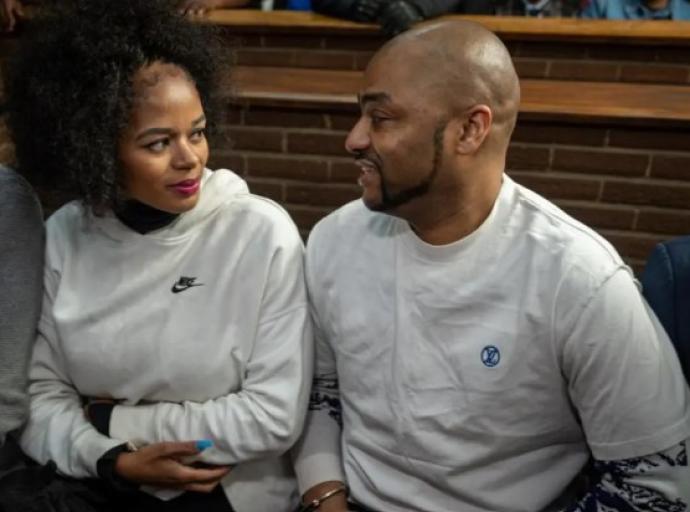
The Pretoria High Court is set to hear a legal battle between convicted killer Thabo Bester and his accomplice, Nandipha Magudumana, and streaming service Netflix.
The duo is trying to interdict the broadcast of a documentary series about them, which is due to be released on Friday.
The matter is set to be heard on an urgent basis on Thursday.
Bester claims the documentary, Beauty and the Bester, makes serious, unfounded and defamatory submissions against him.
In a statement from his lawyers, he argues that the documentary is riddled with falsehoods, selective editing and is character assassination under the guise of a documentary.
Magudumana recently joined his legal bid to stop the screening of the docuseries on Friday as planned and advertised.
But this is not the first time that the pair has tried to block the airing of a production about them.
In 2024, the Johannesburg High Court dismissed their attempt to have a Showmax documentary canned, with Judge Stuart Wilson ruling that Bester’s lawyers failed to convince him that his right to a fair trial would be prejudiced by the screening of the series.
*This article was first published by Eye Witness News
This ruling examined parts of the Births and Deaths Registration Act and its regulations, which had previously prevented husbands from assuming their wives’ last names.
The Constitutional Court has ruled that husbands can now take their wives’ surnames.
This ruling examined parts of the Births and Deaths Registration Act and its regulations, which had previously prevented husbands from assuming their wives’ last names.
Two couples approached the apex court, arguing that the prohibition served no government purpose.
Henry van der Merwe and Andreas Bornman were unable to assume their wives’ surnames because of the legislation.
On Thursday morning, the Constitutional Court declared parts of the Births and Deaths Registration Act invalid, saying the law discriminated on the basis of gender.
*This article was first published by Eye Witness News
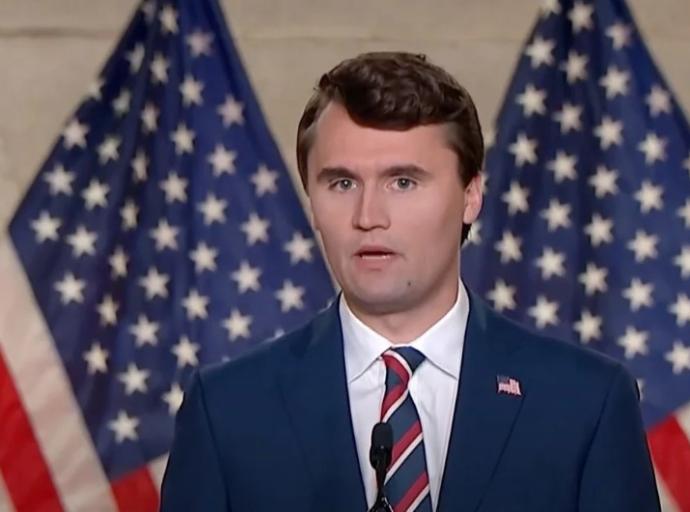
A manhunt was underway Thursday after conservative activist Charlie Kirk was fatally wounded at a university in Utah, a killing that sparked fears of worsening political violence in the United States.
President Donald Trump lashed out at the "radical left" after the shooting of Kirk, a powerful voice in conservative US politics at just 31 years old, and vowed to crack down on those responsible for what he described as "a dark moment for America."
"For years those on the radical left have compared wonderful Americans like Charlie to Nazis and the world's worst mass murderers and criminals," a somber-looking Trump said in a video message from the Oval Office just hours after Kirk's death.
"This kind of rhetoric is directly responsible for the terrorism that we're seeing in our country today.
"My administration will find each and every one of those who contributed to this atrocity, and to other political violence, including the organizations that fund it and support it."
Kirk was shot in the neck while speaking at an event at Utah Valley University on Wednesday. Video from the scene showed him addressing a large crowd when the sound of a single shot rang out.
The father-of-two appeared to collapse in his chair before the camera swiftly moved and sounds of panic erupted in the audience.
The Utah Department of Public Safety said the shooter, dressed in dark clothing, fired from a nearby rooftop in what authorities called a "targeted attack."
Students at the university described the shooting as "crazy" and "scary".
"It makes me feel like I should be very careful about expressing my political ideas," said Samuel Kimball, a software engineering student, told AFP.
"If I was someone considering going into politics, I’d be afraid to get shot."
Confusion
The shooter remained at large despite door-to-door searches by federal, state and local officers.
Orem city mayor David Young said multiple law enforcement agencies were investigating but confirmed that the suspect had not yet been apprehended.
The FBI established a digital line for the public to share tips.
There was initial confusion over the manhunt, with FBI Director Kash Patel posting on social media platform X that the "subject" had been detained before walking that back an hour later.
Trump ordered flags on government buildings -- including the White House -- to be lowered to half-staff until Sunday in an illustration of how important Kirk was in the 79-year-old Republican's orbit.
Utah Governor Spencer Cox, a Republican, called the killing a "political assassination" and issued a stark warning to the perpetrator during an emotional news conference.
"I want to make it crystal clear right now to whoever did this: we will find you, we will try you, and we will hold you accountable to the furthest extent of the law," Cox said.
"And I just want to remind people that we still have the death penalty here in the state of Utah."
Former Utah congressman Jason Chaffetz, who was at the rally, told Fox News the shooting had happened while Kirk was doing a question-and-answer session with the crowd.
"First question was about religion. He went on for about 15-20 minutes. Second question, interestingly, was about transgender shooters, mass shooters, and in the midst of that, the shot rang out," a visibly shaken Chaffetz told the network.
"As soon as that shot went out, he fell back," he said. "Everybody hit the deck... a lot of people started screaming, and then everybody started running."
Turning point
Kirk had an outsized influence in US politics, powering Trump's support among younger voters -- a key factor in the Republican's return to power last year.
He co-founded Turning Point USA in 2012 to drive conservative viewpoints among young people, his natural showmanship turning him into a go-to spokesman on television networks.
Kirk used his enormous audiences on Instagram and YouTube to build support for anti-immigration policies, outspoken Christianity and gun ownership, and to spread carefully edited clips of his interactions during debates at his many college events.
News of the shooting provoked horror across the political spectrum.
"Eternal rest grant unto him, O Lord," Vice President JD Vance posted on social media.
Figures on the left also condemned the attack and urged calm.
"There is no place in our country for this kind of violence. It must end now," former president Joe Biden wrote on X.
California Governor Gavin Newsom -- a frequent foil for right-wing figures like Kirk -- called the attack "disgusting, vile, and reprehensible."
Former congresswoman Gabrielle Giffords -- a Democrat who herself survived an assassination attempt -- said she was "horrified" by the attack.
Kirk's killing came three months after a Minnesota man shot dead a Democratic lawmaker and her husband in their home.
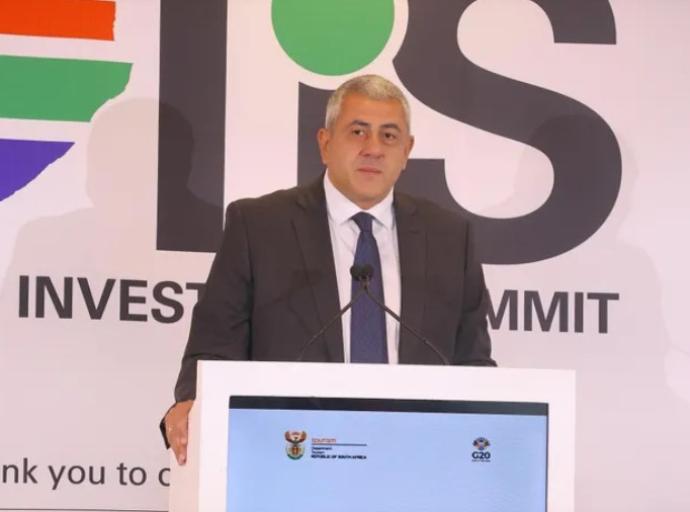
UN Tourism Secretary-General Zurab Pololikashvili has described South Africa as “one of the most attractive destinations for tourism investment,” as he launched the Tourism Doing Business Guide – Investing in South Africa at the country’s maiden Tourism Investment Summit.
Opening the high-level gathering of Tourism Ministers from Africa and industry stakeholders, Pololikashvili applauded South Africa for creating the right conditions for investors.
“From the iconic Table Mountain to the Kruger National Park where we will have the chance to attend the G20 Ministerial Meeting on Thursday, South Africa is a country which combines natural and cultural richness with world-class infrastructure, a resilient financial system, and a welcoming investment climate,” he said.
Highlighting South Africa’s strong tourism performance, the Secretary-General noted: “Last year alone, the country welcomed almost 9 million international arrivals, alongside 47 million domestic trips. Altogether, tourism contributes more than 12% of national GDP, with room for even more growth.”
The new Tourism Doing Business Guide was developed jointly with the South African Department of Tourism. According to Pololikashvili, “It provides investors with a practical roadmap of opportunities, incentives, and projects. It is designed to build confidence and facilitate concrete commitments.”
Beyond the national guide, UN Tourism also unveiled a landmark regional publication. “We will present an executive summary of the Investing in Africa guidebook. I am very excited about this publication. It’s the first time we have produced a report focused on investments for a whole region. That’s testament to Africa’s status as one of the most dynamic frontiers for global tourism investment,” Pololikashvili stated.
He explained that the new Africa-wide report “brings together the voices of both public and private stakeholders. It provides key data as well as insights from those shaping Africa’s tourism future. To date, we have published 7 editions for African countries, including South Africa, Namibia, Zambia, Morocco, Mozambique, Mauritius and Tanzania. And we have editions for Angola, Cabo Verde and Kenya in the pipeline.”
For Pololikashvili, these initiatives underscore UN Tourism’s commitment to Africa: “Together, South Africa’s national guide and Africa’s regional roadmap send a clear message: tourism is not only open for investment, but ready to lead with sustainability, innovation and inclusion.”
He also stressed that investment in tourism must go beyond bricks and mortar. “Investing in tourism also means mobilizing resources to enable access to education and human capital development,” he emphasised. In line with this, he announced the delivery of “100 UN Tourism Online Academy Scholarships to South Africa to promote youth empowerment and quality education.”
Concluding his address, the Secretary-General paid tribute to South Africa for its leadership role: “I thank South Africa for providing the platform to launch this guide, reinforcing the country’s role as a gateway for Africa’s tourism development.”
Opposition is mounting against proposed changes to the National Credit Act (NCA) introduced by the Department of Trade, Industry and Competition (DTIC), with youth advocacy groups and student organisations warning that the amendments could entrench cycles of poverty and exclusion among young South Africans.
Recent reports indicate that under the amendments, educational institutions would be added to the list of entities that can supply credit information to credit bureaus, alongside banks, courts, and debt collectors. This means that unpaid student fees or other educational debts could end up on a young person’s credit record, leading to blacklisting. Critics argue that the move could worsen the position of students who already struggle to graduate due to unpaid fees, and further block their access to housing, loans, or financial services.
Youth Capital, a youth advocacy campaign, expressed alarm at the implications for young people who rely on credit to access education, start businesses, or cover the costs of seeking work.
“Youth Capital welcomes efforts to ensure that young people, who are often first-time borrowers, are safeguarded against unfair lending practices,” said Buhle Magwaza, Project Lead at Youth Capital. “But these amendments can cause harm to young people, as students and hustlers turning to entrepreneurship as a survival strategy in the face of record unemployment.”
Magwaza argued that the framework treats defaults as individual failures without recognising the structural drivers of debt. “These numbers illustrate how young people are not failing to repay debt out of irresponsibility; they are being set up against impossible odds in a system that denies them both work and opportunity,” she said, pointing to youth unemployment of 71.7% for 15–24-year-olds and 49.5% for those aged 25–34 in the second quarter of 2025.
She warned that under the proposed framework, defaults would trigger severe consequences such as blacklisting, garnishee orders, and long-term exclusion from formal financial systems. “These outcomes can entrench disadvantages: closing doors to further education and training, housing, entrepreneurship, and even employment opportunities that require a clean credit history,” Magwaza said.
According to Youth Capital, the tightening of regulations risks portraying debt default as a personal failure rather than recognising systemic issues. “Doing this means ignoring the real, structural drivers of debt: the unaffordability of higher education, the high costs of looking for work, and limited pathways to decent jobs. It also overlooks the precarious reality of entrepreneurship for young people who have no safety nets,” Magwaza added.
She called for complementary reforms to accompany the proposed amendments. “Without complementary measures such as income-contingent repayment systems, debt relief schemes, and more robust public investment in education and self-employment support, these amendments risk further entrenching cycles of exclusion,” she said.
“An example is the steady increase of graduate unemployment now at 12.2%, showing that a qualification does not guarantee protection from exclusion. Penalising defaults without structural reforms will deepen this trap,” Magwaza added.
The South African Democratic Teachers’ Union Students’ Chapter (SADTU SC) has also come out strongly against the DTIC’s proposals, describing them as a betrayal of young South Africans.
“The South African Democratic Teachers Union Students’ Chapter (SADTU SC) note with dismay the proposed bill by the Department of Trade, Industry and Competition (DTIC), which aims to blacklist individuals with student debt,” said National Coordinator Xolani Dube in a statement.
“This is nothing but a sheer betrayal of a promise, and lack of commitment to the plea of an African child. The disingenuous proposed bill by DTIC is regressive and has the ability to perpetuate a cycle of poverty,” Dube said.
SADTU SC called for the scrapping of clause 18(17)e, describing it as “highly contentious and bound to cause an outcry.”
Dube added: “It is a matter of fact that student debt is often unavoidable for those seeking higher education, and this bill disproportionately affects individuals from disadvantaged backgrounds. Rather than penalising these students, DTIC should focus its efforts on enabling social mobility through creating more equitable educational funding and repayment options.”
Both organisations have stressed that the amendments, without broader structural reform, will only deepen exclusion. Magwaza said the credit system should “create pathways for financial rehabilitation, so that a period of hardship does not permanently exclude young people from economic opportunity.”
She added that education and training should serve as “a bridge, not a barrier,” and urged policymakers to design repayment systems linked to income realities, introduce debt relief schemes, and institutionalise financial literacy and mentorship for young entrepreneurs.
With unemployment at record levels and graduate joblessness rising, youth organisations warn that the amendments risk closing off opportunities for a generation already under pressure. “Penalising defaults without structural reforms will deepen this trap,” Magwaza said.
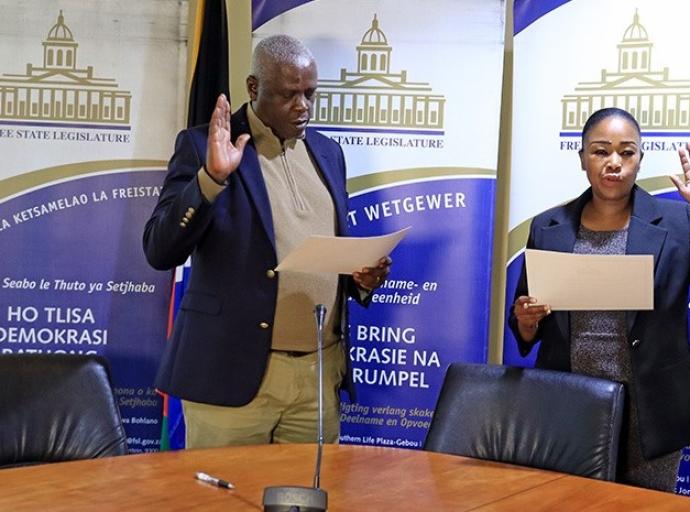
The Free State Legislature has sworn in Mamiki Mkhabela as a new Member of the Provincial Legislature (MPL), marking the African Congress of Transformation’s (ACT) latest representation in the house.
Mkhabela’s swearing-in strengthens the small party’s footprint in provincial politics, with ACT positioning itself as an alternative voice on governance, accountability, and service delivery in the Free State.
The Speaker of the Free State Legislature, Mxolisi Dukwana, presided over the swearing-in of Mamiki Mkhabela in terms of Section 107 of the Constitution, which requires all members to swear or affirm their loyalty to the Republic and their commitment to the Constitution before taking up legislative duties.
Mkhabela’s appointment follows the passing of her husband, David Mkhabela, last month. He had joined the legislature in 2024 and served on several committees, including Petitions, Public Works, Health, and Finance.
Welcoming Mkhabela, Dukwana said he looked forward to working with her in serving the people of the Free State.
Speaking to Journal News soon after her swearing in, Mkhabela stressed that her appointment should not be linked to her husband but recognised in her own right as a political leader in a senior position.
“This is not about my husband. When I joined the African Congress for Transformation, I did so independently, separate from him. This is not a hierarchical position or a matter of kinship - it is purely political. I would like to be treated as an individual, not associated with my husband,” she said.
She further emphasised the importance of youth participation in politics, noting that young people must take charge of the country’s future and work to improve living conditions for all.
Mkhabela is regarded as bringing both experience and dedication to public service.