Free State Targets Surgical Backlogs
The three-day Cataract Marathon, held over the weekend at Boitumelo Regional Hospital in Kroonstad, was a great success, with over 100 patients receiving treatment.
Screening was conducted last week Friday with cataract operations scheduled for Saturday and Su...
As the 2026 municipal elections approach, the Executive Mayor of Maluti A Phofung Local Municipality, Malekula Melato sat down with Journal News to unpack the challenges, progress, and priorities that shape the region’s political landscape. The mayor discussed service delivery, youth unemployment, infrastructure development, and the municipality’s plans to improve transparency and community engagement.
Thank you for your time Mayor. In your view, how would you describe the position of a mayor in local governance?
I cannot speak on behalf of my colleagues, but I firmly believe that I am a public servant for the people of Maluti-A-Phofung, and it is my duty to advocate for the community. Wherever I go, I carry and represent the pride of my municipality — and to me, that is the true embodiment of a mayor.
Maluti-A-Phofung has been in the headlines for a long time due to service delivery challenges. How do you navigate that?
The municipality is rural, yet it is one of the largest in the province and contributes significantly to the Free State’s overall votes. That alone highlights the weight of the responsibility I carry on my shoulders.
Can we look into the specific challenges faced by the municipality? What exactly are these issues, and how are you addressing them?
I face a number of challenges, but my top three priorities are service delivery, roads, and infrastructure. These are the areas I dedicate most of my focus to. I am, however, supported by the interventions of the national department, which strengthens our capacity to respond to these pressing issues.
It has been some time since we last heard of violent protests in your municipality. Would it be correct to say there has been progress in service delivery, or is it still too early?
Maluti-A-Phofung is currently undergoing significant change, and residents can already see positive and visible improvements. Although I am relatively new, I believe the turnaround strategy is beginning to show real impact. There was a period when Maluti-A-Phofung had no electricity at all, and we had to develop an intervention strategy in collaboration with both the provincial and national departments. Those efforts are now bearing fruit.
In these processes you are engaged in, are there any proud moments you can share with the public?
Indeed, one of the milestones I take great pride in was my visit to China in pursuit of investment opportunities for Maluti-A-Phofung. The scale of our service delivery challenges is such that the municipal budget alone cannot sufficiently address the levels of poverty within our communities. Recognising this, I took the initiative to position our municipality on an international platform, where the response was encouraging.
Among the notable outcomes was an agreement with two universities in China, which committed to offering opportunities for our youth to undertake short courses aimed at enhancing their skills and improving their livelihoods. This partnership not only strengthens our capacity to empower young people but also lays a foundation for future investment and job creation within Maluti-A-Phofung.
What are those courses, Mayor?
Our agreement is focused primarily on agriculture, as we already have an agricultural school within the municipality. We are placing greater emphasis and building more capacity in this sector to ensure that our young people are exposed to meaningful opportunities.
In addition, my team and I visited a TVET college, where discussions on cultural exchange were held. This was particularly exciting for us, given the presence of our traditional leaders, the Marena, in Maluti-A-Phofung. I also had the opportunity to attend a Chinese Film Festival, which created a platform to promote tourism in our municipality.
While engaging there, I ensured that the spotlight was not only on national filmmakers but also on our local creative industry. I highlighted that we have many talented young people who are eager to learn and participate in cultural exchanges between China and our community. It gives me great pride to cultivate and nurture the potential of our youth.
What is an exciting project that you have worked on since the inception of your mayoral position?
One of the projects I take pride in is the transformation of our community hall into an amphitheatre. Such refurbishments are particularly meaningful to me because they are directly linked to the development and empowerment of the youth.
In addition, I have introduced a six-month day-to-day working programme designed to equip young people with workplace skills, ensuring that they are prepared once they complete their short courses. I am also in discussions to implement a unisex beautician course, as part of a broader effort to provide diverse training opportunities for the young men and women of Maluti-A-Phofung.
Furthermore, our Special Economic Zone (SEZ), based in Harrismith, remains a priority. I am working on attracting investment into the firms and factories located there, with the goal of strengthening the rural economy and creating sustainable job opportunities.
You are relatively new as a mayor; are you intending to run for a second term?
I believe I am motivated and well-positioned to serve a second term. The infrastructure I have set in motion, coupled with the fact that I have represented Maluti-A-Phofung on international platforms, speaks to my tenacity and dedication. The organisation that deployed me has recognised my potential and the work I have undertaken. As a proud member of the African National Congress (ANC), I will always strive to raise our flag higher and serve our people with commitment.
What are your plans for the local government elections?
While I do have several plans in place, I prefer not to focus solely on organisational matters at this stage. My primary focus is on implementing initiatives that will improve the overall economic well-being of our youth, as they are the cornerstone of Maluti-A-Phofung’s future.
Mantashe’s assertion sparked division within the party, with critics denouncing his stance while others insisted his message had been misinterpreted
By: Lerato Mutlanyane
Amid growing unrest within the ANC, party members have openly challenged National Chairperson Gwede Mantashe, arguing that he should have been advised differently.
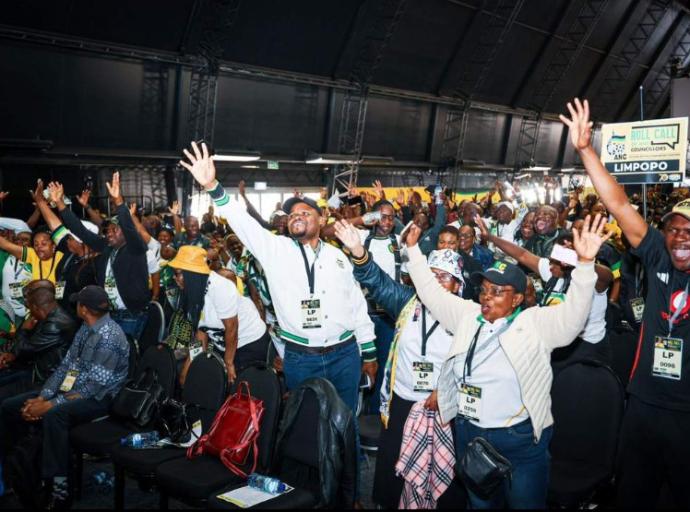
The criticism comes as tensions mount over the party’s direction. Speaking at the FNB Stadium in Gauteng, Mantashe lambasted local ANC councillors, claiming they are “good at singing and creating noise” but lack the skills to govern effectively.
“I know we have a lot of singing councillors, but we have no councils. You all sing well, but capacity dololo [nothing],” he told a rowdy crowd.
Mantashe added that this reflected the type of leadership the roll call was meant to address. “That is the council we are having—comrades who are councillors, leaders of the ANC, who make noise during meetings. What kind of leadership is that?”
His remarks triggered backlash from several local councillors, who accused him of being “divorced” from the realities they face on the ground.
A ward councillor in the Dihlabeng Local Municipality – who asked to remain anonymous – challenged Mantashe’s assessment.
“Our leadership is divorced from the reality we live in. The Chairperson’s insinuation on Monday has far-reaching implications, not only for us as councillors but for the organisation as a whole. We are trying to rebuild the ANC’s image after years of damage, and now, as we approach what is expected to be the most difficult election, our leadership is undermining us,” the councillor said.
However, Mangaung Ward 7 councillor Clement Sehloho took a different view, arguing that Mantashe’s comments were misinterpreted.
“From me personally, I feel the National Chairperson’s message was not to destroy but to build on the basis of governance, urging members to put in more effort. In terms of service delivery, we do our part as councillors, but what truly limits progress is funding. For example, in Freedom Square the roads are in a terrible state, and I have had to use my own money to buy gravel to temporarily fix potholes so that residents can use the roads,” Sehloho explained.
Responding to Mantashe’s remarks, Gauteng Provincial Task Team co-convener Panyaza Lesufi warned that councillors are facing real threats beyond political criticism.
“The message I suspect all councillors would want from the NEC is one of support. Our councillors are not only under attack from our communities but also targeted by people who are hired, resourced, and on a mission to kill them. As we convene here, comrade president, it is vital to stress the need not only to protect councillors and officials, but also whistleblowers who expose corruption in our municipalities and across state institutions,” Lesufi said.
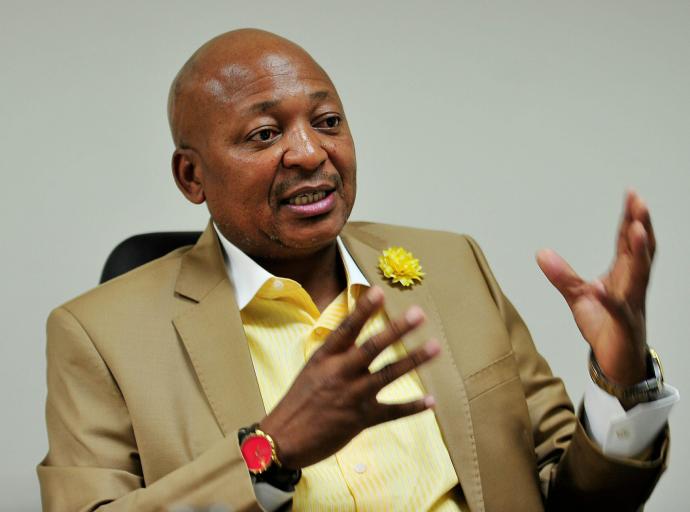
Suspended Patriotic Alliance (PA) deputy president Kenny Kunene’s has been put forward for the mayoral candidacy for the City of Johannesburg in the upcoming 2026 local government election.
This despite ongoing investigations into his ties to the alleged crime underworld figure Katiso “KT” Molefe, who was arrested in connection with the murder of Oupa Sefoka, popularly known as ‘DJ Sumbody’.
Kunene was found at Molefe’s home at the time of the latter’s arrest but subsequently claimed to have only been accompanying and aiding an inexperienced journalist who is employed at his online newspaper.
While acknowledging that the investigations are still underway, current sports minister and PA president, Gayton McKenzie announced that Kunene candidacy for the Johannesburg mayoral post, while lauding his work as the city’s member of the mayoral committee (MMC) for transport.
“He (Kunene) has done very good work in the City of Joburg,” said McKenzie on the party’s Facebook platform “and the DP (deputy president) will be our mayoral candidate for Joburg.”
He continued: “We insist on that as he was a councillor. We will discuss with him that position, but the DP, we want his case to finish.”
McKenzie also shared that the investigations into the Kunene’s alleged links to Molefe allegations are at an advanced stage.
“The investigation of the DP will probably be done, but Eugene will tell us tomorrow when it will be done.”
Former Democratic Alliance member of parliament, Liam Jacobs, has also been announced as the party’s candidate for the mayoral position in Cape Town. The 24-year-old, who defected to McKenzie’s party in June this year, will be resigning from his current parliamentary position in pursuit of the Mother City’s mayoral hotseat.
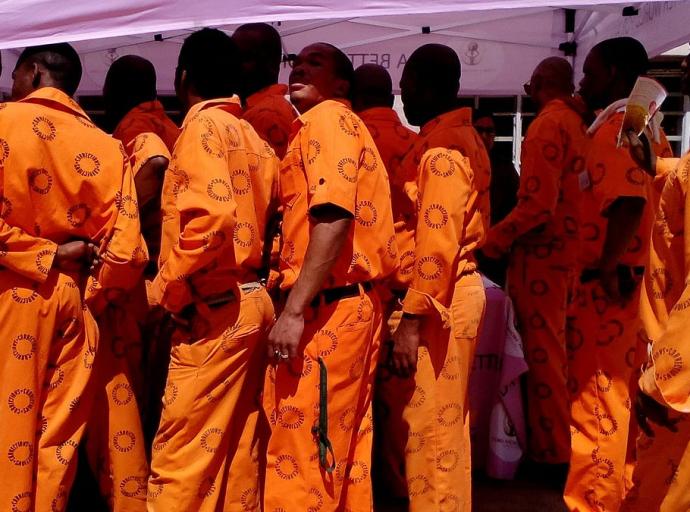
The Portfolio Committee on Correctional Services has raised fresh concerns over inmate deaths and assaults after receiving the Judicial Inspectorate for Correctional Services' (JICS) first-quarter performance report for 2025/26.
Committee Chairperson, Kgomotso Anthea Ramolobeng, said the issue of unnatural inmate deaths had appeared before the committee for the second week in a row.
"Due to time constraints, the committee could not conclude its engagement with the DCS. However, we requested a full report, including details on the unknown causes of death," she said.
According to JICS, 24 unnatural deaths were recorded during the quarter under review. 20 of these occurred in the Gauteng region. The classification refers to cases where an apparently healthy inmate suddenly dies, and the cause of death is unknown.
Ramolobeng noted that the committee was particularly interested in learning about the method that JICS uses to investigate suicides, deaths of 'unknown cause', and those classed as 'unnatural other'.
JICS told the committee it investigates all unnatural deaths except those where no violence or foul play is suspected.
Independent Correctional Centre Visitors (ICCVs) recorded all the 'unnatural other' cases and requested medico-legal documents from the Department of Correctional Services (DCS).
In addition, the committee heard that the JICS Complaints Unit received 177 complaints across categories in the quarter. Inmate-on-inmate assault was the most frequent with 46 cases, followed by 29 cases of official-on-inmate assault and 21 attempted suicides.
The committee was also informed that natural deaths remained high, with 120 reported by the DCS, including 52 classified as 'natural causes other'. Gauteng accounted for 47 of these cases.
Meanwhile, ICCVs processed 11,115 complaints and requests from inmates during the quarter. These ranged from appeals and access to social workers to concerns about conditions in correctional centres.
Among them were 316 inmate-on-inmate assaults, 76 official-on-inmate assaults, six inmate-on-official assaults and 12 sexual assaults.
Ramolobeng said the committee would continue to keep a close watch on JICS. She reiterated the need for stronger ties between the inspectorate and the DCS.
The South African Human Rights Commission (SAHRC) unveiled four comprehensive reports designed to tackle pressing human rights challenges, particularly those affecting the country’s most vulnerable populations.
In an effort to address the inaccuracies, the SAHRC released a statement on Tuesday aimed at dispelling myths, particularly on social media, where misinformation has flourished.
One of the most persistent allegations is that a significant portion of the SAHRC's staff comprises non-nationals. The Commission denied the claim, stating that out of its total staff of 169, only seven employees are non-nationals. Furthermore, a claim that the majority of senior managers are non-nationals was denied. The commission said that among its 16 senior managers, only one is a non-national.
"The persistence of this incorrect and false narrative, especially on social media platforms, necessitated this statement to nullify this disinformation campaign and provide facts," said SAHRC.
Furthermore, the Commission rejected the narrative that it serves only non-nationals. This comes after the organisation has been heavily criticised for being against Operation Dudula.
The commission said statistics for the 2024-25 financial year underscore this commitment, after successfully finalising 7,516 complaints, predominantly from South African citizens.
Key Findings from the Reports
The released reports present a comprehensive analysis of human rights in South Africa, illuminating both successes and areas requiring urgent attention. Highlights from the reports include:
State of Human Rights Report (2024-25): The report quantified the Commission's activities, detailing 1,394 monitoring activities and 3,180 human rights advocacy initiatives. It revealed a staggering volume of complaints centred on racism, xenophobia, and inadequate access to basic services.
Monitoring the Implementation of Recommendations Report: This report captured vital issues observed during the 2024 General Elections, exposing the urgent need for improved sanitation and connectivity in schools, as well as better training for electoral officials.
Section 184(3) Report: Addressing systemic issues, this report highlighted significant gaps in essential services, including housing, health, and social security, while underscoring the lack of adequate governmental responses to pressing challenges.
International and Regional Human Rights Report: The report encapsulated South Africa’s recent engagements with international committees and reinforced the SAHRC's status as an 'A-status' national human rights institution, signalling global recognition of its importance.
Looking ahead, the SAHRC said it's planning to take further action by presenting these reports before Parliament, compelling relevant authorities to address the noted human rights concerns.
The Commission has pledged to enhance public awareness campaigns aimed at correcting misinformation and educating the populace about human rights issues. Additionally, it intends to utilise legal avenues to confront both government and private entities that neglect their obligations.
Water and Sanitation Deputy Minister Sello Seitlholo said on Tuesday his department will continue to request the National Treasury to withhold Equitable Share allocations to defaulting municipalities that owe R25 billion to water boards.
Seitlholo said the withholding of the allocations was used as the last resort to force the councils to honour their obligations.
“The Department of Water and Sanitation, together with the National Treasury and the Cooperative Governance and Traditional Affairs (Cogta) Department, will continue to implement this measure to municipalities that persistently default on their current accounts,” he said.
Seitlholo made the statement when his department, Cogta and National Treasury briefed the Portfolio Committee on Water and Sanitation on the withholding of the Equitable Share from municipalities owing water boards.
He said the withholding of the Equitable Share was meant to ensure defaulting councils paid their current invoices prior to their allocations being released by the National Treasury.
“It is not aimed at reducing the historical debt. The debt write-off mechanism that has been agreed to between the National Treasury and Department of Water and Sanitation is aimed at reducing the historical debt,” said the deputy minister.
eitlholo said the debt owed to water boards stood at R25 billion as at July.
“The outstanding debt owed to water boards by municipalities does pose a financial threat to operational and sustainability of the water boards,” he said.
Seitlholo also said the withholding of the Equitable Share allocation was necessary and temporary intervention to safeguard the sustainability of the water bards.
“This mechanism will be in place until most of the non-compliant municipalities demonstrate consistent payment of their current invoices.”
Director-general Shaun Phillips said they get often get requests from the water boards to ask the National Treasury to withhold allocation from municipalities which consistently do not pay their current invoices.
The department submitted 35 requests to the National Treasury for the withholding of the equitable share of defaulting municipalities in July.
National Treasury official Sifiso Mabaso said 18 municipalities submitted written representations to Minister of Finance Enoch Godongwana.
“A total of R278 million was paid to the water boards within a period of seven weeks,” he said.
A Cogta presentation said R3.9 billion was withheld from 34 municipalities.
It said of the 34 municipalities, 18 municipalities owed the highest amounts to Vaal Central, Magalies Water, Lepelle Northern Water and Rand water and that these water boards face severe financial challenges.
“The total amount owed by these municipalities to the water boards is R15.8 billion.”
On Friday it was reported that the Office of the Auditor-General recovered R460 million in outstanding audit fees from municipalities in December 2024 after the National Treasury notified them of that their allocations would be withheld.
Mabaso said Godongwana has directed the National Treasury to withhold the allocations in December and March 2026.
Phillips said since the next transfer of Equitable Share is in December, the department will be preparing submissions to the National Treasury at the beginning of October 2025.
Parties have welcomed the withholding of the allocations to the defaulting municipalities and praised the collaborative efforts by the departments.
Mk Party MP Visvin Reddy praised the departments for enforcing payments by the municipalities.
“It was a bold step that signals seriousness about accountability,” Reddy said.
ANC MP Stanley Ramaila said: “We appreciate the achievement thus far in terms of making sure that the water boards are self-sufficient and sustainable.”
DA MP Stephen James Moore also thanked the department for the success of the project so far.