Free State Targets Surgical Backlogs
The three-day Cataract Marathon, held over the weekend at Boitumelo Regional Hospital in Kroonstad, was a great success, with over 100 patients receiving treatment.
Screening was conducted last week Friday with cataract operations scheduled for Saturday and Su...
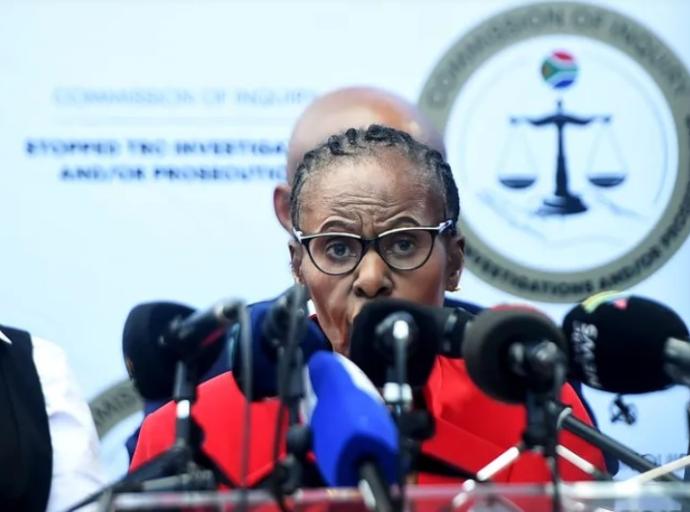
The Truth and Reconciliation Commission (TRC) Cases Inquiry, chaired by retired justice Sisi Khampepe, has announced that it has concluded its consultations with family and legal representatives and other parties who are central to its work.
As a result, the commission has set aside a preliminary timetable for receiving oral testimony by November 10, with the filing of witness statements expected to conclude by October 10, 2025.
The TRC Cases Commission revealed this on Tuesday after it concluded its pre-hearing engagements with interested parties, including family and legal representatives.
Last month, Khampepe indicated at a media briefing held in Soweto that the commission aims to be inclusive and non-adversarial, encouraging contributions from interested parties.
Commission spokesperson, Lionel Adendorg, in a statement said: "During this constructive engagement with around 60 legal and family representatives of victims and/or their respective families, as well as legal representatives for the National Prosecuting Authority (NPA), the South African Police Services (SAPS), and the Department of Justice and Constitutional Development, it was also suggested that persons of interest or implicated persons are to file their statements within 20 days after being provided with the details of their alleged connection to the subject matter of the TRC Cases Inquiry."
Adendorg further said that the commissioners are considering the proposal of scheduled dates, with a draft timetable also discussed.
"The meeting discussed, among other things, how evidence will be collected and what process the inquiry will follow. A draft timetable was also discussed, and according to this proposal, the TRC inquiry is set to receive evidence and submissions from anyone with information by 10 October, and will hear oral evidence during the second week of November. At the moment, the commissioners are considering this proposal, and we will be able to communicate the decision once it has been made," he said.
In January this year, a 23-member group of victims' families filed a 260-page affidavit requesting the court to order President Cyril Ramaphosa to set up a commission of inquiry within 30 days to investigate why TRC cases have not been properly investigated or prosecuted.
Following this, in May, Ramaphosa signed a proclamation for the establishment of a judicial commission of inquiry to determine whether attempts were made to prevent the investigation and prosecution of apartheid-era crimes.
Ramaphosa subsequently appointed Khampepe as the chairperson, with retired Northern Cape Judge President Frans Diale Kgomo and Advocate Andrea Gabriel SC as her assistants.
The commission will be headquartered at the Sci-Bono Complex in Newtown, Johannesburg, CBD.
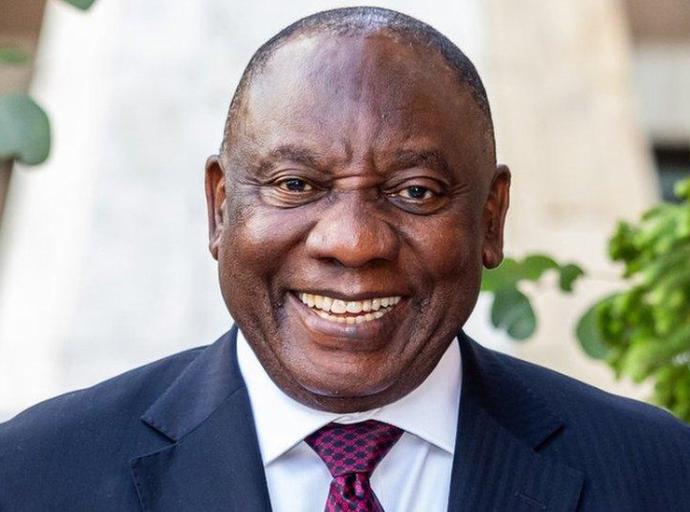
President Cyril Ramaphosa has again come to the defence of deputy ministers, stating that they play a crucial role in assisting ministers in the performance of their functions and responsibilities.
Responding during the oral question session in the National Assembly on Tuesday, Ramaphosa said the deputy ministers play a critical role and that they should be given more responsibilities.
“Those deputy ministers are distinguishing themselves as real contributors to our governance. And what I also really appreciate is the fact that many of our deputy ministers are working so well with their minister colleagues,” he said.
The size of the Cabinet has raised concerns, especially after the 2024 elections resulted in yet another bloated executive, with the total allocation for all new Ministries and Deputy Ministries amounting to R239 million in 2025/26, with carry-through costs over the 2025 MTEF.
The allocation is for salaries of the executive, cost of support staff, official vehicles, and goods and services.
There is again a push to scrap the deputy ministers, with ActionSA even introducing a bill in Parliament.
Ramaphosa said the Constitution provides for the appointment of deputy ministers to assist ministers.
“The deputy ministers appointed in June 2024 continue to add value to the work of government and to support in a meaningful way the implementation of the priorities of the seventh democratic administration.”
He noted that it was not possible to reduce the number of Ministries when he announced the Cabinet last year after the elections, as he had indicated the need to ensure that the executive was inclusive of all the parties to the Government of National Unity (GNU).
Ramaphosa also said they were always concerned about the size of the executive.
“You may recall that right at the beginning, when we constituted this government. We did address this issue, and I said my own wish was that we should have a smaller executive,” he said.
“That has always been my declared wish, but we needed to accommodate various parties that are part of the GNU, which requested us to have the size of the executive,” said the president.
Ramaphosa stated that the GNU partners had accepted the size of the executive.
“It would have been ideal to have a much smaller executive; however, the need to have GNU, which is representative, meant that we needed to have this type of architecture we have.”
Ramaphosa heaped praise on deputy ministers and ministers who went about executing their tasks.
“It is what we have, and we need to keep the government moving forward with this type of architecture we have now.”
ActionSA parliamentary leader Athol Trollip asked whether he and the ANC would support his constitutional amendment bill aimed at doing away with deputy ministers so that the money spent on them could be redirected to the betterment of the country.
In his response, Ramaphosa said he would like to have a look at the bill.
“Please have the bill forwarded so that we can look at it. I am unable to respond in any way until I see the content of the bill,” he said.
The president commended Trollip for introducing the bill, saying he was making a meaningful contribution because he was concerned, as he was, with the size of the executive.
“I would like fewer deputy ministers. But right now we do have deputy ministers who are really stepping up to the plate, who are going beyond what I call of duty. These deputy ministers are distinguishing themselves as real contributors to our governance.”
Ramaphosa said the deputy ministers, as members of the executive, participate in Cabinet committee discussions.
“We have a really wonderful system that functions so well that every proposal that finally sees the light of the day in Cabinet goes through a rigorous process, starting in the department where the ministers and deputy ministers engage with their directors-general and deputies to be thoroughly discussed across various departments, but ends up going to the clusters we have.”
He said deputy ministers also participate in the discussion vigorously in crafting policy proposals and drafting laws.
“I appreciate the inputs and commitment that they demonstrate, and in many ways, deputy ministers' positions can also be seen as a training ground for future ministerial positions. That is how I look at it. They are doing a good job, and we may not see the value they do, but I see great value.”
They said the rise in unnatural deaths over the last three years is a concern and noted how prison officials weren’t held fully accountable.
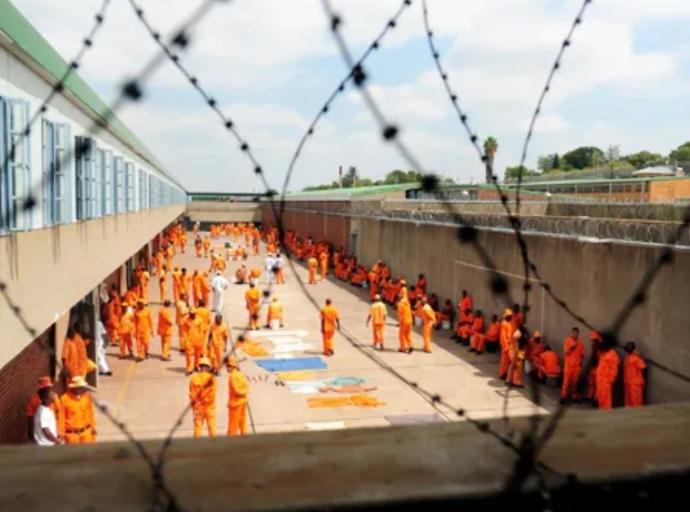
Members of Parliament’s Correctional Services Portfolio Committee have slammed the department accusing it of failing to prevent the unnatural deaths of prisoners by suicide.
Parties have also questioned the high number of prisoners whose causes of death are registered as “unknown”.
They said the rise in unnatural deaths over the last three years is a concern and noted how prison officials weren’t held fully accountable.
The Department of Correctional Services said the unnatural deaths at correctional facilities typically involve fatalities resulting from homicide, suicide and accidents like drug overdose.
The department said over the last three years there have been 1,144 with more than 400 still under investigation.
Economic Freedom Fighters (EFF) member of Parliament (MP) Carl Niehaus raised the alarm on the number of deaths registered as unknown.
“I don’t understand that you can come and tell me that there are unknown causes of death.”
The Democratic Alliance (DA)’s Kabelo Kgobisa-Ngcaba said prison officials should pay a higher price where they're found to have played a role.
“These people who participated in the death of an inmate and then got off with a verbal warning. What does that even mean? Why would you get a written warning or any sort of warning, surely it should be dismissal. “
The department said several deaths are still under investigation and most suicides are usually linked to mental health.
*This article was first published by Eye Witness News
Operation Dudula has recently made headlines for monitoring the entrances of public healthcare facilities and checking whether patients are South African citizens.
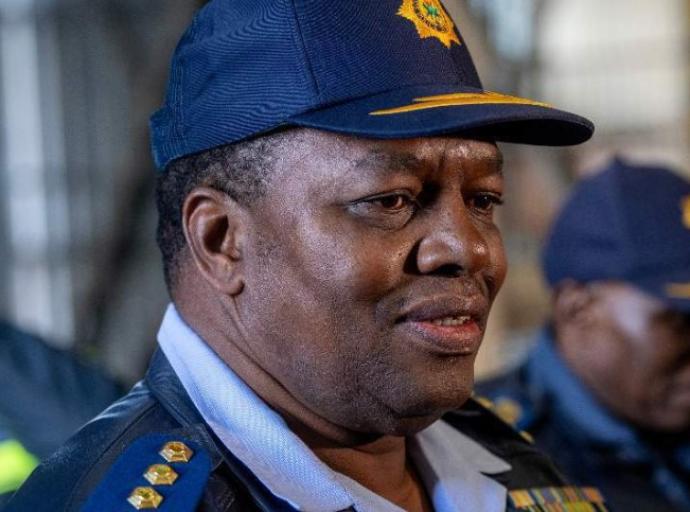
The South African Human Rights Commission (SAHRC) has approached the National Police Commissioner, Fannie Masemola, to ensure Operation Dudula is prevented from blocking foreign nationals from accessing healthcare services.
The group has recently made headlines for monitoring the entrances of public healthcare facilities and checking whether patients are South African citizens.
On Tuesday, the Chapter 9 institution released a series of reports, highlighting some of the most frequently reported human rights violations from the past financial year.
Operation Dudula claimed that public healthcare facilities have become overcrowded due to the influx of foreign nationals, regardless of their legal status in the country.
The group argues that other African nations would not grant South Africansthe same free access to public healthcare and that treatment should be reciprocal.
However, Tshepo Madlingozi, a commissioner at the SAHRC, stated that Operation Dudula is directly obstructing human rights.
“It’s unlawful for any citizen or anyone to try to enforce immigration laws. No one is allowed to play the role that is supposed to be played by Home Affairs.”
Government has been criticised by some civil society organisations for what they describe as turning a blind eye to Operation Dudula’s alleged xenophobic activities.
*This article was first published by Eye Witness News
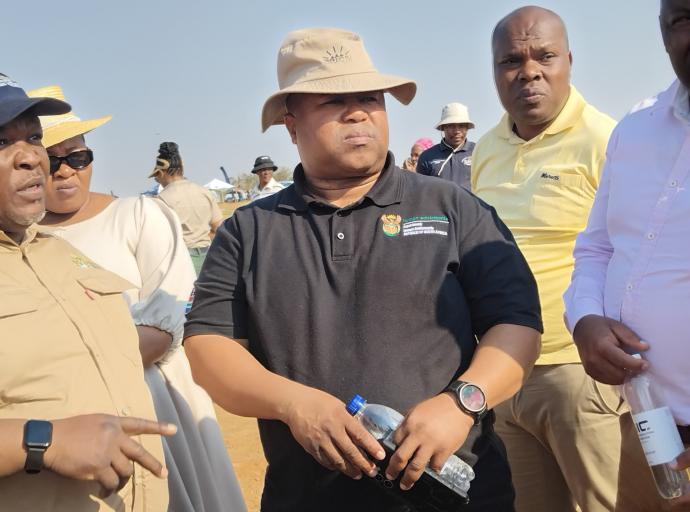
The MEC for Cooperative Governance, Tra ditional Affairs and Human Settlements, Saki Mokoena, has handed over a range of environmental tools to the Masilonyana Local Municipality to help empower communities in maintaining cleaner, healthier environments and strengthening local service delivery. As part of a departmental outreach programme held at Majwemasweu in Slovo Park Extension 5, Brandfort, earlier this week, the municipality re ceived 25 wheelbarrows, 20 chainsaws, 20 petrol bush cutters, and other tools. Mokoena said the handover would support Community Work Programme (CWP) workers who had long requested the equipment. He urged both workers and residents to safeguard the tools as a shared community resource. “These tools are meant for the improvement of the community; they are not given to individu als for personal use. It is very important to report anyone who misuses or attempts to sell them,” Mokoena stressed. He added that government’s efforts were aimed at restoring dignity to the people and en suring they live in an environment they can be proud of. Community member Lucky Klass welcomed the initiative but called for greater focus on the youth. “I came here because I wanted to know how this would benefit the young people sitting around without jobs. I did not come to hear only about CWP,” he said. Alongside the handover, the department part nered with Gap Infrastructure Corporation (GIC) to install 1,943 water meters, a sewer network with 20.57 km of pipes, a fibre duct, and other infrastructure. The R167-million project, initially scheduled for completion at the end of Septem ber, was finalised three months early, creating temporary jobs for local residents during con struction. “This reflects not only the technical success of the project but also its significant socio-economic impact, particularly in terms of job creation and skills development,” Mokoena said. The informal settlement upgrading project will be extended to other municipalities.
Farmworkers Black labourers bemoan rampant racism and unjust labour practices at white-owned farms
By: Abigail Visagie
The recent incident involving a white farmer who allegedly killed and buried a 25-year-old man in a shallow grave on his farm has pulled the veil off the widespread racism and ill-treatment that black farmworkers endure at farms in South Africa. The prevalent injustices that casually take place on farms include racial abuse and unfair labour practices. On the sidelines of the ongoing case at the Kroon stad Magistrate’s court, two farmworkers who work for the alleged suspect whose grandson allegedly murdered the abovementioned victim on their farm, claim to consistently endure racial abuse on the farm, while receiving meagre financial compensation for their hard labour. Women fund launched to empower entrepreneurs White farmers are being exposed for racism and bad labour practices Picture: Baagedi Setlhora “He loosely used the K-word when he refers to us and even refers to poor white people as ‘wit K*ffirs’ (white K-word),” said one of the farm workers. They mentioned that the suspect also refers to them as birds and once he has his gun, he uses phrases like “I’m going to hunt for some birds now,” referring to the farm workers. The farm workers further alleged that their salary amounts to R5000. “If we’re late by just a minute, he deducts R600 from our salaries. “Some of our family members who are also working on the farm haven’t been paid for two months and whenever they inquire, the farmer calls them ungrate ful K*ffirs,” said the other worker, as they alternated in their respective responses. “You can see how much we are hated by the farmer simply by his actions. He does not want us there but is forced to have us there since he needs the farm maintained,” The farm worker further mentioned that there are no payslips and that their payslips along with the deductions are written on a doctor’s note. A reliable source who’s also a resident of Kroonstad, alleged that the suspect, a medical doctor by profes sion, also refuses to assist people of colour and would keep a distance between people of colour and himself if they’re in a queue together. In a separate incident, 36-year-old Pieter Cloete (not his real name) who works on a farm in Bainsvlei, Bloemfontein, mentioned that white farmers often show superiority in the most unconventional ways. When I inquire about this, my boss deducts money from my salary, which is literally R300 for two days,” said a disgruntled Cloete. Cloete, a husband and father of four said that he stopped attending school meetings because he can no longer even afford to pay for school fees. “I am dis graced when I look at my children because I can’t even buy them birthday gifts or school shoes, nothing. The fact that my boss’ children are well taken care of while mine suffer in agony clearly indicates that the white farmers really hate us and do not want to see us grow and contribute to the economy,” said Cloete. The farmworker who has been desperately hanging onto this job, mentioned that one of his colleagues requested an emergency leave and was dismissed immediately on the spot. “Whenever you mention issues of a delay in salaries, not being registered with labour or simply requesting for time off, you get dismissed and unfortunately, there is no one to hear our concerns because we are even disregarded by our own society,” said Cloete. Another anonymous farmworker from Bloemspruit mentioned that he has no qualms with his boss but the wife who oversees their administration often uses the K-word when referring to them and multiple racial slurs. The anonymous worker further highlighted that he too has not yet been registered with the department of labour and is afraid to mention this to his superiors as he fears to lose his job. recommended. It creates certainty on the terms and conditions of employment that will bind the employer and employee. The employer can enter two types of contracts with a farm worker: a permanent contract for an indefinite term and a fixed-term contract for a specific period (seasonal work), which shall end on a predetermined date- something that most farm workers are struggling to obtain. 34-year-old Amos Phali* was recently dismissed on a farm in Bainsvlei after he was caught simply speaking to an official of department of labour which he claims he personally knew. “The mind set of white farmers remain the same: Us and them and unfortunately we experience hatred f irsthand as farm workers,” said Phali. Phali further stipulated that regardless of thirty years of freedom, farm workers bear the grunt of Apartheid notions where the white employer does not even hide finding the black worker intolerable. “The moment my employer caught me talking to a dear friend who so happens to be a labour official, he physically threw me off his farm, saying that I was disobedient and cannot follow rules. That time, he knew how badly I needed this job since I just had a baby, if this doesn’t show hatred, I don’t know what does,” said Phali. Free State MEC for Small Business and Economic Development Toto Makume. Picture: Baagedi Setlhora By: Abigail Visagie MEC for Small Business and Economic De velopment Toto Makume was among the delegates who attended the launch of the R30 million Women Entrepreneurship Fund launched by Minister of Small Business Stella Nd abeni Abrahams last week in Mpumalanga. Makume says the fund is aimed at formalising informal businesses and enhancing capacity build ing progress in small businesses. In a one-on-one interview with Journal News, Makume said the fund aims to close the gender gap in access to finance and elevate women-led enterprises across South Africa’s business land scape. “I’ve worked for my deceased boss for 20 years and I’m still not registered with the department of Labour. “I can see the hatred in Mevrou’s eyes when we speak to her and I even let it be when my salary is delayed because I am not educated and I cannot afford to lose my job,” said the anonymous worker. According to the Consolidated Employer’s Organ isation, a formal contract of employment is highly “I thought it was normal to use the K-word since that is what Mevrou calls us all the time.” These are the words of an anonymous Bainsvlei farmworker who seemed confused when it was high lighted that using the K-word or other racial slurs are considered a serious crime in South Africa. The increasingly deep-rooted hatred towards black people becomes more evident as killings of black farm workers sky rocket.