Free State Targets Surgical Backlogs
The three-day Cataract Marathon, held over the weekend at Boitumelo Regional Hospital in Kroonstad, was a great success, with over 100 patients receiving treatment.
Screening was conducted last week Friday with cataract operations scheduled for Saturday and Su...
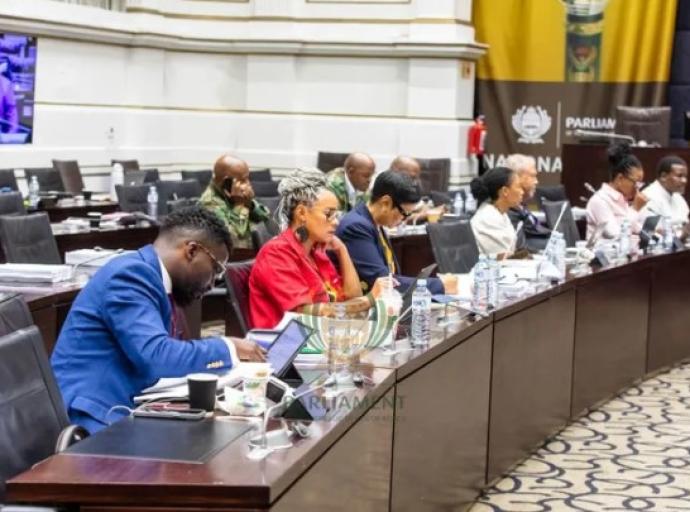
Members of Parliament of the ad hoc committee descended into a heated debate over witness appearances, security demands and Parliament’s authority, as sharp disagreements emerged over whether Paul O’Sullivan and Brown Mogotsi should be compelled to testify physically before the committee.
The dispute arose as the committee considered its programme for the week and correspondence from the Office of the Speaker advising that Parliament pay particular attention to how it responds to security concerns raised by the two witnesses.
The chairperson urged members to focus on appearances scheduled for the current week, noting that later dates could only be shaped once further deliberations had taken place.
ANC MP Khusela Diko said her party had no objection to the programme as presented, noting that the public submissions listed were ones the committee had already approved.
She raised concern about a late request for anonymity by a witness, but accepted that it was within the individual’s rights.
Chairperson Soviet Lekganyane clarified that the witness would introduce themselves publicly on Tuesday, having requested anonymity only for travel and security arrangements.
Diko questioned the absence of a senior SAPS general, a female general who had written to the committee seeking to respond to issues raised by Advocate Andrea Johnson, from the programme. “It’s not a new name. It had been agreed that we would afford her that opportunity,” she said, suggesting the omission may have been an error.
She warned that the committee was under severe time pressure, reminding members that it had agreed to submit its report by 20 February.
“As the African National Congress, we are operating on the understanding that this committee ideally should be wrapping up its work this week or maybe early next week,” Diko said.
On the Speaker’s correspondence regarding O’Sullivan and Mogotsi, Diko said it was “quite disappointing” that Parliament’s legal advisers had not provided clear guidance.
She said the Speaker was correct that Parliament had to formally respond to concerns raised by witnesses, even if those concerns were rejected. “We would be anticipating litigation and we would want to protect Parliament as much as is possible,” she said.
However, Diko said the ANC’s position remained unchanged. “The decision stands that these two witnesses must present themselves before the committee, physically,” she said, arguing that neither had demonstrated extraordinary circumstances.
She said Parliament should spell out what security it could provide and warn that failure to appear would result in a request to the Speaker to concur with issuing summonses.
ANC MP Xola Nqola supported this position, saying the committee had already considered the merits of O’Sullivan’s application.
“There is no less evasive way that we think can be applied to secure the attendance,” he said, accusing the witnesses of deliberately frustrating the committee’s work. “If they say it’s security, we can provide for them appearing. So how are they living now?” he asked.
MK Party MP Sibonelo Nomvalo said the committee could not use a previously adopted witness list to block further names triggered by new testimony.
On O’Sullivan, Nomvalo said the committee should not “nurse people who want to come to Parliament to receive a standing ovation”, adding that O’Sullivan’s demand to appear virtually while refusing to engage with certain parties was unacceptable and would undermine the authority of the chair.
MK Party MP David Skosana said virtual testimony would be “very problematic”, recalling remarks O’Sullivan had previously made about members of the committee.
He raised concerns about consistency and fairness, warning that other witnesses who had already appeared or were still expected to appear should not be treated differently.
Meanwhile, DA MP Ian Cameron said that while physical appearances were preferable, Parliament needed to consider whether a summons would withstand scrutiny if a witness had indicated willingness to testify virtually, including from a South African embassy. Cameron said this created a narrative that the witness was cooperating, making it difficult to justify compelling a physical appearance.
DA MP Damien Klopper said that if any witness appeared virtually, all parties had to be allowed to participate fully. “They cannot be selective answering just to certain parties,” he said.
EFF leader Julius Malema launched a blistering attack on both the witnesses and the Speaker, accusing Parliament of being pressured into granting special treatment. He said O’Sullivan and Mogotsi had shown “no regard for Parliament” and were attempting to dictate terms to the legislature.
“They want private chefs, they want houses and not hotels, they want this and that,” Malema said, adding that such demands amounted to intimidation.
Malema openly rejected the position advanced by the Democratic Alliance, saying Parliament should not accommodate virtual appearances or special security demands. He warned that doing so would amount to capitulating to intimidation and privilege.
“I don’t agree with the DA,” Malema said, appealing to members of the committee “to completely reject this privilege that is being proposed by the DA and the Speaker”.
Malema said accepting these demands would create a dangerous precedent. “You’re going to create a situation where anyone who doesn’t want to come before Parliament simply says, ‘I’ve got security concerns,’” he warned.
He questioned the absence of any security assessment backing the claims. “Where is the security report that confirms this guy has got security threats?” he asked.
He accused Parliament’s legal team of protecting O’Sullivan and Mogotsi, saying, “The protection of Paul O’Sullivan is continuing - now it’s happening in Parliament.” Malema rejected the notion of exceptional circumstances, saying none had been demonstrated, and warned that Parliament should not “succumb to being intimidated”.
EFF MP Leigh-Ann Mathys questioned why the Speaker had only responded at the end of January, despite the committee raising the issue months earlier. She asked whether the Speaker would provide a written explanation for the delay.
Patriotic Alliance MP Ashley Sauls aligned with this position, rejecting any suggestion that Mogotsi’s demands be accommodated.
Sauls said Mogotsi’s demand that Parliament pay for private security was “disrespectful and unreasonable”.
He said witnesses should accept the security Parliament provides to everyone. On O’Sullivan, Sauls said, “It’s no longer a request. It’s now a legal mandate,” arguing that virtual testimony would not serve the interests of justice because the witness could disengage at will.
He warned that O’Sullivan would effectively control his own appearance, saying that if he did not like the questions, “all he can do to leave the meeting is just press a button”.
Freedom Front Plus' MP Wouter Wessels cautioned that while the frustration with O’Sullivan was understandable, the committee had to decide whether it wanted his testimony before the deadline.
He warned that if O’Sullivan was overseas, a summons would likely result in litigation that could delay proceedings beyond 20 February.
“If we summon, we should accept the fact that he’s not going to appear before the 20th of February,” Wessels said, warning that taxpayers could ultimately bear the cost of a legal battle.
He said members needed to weigh whether making a point was worth excluding the testimony from the final report.
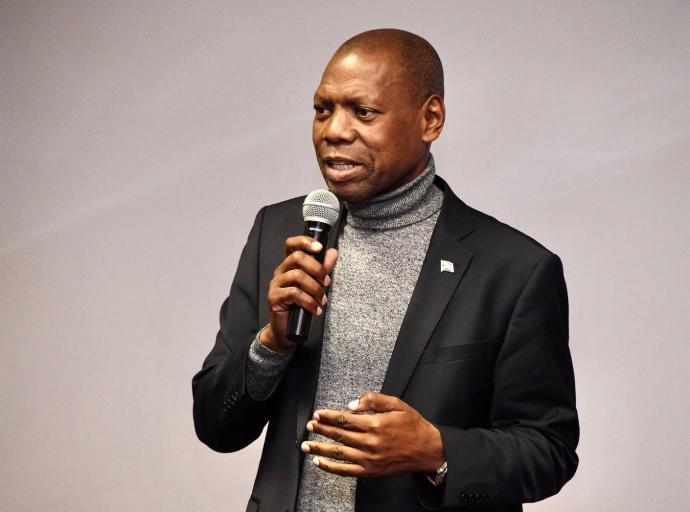
ANC veteran Dr Zweli Mkhize has warned against the use of money in influencing the outcome of the party's elective conferences, saying this will save the party from total collapse.
The former Health Minister and current Cooperative Governance and Traditional Affairs parliament portfolio committee chairperson lost to Cyril Ramaphosa in the presidential race in the 2022 elective conference.
The ANC will hold its elective conference next year.
In an exclusive interview on Monday, Mkhize said the meaningful renewal of the party will only be realised when the ANC conducts the election of leaders in a truthful, transparent and honest way. He said a leadership that came top without the use of money would have been truly elected by the people and would be able to command greater respect, warning that 'a leadership of money' would not be taken seriously by the people.
“When the leadership uses money to buy votes it means that under those circumstances you no longer have people that were elected, because there was a manipulation of process through the use of money. In a situation like that you should expect that that leadership will not be able to command respect and would not mobilise people to vote for the party. These issues are important to be corrected because if not, it will not matter how many times you talk about renewal,” said Mkhize.
Furthermore, he said that the leadership must listen and immediately act on the concerns of the people. He said the ANC is in dire straits because of leadership that forgets people after being elected to positions of power and serves their own interests.
“The concerns of ordinary people must find their expression in the way the ANC is being managed. The ANC must stay in touch with the people so that on a day to day basis, what leaders do reflects the concerns of the people on the ground. That is a fundamental issue. When people feel that the party is unable to address the issues of their concerns it means there is a challenge because people will feel there is distance between them and the party leadership.
"When people raise the issues of corruption, they need the ANC to act swiftly and correct that transparently and honestly,” said Mkhize.
He also complained about inconsistencies and arrogance of certain party leaders who failed to attend the issues of the parliamentary committee and deals with the committee in an acceptable way.
He cited an example of community leaders who failed to communicate with people on how financial challenges may be affecting the delivery of services.
He stated that people will have no problem understanding if issues like these are properly explained to them.
Last week Mkhize, the former KwaZulu-Natal ANC chairperson and the Premier, said he has not retired from politics.
As journalists, researchers and content creators continue to examine newly released US court documents linked to convicted sex offender Jeffrey Epstein, questions have emerged regarding the 'who, why and when' of the documents.
We look into why South Africa appears in some of the files and how frequently the country is referenced compared to others.
How often is South Africa mentioned in the Epstein files?
South Africa’s footprint in the files appears to be limited when compared with other countries.
Ireland, for example, appears more than 1,600 times in one analysed tranche of documents. This is largely due to legal, corporate and correspondence records.
The United States and United Kingdom also appear many times by volume, and this reflects Epstein’s residence, legal proceedings and primary social networks.
South Africa appears only sporadically, with no evidence so far of sustained correspondence or repeated operational activity linked to the country.
Why is South Africa mentioned in the files?
Reporting based on document excerpts shows that South Africa appears in the Epstein files for three primary, non-overlapping reasons. It is worth noting that none of these constitutes allegations of criminal activity in South Africa itself.
1. References to model scouting and travel
One set of emails contained in the released files refers to travel to South Africa, including Cape Town, in the context of international model scouting. The exchanges form part of broader communications around modelling agencies and talent placement, which appear frequently in Epstein-related records due to his long-documented involvement in elite social and modelling circles.
These references describe intended or past travel, not confirmed activities, and do not allege illegal conduct in South Africa.
2. A social event involving former President Jacob Zuma
South Africa is also mentioned in connection with emails arranging a private dinner in London in 2010 for then-President Jacob Zuma during an official overseas visit. The emails show logistical planning for the event and were authored by individuals linked to Epstein’s social network.
The correspondence does not allege or describe unlawful behaviour.
Furthermore, the Jacob Zuma Foundation has publicly rejected any suggestion of connection, stating that a reference in an email does not imply a relationship or wrongdoing.
3. South Africans employed abroad
A smaller number of references relate to South African nationals who worked on Epstein’s private island in the Caribbean. These mentions relate to employment history rather than criminal investigations.
What the mentions do (and do not) mean
A mention of a country or individual does not amount to an allegation, let alone proof of wrongdoing.
The files reflect Epstein’s global social reach, not criminal activity by every person or place referenced.
Many records are administrative, social or contextual, including diaries, travel discussions, event planning and third-party correspondence.
To date, no South African institution or authority has been implicated in the Epstein investigation, and no findings have suggested that crimes were committed in South Africa as part of Epstein’s operations.
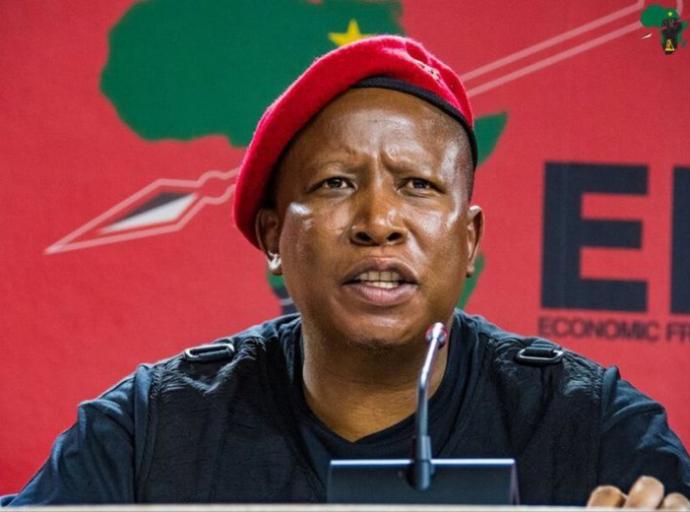
EFF leader Julius Malema has proposed that wealthy South Africans should subsidise water and electricity for poor households, arguing that monthly payments for essential services are unaffordable for many.
Speaking at the EFF's second plenum, in Boksburg, Malema linked the proposal to South Africa's apartheid history and framed it as a matter of economic justice.
He compared the provision of basic services to the country’s education system, where poor children received free schooling.
“Paying monthly for water and electricity is not feasible for poor people,” Malema said, adding that such services should be subsidised.
“We need to make sure someone pays, and who is that someone? The rich must pay for the poor because the rich have stolen from the poor and it is time they pay back.”
In his address, Malema identified whom he believes should bear the cost.
“Who are the rich? The rich are the whites, the rich are the politicians, the businessmen who have left us in poverty in the townships. They must pay for those who are in the villages, and the townships who cannot afford,” he said.
Malema said his vision was for a country where wealthier citizens actively supported efforts to lift others out of poverty.
“We need a country where the rich must be fighting for the poor to come out of poverty, so that their payments can go low and those who were in poverty yesterday are now at a position where they too join the paying crew,” he said.
He also linked the proposed higher costs for affluent households to South Africa’s history of racial exclusion under apartheid.
“Through making the rich pay high water and electricity bills, they will be paying for the benefits they got during apartheid when we were excluded from benefiting from our own government,” Malema said.
Malema described the issue as central to the EFF’s political agenda.
“It’s an important discussion that we need to take up as the leadership of the EFF,” he said.
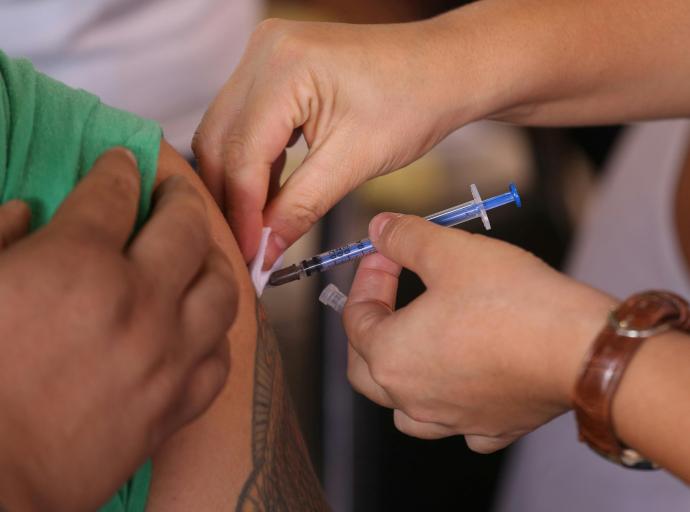
The Department of Health is urging parents to sign consent forms to allow their children to receive vaccinations protecting them from the Human Papillomavirus (HPV).
HPV is a group of viruses that cause infections and irritations on the surface of the skin.
The Health Department is launching its annual HPV vaccination drive on Monday, targeting schools across the country.
Spokesperson Foster Mohale said the vaccination will protect girls aged 9 years and older from developing cervical cancer later in life.
“Over 5,700 cases of cervical cancer are reported each year in the country, while more than 3,000 women die from cervical cancer-related complications. This means unvaccinated girls and women living with HIV are at a higher risk of serious health complications if develop cervical cancer later in life, compared to the general population.”
He’s asked parents to allow their children to receive school-based HPV vaccinations.
“The success of the campaign to protect girls from this preventable, yet deadly, disease hinges on stronger collaboration among all stakeholders, particularly parents and caregivers, who are required to complete the vaccination consent forms issued by schools to eligible girl learners.”
*This article was first published by Eye Witness News
Newly appointed National Director of Public Prosecutions (NDPP) Advocate Andy Mothibi has a tough task ahead of him as he takes office on Monday, as he will be faced with a number of cases that hang over from the Zondo, Mpati, and Nugent Commissions.
This is according to Accountability Now Director Advocate Paul Hoffman SC, who added that Mothibi will now also face possible prosecutions stemming from the Madlanga Commission.
But, Hoffman said, it is not legal for the National Prosecuting Authority to take these cases because it is not “a body outside executive control” that the law requires.
“Mothibi would be well advised to decline to prosecute corruption cases because they fall outside of the remit of the NPA and all other criminal justice bodies currently in existence".
Hoffman is of the opinion that this will prompt long overdue and necessary reform that does comply with the binding Constitutional Court judgment in the Glenister case and the “STIRS” requirements.
This acronym stands for Specialised, trained, independent, resourced in guaranteed fashion, and secure in tenure of office.
Hoffman said we currently do not have an operational and structural framework that effectively deals with the fraudsters and the corrupt in our midst.
He pointed out that international law, domesticated by South Africa, obliges the country to set up and maintain anti-corruption machinery of state that is independent in its operations and structure.
He pointed out that the Constitutional Court in the Glenister case found that “our law demands a body outside the executive control to deal effectively with corruption.”
Hoffman said no actual body answering to the STIRS criteria exists in South Africa, thus the need for the Madlanga Commission and others before it.
He pointed to the fact that the Constitutional Court ordered Parliament to create such a body by September 2011. “Parliament has not done so in any way, shape, or form. Instead, we have Hawks investigating, the SIU raking back loot, and the AFU seizing, freezing, and securing forfeiture of stolen assets, and the NPA prosecuting serious corruption".
Hoffman stressed that these are not independent bodies, as ordered by the Constitutional Court in its 2011 judgment.
As Shamila Batohi steps out of office after her seven-year tenure and Mothibi takes over as the new leader, several high-profile cases, some which stem from State Capture allegations, remain in various stages of investigation or prosecution.
Several accused linked to the Gupta network continue to face prosecution, while he will also have to deal with corruption-related cases involving former Eskom executives and former Speaker of Parliament Nosiviwe Mapisa-Nqakula’s corruption charges.
While this is a lot to deal with, Mothibi’s first day in office is also expected to be marked by the serving of court papers challenging his appointment as the NDPP.
Law firm Barnabas Xulu & Partners Inc. indicated that it would serve Mothibi with its court challenge on Monday when he officially assumed the office of the NDPP.
In its court papers, Barnabas Xulu & Partners Inc. stated that the firm does not dispute Ramaphosa’s powers to appoint the NDPP in terms of the Constitution or impugn Mothibi’s suitability for the position.
“As per the founding affidavit, we persist with the allegation that the entire process of appointing the NDPP that culminated in the appointment of Advocate Mothibi is unlawful,” it said.