Free State Targets Surgical Backlogs
The three-day Cataract Marathon, held over the weekend at Boitumelo Regional Hospital in Kroonstad, was a great success, with over 100 patients receiving treatment.
Screening was conducted last week Friday with cataract operations scheduled for Saturday and Su...
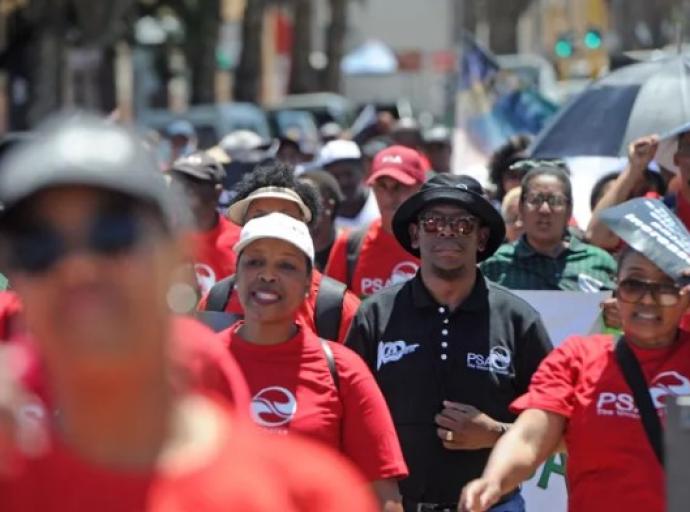
Trade unions in the Public Service Coordinating Bargaining Council (PSCBC), affiliated to the Federation of Unions of South Africa (FEDUSA), and other federations have threatened protest action against the Government Employees Medical Scheme (GEMS) over its recent monthly contribution increases.
GEMS implemented a 9.8 % increase from January 2026.
On Sunday, a coalition of unions, including the South African Policing Union (SAPU) and the Public Servants Association (PSA), condemned GEMS for implementing a 9.8% increase in member contributions, describing the decision as a 'blatant departure from the scheme’s mandate to provide affordable healthcare to its members'.
Paul Sauer, representative of the South African Teachers' Union (SAOU), voiced the frustration of public service workers, stating, "In the past two years, we have been shunned by GEMS. We are now left with no alternative but to embark on protest action to get them to retract or withdraw the increases. Our other demand is that GEMS needs to engage us on a collective agreement to ensure that these increases are reasonable."
FEDUSA spokesperson, Betty Moleya, said this decision comes at a time when public servants continue to face sustained financial pressure due to rising living costs, increased household debt, and stagnant real wage growth.
"The cumulative effect threatens access to affordable healthcare and has direct implications for worker wellbeing and the sustainability of public service delivery," Moleya stated.
Moleya indicated that the recent increases should be understood in their cumulative context, after GEMS implemented a 13.4 percent contribution increase in 2025, a 9.8 percent increase from January 2026, followed by the 9.5 percent adjustment effective 1 April 2026.
He said this will result in a cumulative increase of 23.2 percent over two years, while public servants only received a 5.5 percent salary increase for 2025/26.
"The mismatch between wage adjustments and medical aid contribution increases is clear. Real income is being eroded. Workers are being forced to choose between healthcare and other necessities," Moleya added.
The federation further accused GEMS of disregarding the Regulatory Guidance given by the Council for Medical Schemes, which proposed an average membership contribution increase of 3.3%. As a result, organised labour has called on the regulatory authority to exercise its oversight duties to remedy the situation ahead of the April 2026 increases.
"GEMS proceeded with a 9.8 % increase from January 2026, followed by the 9.5 % adjustment from 1 April 2026. This significantly exceeds the regulator’s benchmark. Organised labour in the PSCBC calls on the regulatory authority to exercise its oversight responsibility to ensure that member interests are protected," the federation stated.
Last month, IOL reported that GEMS had informed public servants’ representatives that it cannot unilaterally reverse the 9.8% increase in 2026 member contributions without approval from the Council for Medical Schemes (CMS), with the insurer indicating that the decrease in the contributions to 9.5% will only be realised in February next year.
According to GEMS, its board of trustees has resolved that the previous recommendation of the 9.8% increase from January 1, 2026, switch to 9.5% if approved by the CMS, is the only implementable option that it can put forward to the PSCBC.
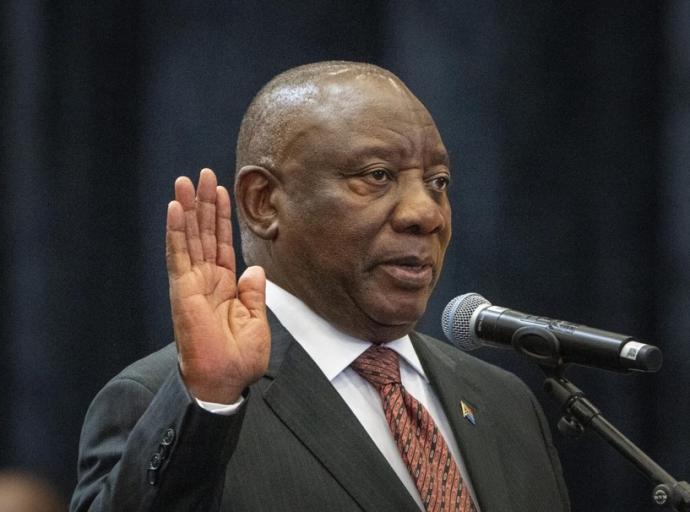
President Cyril Ramaphosa has been described as a good storyteller following his failure to deliver on his promises since he took office in 2018 with political analysts saying his terms will go down as one of the worst for “over-promising” and “under-delivering”.
In 2019, Ramaphosa's State of the Nation Address (Sona) and election manifesto were filled with “New Dawn” promises aimed at economic renewal and social reform. However, many of these high-profile commitments have faced significant criticism for the lack of implementation.
He also announced the development of a "truly post-apartheid" smart city in Lanseria to accommodate more than 500,000 people, which has not materialised to this day.
Ramaphosa also pledged to “intensify the fight against corruption and take action against those implicated in the state capture". However, there have been concerns that despite the Zondo Commission’s findings and recommendations, there has been a lack of “guts” to expel high-ranking corrupt officials from the party or secure major convictions.
He also announced the establishment of a new University of Science and Innovation in Ekurhuleni during the Sona in 2020.
Political analyst Zakhele Ndlovu said Ramaphosa is a good storyteller who no longer inspires confidence.
Ndlovu added that his failure to fulfil his promises has made Jacob Zuma’s tenure in office look good.
“Ramaphosa's term in the presidency will go down as one of the worst for over-promising and under-delivering. His presidency has been a huge disappointment and history will judge him harshly. His Sona speeches are more of the same,” Ndlovu said.
Ramaphosa’s spokesperson, Vincent Magwenya, did not respond to a request for comment.
While he did not provide an update regarding the Lanseria Smart City during his address on Thursday, Ramaphosa reaffirmed that the government is pressing ahead with plans for a high-speed train and that it is preparing to issue a formal request for proposals - moving the project from conceptual discussion to a procurement phase.
He said nearly 30 companies expressed willingness to participate in the project.
On plans to establish a university in Ekurhuleni, he shifted the focus by directing ministers to “work on a proposal” for new universities, which was viewed as a retreat from his specific 2020 commitment.
Political analyst Professor Sipho Seepe said Ramaphosa’s presidency was based on crafted falsehoods. Seepe said nothing in his past suggested that Ramaphosa would do better than his predecessors.
“Unfortunately, Ramaphosa became a victim of his own lies and the misconceptions of what others have of him,” he said.
Seepe said Ramaphosa has resorted to making more promises.
"Unfortunately, both Ramaphosa and the ANC have been emboldened and misled by an echo chamber of well-paid praise singers who masquerade as journalists and analysts. The chickens are now coming home to roost. No amount of spin would cover the fact that Ramaphosa is a dismal failure,” said Seepe.
Meanwhile, Professor Andre Thomashausen said ministers should also take blame for the failures, saying the chronic presidential implementation deficit is not a personal but rather a systemic issue.
He said the President is in reality a prime minister without his own power, adding that the consequence is that the 32 ministers and 43 deputy ministers of “our” cabinet can pursue their own agendas and not that of the President.
*This article was first published by Eye Witness News
A woman arrested in connection with the murder of an e-hailing driver is expected to appear in the Atteridgeville Magistrates Court on Monday.
The act was caught on the vehicle's dashcam, and it has been widely shared on social media.
Police said the victim was murdered by a male and female who had requested the services of an e-hailing driver in Pretoria West last Wednesday.
The hijacked vehicle and the body of the victim were found in Atteridgeville on the same day.
Gauteng Transport MEC Kedibone Diale-Tlabela said she hopes justice will prevail.
“These are the issues that the new regulations are trying to address, like having panic buttons inside the vehicle, the dashcam. Technology is proving that it can assist us in dealing with crime. We are hopeful that the justice system in our country will set an example with individuals who have done bad things.”
*This article was first published by Eye Witness News
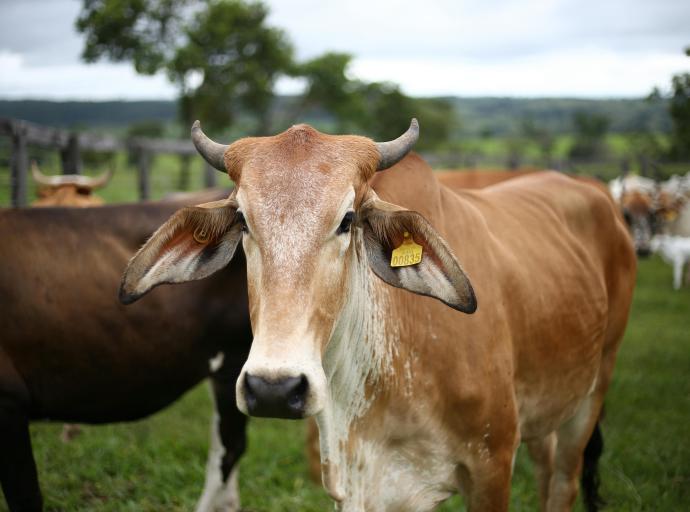
Zambia has banned all livestock imports and transit from South Africa with immediate effect.
This includes all cloven-hoofed animals, trophies, skins and ananimal feed. Furthermore, the Southern African country has restricted all dairy imports.
Last Thursday, during his States of the Nation Address (SONA), President Cyril Ramaphosa declared the KwaZulu-Natal foot-and-mouth outbreak a national disaster.
PR officer Benny Munyama said the ban is part of efforts to prevent the spread of disease into the country.
"Our Department of Veterinary Services, led by our Director, Dr Charles Maseka, has since announced the following measures: all issued permits are revoked with immediate effect.
"We wish to inform members of the public, farmers, and all our stakeholders that these precautionary measures will be reviewed depending on the progression of the foot-and-mouth disease outbreak in South Africa."
*This article was first published by Eye Witness News
The other day, Xolani Khumalo was in court for confronting drug lords in townships where mothers cry themselves to sleep and children drown in drugs. There were no masses outside the court. No buses hired. No slogans, just silence.
Yet when Julius Malema appeared in court for discharging a firearm at a rally, the streets were flooded by zealots who were mobilised in their thousands. Chanting revolutionary songs designed to turn the court precinct into a carnival of defiance. The whole town abounded with a cacophony of chants, although Malema fired his machine gun in a country already soaked in blood from guns.
This is not about personalities but political psychology. It is about what moves us to action. We will mobilise for power. We will mobilise for spectacle. But when it comes to the slow violence destroying the black people, we retreat into our homes.
In truth, this is a display that invites deeper reflection about our democratic culture. What is it about the political psyche of our society that makes us defend people like Malema and demonise crime fighters like Xolani?
In any constitutional democracy, the rule of law derives its authority precisely from its insulation from the whims of popularity, political allegiance and social standing. Courts are designed to be sites of reasoned adjudication, where evidence is weighed dispassionately and justice is dispensed without fear or favour.
When court processes are enveloped by crowds seeking to assert numerical political strength, there is a real risk that accountability gets diluted and justice is subjected to the pressures of public theatre.
Our people’s uneven encounter with the rule of law, time and again, reveals itself most sharply when influential figures are called to account. Here at home, young people used to march in large numbers in support of Ace Magashule and even threatened to burn books in his defence. The question is not whether our people have the right to support political leaders but whether such support inadvertently undermines the very institutional architecture that sustains democratic order.
More troubling still is the prospect of normalisation. In a society already burdened by widespread disregard for the law, the conduct of political elites carries a particular weight. When people who occupy prominent positions appear to treat the law with casual disdain, the message that regrettably gets transmitted is that rules are negotiable for the powerful.
Leadership must not be defined by the ability to evade consequences, but by the discipline to submit oneself to the same standards expected of all.
The persistent perception that South Africa operates with two legal systems, one for ordinary citizens and another for those endowed with political capital or material resources, does nothing but further corrode public confidence.
Lengthy litigation and the mobilisation of supporters create an impression of impunity, even where courts ultimately act with integrity. For many people who encounter the law only as an instrument of punishment, such disparities easily deepen cynicism and weaken trust in democratic institutions.
Those who hasten to defend unlawful conduct in the name of political loyalty would do well to interrogate the substance of their allegiance. History teaches us that progressive movements are not built on the uncritical worship of individuals, but on shared values and fidelity to principle. To excuse recklessness, as in the case of Malema, is not to advance a cause; it is to erode the moral foundations upon which that cause claims its legitimacy.
If our country is to consolidate its democratic project and entrench a culture of constitutionalism; then accountability must truly be non-negotiable. True solidarity does not lie in shielding leaders from the consequences of their actions, but in insisting that they embody the restraint and respect for the law that democracy demands.
Anything less places at risk not only the integrity of a single court process, but the ethical health of our country as a whole.
In the meantime, Xolani remains a villain and Malema a hero before our eyes.
*Tshediso Mangope is an ANC member in Mangaung and writes in his personal capacity…
** The views expressed do not necessarily reflect those of this publication (Journal News).
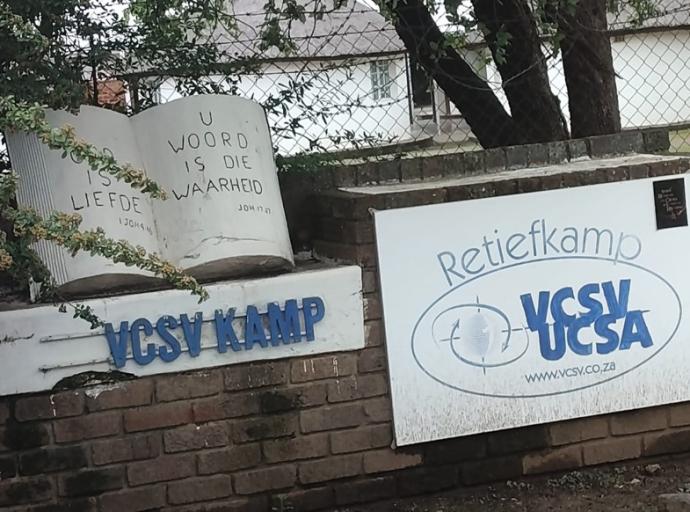
The African National Congress (ANC) in the Mangaung region is set to converge at Retiefkamp — about 20km outside Bloemfontein — for a crucial round of internal polls that could reshape the party’s local leadership landscape.
The much-anticipated gathering is expected to draw branch delegates from across the metro, as members prepare to elect new leaders and map the organisation’s direction ahead of upcoming political contests.
With factional tensions simmering beneath the surface, the Retiefkamp meeting — scheduled for 13 to 15 March 2026 — is likely to be closely watched and fiercely contested. Behind the scenes, political manoeuvring is already under way.
Sources indicate that Pitso is expected to contest a leadership position, despite reported grassroots support for another candidate. At the same time, regional spokesperson Ncamile Nxangisa is said to be under pressure from party members to enter the race for the top post, although he has not publicly declared his intentions.
Regional chairperson Lawrence Mathae is widely expected to seek a second term and could return unopposed if no challengers emerge before the conference.
Mathae, who also serves as Speaker of the Mangaung Metro Municipality, is understood to enjoy strong internal backing. Insiders say his campaign message will focus on unity, organisational renewal and improved service delivery, as the ANC works to rebuild public confidence ahead of the 2026 Local Government Elections.