Free State Targets Surgical Backlogs
The three-day Cataract Marathon, held over the weekend at Boitumelo Regional Hospital in Kroonstad, was a great success, with over 100 patients receiving treatment.
Screening was conducted last week Friday with cataract operations scheduled for Saturday and Su...
Mangaung Executive Mayor Gregory Nthatisi has dismissed claims that political interference led to the dissolution of the Centlec board, stating that the decision was based solely on governance and performance issues, rather than politics.
This follows the recent resignation of four board members who alleged political meddling in the power utility’s operations. They claimed that their request for CEO Molefane Sekoboto’s qualifications prompted Nthatisi to dissolve the board.
However, Nthatisi rejected these assertions, stating that the board had failed to fulfil its mandate and instead became entangled in internal conflicts with Centlec’s management.
“Centlec would have done well if it had been disbanded a while ago. I must confess that mistakes were made when we established the board. We underrated the importance of induction. If we had properly inducted the board, perhaps it would not have been disbanded,” said Nthatisi.
He explained that tensions between the board and management created a working crisis that could have been avoided through a structured induction process. The mayor added that divisions within Centlec’s staff further contributed to instability within the institution.
Nthatisi also noted that some former board members may have resigned out of concern for their professional reputations, fearing they might be labelled unfit to hold office.
“There’s a thin line between the administration and the board. One deals with policy, the other with implementation, and the two must complement each other. Unfortunately, that balance broke down, and I had to decide whether to deal with the administration or the board’s disorganisation,” he said.
The mayor confirmed that an interim board has been appointed in line with Centlec’s Memorandum of Incorporation, which requires such a structure in the absence of a permanent board.
“The matter has gone to the council, which resolved that we advertise for a new board. The advert has been placed, and we’ve been given three months to establish a new structure. We are now nearing the end of the second month, and by next month, a fully-fledged board will be in place to take over from the interim structure,” Nthatisi concluded.
This is a developing story. More details will appear in the Journal News on Friday.
The Trump administration’s plan to overhaul the U.S. refugee resettlement process, including a drastic reduction in overall annual admissions, coincides with a concerted effort to prepare thousands of White South Africans to relocate to the United States through the system, according to documents reviewed by The Washington Post and people familiar with the effort.
If the administration succeeds, almost all people admitted to the U.S. as refugees - as many as 7,000 from a maximum potential pool of 7,500 - could be Afrikaners, a group not traditionally eligible for the program but one that President Donald Trump says has been tyrannized by South Africa’s Black majority. The remainder may be chosen because of their ability to speak English or their views on “free speech,” people familiar with the matter said, upending a system that for decades had taken in people fleeing conflict and persecution from all over the world regardless of race or language.
The State Department has set a goal of processing 2,000 Afrikaners for resettlement by the end of October and an additional 4,000 by the end of November, according to two people familiar with the matter, speaking like some others on the condition of anonymity because they were not authorized to discuss the administration’s objectives.
Shortly after entering office, Trump issued an executive order temporarily halting the admission of most refugees, including those already vetted by the U.S. government, pending a review. Trump made an exception for Afrikaners who he has said face racial discrimination, a characterization rejected as unmoored from reality by South African officials and some Afrikaners themselves.
The initiative, begun in May, has experienced a slow start with fewer than 400 Afrikaners arriving as refugees in the United States through the end of September, people familiar with the matter said. The administration had an early goal of resettling 1,000 people by the start of this month, according to the documents reviewed by The Post and people familiar with the matter. When it became clear that was unrealistic, officials set a new target of getting 1,000 people processed for admission.
Others familiar with the situation said the administration’s resettlement efforts have been slowed at least in part by the Afrikaners themselves, with some changing their minds about relocating to the United States after going through security and medical screenings or electing to delay their journeys to sell property and belongings.
The State Department rejected any suggestion that it had failed to reach its resettlement goals, saying in a statement to The Post that the refugee program was operating “at record speed while upholding the highest standards” and that 700 Afrikaners were ready to travel to the U.S. when the ongoing government shutdown ends.
“There are thousands of more people in the pipeline,” the statement says.
“Unfortunately for additional vulnerable individuals seeking to escape persecution, no refugees will be admitted … until Democrats decide to reopen the government,” White House spokeswoman Anna Kelly said in an emailed response to questions.
In its final year, the Biden administration set the refugee admissions cap at 125,000, with the Democratic Republic of Congo and Afghanistan among the top countries of origin. The Trump administration has said that approach posed a national security risk. “Any refugee admitted to the United States must be in the national interest of our country,” said Tommy Pigott, a spokesperson for the State Department.
The Trump administration is expected to announce soon that it is slashing the number of refugees it will resettle and putting a new focus on people who can speak English, according to a senior State Department official who spoke on the condition of anonymity to discuss the plan. The cap could fall as low as 7,500, this person said and documents reviewed by The Post affirm.
The administration has considered other ways it can radically change the refugee process.
A recent report drafted by the State Department singled out “free speech advocates in Europe” as another group that could be considered in the future, said a former U.S. official who had seen the document, adding that it was clearly discussing far-right entities there. “There was no ambiguity of intent,” the former official said.
The State Department did not respond to a request for comment on the proposal to resettle Europeans.
With the push to resettle Afrikaners, the United States also has cut out the international bodies that help coordinate resettlement efforts.
The United Nations’ refugee agency, for instance, had previously made referrals to the State Department, which in turn screened those candidates. But in South Africa, that step is being conducted in part by Amerikaners, an advocacy group founded by Sam Busà, a South African woman of British descent. Busà declined to comment.
Part of the vetting involves a security and biometric screening, an intensive process typically performed by the Department of Homeland Security that can take years in some cases. Under the Trump administration’s updated procedures, many Afrikaners are being vetted in as little as a week, people familiar with the matter said.
The State Department has acknowledged moving through the process more quickly but says standards remain high.
Despite the Trump administration’s moves to fast-track the admissions process for eligible South Africans, the effort had proceeded slowly.
One significant issue, said people familiar with the matter, is the reluctance of some Afrikaners to relocate when the opportunity to do so is presented. During the third week of September, for instance, State Department officials booked and paid for 50 seats on commercial flights from South Africa to the United States, but only three people wound up traveling, one person said.
In its statement to The Post, the State Department said, “This is not abnormal.” It’s often the case that seats on U.S.-bound flights are bought in bulk and that some end up canceled, the statement says. By sharply limiting the number of refugees overall who are allowed into the United States, the statement notes, the Trump administration has secured a “significant cost savings for the American people.”
The situation also is unusual as, traditionally, most refugees who seek resettlement have already fled their homes, often to a refugee camp or a third nation. In the past, many refugees “had already lost everything that they owned,” said Anne C. Richard, a senior official in the State Department’s refugee office during the Obama administration.
Richard said that it was possible that some of the Afrikaners genuinely do qualify as refugees who merit resettlement but that the process appears to be working based on a quota rather than a need.
“Refugees have to make their case. They have to apply, and then their cases are reviewed,” she said. Instead, Richard said, the Trump administration seems to be “trying to make some sort of case about reverse racism rather than … having smart reforms.”
Though many of the less than 400 Afrikaners who have been resettled thus far appear comfortable in their new home, some have offered more cautious views of life in America, often focusing on difficulties finding employment or the higher cost of living.
Charl Kleinhaus, a South African farmer who arrived in the United States in the spring, was resettled in Buffalo but within days moved for a job he had found in South Dakota. In doing so, Kleinhaus - whose acerbic social media posts have faced backlash - relinquished the housing assistance and other resources he was eligible to receive through the U.S. government.
In an interview shared later on YouTube, Kleinhaus, who did not respond to requests for comment, said that a lack of domestic help was the biggest challenge for him. “There’s no kitchen lady you call to sweep the house, or clean the house, or stuff like that,” he said in the interview. “You do the work yourself.”
Hannah Natanson, John Hudson and Silvia Foster-Frau contributed to this report.
The Free State Department of Education has been ordered to pay a teacher over R91,000 in unpaid salary after a prolonged struggle for her due compensation.
The teacher, only identified as PC, began working at Boase Primary School as a substitute teacher from mid-July 2023 until September 30, 2023, taking over responsibilities from a teacher on sick leave.
She was permanently appointed at the school in October 2023; however, she was not paid for the period she had worked as a substitute.
PC approached the school principal, who initially assured her that the payment issue would be rectified. However, further inquiries yielded little progress.
When PC escalated her concerns to the department, she encountered a dismissive attitude from an identified as Mr Mofokeng. He indicated over the phone that PC should be grateful for her permanent position and that there was little they could do regarding her non-payment. Conversely, another official, Mr Mothusi, acknowledged that she was indeed entitled to pay for her work.
Frustrated by the continuous lack of resolution, PC turned to the Education Labour Relations Council (ELRC) to address her non-payment dispute.
The school principal attended the proceedings and confirmed that PC worked as a substitute in place for a teacher that had gone on sick leave.
It was also revealed that PC's job at the school came after learners were not taught from February 2023 to June 2023, and the school struggled to get a teacher who taught Isixhosa.
He further testified that in an effort to assist PC, he made several queries regarding her payment and was unsuccessful.
The department failed to attend the hearing, neglecting to present any evidence to justify their non-payment or to assert that PC’s claims were unfounded.
After reviewing the circumstances, ELRC Commissioner Khuduga Tlale said PC's testimony was consistent, and there were no contradictions in what she said.
"On the other hand, the respondent (department) failed to attend the proceedings to prove that the amount claimed was paid, or that it was not owed to the applicant," said Tlale.
In the absence of any proof from the department, Tlale found that the department owed PC the amount she had claimed.
The department was ordered to pay the money by October 31, 2025.
The Road Accident Fund (RAF) says it has spent R239.4 million on road accident claims by foreign nationals between April and September 2025.
The RAF said that in response to the questions from IOL News.
According to the RAF, this figure includes all claim expenditure – capital or costs – related to foreign claimants.
“From April 2025 to September 2025, R239.4 million was paid towards claims by foreign nationals.”
“This amount includes all claim expenditure – capital or costs – related to the foreign claims,” RAF spokesperson McIntosh Polela, told IOL News.
The revelation comes in the wake of a tragic bus crash in Limpopo, which claimed 43 lives.
According to the Limpopo provincial government, 34 of the victims have been identified by their families.
The bus, which was carrying 91 passengers, was travelling from Gqeberha in the Eastern Cape to Zimbabwe and Malawi when it crashed on the N1 near Louis Trichardt.
The incident has sparked renewed debate around foreign nationals' access to the RAF, which said that all victims of the crash were eligible to lodge claims under the Road Accident Fund Act.
However, the RAF has emphasised that each claim will be assessed individually and must meet specific legal criteria.
“We have noted misleading media reports suggesting that the RAF is liable for claims arising from the accident,” it said.
“It is not accurate that the RAF is automatically liable for all or any accidents. The liability of the RAF is established by the RAF Act, which provides in Section 3 that ‘the object of the Fund shall be the payment of compensation in accordance with this Act for loss or damage wrongfully caused by the driving of motor vehicles’.”
The RAF said for liability to apply, it must first be established that the accident was wrongfully caused. Each claim must therefore be properly lodged and investigated.
“Until the claims are lodged with the RAF, we implore everyone concerned to allow the relevant authorities to conclude their investigations before any pronouncements are made on the liability of the RAF.”
It added that the RAF, as an organ of state, must also comply with Section 42 of the Immigration Act, which prohibits the aiding and abetting of illegal foreigners.
“Where the RAF’s liability is established, the payment of compensation must not contravene any other law, such as the Immigration Act.”
“The RAF sympathises with the families of those injured and deceased in the accident. We extend our deepest condolences to all those families who lost their loved ones and pledge to support them in lodging their claims for compensation.”
The RAF’s mandate is to compensate people within South Africa’s borders who sustain bodily injuries or die as a result of road accidents caused by a negligent insured driver.
Claims must be lodged within three years if the driver is known, or within two years in the case of a hit-and-run.
Earlier this month, IOL News reported that South African taxpayers have collectively disbursed a staggering R546 million to foreign nationals who lodged claims with the RAF during the 2024/25 financial year.
This was revealed by Acting Transport Minister Kgosientsho Ramokgopa when he was responding to parliamentary questions posed by ActionSA MP Alan Beesley.
“A total of R42.94 billion was paid across 128,716 claims during the 2024/25 financial year. R548 million was paid in respect of claims where the claimant or injured is a foreigner,” Ramokgopa said.
He revealed that a total of 222 personal claims were registered where the claimant or injured is a foreigner.
As of September 13, 2025, only 17 out of the 222 foreign claims had been successfully settled.
On the pending claims, Ramokgopa said 78 had been repudiated, objected to, or flagged as duplicates, while 12 claims have an offer in progress and 115 claims are open and in progress.
Beesley said it was concerning that taxpayers’ money from the fuel levy covered the medical expenses of foreigners.
“It is quite a big concern that we use taxpayers’ money to pay foreigners. The question is why all of that is happening in our country?” he asked.
Beesley also said the matter was begging a question as to how much was spent by the State on health and education for foreigners as opposed to supporting South Africans.
He questioned how many of the RAF claims paid to foreign nationals were legitimate and whether they were genuine or not in light of the RAF being a cesspool of corruption.
Beesley said the Road Accident Fund needed to be relooked and ensure that visitors to the country have their own medical cover.
ActionSA will take up the issue and see whether to introduce some type of legislation in Parliament to plug the gap in law. “That is whole reason we asked the questions to the minister to find out how much it is costing the taxpayer,” he said.
The Democratic Alliance (DA) has called for policy changes to bring about change to the country's current Broad-based Black Economic Empowerment (B-BBEE) policies of the ANC.
On Monday, the party slammed the current policies, which it said only benefitted a few politically-connected individuals.
This comes after the DA unveiled its Economic Inclusion Bill, a needs-based system focused on jobs, skills, and poverty reduction, as an improved alternative to the current legislation.
DA's head of policy, Mat Cuthbert, said the new bill aims to replace years of ineffective ANC empowerment policies.
“We need to call for the policy changes that are required to create an inclusive South Africa... This bill aims to replace years of ineffective ANC empowerment policies that have left the vast majority of South Africans unemployed, impoverished, and hopeless. Around 44 million South Africans are stuck in poverty, 12 million are stranded in unemployment queues, and our country remains the most unequal place on earth. This is not the inclusive country we envisioned building when we lined up to vote on the 27th of April 1994," he stated.
Furthermore, the DA indicated that this bill is aligned with the United Nations (UN) Sustainable Development Goals.
"Our alternative model aligns with the 17 United Nations (UN) Sustainable Development Goals (SDGs), which serve as a universal call to action for government, business, and civil society to end poverty, address inequality, and create a path towards sustainable economic growth by 2030," he said.
Cuthbert said the party's bill further aims to strengthen governance by expanding qualification requirements for members of the Procurement Tribunal, extending regulatory consultation periods, and increasing parliamentary oversight of regulations.
"To give effect to this change, the bill empowers the Minister of Trade, Industry, and Competition to develop and implement a simplified preference points system based on the SDGs. The DA’s proposed model scorecard will enable organs of state to allocate preference points in tenders based on a supplier’s demonstrated contributions to inclusive and sustainable development."
Economist, Dawie Roodt, said the country does not have any pro-poor policies, with most of the country's young people remaining on the fringes of economic inclusion.
"How on earth can we have the black economic empowerment if a third of our black children are malnourished? How is it possible that we can have black economic empowerment when literally thousands of our children are dying of hunger? How is it possible that we have economic empowerment when our crime is the biggest in the world, and the majority are getting poorer and poorer? We do not have black economic empowerment, but we do have black billionaire empowerment," he said.
However, economist Dr Shadi Maganoe stated that the scrapping of the country's laws should balance compliance with the Constitution and transformative objectives to address inequalities.
"From a constitutional perspective, any reform to economic legislation must balance two imperatives: compliance with the Constitution’s transformative objectives, particularly the commitment to substantive equality and socio-economic redress in the Bill of Rights, and the need to promote sustainable economic growth.
"Proposals that aim to improve policy efficiency and enhance service delivery can be considered positively, provided they remain consistent with constitutional principles. The true test is whether these reforms uphold the Bill of Rights and advance the public interest without undermining existing protections for historically disadvantaged groups," she stated.
For each one of us, life is finite. But we do not know how we will die. We are fortunate if we die peacefully, surrounded by loved ones. Or suddenly and unexpectedly of natural causes.
However, for others dying involves protracted, unbearable suffering. Modern medicine, a marvel capable of prolonging life, inadvertently made dying for them more difficult.
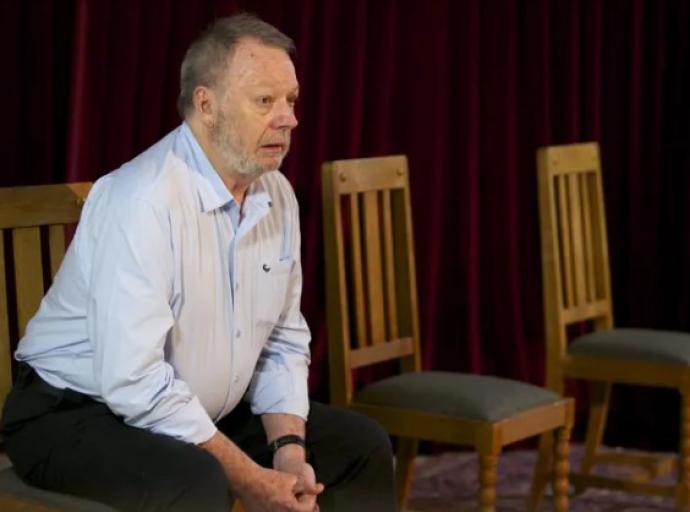
In Mike van Graan’s one-man play, To Life, With Love, currently running at the Baxter Theatre until October 25, actor John Maytham’s character illustrates the predicament of those who die a difficult death. The main character’s wife, who is enduring excruciating suffering without any hope of recovery, pleads with her husband to help her hasten her death.
Our common law, however, does not allow us to help others die a quicker, and thus gentler, death, regarding it as murder, no different from killing in cold blood. It puts a blanket prohibition on assistance with dying, whatever the patient’s tragic circumstances and personal preferences, and whatever the helper’s compassionate motives.
But this stands in direct, stark opposition to the foundational values of our Constitution.
The Constitution's unfulfilled promise
The case for decriminalising and legalising assisted dying is fundamentally a constitutional one, rooted in Sections 10 and 12 of the Bill of Rights: the rights to human dignity and freedom and security of the person, which includes the right to bodily and psychological integrity. Quite simply, the Constitution supersedes common law.
Our courts, notably in the two Stransham-Ford cases, have already grappled with this tension. While the Supreme Court of Appeal (SCA) set aside the North Gauteng High Court’s ruling on procedural grounds, it pointed out that there is “deficiency” in our law that will be “rectified” when a comprehensive case is brought before a court.
When that happens, we can be sure that the court will apply the constitutional rights of human dignity, autonomy and respect for life, among others, to assisted dying.
First, a person’s human dignity is severely diminished when they lose control over the manner of their dying irrespective of the circumstances. Second, the inability to make a rational choice about one’s destiny represents a final erosion of autonomy. Third, the right to life is a right not to extended biological life as such, but life capable of typically human quality interwoven with human dignity.
A palliative care continuum
The argument that assisted dying is unnecessary – a poor substitute for accessible, high-quality palliative care – sets up a false dichotomy.
We unreservedly champion the expansion and proper funding of palliative care across South Africa. Palliative care, with its holistic approach to managing pain – physical, spiritual, and psychosocial – is a fundamental right that should be integrated from the point of diagnosis, not just at the final stage of life.
However, even the best palliative care, administered by the most compassionate professionals, cannot eliminate all suffering for every patient in the manner they prefer. A small minority of individuals suffer from terminal conditions where pain persists as unbearable and intractable despite the best modern medicine can offer. For them, assisted dying is the compassionate conclusion, the desired endpoint, of the palliative care continuum that embraces assisted dying in the appropriate circumstances.
Navigating societal fears
Legal recognition of the supremacy of constitutional imperatives over assisted-dying common law will be long and arduous. Since Parliament has, for 30 years, failed to pass assisted dying legislation, the courts – quite likely, eventually, the Constitutional Court – will have to instruct Parliament to discharge its responsibility.
Despite the Constitution’s supremacy, there are critics who raise understandable fears: a “slippery slope” towards non-voluntary euthanasia; coercion of the elderly or vulnerable; the impact on the doctor-patient relationship; and the capacity and fairness of our healthcare system.
Significantly, these are arguments not against the principle of choice, but about effective regulation. Legislation must be premised on strict eligibility criteria and robust safeguards. For example, candidates must be competent; initiate a request; make their request free from duress; have a terminal or irremediable condition; and suffer intractably and unbearably. These facts must be confirmed by independent medical assessments. Requests must be repeated over a prescribed time, and there should be ample opportunities to opt out.
In this regard, we can learn from many foreign jurisdictions that have practised assisted dying, some over decades, including countries in Latin America that are our socio-economic peers.
It is reassuring to know that the fundamental values of our Constitution are no different from those embedded in world religions as well as cultural beliefs we hold dear. Thus the Constitution is seamlessly consistent with deeper understandings of, for example, Christian charity and African Ubuntu.
A call for moral courage
There is no persuasive moral or legal reason not to write the next chapter of South Africa’s world-class, progressive constitutional jurisprudence – consider the abolition of capital punishment and corporal punishment; legalisation of termination of pregnancy and same-sex unions; and progressive labour practices.
We can now close the circle of our moral courage by recognising “the last right” as constitutionally mandated, thus superseding our common law that considers assisted dying – in all its forms and without any qualification – as a crime of murder.
* Professor Willem Landman is the co-founder of DignitySA. He was the founding CEO of EthicsSA (2000-2010) and is currently an Independent Non-Executive Director of the Ethics Institute of South Africa (EthicsSA) and professor extraordinaire of philosophy at the University of Stellenbosch (since 2000).
** The views expressed do not necessarily reflect the views of IOL or Independent Media.