Free State Targets Surgical Backlogs
The three-day Cataract Marathon, held over the weekend at Boitumelo Regional Hospital in Kroonstad, was a great success, with over 100 patients receiving treatment.
Screening was conducted last week Friday with cataract operations scheduled for Saturday and Su...
The Special Investigating Unit (SIU) has launched a probe into alleged maladministration and mismanagement at Siyathemba Municipality in the Northern Cape. The investigation aims to uncover irregularities in financial management, service delivery, and governance, as concerns grow over the municipality’s accountability and operational practices.
This follows a proclamation signed earlier this week by President Cyril Ramaphosa, authorising the SIU to thoroughly investigate the city amid allegations of irregular procurement of printers, photocopyers, and other office equipment, to recover any losses suffered by the state. “Proclamation 295 of 2025 covers allegations of unlawful and improper conduct that occurred between 1 January 2016 and 31 October 2025, as well as any related activities before 1 January 2016 or after the date of the proclamation that are pertinent to the matters under investigation or involve the same persons, entities, or contracts,” said SIU spokesperson Kaizer Kganyago.
Kganyago further confirmed that the SIU has presidential authorisation to investigate any unauthorised, irregular, fruitless, or wasteful expenditure incurred by the municipality or the state. The probe will also focus on the contracting of goods and services, examining whether contracts were awarded fairly, competitively, transparently, equitably, and cost-effectively, in line with applicable legislation and treasury guidelines.
“Beyond investigating maladministration, corruption, and fraud, the SIU is committed to identifying systemic failures and recommending measures to prevent future losses. Protecting the public interest and assets through preventative and systemic investigations is central to eradicating fraud, maladministration, and corruption,” Kganyago added.
In line with the SIU Act (Act 74 of 1996), any evidence of criminal conduct uncovered during the investigation will be referred to the National Prosecuting Authority (NPA). The SIU is also authorised to pursue civil action in the High Court or Special Tribunal to address wrongdoing resulting from corruption, fraud, or maladministration.
The Democratic Alliance (DA) in Siyathemba Municipality welcomed the SIU’s probe, which targets misconduct dating back to 2016. “Over the years, the DA has fought to address the critical lack of financial oversight in the municipality, particularly the dysfunctionality of the Municipal Public Accounts Committee (MPAC). The committee is responsible for examining financial statements and audit reports, making recommendations, and investigating irregular expenditure,” said DA councillor Wiida Pelster.
Pelster alleged that MPAC’s dysfunction contributed to irregular expenditure exceeding R360 million over the past 15 years, citing a lack of financial competence, withheld financial statements, and insufficient political will to expose irregularities. The DA previously tabled motions of no confidence (MONC) against municipal officials, including the speaker and MPAC chairperson, but these motions were unsuccessful due to council opposition.
Pelster also highlighted unfinished legacy infrastructure projects in Prieska and Marydale, which remain incomplete despite significant spending. These include bulk sewer lines, pump stations, reservoirs, and sewerage networks, with progress ranging from 40% to 99%. “The Prieska Waterborne Gravitational Sewer Network for 472 erven in E’thembeni Plakkerskamp remains incomplete, with millions spent but open trenches left and some trenches filled with pipes,” Pelster said.
The DA hopes the SIU probe will encourage municipal employees to whistleblow and ensure those responsible for misappropriating taxpayers’ money are held accountable.
After serving in the South African National Defence Force (SANDF) for three decades, retired Major John Robertson from De Aar in the Northern Cape has finally spoken out against the issues surrounding his pension fund.
He retired at the age of 57, gaining access to early retirement through the Mobility Exit Mechanisms (MEM), a strategy implemented by the Department of Defence to manage and reduce personnel numbers, primarily by facilitating the exit of members aged 50 to 58 who can no longer progress in their careers, thereby rejuvenating the SANDF.
Robertson claims that he has calculated that more than R540,000 has been deducted by SANDF's Chief Master. When he inquired about this significant amount, he was informed that it was the tax claimed from his pension fund. At the time, he did not think it would become a major issue and accepted the explanation.
Robertson officially retired in January 2023 and received his severance pay in March of that year. Initially, everything seemed fine, and he received a third of his pension—already taxed.
He decided to invest this portion of money and also received a monthly allowance from the Government Employees Pension Fund (GEPF).
“I went to file my tax returns in Belville, Western Cape, during 2023, and a South African Revenue Service (SARS) consultant informed me that I had been overtaxed and was owed R182,000 by SARS,” confirmed Robertson.
He admits that he was concerned about the money and frequently questioned whether he was supposed to receive it, but was assured that it was his.
“I bought my house with cash, so when I received the R182,000, I used it for renovations. I started purchasing furniture and turning the house into a home for my family,” said Robertson.
The following year, he filed his taxes again, only to be told he now owed SARS R167,000. “I was baffled. How could I owe such a large amount to SARS right after being refunded that significant sum? It then occurred to me that the R182,000 was never meant for me in the first place, and now I had to pay back money I had already spent,” said Robertson.
He then embarked on a frustrating and tedious journey with SARS. “They (SARS) could never explain why I owed that much and continuously rejected my disputes. I had to sell my house because SARS decided to take legal action against me,” he explained.
After multiple attempts to resolve the issue, a SARS consultant in the Northern Cape eventually informed Robertson that the Government Employment Pension Fund (GEPF) had processed the same IRP5 form twice, which was why he now owed SARS.
“When I inquired about this with GEPF, they simply stated that this was the information they received from my former employer and denied any mistake on their part. My employer did the same and refused to assist me in any way,” said Robertson.
He mentioned that after one last attempt to clarify the situation, another SARS consultant revealed that this issue arose from MEM, and that other former SANDF members had been experiencing similar problems.
“This has negatively affected my health, my high blood pressure has increased drastically, and I even had to sell my house—something I worked so hard for.
“To this day, I am still in the dark about why I owe SARS such a large amount, while my former employer remains silent throughout this painful journey,” said a dismayed Robertson.
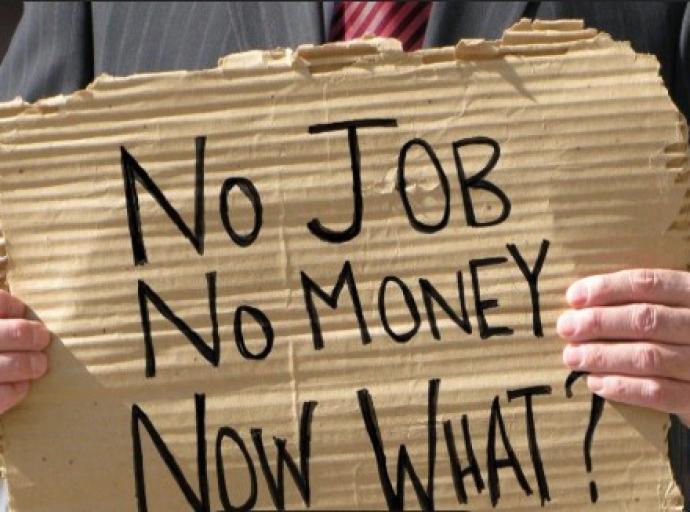
Unemployment in South Africa is no longer just a crisis — it is full-time work with no pay.
Each morning, millions of South Africans rise not to clock in, but to begin a punishing, unpaid routine: scraping together taxi fares, buying mobile data, printing certified documents — all to chase jobs that rarely reply.
This is not a temporary struggle. For many, job-hunting has become a daily grind that lasts months, even years — emotionally exhausting, financially ruinous, and with no guarantee of reward.
It is work. It is labour. And it is breaking people.
The full‑time job with zero pay
Research by the Centre for Social Development in Africa (CSDA) at the University of Johannesburg, supported by Youth Capital, found that young South Africans spend on average R 938 per month seeking employment. That figure, calculated by CSDA, represents a devastating financial burden: the cost of printing CVs, buying data, taking taxis to interviews, paying for certification or recruitment fees — costs that many households can barely meet.
“Young people’s ability to search for, find and hold on to work opportunities is significantly affected by whether they have the financial resources to look for work,” says Youth Capital. “While the survey highlights that the cost of looking for work is one piece of the puzzle, it is critical that we recognise the roadblocks young people face beyond the financial cost; and that we identify and integrate a range of existing interventions to reduce the overall financial cost and time spent looking for work.”
For many, it is an impossible trade‑off between survival and opportunity. “You have to choose between buying electricity or going to an interview,” says 26‑year‑old job‑seeker Zinhle Mthembu, who has been unemployed for almost three years now. “Even when you do go, you come back with nothing, not even feedback.”
That silence — often called “ghosting” — has become one of the most painful parts of the process. After submitting countless applications and enduring expensive, nerve‑wracking interviews, many job‑seekers never hear back at all.
“You are told to keep applying, to never give up,” says Lungelo Dlamini from Khayelitsha. “But every application costs something. Every taxi ride, every piece of paper, it all adds up. Some months, I can’t afford to look for work at all.”
A system that filters by privilege
Because the search itself costs money, the labour market has effectively become a pay‑to‑play system. Only those with financial safety nets — often products of historical privilege — can afford to search consistently. Those without support are trapped in a cruel loop: unable to afford job‑hunting costs, they give up the search entirely and fall into what economists call “discouraged unemployment”.
According to Statistics South Africa’s latest figures, 8.4 million South Africans were actively seeking work in the second quarter of 2025. Yet the expanded unemployment rate — which includes those who’ve stopped looking — sits at 46.1 %, a stark reminder that for many, the financial and emotional cost of searching simply becomes unbearable.
The emotional cost: The weight of rejection
The financial strain tells only half the story. The emotional cost of prolonged unemployment has quietly evolved into a public mental‑health crisis. Industrial psychologist Dr Keitumetse Mashego describes the psychological effects of long‑term joblessness as “a form of emotional exhaustion that eats away at identity and hope”.
“Many people feel depleted,” she explains. “We see burnout, depression, anxiety, a sense of desperation, and sometimes even suicidal thoughts. The stress shows up physically — headaches, digestive issues, trouble sleeping. People start to feel stuck and hopeless.”
The modern recruitment process amplifies that despair. Applicants spend hours on digital platforms, carefully crafting applications, completing online assessments and attending interviews only to be met with silence. The epidemic of “ghosting” from employers has become a shared trauma among job‑seekers.
“Rejection, or worse, no response at all, hits hard,” says Dr Mashego. “It lowers self‑esteem and breeds internalised self‑doubt. People start replaying the rejection in their minds, blaming themselves. The pain is very real; it mirrors physical pain.”
Financial pressure and family guilt
For many, the emotional burden is compounded by financial pressure at home. Wanting to contribute or assist family members creates an internalised sense of guilt and failure. “Especially for graduates from poor backgrounds, there’s enormous pressure to help at home,” says Dr Mashego. “You’ve studied, you’ve done everything right, yet you can’t provide. That pressure can be crushing.”
Every trip to a photocopy shop or job‑centre carries a hidden weight — the unspoken fear of letting one’s family down. In homes where unemployment stretches across generations, the psychological cost multiplies: despair becomes inherited.
Structural failure: Why the job hunt is endless
The enduring nature of South Africa’s unemployment crisis signals that the failure is structural and economic, rather than individual or skills‑based. Research into youth‑employability programmes by the CSDA revealed that even among youth from disadvantaged backgrounds who achieved matric and tertiary qualifications, 78 % were unemployed and nearly three in every four (73 %) faced chronic unemployment.
For Jasely, the frustration runs deeper than silence. “The saddest part about the job hunt is how quick companies are to discard you — over skills that could easily be taught in under a week,” she says. “Sure, they could hire someone with those skills — but they seldom do. You can tell because they repost the same role a week or two later. And the next month. And the month after that. Meanwhile, qualified people are still applying, still being overlooked, still waiting for a chance to prove they can learn. All because they missed one skill, out of the 15 or 20 they’ve demonstrated.”
The job hunt is endless because the economic system lacks capacity to absorb the available workforce, leading to the entrenchment of long‑term joblessness and reinforcing deep historical inequalities. A recent report suggests that each new opportunity requires a reinvestment of time and resources that are already scarce — and takes place in the absence of any guarantee that the investment will lead to a stable position.
“The never‑ending search for stability without clarity on how to attain it leads to exhaustion for both those in long‑term exclusion and those churning between short‑term jobs,” the report states.
The way forward: Breaking the cycle
Experts argue that solving South Africa’s job crisis requires more than rhetoric about skills and resilience. It demands structural reform and human‑centred intervention:
Subsidise the search: Youth Capital and CSDA recommend making job‑seeking affordable through data and transport vouchers, free printing and certification at community hubs, and affordable internet access.
Integrate mental‑health care: Employment centres should offer psychological support, recognising that joblessness is both an economic and emotional emergency.
Unlock the economy: Long‑term recovery depends on reviving growth, reforming state institutions, and empowering small businesses — the true engines of employment.
Until then, the country’s unemployed will continue to wake each morning to a full day’s labour that pays nothing. “They say we don’t want to work. But they don’t see what it costs just to try,” said Phumeza.
“They say we don’t want to work. But they don’t see what it costs just to try,” said Phumeza.
As urban environments grapple with escalating risks from climate change and infrastructural pressures, a transformative approach to disaster risk management is taking shape.
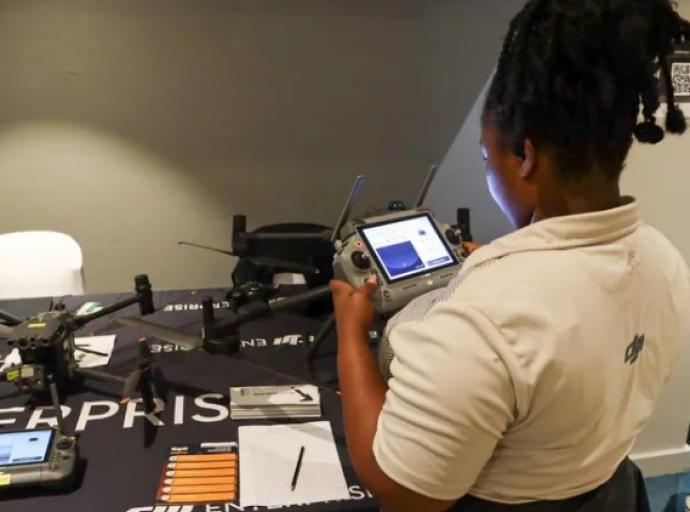
The 4th Annual Southern African Drone, AI and GIS Conference, taking place in Durban, showcases how cutting-edge technologies are redefining preparedness, response, and recovery strategies worldwide.
This groundbreaking conference, hosted by QP Drone Tech in collaboration with South Africa Flying Labs, WeRobotics, and Esri, unites a diverse group of stakeholders, from government leaders and SADC dignitaries to drone operators, GIS specialists, academics, and civil society, who are committed to exploring innovative solutions to common challenges.
Delegates from countries across the SADC region demonstrated how technological advancements have helped combat disaster-related challenges. From rapid aerial mapping during floods to AI-driven predictive modelling for drought management, these examples highlight a pivotal truth: innovation saves lives.
Minister of Cooperative Governance and Traditional Affairs, Velenkosini Hlabisa, underscored the urgency of integrating technology into disaster preparedness plans, particularly for KwaZulu-Natal, a region painfully familiar with the impacts of natural disasters.
“Investing in technology is no longer optional; it is an urgent necessity,” he proclaimed. “By learning from SADC communities and leveraging tools like drones, AI, and GIS, we can predict risks earlier, respond faster, and protect lives and livelihoods.”
Central to the conference’s discussions was the theme of reimagining resilience through collaborative efforts. Experts across disciplines echoed the sentiment that achieving effective disaster risk management requires knowledge-sharing and cross-border partnerships.
eThekwini Deputy Mayor Councillor Zandile Myeni added, “Technology and government must work hand in hand to safeguard communities against climate change and urbanisation.”
“Through partnerships forged here, eThekwini will integrate cutting-edge solutions into its disaster management framework, building stronger, adaptive, and more resilient communities,” she added.
As the discussions progressed, delegates emphasised that progress in technology must be accompanied by capacity building and the empowerment of local communities.
This dual approach ensures that technological advancements translate into real-world benefits, transforming abstract concepts into practical tools for change.
Queen Ndlovu, CEO of QP Drone Tech, articulated this philosophy, noting that while natural disasters are inevitable, their catastrophic impact does not have to be.
“Investing in technology for preparedness, not just for response, is key to saving lives and protecting livelihoods,” she stated, advocating for a proactive rather than reactive approach to disaster management.
As the summit approaches its conclusion on November 5, the anticipation grows for live drone demonstrations at Moses Mabhida Stadium and hands-on GIS workshops, aimed at showcasing the real-time applications of these innovations in emergency response.
On the weekly episode of the vodcast 'The Bill', CapeTalk's Lester Kiewit and political analyst Tara Roos talk about the impact that Cyril Ramaphosa's presidency has had on South Africa.
Kiewit cites News24 Editor-in-Chief Adriaan Basson's latest opinion piece in which he asks, "Doesn't President Cyril Ramaphosa ever get angry with the daily reports of corruption and maladministration?"
"Do you think he ever reflects? Do you think he ever calls in someone who throws the book at him, and gets angry?" asks Kiewit.
Tara replies, "Cyril has one emotion, and that's 'in shock'. He's shocked, he's surprised, he's stunned. That's all Cyril really has to say about the ever-unfolding events of the South African political landscape. And why I don't think Cyril Ramaphosa is angry is because he knows what's happening. Every single scandal that we currently see unfolding in South Africa, Cyril knows about it. He knew about the political interference."
Kiewit says it could be argued that Ramaphosa knew what was wrong and therefore played his classic long game of trying to slowly but surely fix things from the inside.
"I use the example of South Africa being taken off the FATF's (Financial Action Task Force) grey list. It takes a country at least 32 months to get off that grey list, and with that, you have to have legislative reform, policy reform, you have to show an active enthusiasm to try and rectify some of the most basic criteria to get off that grey list, " he says.
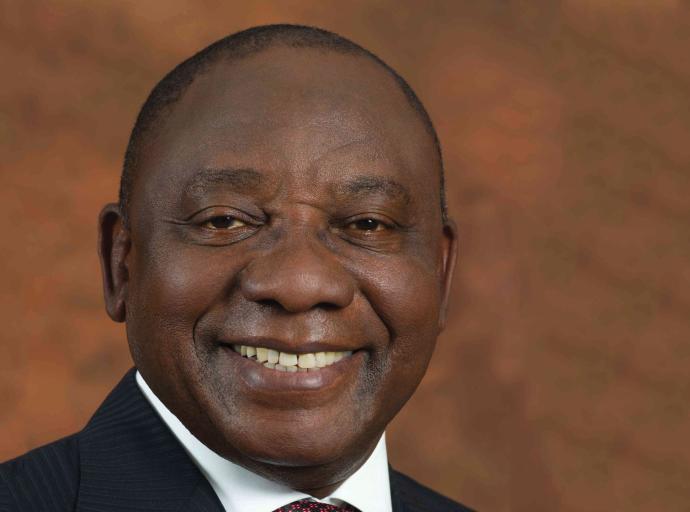
President Cyril Ramaphosa said despite predictions that the GNU might have collapsed by now, it’s united and strong.
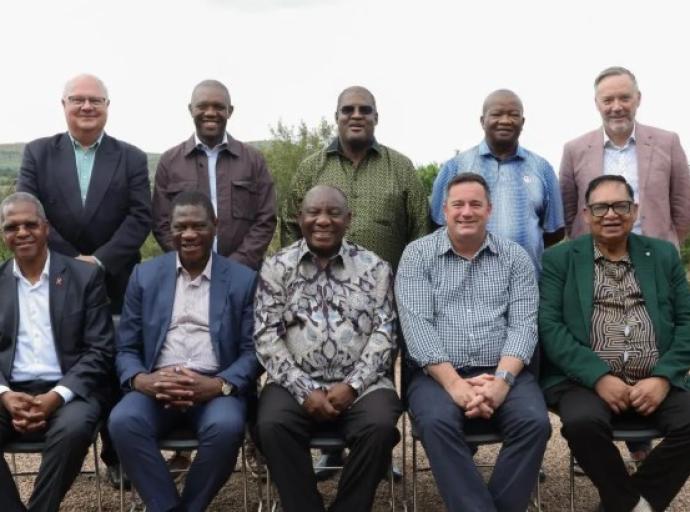
President Cyril Ramaphosa is hoping after the two-day retreat of political leaders of the Government of National Unity (GNU), parties that withdrew from the National Dialogue in August will, in time, return.
Ramaphosa said despite predictions that the GNU might have collapsed by now, it’s united and strong.
He said following the latest talks, the GNU is now focused on urgency and action.
With Finance Minister Enoch Godongwana expected to deliver his Medium-Term Budget Policy Statement next week, he’s briefed the GNU partners about the state of the economy during their retreat.
While some predicted the budget bungle arlier in 2024 may have collapsed the GNU, Ramaphosa said it is here to stay.
“The GNU is going to find more and more ways of working together, strengthening our partnership, focussing on our priorities which are economic growth and job creation.”
Following renewed talks, Ramaphosa is also hoping partners like the Democratic Alliance (DA) and Freedom Front (FF) Plus, which withdrew from the National Dialogue, will have a change of heart.
“The National Dialogue process is moving on. Many organisations around the country want to own it, and they want to make it a people-centred type of dialogue.”
Ramaphosa said political parties are committed to strengthening their partnership to address poverty and lower the cost of living.