Free State Targets Surgical Backlogs
The three-day Cataract Marathon, held over the weekend at Boitumelo Regional Hospital in Kroonstad, was a great success, with over 100 patients receiving treatment.
Screening was conducted last week Friday with cataract operations scheduled for Saturday and Su...
IN HOT WATER: Moqhaka Local Municipality Municipal Manager, Portia Tshabalala.
Picture: Moqhaka Facebook
By: JN Reporter
The Municipal Manager of Moqhaka Local Municipality, Portia Tshabalala, is reportedly facing imminent arrest following serious allegations of financial misconduct involving more than R221 million unlawfully paid to a security company that allegedly did not qualify for the tender. Law enforcement agencies are said to be finalising the case, with an arrest expected soon as investigations have been completed.
This development follows President Cyril Ramaphosa’s signing of Proclamation 163 of 2024 in April last year, authorising the Special Investigating Unit (SIU) to probe the Moqhaka Municipality’s contracting of Isidingo Security Services.
According to a confidential referral affidavit dated September 2025, which contains the full SIU investigation report and is in the possession of Journal News, Tshabalala unlawfully appointed Isidingo Security Services, a KwaZulu-Natal-based company, that allegedly failed to deliver the physical armed security services for which it tendered. The municipality ultimately paid the security company more than R221 million over three years for a tender originally valued at R87 million.
This expenditure exceeded the contract value by 66%, significantly higher than the 15% provision allowed for in the municipality’s 2018/2019 supply chain management policy. Journal News has been reliably informed that the Special Investigating Unit (SIU) has submitted its report to the National Prosecuting Authority (NPA), recommending criminal prosecution against Tshabalala. “The matter has been handed over to the NPA for prosecution. I can confirm that the NPA is currently in possession of the report, and the arrest of the Municipal Manager can be expected soon,” said a source close to the investigation.
The SIU report has flagged several irregularities in the appointment and management of the contract. Key findings include that Isidingo Security Services’ firearm licence had already expired at the time of appointment on January 17, 2020. This means they couldn’t legally deliver the required armed security. Furthermore, as a Durban-based company, Isidingo didn’t meet the requirement for locality preference.
The SIU report also highlights a conflict of interest: on October 17, 2019, Tshabalala, as a member of the Bid Adjudication Committee (BAC), recommended Isidingo as the preferred bidder, and then proceeded to appoint the company in 2020 when she became the acting Municipal Manager (MM). Although she declared her prior involvement with the BAC, the report states this constitutes a conflict of interest under the Municipal Systems Act 32 of 2000.
Additionally, Tshabalala didn’t seek council approval for the contract extension, which ran for over a nine-month period, and she continued to renew the contract until February 28, 2023. The tender’s validity period of 90 days had also expired at the time of Isidingo’s appointment, and an uncertified lease agreement submitted by Isidingo was accepted, even though two other service providers were disqualified for failing to submit a compulsory certified lease agreement.
The SIU report concludes that the appointment of Isidingo constitutes irregular expenditure, and the contract extension amounts to unauthorised expenditure. “Evidence reveals that the appointment of Isidin go by the MM for the provision of physical armed security awarded was irregular and unlawful and in contravention of Section 217 of the Constitution of South Africa,” the report states, adding that the MM’s conduct is “unacceptable, unethical, unlawful, (and) irregular”.
The report also suggests that the NPA should consider instituting criminal charges against Tshabalala for contravening the Municipal Finance Management Act (MFMA), stating that the MM’s conduct is a criminal offence in terms of the MFMA.
However, Journal News contacted the NPA spokesperson in the Free State, Mojalefa Senokotsoane, who clarified the NPA’s mandate. “Unfortunately, the NPA does not make arrests. Our mandate, as guided by the NPA Act and the Criminal Procedure Act, is to prosecute cases brought before the courts.” Senokotsoane stated that the NPA is “not in a position to comment on any matter until a suspect has been charged, arrested, processed, and has made their first appearance in court.”
He advised that the appropriate law enforcement agency to engage is the South African Police Service’s Directorate for Priority Crime Investigation (DPCI/Hawks), as they are “best placed to confirm whether there are any pending arrests”.
This morning, the University of the Free State, together with student leadership, have agreed that provisional registration will be phased out over a period of two years.
This comes after a weeklong protest conducted by the students to show their dissatisfaction over the decision by the institution to phase out provisional registration.
The violent protests led to extensive damage to university property, where students engaged in acts of vandalism and arson, and left several security officers with injuries and three hospitalised on the Qwaqwa campus.
The university campus has been closed for five days now, and according to spokesperson Lacea Loader, the UFS is the only university in South Africa that permits students to register even when they have outstanding fees.
"This practice reflected the university’s commitment to access to education; however, there are serious concerns about the rising levels of student debt and the growing accumulation, leaving students with unmanageable debt at graduation.
“Along with other factors, the debt levels have reached nearly a billion rand over the past five years,” she said.
But for a student like Noluthando Masha, a student from the UFS, who relies on National Student Financial Aid(NSFAS), this arrangement is a serious concern.
“The first thing that came to my mind is 'how are we going to further our studies as NSFAS dependents, where are we going to get that amount of money by January, because we come from low-class families.
But this reconsideration gives us hope that maybe by the end of these two years, there will be a solution that will not affect students as this one would have,” she said.
But there are students who still think the two-year period is short and want a permanent solution that will not compromise students’ future.
“My perception, based on this agreement, is that our SRC didn't represent the black students well enough. Because, after that period of two years, UFS management will get rid of the system that allows provisional registrations, then students will strike again? We need an SRC that has a unipolar mandate that advocates for the struggle of black students within every university in the country,” said a student known as Moleboheng Mokoena.
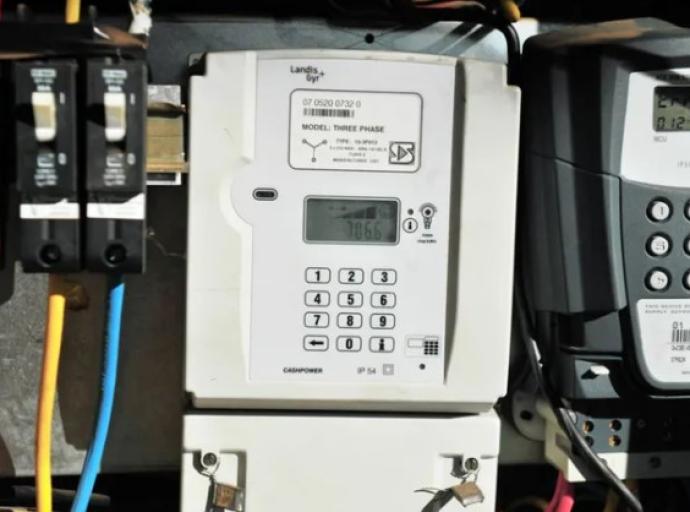
Eskom has ramped up its national smart meter rollout, kicking off installations in KwaZulu-Natal last week Monday. The power utility said the project is part of a broader plan to modernise the national grid and improve the way customers experience electricity supply.
The goal is ambitious but Eskom vowed to help put an end to load reduction challenges within the next 12 to 18 months. Over the next three years, Eskom aims to install 7.2 million smart meters across South Africa. The current phase of the rollout is expected to benefit about 800,000 customers.
Capabilities and Benefits
Smart meters are becoming a central part of Eskom’s plan to address its financial and operational challenges, including growing debt and widespread electricity theft.
According to the power utility, the new technology will allow it to remotely disconnect users who don’t pay, helping to protect paying customers from the consequences of non-payment.
The meters are also meant to tighten control over the grid. They make it easier to detect tampering and illegal electricity sales, and give Eskom more accurate data to plan ahead and respond to issues more quickly. Because the technology removes the need for manual readings, it can also lower operational costs.
Another aim of the rollout is to expand access to Free Basic Electricity (FBE) for qualifying households. Currently, only 485,000 of Eskom’s 2.1 million eligible customers receive this benefit. Smart meters would allow the government to “front-load” the 50 kWh monthly allocation, potentially reaching more households.
For users, the meters provide real-time information about consumption and remove the reliance on estimated bills. This could make it easier for households to budget and monitor their usage. The system also supports Time-of-Use pricing, which charges different rates depending on the time of day, allowing people to shift some usage to cheaper off-peak hours if they choose.
Eskom has asked customers to ensure its teams can safely access meter boxes during installation. It is worth noting that the rollout is not optional and older meters will eventually be replaced and taken out of use.
The utility has also introduced an incentive scheme linked to the new technology. Households with fully activated smart meters and no outstanding payments can receive R90 a month if they agree to let Eskom remotely limit their electricity supply during peak demand periods. Participants will receive an SMS alert an hour before a “load limiting” event and are encouraged to switch off high-usage appliances like geysers and stoves to avoid disconnection.
These events can take place up to 10 times a month and last for no more than two hours. Customers who comply receive the R90 either as a prepaid token or as a credit on their post-paid account.
How much will it cost?
The smart meter rollout comes at a time when Eskom is under severe financial pressure.
Municipalities collectively owe the utility more than R100 billion, while customers owe municipalities more than R400 billion.
Eskom’s chief financial officer, Caleb Cassim, recently cautioned that municipal debt to the utility could surpass R300 billion within the next five years if the situation doesn’t improve.
Electricity theft remains a major contributor to these financial problems. In the 2024/25 financial year alone, Eskom recorded R7.1 billion in losses due to theft and other non-technical energy losses.
The rollout of smart meters is also part of a broader government strategy to address municipal financial instability. The National Treasury is implementing a $113 million (around R2 billion) programme over three years to support municipalities in tightening revenue collection and improving accountability.
Last year, 67,000 smart meters were installed across 18 municipalities. According to Treasury, areas such as Sol Plaatjie and Bela Bela saw better payment rates to Eskom after the rollout. These municipalities were then able to benefit from a one-third debt write-off as part of an incentive for improved financial performance.
Concerns and criticism
Despite the potential benefits, the rollout has met with sharp criticism and operational challenges.
Concerns have been raised over Eskom's control over consumer usage and the remote control devices. Questions have also been raised over fraud and operational issues.
In Johannesburg, the electricity utility City Power temporarily suspended all prepaid meter conversions from August 27 to November 1, 2025, pending a thorough review. Concerns raised included customers who became non-vending” (no longer purchasing electricity) after conversion, and discrepancies in accounts not accurately reflecting on City Power’s systems.
The power utility has urged customers to be vigilant, cautioning them to only allow identifiable, confirmed contractors into their homes to install the new smart meters, and advising them to check that their area is currently scheduled for the rollout. Customers whose meters are replaced will have any remaining credit either refunded or transferred into the new meter.
The location of Walmart’s inaugural branded store in South Africa has been confirmed: it will open at Fourways Mall in Gauteng, occupying the space formerly held by Game.
The announcement follows Walmart’s commitment in September 2025 to launch its first own-brand stores in the country before the year end. Walmart already has a substantial footprint in South Africa through its ownership of Massmart, which operates the Makro, Game and Builders Warehouse chains.
The Fourways Mall store represents its first retail operation under the Walmart banner, rather than via its existing brands.
According to official communications, the new stores are expected to offer an extensive range of merchandise including fresh groceries, household essentials, apparel and technology.
Locally sourced products will also form part of the offering. The stores will be designed with bright, wide-aisled layouts and enhanced digital capabilities to improve the shopping experience.
Massmart had previously stated that while Walmart will be added as a trading banner, it will not replace Makro, Game or Builders Warehouse.
Walmart’s rollout will include both new sites and, where suitable, the conversion of existing retail space in the firm’s real estate portfolio.
Observers noted that at Fourways Mall, the former Game outlet has been closed for several months.
Massmart’s social media channels and local media teased the appearance of Walmart signage: the “Walmart Spark” logo was installed on the site on October 6, 2025, and a photo of the newly branded storefront was published on October 14.
A Fourways Mall employee confirmed that the store is located at the old Game site, though it was not yet open for trade.
Fourways Mall is South Africa’s largest mall by retail space since 2019, but it has faced challenges: high vacancy rates, increased competition, and concerns over tenant retention.
However, it is undergoing a revitalisation. A R400 million investment is underway to improve infrastructure, reduce vacancies, and bring in new tenants.
Public trust in South Africa’s institutions has plunged to its lowest levels in more than two decades, with the South African Police Service (SAPS) emerging as one of the worst-performing arms of government.
According to the Human Sciences Research Council, only 22% of South Africans say they trust the police — the lowest figure since 1998. Experts warn that this credibility crisis is not merely institutional but has devastating social consequences.
Renowned criminologist Professor Kholofelo Rakubu, Head of Department at Tshwane University of Technology’s merged Department of Law, Safety and Security Management, told IOL that corruption and dysfunction within the police have become so entrenched that citizens now see them as “part of everyday life.”
“For many South Africans, the collapse of police credibility has become disturbingly routine,” Rakubu said. “It is no longer shocking when an officer is arrested for corruption or when a suspect walks free because of a missing docket. It has become part of how people expect the system to function — and that is extremely dangerous.”
Broken Trust, Rising Insecurity
Rakubu said the effects of a compromised police service ripple through every layer of society.
“Crimes go unreported because people do not believe anything will come of it,” she said. “Witnesses are afraid to testify because they have seen others threatened or even killed. When communities stop believing in justice, the rule of law begins to collapse.”
She added that poorer areas suffer the worst consequences.
“In wealthier suburbs, residents can hire private security. But in townships and rural areas, people have nowhere to turn. The state’s withdrawal creates a vacuum, and that vacuum is filled by criminal networks, extortion groups, or vigilante structures. Those become the real centres of power.”
The breakdown in trust, Rakubu warned, is eroding social cohesion itself.
“When justice fails, neighbours stop trusting one another. Community-policing forums collapse because people feel they are wasting their time. Young people grow up thinking that corruption is simply how South Africa works — and that is how apathy and rebellion take root.”
Madlanga Commission and Ad Hoc Committee: Deep-Rooted Rot
The Madlanga Commission laid bare the depth of SAPS corruption, exposing systemic bribery, political interference, and leaked intelligence operations. Testimony before the inquiry implicated suspended Police Minister Senzo Mchunu, with claims that classified information was sold for cash.
The subsequent parliamentary Ad Hoc Committee reinforced those findings, pointing to factionalism within SAPS, misuse of surveillance equipment, and obstruction of internal investigations, including allegations raised by Lieutenant General Nhlanhla Mkhwanazi.
Despite the damning revelations, progress on implementing the recommendations has been painfully slow.
“We have seen this movie before,” Rakubu remarked. “Commissions come and go, they expose the rot, but nothing changes. South Africans are tired of hearing about accountability that never arrives. It’s business as usual, and that’s exactly what corrupt networks rely on.”
A Nation Numbed
Analysts say the muted public response reflects corruption fatigue — a collective exhaustion after years of scandals and stalled inquiries.
“People are not indifferent; they are emotionally depleted,” Rakubu explained. “Every few months there is another inquiry, another promise, another scandal. Citizens feel powerless. That emotional burnout is what allows corruption to persist — because outrage has turned into resignation.”
The National Anti-Corruption Advisory Council’s 2025 report paints a bleak picture: corruption now spans healthcare, law enforcement, and procurement — even extending to sextortion and youth disillusionment.
While President Cyril Ramaphosa’s anti-corruption strategies, including the Investigating Directorate Against Corruption, have shown intent, experts say these initiatives are under-resourced and inconsistently implemented.
“We cannot fight corruption with good speeches and weak institutions,” Rakubu cautioned. “Until the people responsible are prosecuted — not reassigned, not suspended, but prosecuted — South Africans will continue to believe that integrity is optional.”
‘Normalising Dysfunction’
The growing sense of resignation, Rakubu warned, poses a deeper threat than corruption itself.
“When citizens start accepting dysfunction as normal, democracy begins to die quietly,” she said. “The tragedy is not only that corruption exists, but that it is no longer shocking. Once corruption stops provoking outrage, it becomes culture — and that is when recovery becomes almost impossible.”
Until the recommendations of the Madlanga Commission and the Ad Hoc Committee are fully implemented — and those implicated held accountable — South Africa’s policing crisis will continue to corrode both public safety and national morale.
On Tuesday, IOL reported that South Africans are watching yet another wave of corruption revelations — from Lieutenant General Nhlanhla Mkhwanazi’s explosive claims about criminal infiltration in the police, to testimony before Parliament’s ad hoc committee and the Madlanga Commission — with weary eyes.
Across townships, suburbs and rural communities, the reaction is the same: not shock, but exhaustion and fatigue. For many, these scandals have become a grim ritual in a democracy that promised integrity but has delivered repetition.
“We are fatigued by repetition”
Siyabulela Jentile, president of #NotInMyName
What the country is witnessing, according to Jentile, “isn’t new — it’s the continuation of a long, painful story of institutional betrayal.”
“South Africans are not numb by choice; we are fatigued by repetition. Each revelation of corruption lands on ground already scorched by previous scandals — from state capture to failures in local governance. When accountability becomes the exception rather than the norm, outrage slowly turns into resignation.”
Public trust in the South African Police Service (SAPS), he said, has been profoundly eroded.
“People no longer see the police as protectors but as an extension of a state that has lost moral authority. In townships and rural areas, residents feel safer calling community patrols or neighbourhood-watch groups than reporting crimes to SAPS.”
The consequences, Jentile warned, are devastating.
“A compromised police service doesn’t just fail to solve crimes; it incubates criminality. It gives organised syndicates, drug networks, and corrupt officers room to operate with impunity. It means gender-based violence cases go uninvestigated, children disappear without trace, and communities resort to vigilantism.”
For Jentile, corruption has “festered into our national fabric.”
“We joke about it, anticipate it, even budget for it. That’s the danger: when wrongdoing becomes predictable, accountability becomes optional. But the fact that people are no longer shocked is not a sign of acceptance — it’s a symptom of exhaustion. Civil society must help rebuild that moral outrage and turn it into organised demand for reform.”