Free State Targets Surgical Backlogs
The three-day Cataract Marathon, held over the weekend at Boitumelo Regional Hospital in Kroonstad, was a great success, with over 100 patients receiving treatment.
Screening was conducted last week Friday with cataract operations scheduled for Saturday and Su...
On the last day of the 2025 G20 Summit hosted in South Africa, more than 40 countries and institutions gathered to tackle an array of urgent global challenges, including climate change, debt sustainability for low-income countries, and peace efforts in conflict zones such as Congo, Palestine, and Ukraine.
Despite the absence of the United States delegation, led by President Donald Trump, who boycotted the event, citing South Africa’s policies as discriminatory, the summit moved forward with a declaration that placed Africa and the Global South’s priorities front and center.
The G20 leaders, under the stewardship of South African President Cyril Ramaphosa, adopted a sweeping declaration reaffirming the group’s commitment to multilateralism and cooperation amid the “polycrisis” confronting the world.
Central to the declaration was an unprecedented focus on the continent hosting the summit, with Africa mentioned over 80 times - a symbolic milestone underscored by South African officials.
Ramaphosa reflected on the summit’s progress in his closing remarks at the Johannesburg Expo Centre as a success.
“This is the first G20 summit hosted on African soil, and it has placed urgent global priorities at the centre of discussions. We appeal to all world leaders to confront our shared challenges together, ensuring that no one is left behind in our pursuit of global prosperity.”
Ramaphosa dismissed Trump's claims of discrimination against South Africa, reaffirming the country’s leadership in championing Africa's and the broader Global South's development agenda.
Key Outcomes of Day Two
Peace and Security: The leaders committed to promoting sustainable peace in conflict-ridden regions, including Congo, Palestine, and Ukraine, acknowledging the critical nature of these conflicts on global stability.
Climate Action: The declaration emphasised the urgency of tackling climate change, calling for enhanced adaptation measures and accelerated transitions to renewable energy, despite opposition and the absence of the United States delegation from the climate-related language.
Debt Relief: Global leaders acknowledged the pressing debt crisis faced by many low-income countries, particularly in Africa, linking debt sustainability directly to economic stability and inclusive growth.
Italy’s Prime Minister Giorgia Meloni pledged to halve the debt owed by African countries over the next decade, reinforcing international support for economic recovery in developing nations.
Energy Access: The summit recognised the severe energy access deficits across Africa, where over 600 million people lack electricity and about 1 billion lack access to clean cooking facilities.
The G20 endorsed recommendations from the South African G20 Africa Expert Panel report, which urges greater productivity and investment, facilitated by institutions such as the African Development Bank.
Global Governance Reform: Leaders stressed the importance of amplifying the voice of the Global South in international institutions, endorsing reforms to fair trade rules, global financial institutions, and broader development paradigms that view African and developing nations as active economic players rather than mere raw material exporters.
Minister in the Presidency Khumbudzo Ntshavheni reflected on the summit’s landmark role in placing Africa at the centre of global policy discourse.
“For us, our success is that we have put the African agenda firmly on the map. Africa is mentioned in the declaration 80 times, according to those who counted. This isn’t just about Africa, but about the developing world’s priorities and challenges. It is our time. We have demonstrated Africa’s capacity to engage as an equal partner on the international stage.”
Maxim Oreshkin, deputy head of the Russian presidential administration, highlighted systemic issues in the global economic order.
“The international economic order is in crisis, failing to incorporate new global realities. Sanctions, trade barriers, and technological restrictions fragment economies, destabilise global architecture, and undermine the United Nations’ Sustainable Development Goals,” Oreshkin said.
Addressing Africa’s development, he warned that “Africa's total debt will reach $3 trillion this year, according to the IMF. Notably, the World Bank has provided more aid to Ukraine in the past three years than to all African countries combined.
“This summit must reinforce multilateralism and bolster Africa’s growth trajectory to meet the needs of its young population.”
Security Incidents: Operation Dudula Clashes
The summit was not without unrest. Outside the Nasrec Expo Centre on Saturday - the summit venue - police engaged protesters affiliated with Operation Dudula, a South African activist group known for its controversial stance on immigration and social issues.
Supporters attempted to block G20 motorcades on Baragwanath and Nasrec road, prompting police to intervene.
Brigadier Athlenda Mathe, national police spokesperson, confirmed the arrest of two Operation Dudula members after a police officer sustained injuries during a violent protest.
“We have registered cases of public violence, assault, and contravention of a court order against Dudula members,” said Mathe. Police had previously announced a “ring of steel” around the venue, vowing zero tolerance for security threats.
Looking Ahead: Transition to US Presidency
As South Africa prepares to hand over the G20 presidency to the United States, Minister Ntshavheni expressed optimism about the legacy of the summit.
“We have placed the African agenda on the table in a way never done before. Africa’s interests and challenges are now integral to global conversations. This is proof of our capability to lead and represent the continent’s aspirations on the world stage.”
The summit underscored shifting dynamics in global leadership, highlighting a growing role for the Global South in shaping multilateral solutions to economic, environmental, and security crises.
The absence of the United States - traditionally a leading G20 power - cast a shadow but did not stall progress, as countries redoubled efforts to address urgent issues inclusively.
The ANC in the Free State has postponed two key regional conferences, citing outstanding organisational processes and unresolved internal disputes that officials say must be addressed before delegates can convene.
The delays affecting the Mangaung and Lejweleputswa regional conferences are expected to impact preparations for upcoming elective processes and have heightened uncertainty within the party’s provincial structures.
According to sources within the Provincial Executive Committee (PEC), the two regional elective conferences were initially scheduled for next month ahead of the party’s National General Council (NGC). However, the plans have been halted due to challenges at branch level.
They claim the PEC – in its meeting a week ago – resolved to postpone both conferences after several branches failed to convene successful Branch General Meetings (BGMs), many of which were marred by factional tensions.
“Some branches in both regions are struggling to convene due to leadership squabbles stemming from interference and ambitions. Comrades are gatekeeping BGMs, pushing them toward possible disqualification because they are not aligned to certain individuals in the leadership,” said a source who asked to remain anonymous as they are not mandated to speak to the media.
Journal News has learned that both current regional chairpersons – Lawrence Mathae in Mangaung and Xolile Toki in Lejweleputswa – are seeking second terms.
Without confirming new dates, provincial spokesperson Thabo Meeko told Journal News that the ANC would announce updates at the appropriate time and communicate formally through the media.
He said the PEC had adopted timelines for regional conferences and that reports on their implementation are being monitored by the Provincial Secretary’s Office (PSO).
“These timelines coincide with preparations for the NGC, and with the broader organisational programme aimed at deepening unity and renewal, whose cornerstone is raising the bar on political consciousness,” Meeko said.
He added that regional conferences must be convened in line with the ANC constitution and with the organisation’s renewal agenda in mind.
“This period imposes the need to invoke the progressive values of the ANC as a party of the revolution – reconnection with the people, ethical leadership, corruption-free governance and organisational discipline, among others. The PEC insists that these conferences must unify the movement and deepen renewal, without thwarting democratic processes, as we prepare for elections and the battle for the hegemony of the progressive agenda on all fronts,” Meeko said.
On Tuesday, Secretary General Fikile Mbalula, when briefing the media on the outcomes of the NEC meeting, said that all due conferences must be concluded by March 2026.
“This decision is a strategic imperative to ensure that the ANC enters the 2026 Local Government Elections with constitutionally mandated leadership structures. This timeline is central to the renewal agenda, allowing the movement to shift its full organisational strength towards building a disciplined and election-ready machine,” said Mbalula.
As the ANC navigates internal tensions and prepares for its National General Council, the postponement of the two regional conferences underscores the depth of organisational challenges facing the party in the Free State. Whether the delays will foster unity and renewal – as the party insists – or further entrench factional battles remains to be seen.
Premier Spokesperson Matshidiso Setai has vehemently denied allegations of corruption against her, calling them baseless and a smear campaign intended to damage her reputation and remove her from the Free State Provincial Government.
In an interview with the Journal News, Setai responded to various media reports accusing her of fraud, forgery, and involvement in a R4.3 million financial mismanagement lawsuit with the National Department of Transport, where she served as the Acting Deputy Director General of Communications in 2008.
Setai asserts that these allegations are rooted in distortion and aim to eliminate her as an obstacle to corrupt activities in government procurement.
In September, media reports accused her of fraudulently creating a letter that forged the signature of former Acting Director General Dr Mafole Mokalobe from the Premier's office and sending it to the Head of the Department of Education, Advocate Tshwarelo Malakoane.
Previously, Setai emphasised that this is a smear campaign against her, intended to discredit her character.
"I will stop at nothing to ensure that corruption ends within the seventh administration of the Free State provincial government," she said.
According to the reports, Setai was allegedly placed on suspension after a KPMG report indicated that proper tender procedures were not followed for some of the projects issued by the department.
She reportedly faced 14 charges and was found guilty on 13 of them, including procurement irregularities, gross dishonesty, and gross negligence.
“We went to lawyers and there was an out-of-court settlement that we reached, initiated by the department itself, Setai said.
Based on the settlement agreement signed at the North Gauteng High Court, dated 3 October 2012 between Setai and NDOT an order of court was signed and therefore R4.3 million was paid to Setai by the department.
According to department of Justice, a settlement agreement ordered by the court, has to follow the same legal process should it be reviewed.
In September 2020, NDOT instructed National Treasury to change the status of Setais persal from dismissal to resignation.
In 2023, it is alleged that the Department of Transport wanted to revoke and review the settlement agreement.
Setai reveals that the department has not reviewed the settlement agreement from her case as they need to do it through the court.
"Based on all of those charges, the department opted to settle out of court, and the settlement letter was issued by them, resulting in my payment of R4.3 million.
"This amount included my outstanding salary and all legal costs, she said.
In response, Setai confirmed that she had heard about the department's intention to review the decision made in 2012, but noted that no court application has been lodged.
"To date, the Department of Transport has still not reviewed the agreement, so I don’t know where these media platforms are getting the information that the settlement has been reviewed.
"If there is a review outcome, I ask that it be issued now,” she said.
"What I can tell you is that there is ongoing litigation against the department, and our case is set for October 2028.
“This reflects their level of desperation against me. They are attempting to find dirt on me, but cannot succeed.
"I'm currently viewed as an enemy because I have halted corruption. I am a target because they are unable to steal from the government,” Setai said.
Red meat lovers and farmers are facing yet another blow after the Red Meat Industry Services (RMIS) confirmed a case of Rift Valley Fever (RVF) in sheep in the Augrabies area, Northern Cape.
This comes as South Africa continues to deal with Foot and Mouth Disease (FMD), which has disrupted livestock markets, restricted animal movements, and placed significant financial pressure on farmers across multiple provinces.
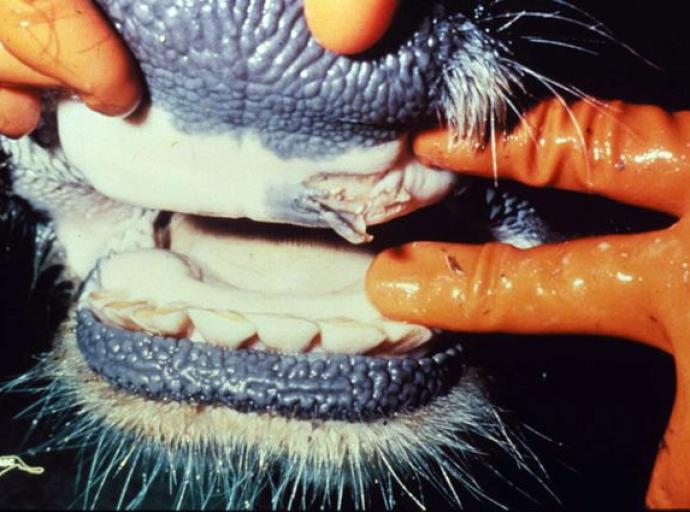
Rift Valley Fever is a viral disease that primarily affects domestic livestock, often leading to miscarriages and high mortality rates among infected animals.
IOL previously reported that the country has been battling FMD for several months, prompting key trading partners, including Zimbabwe, Namibia, Botswana, and China, to suspend imports of meat and related animal products from the country.
Two months ago, Minister of Agriculture by Minister of Agriculture John Steenhuisen also revealed that the Department has procured 900,000 doses of FMD vaccine to combat the ongoing and increasingly widespread outbreaks affecting several provinces.
“At the beginning of 2025, active FMD outbreaks were confined to KwaZulu-Natal. Unfortunately, by the end of May 2025, new outbreaks had emerged in other provinces,” said Steenhuisen.
However, as South Africa continues to struggle with FMD, the RMIS has also revealed that a new case of Rift Valley Fever (RVF) has been confirmed in sheep in the Augrabies, Northern Cape, prompting increased surveillance and vaccination efforts to prevent further spread.
"RVF has been diagnosed in sheep in the Augrabies area. To prevent further spread, vaccination of at-risk animals is strongly advocated. RMIS has contacted OBP to determine current vaccine stock levels and will assist in coordinating the allocation of available vaccine to high-risk areas as a priority". RMID said.
The organisation added that it is working closely with local veterinary authorities to monitor the situation and ensure that all necessary biosecurity measures are implemented to protect livestock and support affected farmers.
"In addition, RMIS is working with local veterinary authorities to monitor the situation closely and ensure that all necessary biosecurity measures are implemented to protect livestock and support affected farmers".
The SA Revenue Service (SARS) will implement a delayed 6.2% salary increase for its employees after it was rejected by Cosatu affiliate, the National Education, Health and Allied Workers' Union (Nehawu).
SARS approached the Gauteng High Court, Pretoria, in a bid to make a settlement agreement with the Public Servants Association (PSA) an order of the court.
The tax revenue collection agency told the High Court that it entered into an agreement with the PSA to settle the dispute over the salary increases.
It insisted that its agreement with the PSA was also binding on Nehawu, which the union disagreed with.
The agency applied for its agreement to be made an order of the court that was binding on Nehawu.
Earlier this month, Judge Mncedisi Kumalo ruled that the settlement agreement was binding on all members of SARS’ bargaining unit, including members of Nehawu.
Nehawu had claimed in court that wage agreements should not be made court orders, but Judge Kumalo disagreed.
He said a 2014 Labour Appeal Court (LAC) ruling on the right of public servants to go on strike against the government was not binding on the present dispute over salary increases.
The LAC refused to make the settlement agreement an order of the court and its employees did not stop the court from making a wage deal an order.
“I am of the view that the decision does not prevent a court from making a settlement an order of the court. The court has, at the very least, as pointed out by Nehawu in its heads of argument, a discretion whether to do so,” the judge stated.
Judge Kumalo continued: “I accept that the settlement agreement between the parties was a compromise. It was open to SARS and PSA to decide how to settle their dispute regarding the judgment, that is, the implementation of the third year of the multi-year wage agreement.”
According to the ruling, it therefore did not constitute a variation of the main agreement in the strict sense.
“I accept the applicant’s (SARS’) submission that it does not fall foul of the non-variation clause in the main agreement,” explained Judge Kumalo.
He added that the agreement was in full and final settlement of the dispute arising from the non-implementation of the third year of the wage agreement.
“This court has discretion to make it an order of the court, and I am of the view that the circumstances in this matter call for it to exercise such discretion in the positive and make it an order of the court,” the judge stated.
*This article was first published by Eye Witness News