Free State Targets Surgical Backlogs
The three-day Cataract Marathon, held over the weekend at Boitumelo Regional Hospital in Kroonstad, was a great success, with over 100 patients receiving treatment.
Screening was conducted last week Friday with cataract operations scheduled for Saturday and Su...
The Border Management Authority (BMA) on Tuesday said it has intensified border line management and is implementing its anti-fraud and corruption campaign during this Easter weekend.
Briefing the Home Affairs Portfolio Committee on planned operations to be conducted during the weekend, BMA’s assistant commissioner Belene Mkhabela said the planning phase started on February 5. He stated that the focus is on inter-agency coordination, risk assessment, intelligence analysis, resource mobilisation, and finalisation of readiness plans.
He said they were now at the execution phase, which started on Monday and will run until April 9.
“During this phase, resources will be enhanced, personnel redeployed, and post-operation assessments initiated to capture lessons learnt and operational insights,” he said.
Mkhabela noted that the Easter operation was marked by increased movements of goods and persons, mainly for religious pilgrimages, holidays, and family visits.
He told the MPs that their operations were designed to manage traveller movement, mitigate congestion, and enhance border security.
“Intelligence indicates with high confidence that the border management law enforcement agencies are prepared for a further escalation in overall volume for the 2026 Easter period. This surge will be characterised by predictable peaks in flow direction and volume,” he highlighted.
Mkhabela also said they have identified 12 critical ports of entry of focus, followed by 11 vulnerable segments of the border line and the top three busiest ports of entry.
Beitbridge, Maseru Bridge, and Lebombo border posts are expected to have extreme congestion and traffic levels on Thursday.
High volumes, especially on Friday morning, are expected at Beitbridge and Grobler’s Bridge, as well as extreme congestion when travellers return on Monday.
“What we have done is that we have requested the minister to extend operational hours,” Mkhabela said.
He added that corruption and collusion, critical Information Communication Technology (ICT), power infrastructure collapse, systematic exploitation of the porous borderline, severe traffic congestion, smuggling of high-risk goods, and organised crimes top the list of intelligence threats and risk assessment.
However, Mkhabela said there was daily planning of operations and exchange of information between agencies in the border environment.
“We have got well in advance in planning, and there is an effective risk analysis and management plan by the National Target Border Centre. From today (Tuesday), we have our first report for the day,” he said.
Mkhabela further said there is intensified borderline deployment by the BMA, SANDF, and SAPS.
There is also the deployment of the Department of Social Development to attend to cases and incidents involving minors. The corridor management and traffic management were supported by the national traffic police, provincial and municipal authorities, he said.
“Anti-fraud and corruption measures are conducted at identified ports of entry as a proactive measure for deterrence,” he stated.
According to Mkhabela, as part of the preparations, extensive consultations were conducted with key stakeholders, including port management structures, border control entities, and representatives from neighbouring countries that share borders with South Africa.
“These engagements resulted in consensus regarding the specific dates and modalities for implementing the extended operational hours. Approval has been granted for the extension of operational hours at designated ports of entry for the 2026 Easter period,” he said.
Mkhabela stated that system downtime and technical glitches have been identified as some of the significant risks to the effective and efficient facilitation of the movement of persons and goods.
“The BMA will have full-time deployment of ICT technicians at the 12 prioritised ports of entry to provide direct support. Remote ICT support will also be provided by SARS and the Department of Home Affairs.”
He added that drones and body-worn cameras will be deployed to enhance the level of border security at vulnerable segments of the borderline.
The BMA has five drones, including one donated by the KwaZulu-Natal government to assist with challenges in the northern part of the province.
There is also a demonstration by a private company that will be put to use.
Mkhabela said the Department of Public Works and Infrastructure is assisting with the supply of additional resources, such as water tankers, gazebos, mobile ablution facilities, and barricades.
“They have started moving all the additional resources we requested from them to support our preparations,” he said.
Responding to questions, BMA commissioner Mike Masiapato said they will make sure that for every risk, there are measures in place to mitigate the threats.
“If everything fails when it comes to ICT, we default to manual processes, as we don’t want to stop people from getting recorded when they exit or enter. Manual processes mean that we have to record all people in terms of biographical data and passports and do bulk capturing of their movement,” he said.
Masiapato added that they would ensure that uninterrupted power supplies kick in when there are outages.
He assured the MPs that the planning they presented to the committee was not only just talking to the BMA, but also to other departments and entities involved in border management.
Asian stocks rallied on Wednesday after US President Donald Trump said the Middle East war would be over in up to three weeks and his Iranian counterpart said Tehran had "the necessary will" to bring it to an end.
But while the remarks from the two leaders provided hope for an end to the month-long crisis, crude prices jumped on lingering worries about the closure of the strategic Strait of Hormuz.
They also come as the economic impact of the conflict worsens, with average US petrol prices topping $4 a gallon (R17.86 per litre) for the first time in four years, European inflation spiking, and governments unveiling a range of support measures.
Trump told reporters in the Oval Office the United States would be leaving Iran "very soon", perhaps within "two weeks, maybe three".
"But we're finishing the job," he insisted.
"We want to knock out every single thing they have," Trump said, before adding that "it's possible that we'll make a deal before that."
The White House also said he would address the nation on Thursday "to provide an important update on Iran".
Earlier, Iranian leader Masoud Pezeshkian told the head of the European Council the country had "the necessary will to end this conflict, provided that essential conditions are met — especially the guarantees required to prevent repetition of the aggression".
Wall Street surged, with the Nasdaq up 3.8 percent and the S&P 500 adding almost three percent.
In Asia, Seoul — the standout before the war but among the worst-hit since it started — was up more than six percent, while Tokyo and Taipei gained at least four percent.
Hong Kong, Shanghai, Sydney, Singapore, Manila and Jakarta were also sharply higher.
Traders appeared to brush off Prime Minister Benjamin Netanyahu's comments that Israel would press ahead with its campaign and that "we will continue to crush the terror regime".
However, Trump also said US forces would not work to unblock the Strait of Hormuz, through which a fifth of global oil and gas passes, and said it was up to other countries to do so.
"What happens with the strait we're not going to have anything to do with," he said.
In a Truth Social post earlier Tuesday, Trump lashed out at NATO allies and other countries that have refused to help the United States secure the waterway.
"The U.S.A. won't be there to help you anymore, just like you weren't there for us," he wrote. "Iran has been, essentially, decimated. The hard part is done. Go get your own oil!"
The remarks came after he said on Monday that he was willing to end the war even if the strait remained closed.
Trump has zigzagged on whether Washington plans to escalate the conflict — possibly by deploying American ground forces — or try to end it through negotiations.
Both main crude contracts rose more than one percent on Wednesday, a day after Brent dived more than three percent and West Texas Intermediate shed 1.5 percent. On Wednesday morning, Brent Crude oil was trading at $105.
That came as more US troops continued to arrive in the region, and after the Wall Street Journal cited Arab officials as saying the United Arab Emirates was preparing to help Washington open the Strait by force, which would make it the first Gulf nation to join the battle.
The report said the UAE, which has been targeted by Iran during the war, was lobbying for a United Nations Security Council resolution to authorise such action.
The head of maritime analyst group Kpler told AFP that Asia faced the gravest fallout from the war.
"We think Asia will, for now, be the ones suffering the most," president Jean Maynier said.
War in the Middle East: latest developments
Iran's state broadcaster IRIB said Tehran was under attack on Wednesday, reporting that explosions were heard in areas of the capital's north, east and centre.
Attacks on the Gulf
Kuwait's civil aviation authority said Wednesday that the Gulf state's international airport had come under an Iranian drone attack that led to "a large fire" at fuel tanks.
Bahrain's interior ministry said a fire broke out at a business facility "as a result of the Iranian aggression", while Saudi Arabia said it shot down several drones.
A tanker was also hit in the waters off Qatar, a British maritime security agency said.
Journalist kidnapped
An American journalist was kidnapped Tuesday in Baghdad by a suspected Iranian-backed Iraqi armed group, the United States said.
The State Department said it had warned the journalist of security risks and was working to ensure the American's release "as soon as possible".
The journalist was identified as Shelly Kittleson, a freelancer, by media advocacy groups as well as Al-Monitor, one of the news outlets for which she worked.
Trump to address Americans
US President Donald Trump will give an address to the nation on Wednesday night "to provide an important update on Iran," the White House said.
The announcement comes as the commander-in-chief said US forces would end operations in Iran "very soon", evoking a timeline of two to three weeks as his administration pursues talks while continuing its aerial campaign.
Asked about the impact of high fuel prices since the war began, Trump told reporters: "All I have to do is leave Iran, and we'll be doing that very soon, and they'll come tumbling down."
Asian markets climb on Trump comments
Asian stocks rallied Wednesday after Trump indicated that the war may end soon.
Japan's Nikkei 225 jumped 4.0 percent while benchmarks in Hong Kong, Shanghai and Seoul all rose.
Deadly strikes hit Beirut
Three explosions rocked Beirut's southern suburbs early Wednesday, AFP journalists reported, as a series of Israeli strikes in the south of the Lebanese capital and a nearby area killed seven people and wounded dozens, according to Lebanon's health ministry.
The Israeli army said it struck a "senior Hezbollah commander" and another "senior" member of the Iran-backed group in Beirut.
Pope hopes Trump will end war
Pope Leo XIV said he hoped Trump was looking to end the war in the Middle East and called for a halt to the violence.
"I'm told that President Trump recently stated that he would like to end the war. Hopefully he's looking for an offramp, hopefully he's looking for a way to decrease the amount of violence, of bombing," the pope told journalists.
Israeli strikes kill 8 in south Lebanon
At least eight people were killed Tuesday, including a paramedic, in Israeli strikes in south Lebanon, according to the ministry of health.
The ministry said a strike in Tyre district killed three people and wounded 19 more, while another attack in Sidon district killed four. A third strike in Bint Jbeil district hit a gathering point for the Risala Scouts, a rescue organisation run by a Hezbollah ally group, killing a paramedic.
Netanyahu vows to 'crush' Iran
Prime Minister Benjamin Netanyahu said Israel would press ahead with its military campaign against Tehran.
"The campaign is not over," he said in a televised statement. "We will continue to crush the terror regime."
Iran has 'will' to end war
Iran has the "necessary will" to end the war with the United States and Israel, President Masoud Pezeshkian said, emphasising that Tehran was seeking guarantees the conflict would not flare up again.
The comment, which boosted US markets and led oil prices to fall, came after a day of heavy strikes on Iran and followed a warning from the powerful Islamic Revolutionary Guard Corps to retaliate against leading US tech firms such as Google from Wednesday if more Iranian leaders were killed in "targeted assassinations".
Canada denounces 'illegal invasion'
Canada's Prime Minister Mark Carney denounced Israel's deployment of troops against Hezbollah targets in Lebanon as an "illegal invasion" that violates its "integrity and sovereignty."
Save fuel, EU says
The EU urged member states to try to push down domestic demand for fuel in the face of surging energy prices caused by the Middle East war.
The South African National Taxi Council (SANTACO) has assured commuters that any fare increases will be approached with consideration and transparency.
This, after fuel prices rose on Wednesday, with motorists now paying more than R3 and R7 for petrol and diesel respectively.
The taxi body said that while it acknowledges the government’s efforts to reduce the fuel levy temporarily, the overall fuel rise places a significant burden on its daily operations.
Said SANTACO national spokesperson Mmatshikhidi Phala: “Given that the majority of minibus taxis operate on diesel, which is largely unregulated, the significant increase of over R7 per litre means the industry will continue to absorb the greatest impact of the current fuel price adjustments.”
Phala said associations under SANTACO countrywide are currently assessing the impact of the latest increase on operational costs and profit margins.
“SANTACO wishes to assure the public that any fare increases implemented by associations will be approached with caution, transparency, and responsibility. At a national level, SANTACO leadership remains actively engaged with government to explore further support measures aimed at cushioning both the industry and commuters from the ongoing financial strain.”
In a decisive crackdown on illegal gambling, the North West Gambling Board has destroyed more than 300 illicit arcade machines across the province, targeting unlicensed operations that prey on vulnerable communities, particularly the youth.
The move forms part of ongoing efforts to curb unlawful gambling activities. During recent operations, authorities seized and publicly destroyed hundreds of machines found in taverns, spaza shops and other unlicensed outlets in the Mahikeng and Rustenburg regions.
According to the board, over 300 illegal machines were confiscated last year alone. In the latest sweep, 278 machines were demolished in Rustenburg and Koster, with an additional 257 destroyed in the Bojanala Platinum District—marking significant progress in the province’s clean-up campaign.
The seized equipment included various slot machines, bingo-style roulette devices, “cherry master” games, and computers linked to illegal gambling networks, often concealed within informal businesses.
The operation was carried out in collaboration with the South African Police Service (SAPS), the Department of Economic Development, Environment, Conservation and Tourism (DEDECT), and the Hawks, resulting in a major enforcement success for the province.
Authorities have focused on high-risk areas where illegal machines are easily accessible to children and unemployed youth. Many of these outlets also operate without proper liquor licences, compounding social challenges in townships and rural communities.
Illegal gambling remains a serious concern in the North West, with operators exploiting communities for quick profit while flouting regulatory frameworks. The presence of these machines has also raised alarm over underage gambling.
Officials say the crackdown helps level the playing field for licensed operators who comply with regulations, pay taxes, and contribute to the provincial economy.
The North West Gambling Board stressed that the destruction of these machines is not a once-off effort, but part of a broader, sustained campaign to eliminate illegal gambling.
Board chairperson Prof. Vuyo Peach warned that those caught operating unlawful gambling activities face arrest, fines and possible imprisonment. He also urged members of the public to report suspicious activities through official channels.
“Illegal gambling operations have no place in a province working hard to build safer and more prosperous communities,” he said.
Further operations are expected in the coming months as authorities intensify efforts to protect communities and maintain momentum in the fight against unlicensed gambling.
Former president Thabo Mbeki has issued a blistering warning about South Africa's unemployment crisis.
Speaking to eNCA, he laid the blame squarely at the feet of the nation's workforce.
Mbeki ignited outrage when he told the broadcaster: "Why are millions of our people unemployed? The reason they are unemployable is because they don't have the skills that the modern economy and society need."
He doubled down with a stinging attack on the country's welfare system.
"Why are we continuing to boast as though it is a great achievement with so many people on social welfare. It's not an achievement. It's failure."
Political analyst Siya Ntombela told IOL that Mbeki isn't entirely wrong but may be pointing fingers in the wrong direction.
"There is a mismatch between what our education offers and what employers need," he said.
However, he quickly turned the tables, pointing to historical policy decisions, including those made during Mbeki's own presidency.
"We need to trace the problem back to the education policies and legislation passed by previous governments, including Thabo Mbeki's administration," he said.
Ntombela highlighted controversial reforms such as the closure of vocational, teaching and nursing colleges, decisions he says have had long-term consequences for skills development in the country.
This refers to closely after the end of apartheid when the government embarked on a major overhaul of vocational and technical education, beginning with White Paper 4 on Education and Training (1998).
The reforms aimed to replace the fragmented network of technical colleges with a unified Further Education and Training (FET) system, designed to better align education with the country's skills and workforce needs.
These changes, formalised in the Further Education and Training Act of 1998, were rolled out during the early 2000s, setting the stage for significant shifts in vocational education under Thabo Mbeki's presidency.
Ntombela also pointed to ongoing systemic challenges, including electricity issues, which continue to disrupt practical training that depends on electricity, further widening the gap between education and employability.
But he also blamed the broader education system. "It taught teachers and learners to focus on the end assessment rather than holistic learning," he said.
Ntombela suggested that resistance to raising academic standards has contributed to a cycle of underprepared graduates.
"Meaning they wanted and continue to produce certificated unemployable but uneducated citizens who will not be critical of their wrongdoings
"What will Thabo Mbeki do to ensure that young educated South Africans are employable?" he asked.
The comments also triggered fierce backlash from General Secretary of the South African Federation of Trade Unions (Saftu) Zwelinzima Vavi.
"Regrettably, he is in denial," Vavi fired. He painted a grim picture of a country in crisis.
"There are 12.4 million unemployed people, and of these, around about 10 million, nearly 80% are trapped in structural, long-term unemployment, meaning they have been without work for over a year."
He went on to say that that the majority are young black South Africans, mostly those living in rural areas.
Even if they are incorporated into universities and TVET institutes, he said, it would not alleviate the situation since the economy is just not providing jobs.
Vavi dismissed the "skills-only" argument outright. "The crisis is not just a skills problem; it is a failure of the economy to generate decent work."
However, the founder of thinktank, Lex Libertas, Ernst Roets agreed with Mbeki's statement. "He is right," Roets said.
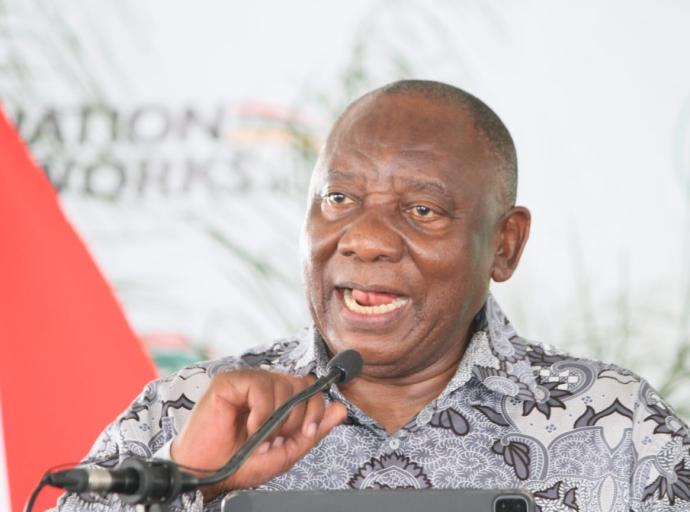
South Africa’s improving economic outlook and ongoing structural reforms are positioning the country as an increasingly attractive destination for global investors, President Cyril Ramaphosa said ahead of the sixth South Africa Investment Conference (SAIC) in Sandton this week.
More than 1,000 delegates from over 50 countries are expected to attend the conference, which has grown into a key platform for promoting investment opportunities since its launch in 2018.
Ramaphosa said the gathering comes at a time when “investors look to destinations that have demonstrated resilience in the face of increasingly volatile global financial conditions,” adding that, “South Africa presents a favourable proposition.”
The President pointed to signs of recovery in the domestic economy, including “four consecutive quarters of growth by the end of 2025,” stabilising national debt and rising employment levels.
He also highlighted improvements in investor confidence, noting that “our sovereign rating was upgraded for the first time in 17 years, and we were removed from the Financial Action Task Force grey list.”
Central to the country’s investment case, Ramaphosa said, is a broad programme of structural reforms under Operation Vulindlela, which has targeted key sectors such as electricity, logistics, water, telecommunications and the visa system.
“We have brought load-shedding to an end and are creating a new, competitive electricity market that will ensure energy security and attract investment,” he said.
In the logistics sector, government has moved to open up rail and port infrastructure to private sector participation.
Projects underway include the Ngqura Manganese Export Corridor in the Eastern Cape and the Richards Bay Dry Bulk Terminal in KwaZulu-Natal. A 25-year concession for Durban Container Terminal Pier 2, valued at R11 billion, was also concluded last year.
Ramaphosa said reforms to the visa regime, including the introduction of a Remote Work Visa and a Trusted Employer Scheme are aimed at attracting critical skills and boosting tourism.
Since the launch of the investment drive in 2018, government has exceeded its initial target, securing R1.57 trillion in pledges by 2024, 26% above its goal. More than 300 projects have been initiated, with 161 either completed or under construction.
“The pledges have not been merely vague commitments and promises, but have materialised as tangible, brick-and-mortar projects that are creating jobs for our people,” Ramaphosa said.
He cited major investments such as the Platreef Mine in Limpopo, backed by Ivanhoe Mines, and BMW’s R4.2 billion upgrade of its Rosslyn plant to produce hybrid vehicles, both of which originated from commitments made at previous conferences.
Looking ahead, government has set a new target of mobilising R2 trillion in investment by 2028, with a sharper focus on implementation rather than pledges.
“As we strive to achieve growth that creates jobs for our people, this next phase will move from pledges towards implementation,” Ramaphosa said.
He said that the conference represents a crossroads of opportunity and ambition, stressing that government remains committed “to staying the course on fiscal discipline, to accelerating the momentum of the reform agenda and to leveraging investment to build an economy that is inclusive, transformed and that benefits all.”