Free State Targets Surgical Backlogs
The three-day Cataract Marathon, held over the weekend at Boitumelo Regional Hospital in Kroonstad, was a great success, with over 100 patients receiving treatment.
Screening was conducted last week Friday with cataract operations scheduled for Saturday and Su...
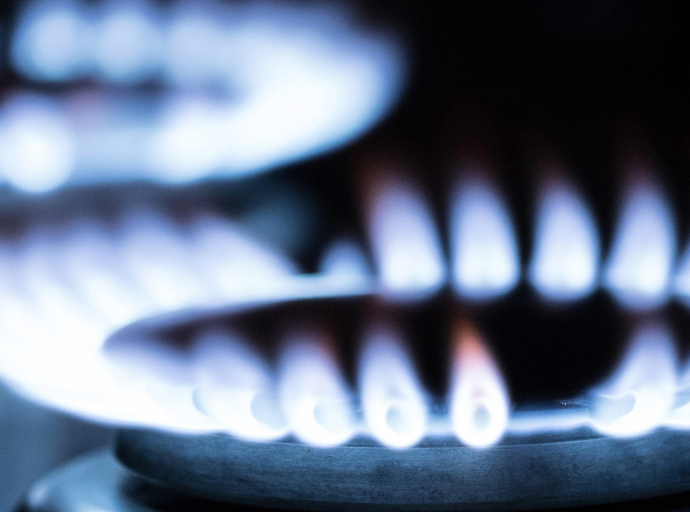
Members of Parliament’s Electricity and Energy Portfolio Committee, as well as stakeholders in this industry, have expressed concern about South Africa’s impending gas supply challenge which could take place in the middle of 2028.
Entities like the Central Energy Fund, Sasol, the South Africa Oil and Gas Association and Business Unity South Africa, presented on the ramifications of South Africa reaching the so called ‘gas cliff’, but also tried giving solutions to the problem.
The Central Energy Funds Chairperson, Ayanda Noah says South Africa’s current supply of natural gas which really comes from Mozambique, Pande and Temane fields, is approaching its end and we are looking at 2028, only three years away.
“We are approaching a major challenge when it comes to our energy supply chain, our industrial output, as well as the broad economic competitiveness .The importance of natural gas in our energy supply chain cannot be overstated because it is a key enabler of industrial production.”
Some stakeholders in the gas industry have painted a grim picture about the impending gas supply issue and referred to it as a ‘cliff’ that South Africa is facing.
The Portfolio Committee on Electricity and Energy was briefed on the matter.
Sasol explained how it planned to mitigate the impending gas cliff which is expected in June 2028.
Sasol says it plans to supply methane gas to industrial markets for 24 months beyond the June 2028 cliff.
All entities presenting to the committee agreed that the supply issue could be mitigated but rapid action was needed.
Jaco Human, representing one of the entities falling under Business Unity South Africa, painted a grim picture to MPs.
“Gas as we often refer to is essentially the Swiss army knife of energy. It can be many things for many applications. It can generate power, it can provide chemicals, it can provide liquid fuels, it can provide direct heating, it can provide power to the logistics sector.
It is really a multi-faceted energy type, which certainly warrants a deep look into the future and role of it in the South African economy.”
Even though South Africa’s economic growth slumped to 0.1% in the first quarter of the year, following a mere revised 0.4% gain in gross domestic product in the last quarter of 2024, economists said that the figure surprised to the upside.
Even though South Africa’s economic growth slumped to 0.1% in the first quarter of the year, following a mere revised 0.4% gain in gross domestic product in the last quarter of 2024, economists said that the figure surprised to the upside.
However, several economists have indicated that there is a downside risk to growth for this year.
Commenting on Statistics South Africa figures released on Tuesday, Dr Elna Moolman, Standard Bank Group Head of South Africa Macroeconomic Research, said that the number “marginally” surprised to the upside. She attributed this to a “very strong performance in the agricultural sector”.
“This is a relief but at the same time it doesn't entirely remove our concerns around downside risks to this year's growth. Of course, the first quarter was characterised by exceedingly high uncertainty stemming from both global and domestic factors and we are expecting some improvement in growth over the course of this year,” Moolman said.
Investec economist, Lara Hodes, noted that the figure was slightly above Bloomberg’s consensus. “The outcome is reflective of a highly subdued economy, which continues to face a number of challenges, with business confidence weak, weighing on investment potential,” she added.
Concurring that the GDP numbers were “a touch better than feared,” was Old Mutual chief economist, Johann Els. He said he had expected a contraction of 0.1%.
“Be that as it may, it's still a very weak number, mostly due to significant weakness in mining, manufacturing production in the first quarter. And as a result of those, electricity production was also pretty weak,” Els said.
Manufacturing declined 2% as a sector, while the mining and quarrying industry decreased by 4.1%, with the largest negative contributors being the platinum group metals industry.
Both manufacturing and mining are key economic growth drivers, with manufacturing accounting for almost 13% of GDP in 2023, and mining worth 6% of economic activity in the same year.
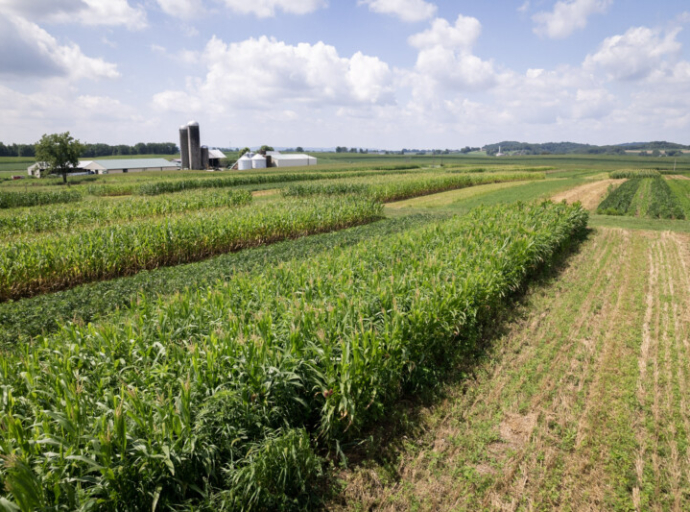
Outside the agricultural sector, Moolman noted that the “economy was generally quite weak with more than half of the economic sectors contracting relative to the previous quarter”. Els added that the growth in agricultural was a “positive surprise versus my expectation,” given that it is a volatile sector.
Dr Azar Jammine, director and chief economist at Econometrix, stated that the figures, were not as bad as expected, while adding that the industrial sector “really appalling”. He explained that “deindustrialisation is just carrying on regardless”.
Hodes added that expectations for GDP growth this year have eased. “The extent of the effect of global trade policies on investment and growth remain uncertain,” she said. She also said that hastened implementation of key reforms is imperative to boost confidence and accordingly growth.
The move bans all travel to the United States by nationals of Afghanistan, Myanmar, Chad, Republic of the Congo, Equatorial Guinea, Eritrea, Haiti, Iran, Libya, Somalia, Sudan and Yemen.
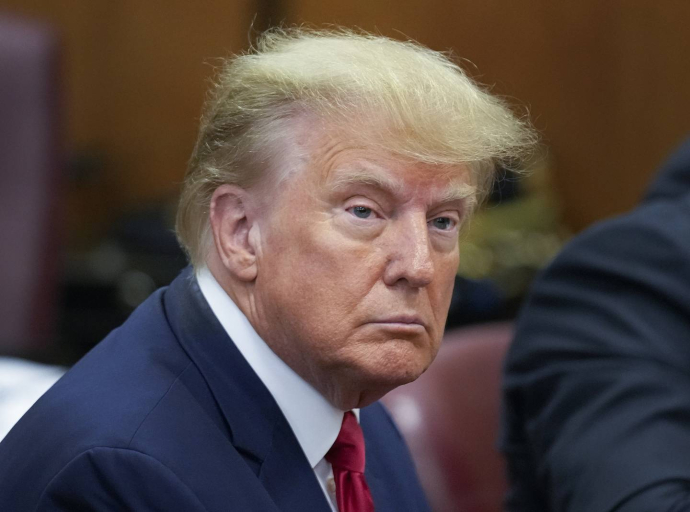
US President Donald Trump signed a new travel ban Wednesday targeting 12 countries including Afghanistan, Iran and Yemen, reviving one of the most controversial measures from his first term.
Trump said the measure was spurred by a makeshift flamethrower attack on a Jewish protest in Colorado that US authorities blamed on an man they said was in the country illegally.
The move bans all travel to the United States by nationals of Afghanistan, Myanmar, Chad, Republic of the Congo, Equatorial Guinea, Eritrea, Haiti, Iran, Libya, Somalia, Sudan and Yemen.
Trump also imposed a partial ban on travelers from seven countries: Burundi, Cuba, Laos, Sierra Leone, Togo, Turkmenistan and Venezuela. Some temporary work visas from these countries will be allowed.
The bans go into effect on Monday, the White House said.
"The recent terror attack in Boulder, Colorado has underscored the extreme dangers posed to our country by the entry of foreign nationals who are not properly vetted," Trump said in a video message from the Oval Office posted on X.
"We don't want them."
The ban will however not apply to athletes competing in the 2026 World Cup, which the United States is co-hosting with Canada and Mexico, as well as the 2028 Los Angeles Olympics, Trump's order said.
Trump separately on Wednesday announced a ban on visas for foreign students who are set to begin attending Harvard University, ramping up his crackdown on what he regards as a bastion of liberalism.
The US leader compared the new measures to the "powerful" ban he imposed on a number of mainly Muslim countries in his first term, which caused travel disruption across the world.
Trump said that 2017 ban had stopped the United States from suffering terror attacks that happened in Europe.
"We will not let what happened in Europe happen in America," Trump said.
"We cannot have open migration from any country where we cannot safely and reliably vet and screen."
Venezuela hit back by warning that the United States itself was a dangerous destination.
"Being in the United States is a great risk for anyone, not just for Venezuelans," Venezuela's Interior Minister Diosdado Cabello said after the announcement, warning citizens against travel there.
Trump's new travel ban could, however, face legal challenges, as have many of the drastic measures he has taken in his whirlwind return to office.
'TERRORISTS'
The White House unveiled the new ban with virtually no warning, minutes after Trump had addressed some 3,000 political appointees from his balcony at a celebratory "summer soiree."
Trump also made the announcement with no reporters present, an unusual move after sharing many of his most headline-grabbing policy announcements at signing ceremonies in the Oval Office.
But rumors of a new Trump travel ban had circulated following the attack in Colorado, with his administration vowing to pursue "terrorists" living in the US on visas.
Suspect Mohammed Sabry Soliman, an Egyptian national according to court documents, is alleged to have thrown fire bombs and sprayed burning gasoline at a group of people who had gathered on Sunday in support of Israeli hostages held by Hamas.
US Homeland Security officials said Soliman was in the country illegally, having overstayed a tourist visa, but that he had applied for asylum in September 2022.
"President Trump is fulfilling his promise to protect Americans from dangerous foreign actors that want to come to our country and cause us harm," White House Deputy Press Secretary Abigail Jackson said on X.
Trump's proclamation gave specific reasons for each country in his proclamation, which says it is aimed at protecting the United States from "foreign terrorists and other national security" threats.
Notably, Egypt was not on the list of countries facing travel restrictions.
For Taliban-ruled Afghanistan and war-torn Libya, Sudan, Somalia and Yemen, it said they lacked "competent" central authorities for processing passports and vetting.
Iran, with which the United States is in negotiations on a possible nuclear deal, was included as it is a "state sponsor of terrorism," the order said.
"The impact of the ban will once again be felt by Americans who were denied the ability to see their loved ones at weddings, funerals, or the birth of a child," said National Iranian American Council president Jamal Abdi.
For most of the other countries, Trump's order cited an above average likelihood that people would overstay their visas.
*This article was first published by Eye Witness News
The department said this was necessary while it finalised the basic income grant policy, which has been reviewed again by the department, despite frustrations from members of Parliament (MPs).
The Department of Social Development wants the Social Relief of Distress (SRD) grant to be extended beyond March 2026, despite Treasury's intentions to stop the welfare initiative.
The department said this was necessary while it finalised the basic income grant policy, which has been reviewed again by the department, despite frustrations from members of Parliament (MPs).
Department officials and Minister Sisisi Tolashe briefed the social development portfolio committee on Wednesday on the progress made in finalising the long-awaited universal grant for all poor South Africans.
The basic income grant policy has been in the making for several years and aims to provide monthly financial support to citizens who qualify.
The Department of Social Development told Parliament that the policy was still in the making, and it could be a year before legislation on the policy was developed.
Deputy Director-General Brenda Sibeko said until such time that the basic income grant policy was finalised, the SRD grant must be extended beyond March 2026.
"So, we will also, in the process of doing the legislation, need the SRD grant to continue. So, in that regard, we will ask Treasury again to extend the SRD so that there isn’t a break in that income support while the policy process is underway."
She said the policy would also link beneficiaries with economic opportunities so that they did not just rely on the basic income grant.
*This article was first published by Eye Witness News
South African Finance Minister Enoch Godongwana said he is waiting for a report on the country’s inflation-targeting dispensation, and he hasn’t decided whether it should be adjusted.
“I do not have any views at the moment,” Godongwana said in an interview in Cape Town on Wednesday.
“All I do know is that there is a standing committee between ourselves and the Reserve Bank, and one of the matters they are discussing is the level of the inflation target.
“In the absence of a report tabled before us, we can’t form an opinion.”
The central bank’s 3% to 6% inflation target hasn’t been changed since it was introduced in 2000. Its governor, Lesetja Kganyago, favours shifting to a single-point target and has said that aiming for 3% would lead to lower interest rates than otherwise would be the case.
South Africa’s annual inflation rate was less than 3% in March and April, and the central bank last week said it expects it to average 3.2% this year and 4.2% in 2026. The bank aims to anchor inflation expectations around the midpoint of its target range
Godongwana didn’t specify when he expects the panel that is reviewing the framework to complete its work.
“Once we get that report, we will form an opinion and issue the appropriate statement,” he said.
S&P Global Ratings Director Ravi Bhatia said a lower target would be good for South Africa’s economy and government finances.
“The benefits from a rating point of view would primarily be the cost of government borrowing would go down and the cost of credit in the wider economy would go down, which would mean faster growth and more investment,” he said at a conference in Johannesburg on Wednesday.
A lower target would also help bring down interest rates over the medium and long term, he added.
Deputy President Paul Mashatile traveled to Japan in March 2025 to strengthen the work-affiliated ties between the two countries but his overall expenditure on these international trips is what is making the headlines.
The deputy president was questioned by a member of parliament of ActionSA, Lerato Ngobeni who requested a complete breakdown of the deputy president’s traveling expenses from the time he stepped into office in July 2024. The deputy president disclosed that he spent R2.3 million of hard-earned taxpayer’s money in Japan which is additional to the R5 million he further spent in Ireland and the United Kingdom, including a R2 million tab that was left at a London hotel- all coming from the ordinary taxpayer’s pocket.
These expenses included flights for not only himself but also his wife, accommodation, ground transport, restaurant services, and laundry costs. To date, Mashatile had four international trips that amounted to approximately R7.7 million. Mashatile confirmed that these four trips were for working visits to Ireland and the United Kingdom in September and October 2024 and to represent President Cyril Ramaphosa at the inauguration of Botswana’s President Duma Boko in November 2024. Attending an extraordinary SADC Summit in Harare, Zimbabwe, also in November 2024, and a recent working visit to Japan in March 2025.
An article by the George Herald elaborated that the deputy president’s Ireland and UK working visits cost the country R5 475 829.03, while the Botswana inauguration cost R52 867.58 and the Zimbabwe SADC Summit cost R56 166.20.
Mashatile’s recent trip in March 2025 to Japan alone cost R2 319 138.19, bringing the total expenditure for all four trips to approximately R7 903 901. Although a detailed response was provided, Mashatile’s response in parliament mainly focused on his Japan trip from 16-19 March 2025.