Free State Targets Surgical Backlogs
The three-day Cataract Marathon, held over the weekend at Boitumelo Regional Hospital in Kroonstad, was a great success, with over 100 patients receiving treatment.
Screening was conducted last week Friday with cataract operations scheduled for Saturday and Su...
As South Africa heads into the 2025 winter season, the South African Medical Association (SAMA) and international health experts are raising awareness about rising flu cases and emerging COVID-19 Omicron subvariants, including NB1.8.1, currently detected in multiple countries.
SAMA chairperson, Dr Mvuyisi Mzukwa, clarified in a recent interview with Newzroom Afrika that while there is no formal call to reintroduce mask mandates, precautionary measures remain important.
He said, “If you have symptoms, whether flu symptoms or similar symptoms, it’s always good to protect those that are around you by putting on a mask, but making sure that you don’t attend gatherings, large gatherings, if you have flu symptoms.”
The new COVID-19 variants are being closely monitored worldwide, with the World Health Organisation classifying NB1.8.1 as a variant under observation, said Mzukwa.
“We’re looking at its spread, its severity, but it’s early days. There’s nothing to worry about at the moment,” Mzukwa said.
He said while COVID-19 continues to circulate at low, endemic levels in South Africa, the main concern remains protecting vulnerable individuals, particularly those with underlying health conditions.
The alarm would only be raised if hospitalisations increase or healthcare facilities come under significant pressure.
Addressing pandemic fatigue, Mzukwa highlighted the importance of ongoing public education: “It is critical for the medical association and other organisations to continue educating the public, not to make them panic, but to say there is this that we’re facing.”
He also stressed the importance of vaccination, especially for flu: “It is very important that we encourage communities to get vaccinated, especially for flu, so that if you are in a vulnerable group, you can be protected against severe illness.”
With flu season in full swing, Mzukwa urged responsible behavior to limit the spread: “If your child has flu symptoms, don’t send them to school. You need to protect other children, especially those with underlying medical conditions.”
He reminded the public that masks are not just for COVID: “Masks were not only meant for COVID. It was also meant for the flu. If you’ve got flu symptoms, you protect other people in the workplace and the community.”
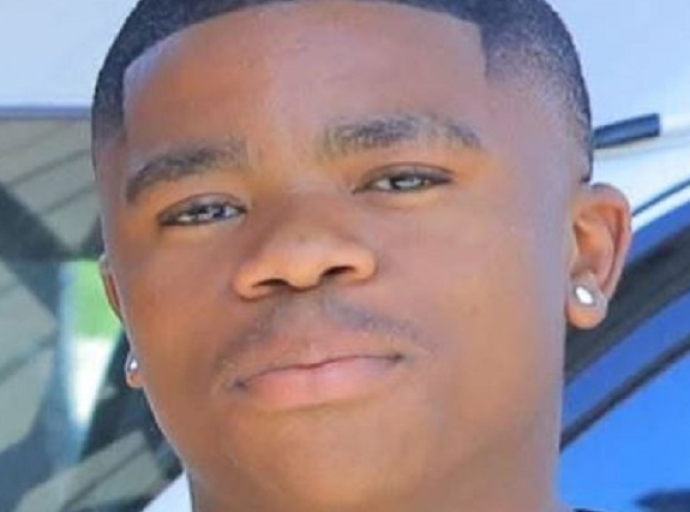
A 42 year old police Sergeant has been detained and taken in for questioning in regards to the kidnapping of 19 year old Kamogelo Baukudi by Free State’s South African Police Service (SAPS) and will appear in the Bloemfontein Magistrate’s Court soon due to affiliation with this case.
Provincial Commissioner of the Police, Lieutenant General Baile Motswenyane confirmed that the police Sergeant has been detained and added that the ongoing investigation has now entered a very crucial phase. “The involvement of any SAPS member in criminal acts will not be tolerated. Culprits will be held accountable, even if they are within our own ranks,” Motswenyane said.
Baukudi was kidnapped on June 5 on his way home from Martie du Plessis School. “SAPS continues to prioritise his safe return as a matter of utmost urgency,” Motswenyane concluded and appealed for public assistance.
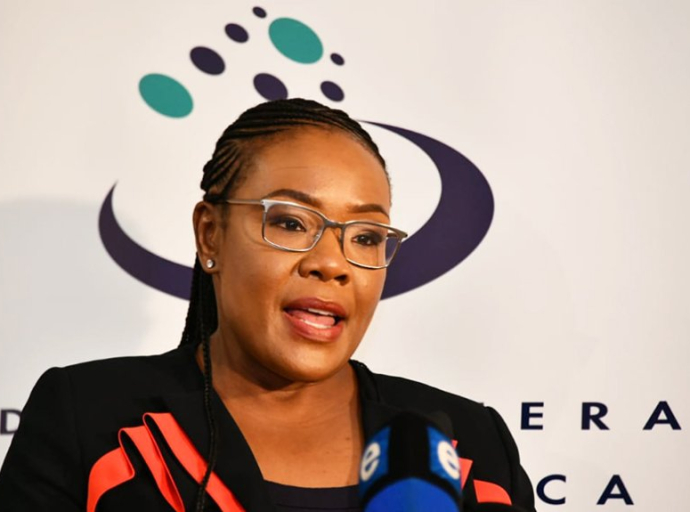
Auditor-General of South Africa (AGSA), Tsakani Maluleke, has strongly denied allegations of corruption involving some of its auditors in the Free State province, following claims brought forward by ActionSA.
ActionSA stated it had received reports from whistleblowers alleging that senior AGSA officials in the province colluded with employees and consultants from Centlec—a municipal electricity distributor—to manipulate audit outcomes.
The allegations suggest that audit reports were deliberately altered to conceal evidence of widespread financial mismanagement and fraud within the Mangaung Metropolitan Municipality.
Maluleke responded firmly, defending the integrity of the institution and its auditing processes.
She emphasised that AGSA audits were conducted under rigorous internal and external review mechanisms, designed to uphold the highest ethical and professional standards.
“They also undergo strict independent quality reviews by independent industry regulators such as the Independent Regulatory Board for Auditors (IRBA),
“In line with International Standards on Auditing (ISA) that we adhere to, our audit processes are such that no single person can conclude and audit alone, as there are several stringent internal and external review mechanisms that all our auditors must adhere to,” she said.
There is currently no evidence to support claims of collusion between AGSA auditors in the Free State and municipal officials, Maluleke stated.
“We therefore call on those who have concrete evidence of impropriety to submit it through our complaints process to enable the AGSA to investigate it,” she said.
Additionally, the auditor-general pointed out that the accusations first surfaced on social media in 2024.
AGSA immediately initiated an internal assessment and informed the appropriate municipal authorities of its findings.
AGSA reaffirmed its constitutional mission to audit public sector organisations without fear or favour, as well as its dedication to accountability and openness.
“We therefore call on those who have concrete evidence of impropriety to submit it through our complaints process to enable the AGSA to investigate it,” the statement read.
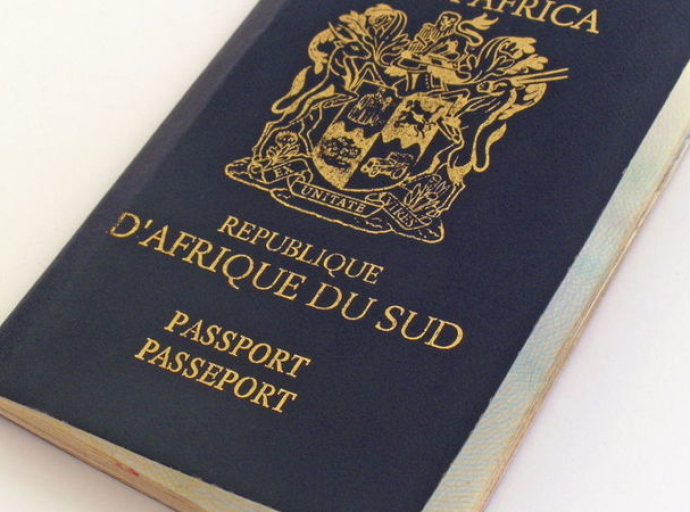
The anti-migration regulations in Europe and the US against Africans continue to affect the sociopolitical and economic development of Africa. Thousands of Africans who apply for visas continue to have their applications rejected.
Moreover, most Africans are charged exorbitant non-refundable fees when applying for visas. Millions in foreign and local currencies are accumulated by European and US embassies in various African countries from visa applications annually. African visa applicants face more severe restrictions compared with applicants from other regions, resulting in a disproportionately high rejection rate.
In 2022, Africa topped the list of rejections with 30% or one in three of all processed applications being turned down, even though it had the lowest number of visa applications per capita.
Africa accounted for seven of the top 10 countries with the highest Schengen visa rejection rates in 2022: Algeria (45.8%), Guinea-Bissau (45.2%), Nigeria (45.1%), Ghana (43.6%), Senegal (41.6%), Guinea (40.6%) and Mali (39.9%). The situation has become worse over the years as economic instability and conflicts continue to rage in most African countries.
Some African countries have started calling for visa reciprocity against travellers from Europe and the US. The US and most European countries do not require visas to enter African countries.
According to Justice Malala, a South African political analyst, in May, Namibia unveiled measures to impose entry visa requirements to more than 30 countries that have not reciprocated its open visa regime. Nigeria has threatened to impose the same measures. In the run-up to the French election earlier in July, a Chadian official told France’s Le Monde newspaper that if incoming leaders block visas for Chadians, “we will apply reciprocity”.
Zambia’s President Hakainde Hichilema recently raised the issue of non-refundable visa fees in his country, demanding the rules on non-refundable fees be re-examined and the visa application fees be refunded to Zambians whose applications are rejected. If his demand is accepted, this must apply to all African countries.
According to European states, most rejections are based on “reasonable doubts about the visa applicants’ intention to return home”. Many Africans believe otherwise.
They claim that African visa rejections are weaponised against Africans to deprive them of voices at critical political and socio-economic gatherings on global matters such as climate change, artificial intelligence, human trafficking in Europe and the US. These discussions eventually become policies that affect Africa.
An increased number of leading Africans on these subjects continue to have their applications rejected. These do not sound like people who present “reasonable doubts about the visa applicants’ intentions to return home”.
African News reports that African governments are building partnerships with Europe across sectors, trade, education, and technology. But the barriers to movement stand in stark contrast to the rhetoric of cooperation.
The rise of right-wing politics in many parts of the world has also further complicated matters for African visa applicants. Pressure from far-right parties who are in power in half a dozen member states in Europe are outdoing each other in introducing tough anti-immigration measures.
US President Donald Trump has just imposed travel bans on 12 countries, of which seven are African — Chad, Congo-Brazzaville, Equatorial Guinea, Eritrea, Libya, Somalia and Sudan. Travel restrictions will be imposed on people from Burundi, Sierra Leone, and Togo.
Even before this measure, Trump’s anti-migration political campaign and his subsequent extra-judicial expulsion of immigrants without due process now that he is in power has emboldened right-wing anti-migration politics throughout the world.
The victory on Monday of the nationalist historian Karol Nawrocki in Poland’s presidential election is one case in point. Nawrocki is an admirer of Trump who support by calling for tighter immigration controls and championing conservative social values in the EU.
The BBC reports that Trump’s administration can temporarily revoke the legal status of more than 500,000 migrants living in the US, the US Supreme Court ruled recently.
The ruling puts on hold a previous federal judge’s order stopping the administration from ending the “parole” immigration programme, established by former president Joe Biden. The programme protected immigrants fleeing economic and political turmoil in their home countries. The new order puts roughly 530,000 migrants from Cuba, Haiti, Nicaragua and Venezuela at risk of being deported.
It is not just the rejection of visa applications that is troubling; the non-refundable visa application fees continue to negatively affect applicants’ financial status. According to the London-based research and arts organisation LAGO Collective, African countries have lost an estimated $67.5 million in non-refundable Schengen visa application fees since 2024.
Africans find themselves going against the tide in a globalised world where mobility equates to opportunity. They are finding themselves locked out “not because they lack intention or preparation, but because the system increasingly seems stacked against them”.
This matter deserves a wider discussion, preferably at the African Union.
The visa rejections of Africans are not only about Africans overstaying their allowed time in Europe and the US. It is about Europe and the US continuing with business as usual, particularly at multilateral level, where binding discussions without the involvement of Africans are taken. This is particularly the case regarding rare earth minerals and other metals essential to new technologies.
*This article was first published by Mail & Guardian
According to the City of Cape Town’s disaster risk management centre, Friday night’s blaze gutted about 45 homes in the area.
More than 140 people have been left destitute after a devastating fire ripped through Silvertown, Khayelitsha.
According to the City of Cape Town’s disaster risk management centre, Friday night’s blaze gutted about 45 homes in the area.
Emergency response teams have since been deployed to assist those affected by the fire.
Spokesperson Charlotte Powell said the names of those displaced will be submitted to SASSA and the national Department of Human Settlements for additional support and relief.
“City departments have been activated to clear the debris and restore any municipal infrastructure and services affected by the incident. Humanitarian relief will be provided by The Salvation Army and Gift of the Givers.”
*This article was first published by Eye Witness News
In the world of politics and power, a sinister game of cat and mouse is unfolding.
Behind the façade of journalistic inquiry, a group of individuals had been secretly leveraging their media influence to extort concessions and favours from politicians and officials..
Armed with fake press credentials and a talent for manipulation, these fake journalists have built a lucrative racket, trading silence and spin for business deals and contracts.
But as their scheme began to unravel, the stakes grew higher, and the players found themselves in a deadly game of corruption and survival.
“They must be arrested”, shoutedMEC for Police Roads and Transport Jabu Mbalula during a media briefing hosted by Free State Premier MaQueen Letsoha-Mathae on Wednesday afternoon at Imvelo Safari Lodge.
When asked if she is aware, Letsoha-Mathae said she is a victim.
She says she has found herself as a victim of scammers pretending to be people who need help.
“ I once received a Facebook message where someone asked for money and a laptop.
“I indeed helped but unfortunately this person was a scammer.
“ So we are aware of this conduct, because every time we help people they come and threaten us, trying to extort money or business favours.
“ When we are unable to assist they threaten us that they will go to the media, said the Premier.
But the Premier was not alone in this, MEC for Treasury Toto Makume, added that these criminals must know that the government is not a banana republic.
He says he is also aware of this.
“ It must be known that we will not succumb to any kind of threats and illegal acts, Makume said.
Makume said those individuals will be found and they will be arrested.