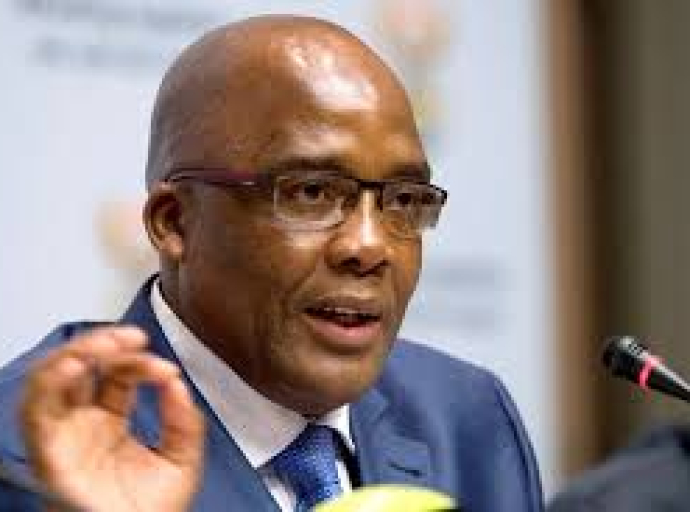
Free State Targets Surgical Backlogs
The three-day Cataract Marathon, held over the weekend at Boitumelo Regional Hospital in Kroonstad, was a great success, with over 100 patients receiving treatment.
Screening was conducted last week Friday with cataract operations scheduled for Saturday and Su...
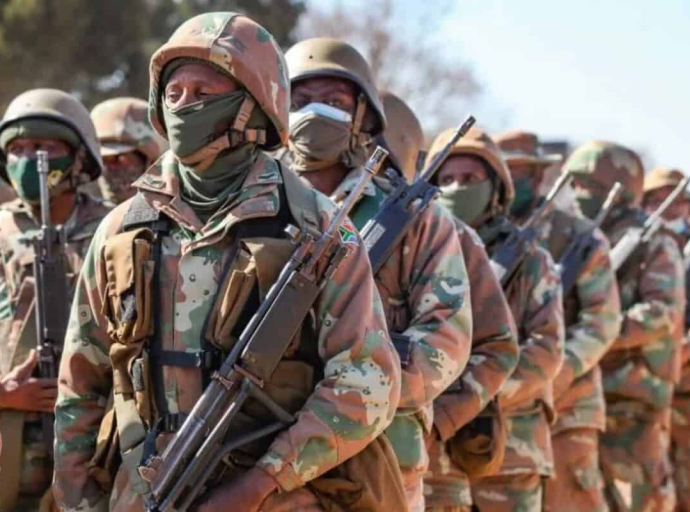
The SANDF has been part of the Southern African Development Community (SADC) mission in Congo to restore peace and security in the Eastern parts of DRC,
But M23 and other groupings have since captured swathes of land in the DRC.
The SADC leaders decided to withdraw the mission to give peace talks a chance.
The withdrawal of the SADC mission in the DRC has been conducted in a structured manner to ensure the safe return of SA troops and their military equipment.
It’s been a delicate process as they travelled with their armaments from Goma and Sake in Eastern DRC via Rwanda to Tanzania in Chato, which has been designated as the assembly location.
They are expected to arrive at Air Force Base Bloemspruit in Bloemfontein and the estimated time of arrive is 12h00 (CAT) midday on Friday.
The troops will be welcomed by the Defence and Military Veterans Minister Angie Motshekga alongside the members of the Military Command Council.
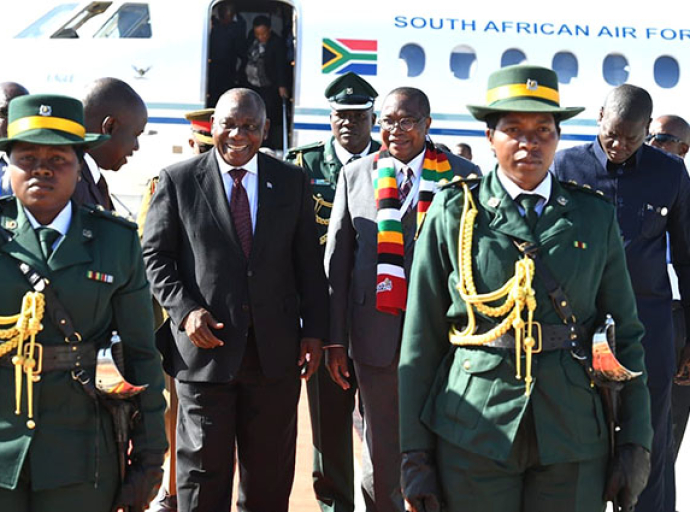
The Department of International Relations and Cooperation (Dirco) says Home Affairs is still checking and verifying if there are any South African nationals among the 14 people arrested in Zimbabwe for allegedly crossing the border illegally.
Dirco head of public diplomacy Clayson Monyela told Sunday World this week that his department has asked Home Affairs to verify the nationality of the 14 people arrested.
Monyela said once Home Affairs has verified the nationality of the 14 arrested people, then that will determine how Dirco responds to the matter.
Zim agency confirmed arrests
According to various media reports this month, the Zimbabwe Human Rights Commission said 14 South Africans have recently been detained in Zimbabwean jails. It said out of the 14 arrested South Africans, 11 are male and three are female.
The commission said the majority of the South Africans have been held for crossing the border illegally or illegal migration.
“What we know is that they [Zimbabwe police] have arrested about 14 people. We should not call them South Africans because we do not know that yet. Their nationality is yet to be determined. We have asked Home Affairs to confirm if the arrested people are South Africans or not. Once we get confirmation of the nationalities, it will determine our level of involvement in this matter,” said Monyela.
“We have noted that the people arrested are apparently in line to be deported from Zimbabwe. Apparently there is an issue of a possible overstay in Zimbabwe and other matters. If you are in one of the SADC member countries, you do not need a Visa. All you need is a passport and then you are fine. It [arrests] would not be a Visa-related issue. It is unclear why they were arrested.
Home Affairs still verifying matter
“Home Affairs is still checking if the people arrested are South Africans. Once that is determined, we will state what we are going to do to take the matter forward. We do not know who they are,” said Monyela.
Monyela was asked how long it will take Home Affairs to verify the nationalities of the arrested 14 people.
“It is difficult to put a timeline on a process like this. Home Affairs is busy with that process,” he said.
Minister’s spokesperson clarifies law
Meanwhile, when asked if Dirco Minister Ronald Lamola was aware of the alleged arrests, Lamola’s spokesperson, Chrispin Phiri, said South Africa does not bypass another country’s legal processes.
“As you may know, when a sovereign state finds that any individual has violated its sovereign laws, it is a matter between that state and the accused people. Therefore, an expectation that South African government must circumvent the legal processes of another country is not justifiable,” said Phiri.
Eskom said that it could avoid load shedding this winter if it kept breakdowns below 13,000MW, but new data shows that South Africa has exceeded this for the past two months, and continues to do so.
This means that the country is walking a fine edge, with experts warning that load shedding could hit at very short notice.
In it latest power alert, Eskom noted that unplanned outages averaged 14,644MW from 30 May to 5 June 2025, representing an increase of 2,315MW compared to the same period last year.
Worryingly, this is 1,644MW above Eskom’s base case of 13,000MW in unplanned outages for winter.
Delivering its winter outlook for 2025, Eskom said its base case for the winter period was no load shedding.
However, it warned that, should demand exceed the expected outage limit of 13,000MW, the country could experience 21 days of stage 2 load shedding in the “worst-case” scenario.
Despite the worst case not being the ‘expected’ case, operational failures at Eskom in the first few months of the year showed that circumstances can change quickly and load shedding can kick in with little warning.
Between January and April, South Africa experienced five ’rounds’ of load shedding, which typically followed the loss of multiple units across key power stations.
Notably, this was counter to Eskom’s summer outlook, which anticipated no load shedding over the period, and stage 1 load shedding at worst.
Instead, the country saw 14 days of load shedding between stage 2 and stage 6. Similarly, Eskom’s winter plan of no load shedding has already fallen flat.
Load shedding hit in May for three days—from 13 to 15 May—which was contained to a total of 18 hours of outages at stage 2 during evening peaks.
The latest Electricity Update from the Minerals Council South Africa (MCSA) tells a more positive story.
The group noted that Open-Cycle Gas Turbine (OCGT) usage declined during the month, and planned maintenance was cut by over 1,500MW, contributing to an improvement in energy availability (EAF).
EAF improved in May, rising by nearly three percentage points to 59.3%, as maintenance downtime was cut.
“This is in line with the normal seasonal pattern where Eskom reduces planned maintenance in the colder winter months when residential electricity demand is higher,” said MCSA chief economist André Lourens.
However, Lourens pointed out that unplanned outages (breakdowns), while remaining relatively stable, averaged around 13,500 MW on average in May, and around 15,223 MW in April.
Eskom said that for the financial year to date, average unplanned outages stand at 13,760MW.
“The increase in unplanned outages is largely driven by outage slips,” it said.
Worryingly, this is above Eskom’s 13,000 MW threshold, which is needed to avoid all load shedding stages in winter.
The MCSA also flagged that both planned and unplanned outages remained elevated compared to 2024, despite the improved EAF.
Regardless, Lourens noted that May 2025 reflected a “modest but encouraging” improvement in South Africa’s electricity supply performance.
The uptick in EAF to 59.3% was supported by reduced planned maintenance and lower reliance on costly OCGTs.
“This suggests that Eskom is gaining some traction in its Generation Recovery Plan, and comes at a critical time, with winter demand pressures mounting,” he said.
However, he warned that the underlying fragility of the system remains.
“Load shedding was contained to three days in May, but the fact that it re-emerged, even if limited, serves as a reminder of ongoing generation constraints.”
The fact that breakdowns are exceeding the 13,000MW target set by Eskom is also worrying, he said.
Eskom has admitted that the grid remains strained but stable. According to the utility’s latest 52-week outlook, load shedding remains a risk in the weeks to come.
The generation adequacy report shows that the greatest risk of a 2,001MW shortfall in meeting demand lies between 16 June to 20 July.
While not exact, losing more than 2,000MW of generating capacity would necessitate at least Stage 2 load shedding, aligning with Eskom’s Winter Outlook for 2025.
Despite the pressure on the national grid, Eskom insists that it is stable for now.
DA Federal Chairperson Helen Zille, who is considering running for Johannesburg Mayor, said it is crucial to stop Johannesburg’s collapse to drive South Africa forward.
She told Biznews that the Gauteng metros, Johannesburg, Ekurhuleni, and Tshwane, are South Africa’s economic heartland and that the country will stand or fall based on their state.
Johannesburg, the wealthiest and most important of the three metropolitan areas, has been suffering due to a lack of service delivery.
The city’s residents and businesses regularly experience prolonged water and electricity outages, surging crime, collapsing road infrastructure, and general service failures.
Most of Johannesburg’s challenges are self-inflicted, stemming from years of municipal mismanagement, corruption, and inadequate maintenance.
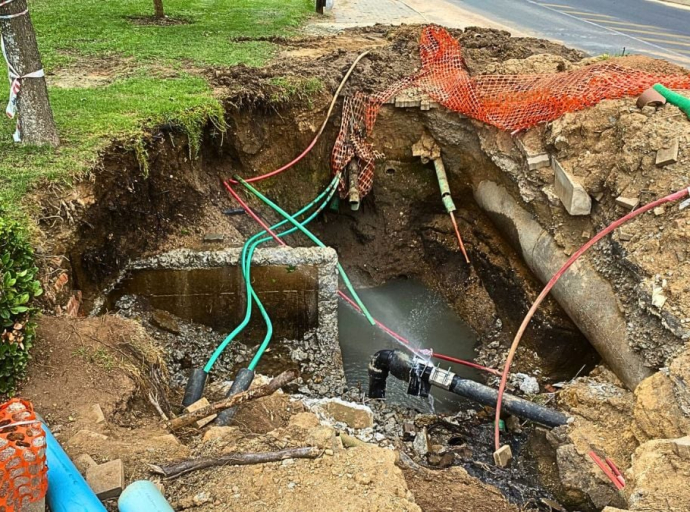
The city’s water crisis is a good example. It has been looming for years, with little maintenance on water infrastructure and poor planning to ensure adequate supply for a growing population.
A report showed that City of Johannesburg has approximately 2,396 burst pipes, 6,727 leaking meters, 442 leaking valves, and 259 leaking fire hydrants.
Even more concerning is that of the city’s 80 reservoirs, around 42 are leaking, and only 11 are being repaired.
Johannesburg needs approximately R26 billion to halt the collapse of its water infrastructure. Billions more are required to upgrade the system to cope with its growing demand.
The city is also struggling with a crumbling electricity infrastructure. Residents experienced an increase in electricity outages despite the decline in load-shedding.
The City of Johannesburg’s electricity problems include ageing infrastructure, lack of maintenance, and cable theft.
It does not stop at infrastructure collapse. In April 2025, the long-standing dispute between Eskom and the City of Johannesburg over unpaid electricity bills reignited.
It has reached such concerning levels that Eskom is threatening to resume power cuts due to non-payment of arrears.
In November 2024, Eskom stated that the city had an outstanding debt of R4.9 billion and an additional R1.4 billion in current charges.
The city’s road infrastructure is also collapsing, with thousands of potholes and broken traffic lights causing traffic congestion and other problems for motorists.
In February 2025, the Johannesburg Roads Agency (JRA) stated that the city requires R70 million to repair its malfunctioning traffic lights and replace those that have been stolen.
The JRA’s acting head of mobility and freight, Sipho Nhlapo, said 396 traffic lights in the city are vandalised. Of these, approximately 202 are still functional, while the remaining 194 are not operational.
Johannesburg mayor Dada Morero’s Bomb Squad
Last week, Johannesburg mayor Dada Morero launched his ‘Joburg Bomb Squad (JBS)’, a specialised unit to tackle ‘crime and grime’ in the city.
Morero said the unit will employ a precinct approach to combat lawlessness, address service delivery bottlenecks, and expedite service delivery over two years.
It includes fixing potholes, cutting grass, repairing traffic lights, stopping illegal refuse dumps, repairing streetlights, preventing sewerage spillages, and formalising informal settlements.
The Organisation Undoing Tax Abuse (OUTA) and the Johannesburg Community Action Network (JoburgCAN) said they have heard this all before.
They said Morero’s 2025 State of the City Address lacked credible plans, timelines, or consequences, leaving residents with more promises and no delivery.
“We’ve heard these promises before,” said OUTA executive Julius Kleynhans. “Meanwhile, the lived reality for residents and businesses in the city continues to deteriorate.”
It includes water outages, unreliable electricity supply, uncollected waste, crumbling roads, and traffic chaos. “This is systemic failure, not just a service glitch,” he said.
Although Morero conceded to widespread failures in core services, it lacked detailed plans, clear timelines, budget allocations, and performance targets to reverse the decline.
“Residents are fed up. Projects stall halfway, billing systems remain broken, and administrative bloat delivers very little. The failure to fix the basics signals a city in paralysis,” Kleynhans said.
He said Morero sidestepped the root causes of Johannesburg’s collapse: unstable coalitions, executive turnover, and cadre deployment that favours loyalty over competence.
JoburgCAN Regional Manager Julia Fish says Johannesburg’s residents and businesses are beyond frustrated.
“Water outages are daily disruptions. Illegal dumping sites are multiplying. Roads are dangerous. Traffic lights don’t work. People are tired of watching their city deteriorate,” she said.
She said the absence of clear implementation strategies raises concerns about the administration’s capacity to effect meaningful change.
Helen Zille wants to fix Johannesburg
Democratic Alliance’s (DA) Federal Council Chairperson, Helen Zille, is considering running for Johannesburg mayor to fix the city.
Although she has not made a final decision on whether she will run, she said she was leaning towards this option.
Zille said she loves Johannesburg and is dismayed by what is happening to the city, including the area where she was born, Hillbrow.
“I was born in Johannesburg and grew up there. I have very deep roots and unfinished business in Johannesburg,” she told Newzroom Africa.
“From that point of view, I would be keen to roll up my sleeves and get things done in the City of Johannesburg.”
Another significant factor that is drawing her to run for mayor is that Johannesburg is South Africa’s financial and economic capital.
She said nobody will invest in a city with widespread water outages, potholes in the roads, malfunctioning traffic lights, an unstable electricity supply, and escalating crime.
Unless this situation is fixed, Johannesburg’s economy will continue to unravel and eventually collapse.
She said her first objective will be to stabilise the finances. “Johannesburg has a capital infrastructure backlog of R200 billion, and the entire city’s budget is R86 billion,” she said.
Her task would be to stop the rot in the city and turn the ship around, then hand it over to her successor to move forward with what she had started.
Zille explained that fixing Johannesburg will take a whole-of-society approach. She sees civil society as a crucial partner in this process.
“Every individual who is decent, pays their rates and taxes, and holds the government to account for its performance is a valuable resident and citizen,” she said.
She wants these residents to stay in Johannesburg and help them fix it, adding that a brain drain is the last thing the city needs.
“We need people to return from abroad and put their shoulder to the wheel in South Africa’s economic heartland.”
The skills of the Johannesburg City Council will also be fundamental. This includes appointing the right people in the correct positions who are capable of doing the job.
Health Minister Aaron Motsoaledi is urging the public to continue regular hygiene and safety measures amid a new Covid variant detected in Asia.
Speaking at the 4th G20 health working group meeting held in Johannesburg on Tuesday the minister detailed that the new Covid variant has only been detected in parts of Asia.
The National Institute for Communicable Diseases (NICD) said there are no signs of an increase in severity or different symptoms.
Motsoaledi said that they will continue to monitor the variant closely and report any significant changes.
"At this stage, no specific new public health actions are required from the public. But we continue to advocate for maintaining good hygiene practices such as hand washing, covering coughs and staying home when unwell. These simple measures are effective in reducing the spread of all respiratory illnesses,” said Motsoaledi.
Meanwhile, the NICD has confirmed that the new covid variant hasn’t been detected in South Africa.
The variant was first detected in January this year under the name nb.1.8.1.
The NICD said while there are no recorded cases in the country testing of the variant is limited and few specimens are being submitted for sequencing.
"The WHO has designated this variant under monitoring due to its growing presence. I wish to reassure the esteemed gathering that South Africa has robust surveillance systems in place. Our National Institute for Communicable Diseases known as NICD manages a comprehensive sentinel surveillance programme that systematically tests for key respiratory viruses including covid-19 influenza and the respiratory syncytial virus," said Motsoaledi.
*This article was first published by Eye Witness News
Professor Hester Klopper is the first woman to lead the university in its 121-year history.
Professor Hester Klopper was officially inaugurated as the 15th vice-chancellor and principal of the University of the Free State (UFS) and is the first woman to lead the university in its 121-year history, in a ceremony at its Bloemfontein campus on Monday.
n her inaugural address, titled “Walking Together with Purpose: Unlocking Excellence to Lead Change”, Klopper outlined her vision to transform UFS into a research-led powerhouse that harnesses artificial intelligence while preserving human connection and African identity.
Klopper challenged the higher education sector to confront an uncomfortable reality about the pace of technological change vs educational transformation.
“Artificial intelligence capabilities are advancing exponentially, doubling in power every few months. However, our educational systems remain fundamentally unchanged from their industrial-era origins.
“We are preparing students for a world that is transforming faster than we can imagine, using methods designed for a world that no longer exists,” she said.
Klopper emphasised that it was essential for UFS to find its place and purpose in confronting the challenges faced by the higher education sector, and not merely emulate what other institutions were doing.
“The question before us is not whether we will adapt — it is whether we will step up and lead this transformation or be swept aside by it,” she said.
Klopper shared her vision of UFS as “a true entrepreneurial knowledge ecosystem, thriving on the creative synergy produced when our best academic minds work together across our three campuses, allowing us to be the very best we can be”.
She emphasised that preparing students for the world of work will focus on “their ability to think creatively, to empathise deeply, to ask the right questions, to challenge assumptions, and to work collaboratively with both humans and artificial intelligence”
During her address, Klopper announced two significant new funding initiatives for UFS.
The first is the VC-ISRC Imbewu Legacy Fund, a dedicated student support fund that ensures that no deserving student is denied access to quality education due to financial constraints. Klopper invited support for the fund and expressed her appreciation to the Motsepe Foundation which contributed R1.3m, which was matched by the university, providing a springboard of R2.6m.
The other is the VC Talent Magnet Fund, an ambitious recruitment initiative to attract world-class academic talent to UFS, offering competitive packages and the opportunity to shape Africa's educational future.
UFS said Klopper brings with her a wealth of experience, global recognition, an outstanding record of visionary leadership and academic distinction.
“Her career spans more than three decades and includes eight postgraduate qualifications — including an honorary doctorate from Oxford Brookes University in the UK — leadership roles on more than 30 national and international boards, and recognition such as being a Fellow of the Academy of Science of South Africa, a Fellow of the American Academy of Nursing, and the Royal College of Surgeons of Ireland.”
Before joining UFS, Klopper was deputy vice-chancellor at Stellenbosch University for eight-and-a-half years, overseeing strategy, global and corporate affairs.