Free State Targets Surgical Backlogs
The three-day Cataract Marathon, held over the weekend at Boitumelo Regional Hospital in Kroonstad, was a great success, with over 100 patients receiving treatment.
Screening was conducted last week Friday with cataract operations scheduled for Saturday and Su...
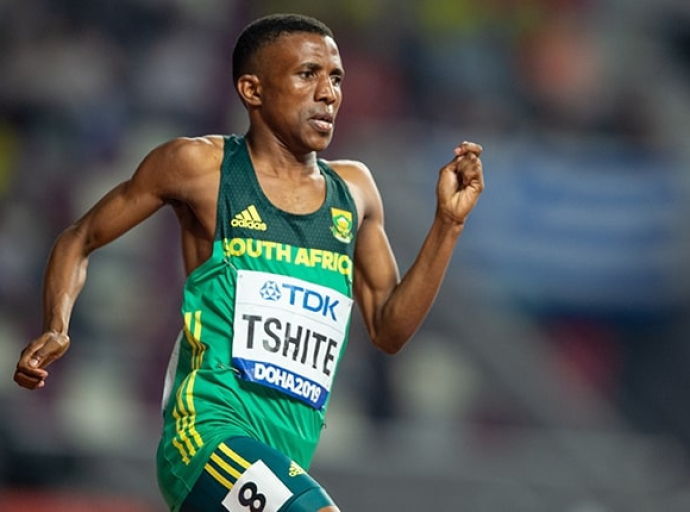
Already holding the SA 1,500 m (3:35.06) and mile (3:54.10) short track records, the 28-year-old set a national outdoor mark for the first time in his career.
Tshepo Tshite broke the 11-year-old South African 1,500m record at the Diamond League meeting held in Paris, France, on Friday night.
The middle-distance runner finished ninth in 3:31.35, taking more than half a second off the 11-year-old national mark of 3:31.93 set by former World Championships medallist Johan Cronje in Rieti, Italy, in September 2013.
All SA records are subject to standard ratification processes
Already holding the SA 1,500 m (3:35.06) and mile (3:54.10) short track records, the 28-year-old set a national outdoor mark for the first time in his career.
"As we congratulate Tshite for achieving his feat of breaking a record, we also take the opportunity to encourage all athletes to drastically improve their performances in order to reach podium positions. The rest of the world is doing the same, because Japan won't be easy in September.
"But, we definitely don't take anything away from him, for a national record is always an achievement to be celebrated as it becomes a new benchmark for others. We, therefore, congratulate Tshite, his coach and all of his support staff," said Athletics South Africa's president, James Moloi.
In another race, Adriaan Wildschutt, the only other South African competing in Paris, settled for 14th position in the men's 5,000 m race in 13:28.67.
The next leg of the Diamond League series will be held in Eugene, USA, on 5 July.
*This article was first published by Eye Witness News
An intense cold front is expected to affect the Western and Northern Cape provinces from Wednesday until Friday
It's going to be a chilly start to the week for those in the Eastern Cape as an intense cold front is expected to blow into the country this week.
The South African Weather Service (Saws) is predicting icy temperatures across the province, coupled with gale-force winds reaching up to 70km/hour along the coast between Plettenberg Bay and East London.
The forecaster further warned of very rough to high seas with wave heights reaching up to eight metres offshore. For this, Saws has issued a Yellow Level 1 warning.
A Yellow Level 1 warning for damaging winds has also been issued for areas between Plett and Port Alfred on Monday.
Saws has also warned of an intense cold front expected to affect the provinces of the Western Cape and Northern Cape from Wednesday until Friday.
"The public and small stock farmers are advised that icy, wet and windy conditions with heavy rainfall, strong interior winds and gale force coastal winds, very rough to high seas and light snowfall on the high ground can be expected," Saws said.
Other parts of the country can expect fine to partly cloudy and cool temperatures.
"In KwaZulu-Natal, the wind along the coast will be moderate to fresh northerly to north-westerly, becoming southerly to south-westerly from the south, spreading to the north by the evening," Saws said.
The agreement, reached between Transnet and recognised unions United National Transport Union (UNTU) and South African Transport and Allied Workers’ Union (SATAWU), includes a 6% annual increase over three years, totalling an 18% rise in wages.
The Federation of Unions of South Africa (FEDUSA) has condemned what it calls a “reckless and dishonest attack” by Business Leadership South Africa (BLSA) on the recent Transnet wage agreement, saying business elites are attempting to scapegoat workers for deep-rooted failures within the state-owned logistics company.
FEDUSA was responding to BLSA chairperson Busisiwe Mavuso’s comments labelling the wage settlement a “leadership failure.” The agreement, reached between Transnet and recognised unions United National Transport Union (UNTU) and South African Transport and Allied Workers’ Union (SATAWU), includes a 6% annual increase over three years, totalling an 18% rise in wages.
“BLSA's characterisation of the hard-won wage settlement as a ‘leadership failure’ is not only absurd, but also a direct attack on the constitutional rights of workers to organise, bargain collectively, and demand just and equitable treatment from employers,” FEDUSA said in a statement on Saturday.
The union federation defended the wage hike, saying it was secured through legal processes, with no strike action, and offered both “fiscal restraint and a measure of justice.”
“Transnet workers, led by UNTU and other unions, exercised their rights under South Africa’s labour laws. They rejected below-inflation offers that would have entrenched poverty wages and job insecurity,” said FEDUSA.
Transnet said the agreement was reached after conciliation at the Commission for Conciliation, Mediation and Arbitration (CCMA) and thanked all stakeholders involved. “The finalisation of the three-year wage agreement provides labour stability and will enable the company to focus on its immediate strategic priorities of improving operational and financial performance, while positioning the organisation for future growth,” it stated.
FEDUSA rejected assertions that the wage deal would hamper economic recovery, instead blaming “executive corruption, mismanagement of public entities, poor governance, and a refusal by the business elite to invest in inclusive, labour-intensive growth” for South Africa’s economic challenges.
“BLSA and other private sector commentators must stop masquerading their disdain for collective bargaining as concern for economic stability. Their real fear is the growing strength of organised labour and the possibility of a more equal distribution of power and resources in our economy,” the federation said.
FEDUSA concluded by urging Transnet to fully implement the terms of the agreement, warning: “Workers will not be silenced, scapegoated or sacrificed.”
The mother of a little boy born with cerebral palsy, and who is said to be "in a vegetative state" lost out on the Gauteng MEC paying R2.2 million towards the child for general damages.
In a groundbreaking judgment regarding general damages to be paid by the health authorities as compensation for an “unconscious claimant”, the Supreme Court of Appeal ruled that such a claimant is not entitled to any award for pain and suffering.
This ruling was made in a case where a mother whose child was born with cerebral palsy was awarded R2.2 million in general on behalf of her child. The child suffered a severe brain injury at birth due to the negligence of doctors at a Gauteng hospital. The child, represented by his mother, was awarded R13.3 million for special damages. This is to make his life a bit easier by acquiring special aids and devices to cope with his needs.
In addition, the Gauteng High Court earlier awarded the child R2.2 million in his own capacity for general damages. The Gauteng MEC appealed against the award of general damages on the basis that the child is in a vegetative state, and therefore, was not entitled to general damages. In a split decision, three judges ruled in favour of the MEC, while two judges found that the child is entitled to general damages.
In the majority judgment, penned by Judge Tati Makgoka, it was ruled that an award for loss of amenities of life can only be made to the extent it can serve some function for the personal and exclusive benefit of the claimant (the child in this case). This, he said, is particularly so where an award for special damages (the R13.3 million already awarded) adequately provides the means and facilities to make the unconscious claimant’s life "less miserable".
Judge Makgoka said unless there is some indication that additional sums in the form of general damages can be used for the exclusive use of the claimant (child in this case), there is no juridical basis for awarding such amounts in the form of general damages for loss of amenities of life.
“In the present case, adequate provision has been made for the child’s physical needs by an award of special damages. There was no evidence as to what the additional amounts, over and above those provided for by special damages, would be used for,” he said. He added that awarding additional amounts for loss of amenities of life to the “unconscious child” would serve no purpose other than benefiting the child’s mother.
The minority judgment, written by Judge Anna Kgoele, to which Judge Elizabeth Baartman concurred, concluded that the child is not in an unconscious, vegetative state. After analysing the expert reports, they concluded that although he had limited insight into his condition, the child had “twilight moments.” For that reason, he was entitled to general damages, they said.
Judge Kgoele concluded that even if the child is in an unconscious, vegetative state, she would still have concluded that the child is entitled to general damages. She reasoned that the child cannot be equated to a dead person. She further reasoned that there can be no objection if the award to an unconscious claimant, who meanwhile dies, accrues to their relatives. Both she and Judge Baartman found that the payment of R2.2 million for general damages to the child was thus reasonable.
*This article was first published by IOL News
The mother of a little boy born with cerebral palsy, and who is said to be "in a vegetative state" lost out on the Gauteng MEC paying R2.2 million towards the child for general damages.
In a groundbreaking judgment regarding general damages to be paid by the health authorities as compensation for an “unconscious claimant”, the Supreme Court of Appeal ruled that such a claimant is not entitled to any award for pain and suffering.
This ruling was made in a case where a mother whose child was born with cerebral palsy was awarded R2.2 million in general on behalf of her child. The child suffered a severe brain injury at birth due to the negligence of doctors at a Gauteng hospital. The child, represented by his mother, was awarded R13.3 million for special damages. This is to make his life a bit easier by acquiring special aids and devices to cope with his needs.
In addition, the Gauteng High Court earlier awarded the child R2.2 million in his own capacity for general damages. The Gauteng MEC appealed against the award of general damages on the basis that the child is in a vegetative state, and therefore, was not entitled to general damages. In a split decision, three judges ruled in favour of the MEC, while two judges found that the child is entitled to general damages.
In the majority judgment, penned by Judge Tati Makgoka, it was ruled that an award for loss of amenities of life can only be made to the extent it can serve some function for the personal and exclusive benefit of the claimant (the child in this case). This, he said, is particularly so where an award for special damages (the R13.3 million already awarded) adequately provides the means and facilities to make the unconscious claimant’s life "less miserable".
Judge Makgoka said unless there is some indication that additional sums in the form of general damages can be used for the exclusive use of the claimant (child in this case), there is no juridical basis for awarding such amounts in the form of general damages for loss of amenities of life.
“In the present case, adequate provision has been made for the child’s physical needs by an award of special damages. There was no evidence as to what the additional amounts, over and above those provided for by special damages, would be used for,” he said. He added that awarding additional amounts for loss of amenities of life to the “unconscious child” would serve no purpose other than benefiting the child’s mother.
The minority judgment, written by Judge Anna Kgoele, to which Judge Elizabeth Baartman concurred, concluded that the child is not in an unconscious, vegetative state. After analysing the expert reports, they concluded that although he had limited insight into his condition, the child had “twilight moments.” For that reason, he was entitled to general damages, they said.
Judge Kgoele concluded that even if the child is in an unconscious, vegetative state, she would still have concluded that the child is entitled to general damages. She reasoned that the child cannot be equated to a dead person. She further reasoned that there can be no objection if the award to an unconscious claimant, who meanwhile dies, accrues to their relatives. Both she and Judge Baartman found that the payment of R2.2 million for general damages to the child was thus reasonable.
Tourism Minister Patricia de Lille has arrived at the Golden Gate Highlands National Park in the Eastern Free State, where she will unveil the R120 million Kgodumodumo Dinosaur Interpretation Centre today.
The centre is a collaborative initiative between the Tourism Department and the South African National Parks (SANParks) aimed at enhancing the visitor experience at the park, nestled within the breathtaking landscapes of the Golden Gate Highlands National Park.
This R120 million investment, funded by the European Union through the South African National Treasury, represents a significant step forward in the country’s mission to create inclusive, educational and globally compelling tourism experiences.
According to De Lille the centre is aimed at boosting tourism in the Free State province, which is one of the less-visited provinces.
“This centre is a symbol of what we mean when we say, ‘Come Find Your Joy in South Africa'," said De Lille.
The Department of Correctional Services has allocated R1.2 billion for the provision of food for its more than 100,000 prisoners in the 2025/26 financial year, Minister Pieter Groenewald said.
Responding to parliamentary questions from EFF MP Betty Diale, Groenewald said the department spent R1.4 billion on the provision of food on prisoners in 2023/24 financial year.
The amount had increased to R1.5 billion in the last financial year that ended in March 2025.
“For the 2025/26 financial year, the department allocated R1,286,972,000 for the provision of nutrition to inmates,” he said.
In its 2025-2030 strategic plan, the department places the provision of food for prisoners as one of the top four cost drivers of its budget after compensation of employees, property payments, and public-private partnership support.
The document puts the provision for food to the tune of R952,975.
Groenewald also said the department planned to maximise the utilisation of the services of the prisoners to produce food for themselves, to enable the department to redirect funds to other essential programmes.
He said the prisoners will participate in the production workshops in agriculture to maximise their skills utilisation for bread and agricultural production for their ration.
“The self-sufficiency and sustainability programme in the department is centred around offender development, through the provision of work opportunities to offenders in bakeries and agriculture. Expansion of bakeries and agricultural projects towards an increase in offender skills utilisation for food production,” he said.
The department’s strategic plan document states that the department wants to become self-sustainable through activities such as those in production workshops, bakeries, agriculture, skills development, formal education and training, as well as through arts and culture.
“The department will expand marketing of production workshops’ products and services to other client departments to improve revenue generation.”
Meanwhile, Groenewald revealed that the cost per capita per inmate incarcerated for the 2025/26 financial year is R462.13 per day.
Asked how his department managed financial implications for imprisonment of foreign nationals, he said there were 13,181 sentenced foreign nationals in prisons as at May 4 this year.
“The total cost to accommodate 13,181 sentenced foreign nationals on 4 May 2025 was R6,091,335.53 per day.”
He stated that foreign national prisoners were not a separate category of inmates.
Groenewald added that there were currently no bilateral agreements with neighbouring countries to transfer sentenced foreign national prisoners to serve in their countries of origin.
“The DCS is in consultation with the South African Police Service, Department of Home Affairs, Department of Justice and Constitutional Development, and Department of International Relations and Cooperation to formalise a South African procedure to inter-state transfer of offenders.”