Free State Targets Surgical Backlogs
The three-day Cataract Marathon, held over the weekend at Boitumelo Regional Hospital in Kroonstad, was a great success, with over 100 patients receiving treatment.
Screening was conducted last week Friday with cataract operations scheduled for Saturday and Su...
New pricing model aims to secure South Africa's identity verification system
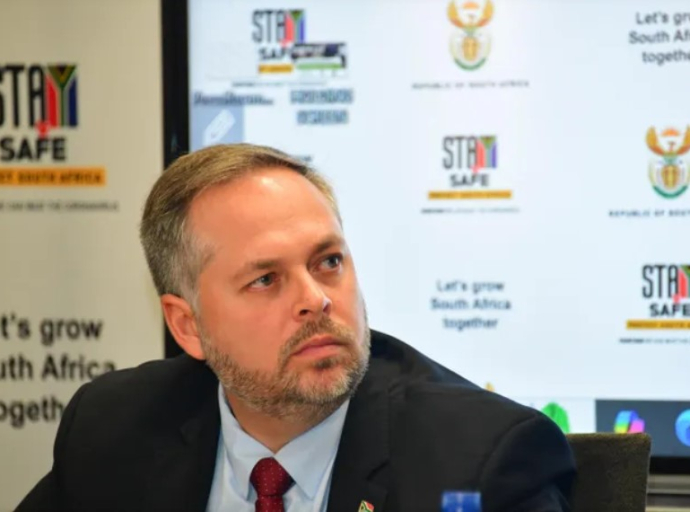
Home Affairs Minister Dr Leon Schreiber has announced major reforms to the identity verification system, including new tariffs to prevent abuse and protect national security.
The Department of Home Affairs has moved to stop what it calls the exploitation and profiteering of South Africa’s identity verification system, accusing some private entities of overwhelming the National Population Register (NPR) for profit while paying rock-bottom fees that left the state unable to maintain the system.
For more than ten years, registered users, including major banks and private companies, have paid as little as 15 cents per identity check, a price the department now says enabled abuse, degraded public services, and posed a serious risk to national security.
“The artificially-low pricing structure has led to such severe under-investment in the NPR that it now poses a direct threat to financial inclusion, to the ability of the government to combat identity and financial crime, and to national security,” the department said.
Minister of Home Affairs Dr Leon Schreiber announced that a new pricing model will take effect from July 1, raising the cost of real-time identity verifications to R10 per check. To ease the transition and avoid overloading the system, a low-cost R1 batch verification option will also be introduced for off-peak use.
The move follows years of complaints about Home Affairs’ “system offline” issues, which the department now links directly to unchecked demand from underpaying institutions. Some users reportedly made massive profits by building private services on top of the state’s database, while the system itself crumbled under pressure.
“Some users then went on to exploit the unreliability of the system created by their excessive use, to create third-party verification services that charge prices vastly in excess of those paid to Home Affairs,” the department said.
The failure rate of the current system had skyrocketed to over 50%, defeating the purpose of real-time identity checks and crippling services at frontline offices. But a modernised verification platform, now rolling out nationwide, brings that failure rate down to under 1%, the department said.
Minister Schreiber was blunt in his assessment.
“This is a matter of national security, plain and simple. Every responsible State on earth must take the necessary steps to ensure a functional population register.”
He said the reform would also support South Africa’s financial system by addressing weaknesses flagged by the Financial Action Task Force (FATF), which placed the country on its grey list due to inadequate safeguards against financial crime.
Calling on all users of the verification system to act in the national interest, Schreiber added; “I thank the many stakeholders who expressed support for this vital reform… and call upon all users of the OVS to rise above narrow profiteering to support the safeguarding of national security.”
The overhaul is also a critical step toward the government’s goal of establishing a Digital ID system, with the upgraded NPR expected to serve as the foundation.
“A healthy NPR is also a prerequisite for a functional Digital ID, this investment in the NPR is an investment in national security, in financial inclusion, and in the value of our cherished South African identity,” Schreiber said.
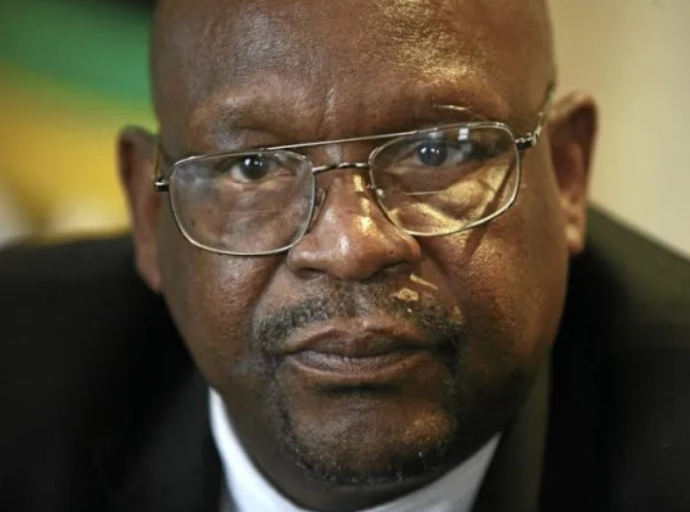
Dr Mathole Motshekga, founder of the Kara Heritage Institute, has emphasised the urgent need for South Africa to restore the dignity and pride of its people through a radical cultural transformation.
Speaking on the sidelines of the C20 South Africa launch event held at The Capital on the Park in Sandton on Monday, Motshekga called on the nation to embrace its rich cultural identity, which is essential for fostering knowledge and enhancing dignity.
According to the Kara Heritage Institute, founded in 1982, the African people have a rich ancient history and an indigenous cultural heritage that is at risk of being lost in the tide of contemporary global influences.
Motshekga believes that, by reigniting awareness of our proud African heritage and reawakening our consciousness of values, which is at the core of Africa’s spiritual heritage, Africans can revive the dignity and true equality of all humankind.
The three-day C20 South Africa launch event, which kicked off on Sunday and concludes on Tuesday, has brought together scores of representatives from various civil society organisations tasked with developing their policy proposals to be submitted to the government ahead of the G20 Summit later this year.
With 14 working groups engaged in developing various policy proposals to effect change in their respective space, Motshekga welcomed the participatory democracy, which is at the centre of the C20 South Africa's mandate.
Motshekga indicated that South Africa, with its diverse culture, indigenous languages, and traditions, should embrace its colourful heritage to build on its knowledge.
"We have nine provinces, and each province presents us with its own set of cultures and languages. We are the people rich in culture and should indeed encourage our cultures to flourish. When someone is taught in their language, there is a sense of pride that comes with it, and I think that should be encouraged in our children, as this enhances their sense of pride and identity.
"In essence, there should be a radical cultural transformation that must happen for all of South Africans and the rest of the continent to realise its full potential," he said.
Among the focus areas of the 14 working groups are Women and Gender Equity, People to People Interaction and Solidarity, Poverty Alleviation and Food Sustainability, Democratic Governance, Civic Space, Anti-Corruption and Access to Justice, Cultural Diversity Recognition and Embracement, Trade and Sustainable Development, and Digital and Inclusive Economies.
"As African people, at the beginning, we believed in participatory democracy and not representative democracy, where we elect leaders every five years to represent us. This is where all the elders, women, and young people would gather and resolve community issues.
"With the introduction of representative democracy, we elect people for five years. I love the fact that C20 and this process, which is the gathering of civil society, brings participatory democracy," he stated.
South Africa has ranked 64th out of 69 countries in the IMD World Competitiveness Rankings for 2025, highlighting ongoing challenges with governance, infrastructure, and job creation.
According to the report, South Africa continues to struggle with high unemployment rates and lack of employment opportunities, as well as corruption and poor government effectiveness.
The report also cites poorly located and inadequate infrastructure that limits social inclusion and economic growth, along with rising public debt levels amid a shrinking fiscal space as key challenges. This is the lowest ranking for South Africa since 2021.
Reacting to the ranking, economist Dawie Roodt said the core issue is not economic but political. “The main reason behind all of this is an ineffective government, a corrupt government with the wrong ideologies and policies. So the reason why we keep on slipping is because, let's call it by name, is because of the ANC,” he said.
He added that the biggest barrier to investment is “a lack of confidence in the South African government, a lack of confidence in South Africa's economic future.”
On balancing developmental policies with investor confidence, Roodt said, “That’s the wrong approach. It’s not the one or the other, it’s both combined. By developing the economy, you will also address some other social imbalances.”
Economics professor Waldo Krugell, from the North-West University, also said sentiment plays a key role. “There was a lot of optimism when the GNU (Government of National Unity) initiated last year, but a lot of that momentum has been lost,” he said. “When it comes to sentiment, that's where we’re struggling at the moment; the reform process is too slow.” Krugell said regulatory reform is critical.
“You can make these regulatory reforms without increasing taxes or increasing borrowing. When it’s easier and cheaper to do business, we should see a boost in confidence, followed by increased investment, and ultimately growth and job creation.” He said: “The biggest barrier at this stage to attracting more domestic and foreign investment is the cost of doing business,” and that policy uncertainty was also a significant problem.
Professor Bonke Dumisa, an independent economic analyst, said South Africa’s poor competitiveness ranking is largely due to “no political will for those who are in political power to make sure that the economy grows faster than the population growth rate.”
He criticised regulatory reform efforts as being compromised by “politicians and bureaucrats who are involved in the issuing of those licenses.”
Dumisa added that many domestic investors are “on strike” and unwilling to reinvest locally, choosing instead to send profits abroad, which worsens inequality. “They want to make lots of money with very little compliance and send it abroad, without the South African economy benefiting from that.” He stressed that meaningful reform must go beyond “big words used by politicians” and must deliver transparent, inclusive economic growth.
DA MP and party spokesperson on Trade, Industry & Competition Toby Chance said South Africa’s competitiveness crisis “demands urgent regulatory reform.” He said policies like the Employment Equity Amendment Act, Expropriation Act, and BBBEE Act are “anti-growth” and argued that “this economy must grow for jobs to be created.”
“The Organisation for Economic Co-operation and Development, in its latest report on SA, finds our regulatory environment is the most restrictive of the countries surveyed.” He added that the Department of Trade, Industry and Competition is expected to table an Omnibus Bill that aims to reform multiple economic laws. “This bill, to be effective, must reduce red tape and the legislative and regulatory impediments in these laws that undermine competitiveness and add to the cost of doing business,” Chance said.
More than 26 000 people who were in debt had summons issued against them to appear in court during April, with the balance of the 31 000 summonses issued in the fourth month of the year being against companies.
Of the total amount of R242 million cases, South Africans accounted for R209m, with the balance being owed by companies. That translates into 83% of the value of all civil summons cases emanating from debt owed by ordinary citizens.
This is according to Statistics South Africa’s latest print on preliminary statistics of civil cases for debt for April. Overall, the agency noted that the total number of civil summonses issued for debt decreased by 16.4% in the three months to April compared with the same period a year ago.
Statistics South Africa said that, while several categories of types of debt – such as services or money lent – declined in terms of money owed and set to head to court, outstanding rent increased. Outstanding rent made up R30.2 million – or 12% of the debt against which action was taken.
The Western Cape saw the most summonses issued, followed by Gauteng and then Limpopo.
Debt Busters’ latest index for the first quarter of the year found that nine out of ten debt counselling applicants have a personal loan as more and more South Africans are “using personal and one-month loans as a lifeline”.
“The most vulnerable consumers, taking home R5 000 or less per month, use 76% of their income to repay debt. Those earning R35 000 or more spend 77% servicing debt. The ratios for these income groups are the highest since DebtBusters started analysing the data in 2016,” it said.
It added that “today’s consumers have 53% less purchasing power,” than in 2016.
The National Financial Ombud Scheme South Africa (NFO) has emphasised the need for fairness from financial institutions after intervening in a case where a bank sold a home for just R10,000 due to a client's home loan arrears.
The intervention of the NFO led to the bank writing off the client's home loan arrears of more than R233,000.
The details of the matter are contained in the NFO's recently released 2024 annual report.
Between 1 March 2024 and 31 December 2024, the NFO handled 35,855 complaints that was dealt with by its four divisions - Non-life and Life Insurance, Banking and Credit.
According to the report, in a complaint handled by the Ombud's banking division, a complainant held a Home Loan account with a bank and the account was in arrears.
The report explained that the bank exercised its rights in terms of the home loan agreement and proceeded with legal action to recover the full outstanding balance owing on the account.
"Judgment was granted and the property was declared executable. There was no reserve price set by the court for the sale of the property. The bank proceeded to sell the property on auction for R10,000 and the complainant remained liable for a shortfall of R233,241.90 after the proceeds of the sale had been credited to the account."
When the NFO investigated the complaint, it was found that the property had been valued at R590,000. The outstanding balance on the home loan account at the time of the sale was R234,541.06.
In addition, outstanding rates and taxes on the property amounted to R335,575.12 at the time of the sale.
However, the NFO said it was of the view that despite these costs, there was still sufficient value in the property, and that a higher selling price could have been achieved by the bank to ensure that the full outstanding balance on the account was settled.
The report said: "Whilst the NFO remained cognisant that the court did not set a reserve price and therefore the bank was not in contravention of any court order, the office exercised our equity jurisdiction and remained firm in its view that it could never be considered fair nor reasonable of a bank to sell someone’s home for R10,000 when it has a market value of R590,000.00."
The NFO therefore recommended that the bank write off the full shortfall amount.
"The bank accepted the recommendation, and the full shortfall of R233,241.90 was written off," the report said.
The Takealot Group has posted yet another loss, but says it is expected to reach profitability in the current financial year.
Its parent organisation, Naspers, said that the Takealot Group achieved significant growth in 2H25, driven by enhanced customer offerings and the TakealotMore subscription service.
According to Nasper’s results for the 2025 financial year, the Takealot Group’s revenue grew by 20% in US dollar terms to reach $823 million (R14 billion at the current exchange rate).
Gross Merchandise Value (GMW) increased by 13% year-on-year despite a slow start. Gross profit margin improved by 1%, supported by the strong performance of high-growth segments like Mr D Grocery.
Despite the growth in revenue, the group recorded an adjusted loss before interest and taxes (aEBIT) of $12 million (R217.12 million) due to increased marketing and infrastructure investments.
AEBIT is a non-IFRS measure that refers to EBITDA adjusted for depreciation, amortisation of software and interest on capitalised lease liabilities.
It was previously referred to as a trading profit or loss, by the group.
Although not a standard measure of profit or loss, Naspers said it is useful to analyse operational profitability within the group’s chief operating decision-maker (CODM).
Notably, while still recording a loss, Takealot has improved on the $14 million loss recorded in 2024.
The group’s aforementioned marketing investments were aimed at preparing for competitive pressures from new international entrants, such as the Amazon marketplace which launched in South Africa last year.
Naspers believes that the Takealot group remains on track to achieve profitability in the 2026 financial year.
The e-commerce group’s strategic initiatives included the sale of Superbalist.com and the acquisition of M24 Logistics, which boosted its operational capabilities.
Customer loyalty through TakealotMore also continues to grow, which is driving increased shopping frequency and order growth.
Takealot.com posted 19% (17%) revenue growth to $706 million (R12.7 billion), with GMW rising 13% and orders increasing by 15%, underpinned in emerging product categories.
Mr D achieved an 11% (8%) revenue increase to $117 million (R2.1 billion), with a significant 81% GMW growth in groceries and improved aEBIT of $4 million (R72 million).
“Both the Takealot.com and Mr D platforms continue to excel, cementing their leadership in South Africa’s ecommerce market through innovation and customer focus,” said Naspers.
“Takealot grew investments in its staff and infrastructure to expand its fleet of electric trucks, now operating one of the largest fleets of electric trucks in South Africa.”
Broader group
Takealot may be the most recognised brand for South Africans regarding Naspers, but the broader group is far larger and makes most of its wealth from its international businesses.
Having started in publishing, which it retains through its ownership in Media24, Naspers has grown into an international tech giant, much of this is due to its large shareholding in Chinese company Tencent.
Naspers has a cross-ownership structure with the Dutch-listed Prosus, with the two companies having a combined market cap of roughly R3 billion.
In the past year, the group exceeded its profitability targets with increased pace and focus. For the year ending 31 March 2025, Prosus Ecommerce operations delivered US$443m (R8 billion) aEBIT.
The group’s consolidated aEBIT grew by $284 million (R5 billion) to $130 million (R2.3 billion). The strong performance in e-commerce and Tencent boosted core headline earnings by 46% to $3.1 billion (R56 billion).
“Naspers is rapidly transforming into an operating technology company, focused on lifestyle ecommerce, and powered by innovation and collaboration,” said CEO Fabricio Bloisi.
“We completed the acquisition of Despegar in May 2025 and are already integrating its products into iFood’s Clube membership. We are making good progress with the purchase of Just Eat Takeaway.com, which will create a new AI-powered tech champion in Europe.”
The group’s earnings for ordinary shares increased nearly double to 3,099 US cents (R55) while headline earnings per share saw a similar increase to 1,529 US cents (R27).
The Prosus board recommended a 100% dividend increase per share from 10 euro cents (R2.08) to 20 euro cents (R4.16).
*This article was first published by Business Tech