Free State Targets Surgical Backlogs
The three-day Cataract Marathon, held over the weekend at Boitumelo Regional Hospital in Kroonstad, was a great success, with over 100 patients receiving treatment.
Screening was conducted last week Friday with cataract operations scheduled for Saturday and Su...
A potential deadlock over pay increases for South Africa’s automotive sector workers risks shutting down an industry that accounts for more than a fifth of the nation’s manufacturing output, weighing on an already moribund economy.
The National Union of Metalworkers of South Africa, the country’s largest labor group, is demanding employers including BMW South Africa and the local units of Toyota and Ford give workers 10% raises ahead of talks that will agree wages for the next three years.
While that’s more than three times the annual inflation rate, it’s the union’s lowest initial ask in at least four negotiation cycles and comes as several headwinds threaten the long-term viability of manufacturing vehicles and components locally.
They include:
Heightened global uncertainty due to fears of a wider war in the Middle East and higher US tariffs;
South Africa’s potential exclusion from a trade deal that gives African nations preferential access to the world’s biggest economy;
A shift to electric vehicles in key export markets; and
A flood of cheap imports
South Africa is the world’s most unequal country and its economy has barely grown over the past decade.
Still, the automotive sector remains a key driver of output, accounting for about 5% of gross domestic production.
Averting a fourth-consecutive deadlock in pay talks and a potential strike by more than 100,000 workers is seen as key for the survival of an industry that has long been hobbled by electricity-supply constraints and logistics challenges.
“The economy isn’t performing well and a flat 10% increase along with some of the other challenges will negatively impact the performance of businesses,” said Siyabonga Mthembu, a partner at BDO South Africa.
“International companies operating in South Africa’s automotive sector are particularly at risk and will have to consider survival strategies such as market diversification.”
“Sometimes, looking at pay in isolation of other factors at play can be very dangerous and I think all the parties need to sit around a table and understand the entire ecosystem.”
Phakamile Hlubi-Majola, Numsa’s spokesperson, has said that asking for an inflation-linked increase is “unrealistic” because its members are struggling to survive.
Representatives for employers associations declined to comment as formal wage negotiations have yet to begin.
Price-Sensitive Buyers
A sluggish economy has also driven a shift in the new vehicle market, with consumers increasingly buying imported vehicles.
Almost 62% of light vehicles purchased in South Africa last year sold for less than 500,000 rand ($27,588), according to Paulina Mamogobo, the chief economist at Naamsa, The Automotive Business Council.
Industry association data show global trade wars are also weighing on exports, which account for about two thirds of vehicles produced in South Africa.
While higher tariffs imposed by the US on imported vehicles and components only took effect in April, shipments to North America had already declined 73.2% year-on-year in the three months through March.
Given changes in the operating environment, key players in the industry have asked the government to bring forward a review of its production-incentive program and so-called industry master plan to 2025, Mamogobo said.
Naamsa is already working with its members on potential evidence-based solutions to address the challenges they are facing, he added.
Lesego Moshikaro-Amani, a senior economist at Trade & Industrial Policy Strategies urged the government to consider adopting policies that promote local battery production for electric vehicles, mineral processing and refining for the automotive industry and measures to “aggressively attract new manufacturers.”
Local manufacturers could also benefit from producing more affordable vehicles, including two and three wheelers, for export into Africa, she said.
*This article was first published by Business Tech
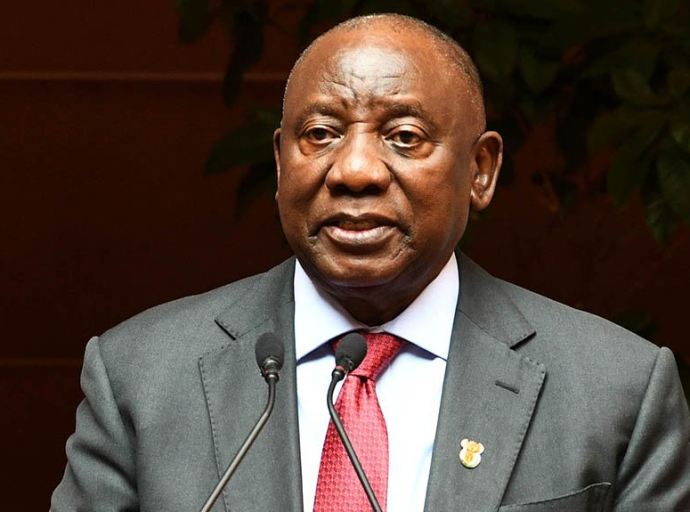
President Cyril Ramaphosa’s call for dialogue and peaceful resolution of the tensions in the Middle-East reflects the complexities of striking a balancing act as South Africa seeks to maintain its relationships with both Iran and the US, says one political analyst.
As a fellow BRICS member, South Africa has warm diplomatic relations with Iran. However, the country has also been a staunch critic of Israel's conduct in Gaza, culminating in a landmark International Court of Justice case accusing Israel of genocide.
Pretoria has publicly cut diplomatic ties with Israel, a key US ally and formally downgraded its embassy.
The international community has reacted to the conflict with varying degrees of condemnation and support.
In a statement on Sunday, a day after the US claimed to have obliterated key nuclear sites in Iran, Ramaphosa expressed "anxiety" over the US involvement in the conflict, urging President Donald Trump to use his influence in ensuring a path to dialogue prevails.
"It was South Africa's sincerest hope that President Donald Trump would use his influence and that of the US government to prevail on the parties to pursue a dialogue path in resolving their issues of dispute," the statement read.
“President Cyril Ramaphosa and the South African government have noted with a great deal of anxiety the entry by the United States of America into the Israel-Iran war.
“South Africa calls on the United States, Israel, and Iran to give the United Nations the opportunity and space to lead on the peaceful resolution of the matters of dispute, including the inspection and verification of Iran's status of uranium enrichment, as well as its broader nuclear capacity,” the statement reads.
Political analyst Dr John Molepo said the government has sought to portray itself as a champion of the Global South, a defender of international law, and a broker of multipolar diplomacy.
“Ramaphosa's measured response reflects the complexities of this balancing act, as the country seeks to maintain its relationships with both Iran and the US while upholding its commitment to peaceful resolution and international law,” Molepo said.
The National Treasury said the loan agreement was aimed at supporting critical structural reforms that will enhance the efficiency, resilience and sustainability of the country’s infrastructure services.
Government has signed a $1.5 billion loan with the World Bank to spur on infrastructure development.
The National Treasury said the loan agreement was aimed at supporting critical structural reforms that will enhance the efficiency, resilience and sustainability of the country’s infrastructure services.
This includes improving energy security, the freight transport services and the transition to a low-carbon economy.
The National Treasury said this latest partnership with the World Bank marked a significant step towards addressing South Africa’s low growth and unemployment.
It said the loan would help to unlock key infrastructure bottlenecks, particularly in the energy and freight transport sectors.
The Treasury said the financing formed part of government's broader efforts to implement structural reforms that strengthened public institutions, included private investment and improved service delivery across priority sectors of the economy.
The loan will mature in 16 years, with a three-year grace period.
It will be charged at the standard overnight financing rate plus 1.49%.
The Treasury said these terms were in line with its financing strategy, important to government’s financial stability and of minimising an increase in debt service costs.
*This article was first published by Eye Witness News
Three properties owned by the controversial Gupta brothers are set to be sold separately.
The auctioneers who are tasked with selling the elaborate Gupta compound properties said that the identities of the previous owners may draw many fascinated viewers who have no intention to buy.
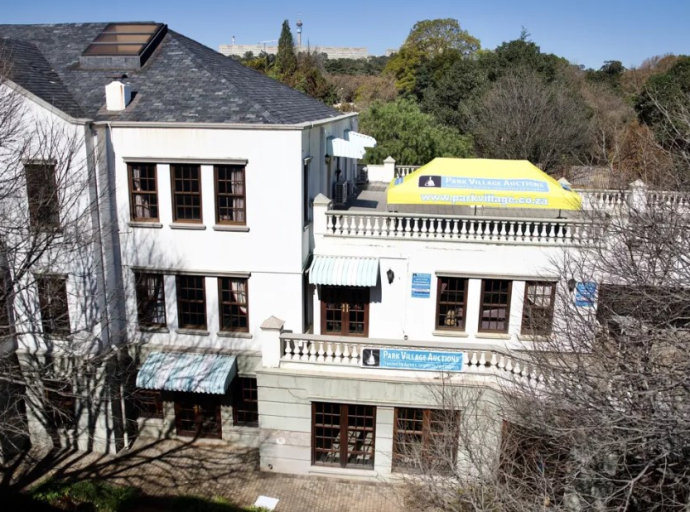
Park Village Auctions opened the Saxonwold properties up to the media on Monday ahead of the auction in July.
Three properties owned by the controversial brothers are set to be sold separately.
As you walk into the grossly opulent main Gupta home, you are met by two giant velvet chairs and The New Age newspaper rack where guests may have been offered a copy of one of the Gupta brothers' latest daily news offerings.
The eight-bedroom ensuite house, with an indoor pool, is cold, with tile, granite and mirrors a clear theme in the house.
But there are two more properties sandwiching the main house - one a more modest, three-bedroom older suburban house thought to be the staff quarters, and on the other side is a 17-bedroom massive ensuite building that resembles a guest house.
Graham van Niekerk from Park Village Auctions said these properties, which would be sold separately, would likely draw different buyers.
"I think the properties will sell. I think the key will be where that point is, as you’ve seen again, the properties are in a little bit of disrepair and are going to need some TLC, a good fixer-upper. Other than that, I don’t see any difficulty selling the properties," said van Niekerk.
The properties have a municipal value of about R5.5 million, R36 million and R21 million, respectively.
The auction will take place on 24 July.
*This article was first published by Eye Witness News
South Africa remains under a temporary ban of trade with some European countries and Botswana as a result of the contagious disease.
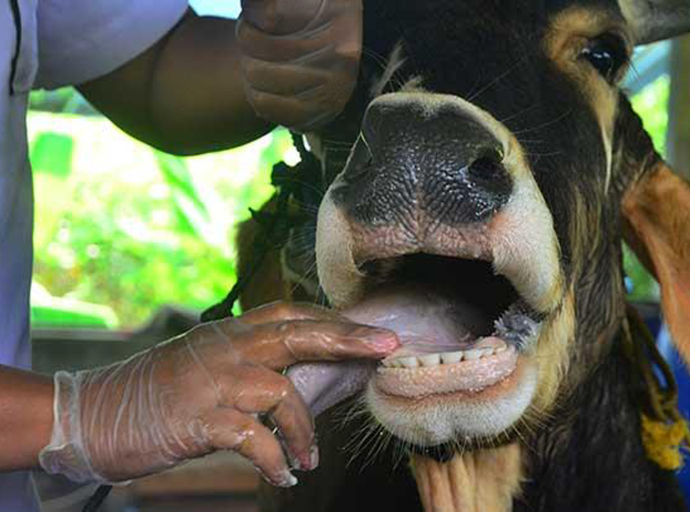
Agriculture Minister John Steenhuisen said it's unclear when borders will open for import and export activities amid an outbreak of foot and mouth disease in cattle.
South Africa remains under a temporary ban of trade with some European countries and Botswana as a result of the contagious disease.
Gauteng, the Eastern Cape and KwaZulu-Natal provinces have been hardest hit as government awaits an order for vaccines from Botswana.
Steenhuisen weighed in on the impact of the outbreak while visiting one of the country’s biggest beef suppliers in Heidelberg on Monday during a vaccination drive.
"The skins that come from here feed an entire industry of leather for car seat production in Europe and locally, gear, seats, steering wheels. It’s not just about the food, it’s about the value-added product," said Steenhuisen.
*This article was first published by Eye Witness News
The GPAA administers the pension affairs of approximately 1.7 million government employees and pensioners, as well as the affairs of their spouses and dependants.
The Public Service and Commercial Union of South Africa (PSCU) has issued a stark warning regarding the alleged financial mismanagement of pension funds amounting to more than R500 million at the Government Pensions Administration Agency (GPAA).
In a letter to the GPAA CEO Kedibone Madiehe over the weekend, the PSCU requested clarification and remedial measures in response to the troubling findings of the pension administrator’s Internal Audit Report for the 2024/25 financial year.
The GPAA is a government component which reports to the Minister of Finance and administers funds and schemes on behalf of the Government Employees Pension Fund (GEPF), the largest pension fund in Africa.
It thus administers the pension affairs of approximately 1.7 million government employees and pensioners, as well as the affairs of their spouses and dependants.
The internal audit report was compiled by Abacwaningi Business Solution (ABS) Audit & Advisory Services and found a raft of key governance concerns, which they brought to the attention of management to ensure sound governance.
According to the PSCU secretary general, Tahir Maepa, this report not only highlights gross financial mismanagement but also hints at potential criminal conduct that necessitates urgent strategic intervention.
“The report reveals severe financial mismanagement, governance failures, and potential criminal conduct that demand urgent intervention,” said Maepa in the letter.
The PSCU is questioning the apparent discrepancy between the reported R15.3 million irregular expenditure and the R30.8m logged in the internal register. The union is pressuring for a full disclosure of the irregular expenditure report to understand this contradiction.
The union pointed to a seemingly innocuous purchase order of R67m, which ballooned into a staggering R495m lease liability. It raised questions over the motivations behind signing this contract post-audit (23 May 2025), complete with a backdated commencement date (31 July 2024).
The leasing agreement was concluded between LCS and GPAA, signed by Lerato Molefi from LCS and previous acting financial officer, Kgaile Molebatsi.
“Not only does this contract commit GPAA to a very expensive project without budget, the current and future objectives by GEPF and GPAA to modernise were not considered,” reads the audit report.
“How does a purchase contract of R67 135 442 translate to an additional R428 255 112.72, making this contract a R495 390 554 project, half a billion rands?”
The PSCU is now demanding evidence of Supply Chain Management compliance and the National Treasury approval.
The PSCU also raised serious concerns regarding R11.9m in prepayments, an additional R6.8m for undelivered uniforms, and a R12m NPS system devoid of deployment evidence. It said action was needed on this to recoup these substantial losses.
According to the union, member data appeared to have been shared unlawfully with service providers, exemplifying a gross breach of the Protection of Personal Information Act (POPIA).
It alleged that ICT projects were executed without ICT department oversight, risking system integrity. Provide all contracts, invoices, and approval documents for the LCS, Jicho, LSG, and Shula contracts.
The PSCU now requests all pertinent contracts, invoices, and approvals regarding multiple contracts, alongside confirmation of any forensic investigations initiated as per the audit recommendations.
The union has taken a firm stance, declaring that a written response is required within a mere seven working days.
Should there be no satisfactory reply, the union warned of escalating the matter to various governmental watchdogs, including the Minister of Finance, the Standing Committee on Public Accounts (Scopa), and the Public Protector, alongside the Hawks—South Africa's Directorate for Priority Crime Investigation.
Madiehe and the GPAA were not immediately contactable over the weekend.
The 66-page audit report by the ABS Audit & Advisory Services confirmed the concerns raised by the PSCU by giving each of the
The auditors recommended, among others, that all contracts issued without budget availability be regulated by seeking approval from the GEPF and that all contracts be vetted by GPAA legal chief director and amended to include risk management clauses to protect the GPAA.
“We advise that consistent and continuous compliance is required to ensure reasonable reliance on controls currently in place; and to ensure the consistent attainment of business objectives, and to meet the requirements of the laws and relevant regulations. Furthermore, where the management of risk, control and governance is considered requiring improvement, management should ensure that the residual risks and management concerns are appropriately addressed,” concluded the auditors.
“By addressing the weaknesses that have been identified, this will ensure that the controls implemented within the Government Pensions Administration Agency and its related processes are improved.”