Free State Targets Surgical Backlogs
The three-day Cataract Marathon, held over the weekend at Boitumelo Regional Hospital in Kroonstad, was a great success, with over 100 patients receiving treatment.
Screening was conducted last week Friday with cataract operations scheduled for Saturday and Su...
Deputy President Paul Mashatile has denied accusations that he influenced the awarding of an estimated multi-billion rand National Lottery license to Sizekhaya Holdings, amid intensifying scrutiny over the company’s ties to his immediate family. The denial follows a searing investigation by amaBhungane, published on 23 June, which connected one of Sizekhaya’s shareholders, Bellamont Gaming, to Mashatile’s sister-in-law, Khumo Bogatsu. The company is co-owned and co-directed by Bogatsu and Moses Tembe, a KwaZulu-Natal businessman and the current chair of Sizekhaya. Both individuals have links— personal and professional—to the Deputy President. Bogatsu is the twin sister of Humile Bogatsu, now known as Humile Mashatile, whom the Deputy President married in 2023. Though Mashatile insists that he played no role in the awarding of the contract, critics and analysts are questioning whether proximity alone constitutes undue influence. A Tender With Powerful Ties Sizekhaya was officially awarded the National Lottery license on 28 May, following extensive delays in the adjudication process. The announcement came just three days before Ithuba Holdings’ existing license expired on 31 May. The new license grants Sizekhaya the power to operate the lottery for the next eight years, beginning in June 2026, and is expected to generate billions in revenue. This significant contract was overseen by the National Lotteries Commission (NLC), which falls under the portfolio of Trade, Industry and Competition Minister Parks Tau. The Department had received eight bids for the license, with the process described by Tau as “arduous.” In light of the amaBhungane exposé, Minister Tau responded before Parliament’s Portfolio Committee on Trade, Industry and Competition on 24 June. In that session, he acknowledged the seriousness of the claims and promised that his Department and the NLC would seek independent legal advice to assess whether a conflict of interest or political bias had compromised the fairness of the bidding process. “It would be irresponsible to ignore concerns raised by investigative journalists,” Tau said, pledging transparency and adherence to due process. Mashatile: “Where Must They Do Business?” In a televised interview with SowetanLIVE on the same day, Mashatile shrugged off the allegations, suggesting that the idea of “guilt by association” was both unfair and unrealistic. “There are so many people who know me in this country—family, children, cousins, and friends. Where must they do business, in Zimbabwe?” he said, adding: “They can do business as long as I’m not involved… Because once you say Mr. Mashatile is capable of influencing, even if he is sitting in his house, it’s unfair.” He dismissed the idea that connections alone should imply corruption, noting that the chairperson of the NLC had publicly stated no political pressure influenced the decision. “Why don’t we believe him?” he asked. Mashatile further defended his 30-year track record in government, saying, “There is no single department that I have run where the Auditor-General came and said there was a problem… If I’ve done something wrong, I’ll be the first to accept it—but if not, I won’t.” An Ethics Cloud That Lingers This is not the first time Mashatile has been forced to answer tough questions about his ethics and political connections. In 2023, he was questioned by Parliament’s Ethics Committee following allegations linking him to controversial businessman Edwin Sodi, a key figure in the R255-million Free State asbestos corruption case. The Democratic Alliance (DA) filed criminal charges against Mashatile last year, citing evidence that he was living a lavish lifestyle, allegedly subsidized by businesspeople under criminal investigation. The party accused him of benefiting from high-end properties, luxury vehicles, and extravagant hospitality with murky sources of funding. DA Chief Whip Siviwe Gwarube pressed Mashatile during a Q&A session to come clean about these allegations, asking why his name repeatedly appeared in stories detailing ethically questionable relationships between government leaders and business elites. In response, Mashatile claimed ignorance: “I don’t know where these allegations come from. People just go around picking stuff, and I don’t know what their motive is. They would know why.” The Shadow of Succession While the Deputy Presidency is not a guaranteed springboard to South Africa’s highest office, the role has historically positioned leaders at the heart of ANC succession battles. As President Cyril Ramaphosa’s second term winds down, competition for the party’s top post is slowly intensifying. Factions are forming, alliances are being tested, and scrutiny is falling heavily on those next in line for power. Mashatile, long considered a shrewd operator with deep roots in Gauteng’s political machinery, now finds himself at a crossroads. With questions of cronyism, proximity-based enrichment, and political influence dogging him, his ambitions—whether stated or not—may face serious obstacles. When Proximity Breeds Distrust The growing controversy surrounding Deputy President Paul Mashatile isn’t just a question of legality—it’s a question of public confidence. In a nation still reeling from successive waves of corruption scandals, even the appearance of impropriety can erode already fragile trust in democratic institutions. While Mashatile insists on his innocence, the echoes of influence reverberating from boardrooms to Parliament continue, not just for his political future, but for the integrity of the systems that govern us all. If the lottery is about chance, the people deserve to know the process wasn’t rigged before the draw began.
In a scathing judgment, the Bloemfontein High Court slammed the Ngwathe Local Municipality for failing to provide basic services to the people and ordered the dissolution of the council.In his opening statement when delivering his judgment, Judge Johannes Daffue referred to the Deputy Minister of Cooperative Governance and Traditional Affairs (COGTA), Namane Dickson Masemola, who concluded his speech at the Free State Local Government Summit in December by saying, “The people of the Free State deserve better.” Daffue stressed, among other things, that the municipality and its council are dysfunctional and that provincial government departments, and particularly the MEC for Cooperative Governance and Traditional Affairs (CoGTA), have failed to intervene in the affairs of the municipality in accordance with the Constitution. He also pointed out that he deems this a “suitable case where the court should play the role of a watchdog.” In terms of Judge Daffue’s ruling, the Premier of the Free State, the province’s Executive Council, and the other relevant respondents are directed to implement a recovery plan to restore service delivery and ensure that the municipality meets its financial obligations. They must also dissolve the Ngwathe Municipal Council and appoint an administrator until a new municipal council can be elected. The executive must further approve a temporary budget, revenue-raising measures, or any other measures that will give effect to the recovery plan. However, in his response to the judgment, provincial spokesperson for Cogta, Zimasa Mbewu, said the department is “currently studying this judgment further and will issue a full statement in due course relating to the way forward.”Multiple attempts to get comment from the municipality also drew blanks, as Mayor Victoria de Beer-Mthombeni—through her communication office—said they are studying the judgement in detail. However, speaking on NewsRoom Africa, Mthombeni defended her administration and insisted that progress had been made in turning the municipality around
Gauteng Premier Panyaza Lesufi has denied reports that he has succumbed to DA pressure by releasing the 47 forensic investigation reports, which have resulted in more than 88 people being sanctioned for their involvement in alleged theft and irregular financial practices.
On Wednesday, Lesufi released another batch of forensic investigation reports, which were referred to the Public Protector, the Special Investigation Unit (SIU), and the National Prosecuting Authority (NPA) for investigation.
Lesufi announced the removal of three Heads of Department (HODs) after they failed their lifestyle audits for the second time.
The audits, conducted by the SIU, revealed that 37% of senior officials assessed were either high-risk or failed to satisfactorily explain their finances.
The reports from multiple departments covered alleged abuse of state resources, irregular and unauthorised expenditure, theft, unfair labour practices, ghost employees, and suspected fraud. Some reports date as far back as 2016.
According to Lesufi, 88 people have been sanctioned and held accountable for transgressions emanating from the findings and the recommendations of the investigations, with at least R2 million of the R3 million that was lost due to financial misconduct having been recovered.
Overall, based on these 47 reports, approximately 88 people have faced consequence management, and 55 criminal cases have been registered with law enforcement by the departments. This reflects the Gauteng Provincial Government’s (GPG) commitment to accountability.
"This means that almost 60% of the value lost through fraud and corruption was recovered by the GPG departments in the last quarter," Lesufi said.
However, the DA, through its provincial chairperson, Solly Msimanga, suggested that it is through their pressure that Lesufi has been able to comply.
"Gauteng Premier Panyaza Lesufi has succumbed to pressure from the Democratic Alliance (DA) and has announced that he will release 47 forensic investigation reports to the public. This is out of 177 that are awaited.
"We note that these reports are still waiting for the promised publication on the website. This has been long overdue, and more reports are still outstanding. We will continue to exert pressure on Premier Lesufi using the mechanisms at our disposal to force him to release all the reports," said Msimanga.
However, reacting to the DA, spokesperson for the premier, Sizwe Pamla, denied that it is pressure from the DA that has resulted in the release of these reports, saying Lesufi had made the commitment to release these reports as soon as they are made available to him.
"It is not true that the premier has succumbed to pressure, as the premier made a commitment in 2023 when he took over that he would release these reports as soon as they are made available to him, when he was appointed late in 2022. When he came, he released some of the reports within months of his appointment. The fact that political parties have been impatient is understandable as they had hoped that they would extract something from these reports," Pamla stated.
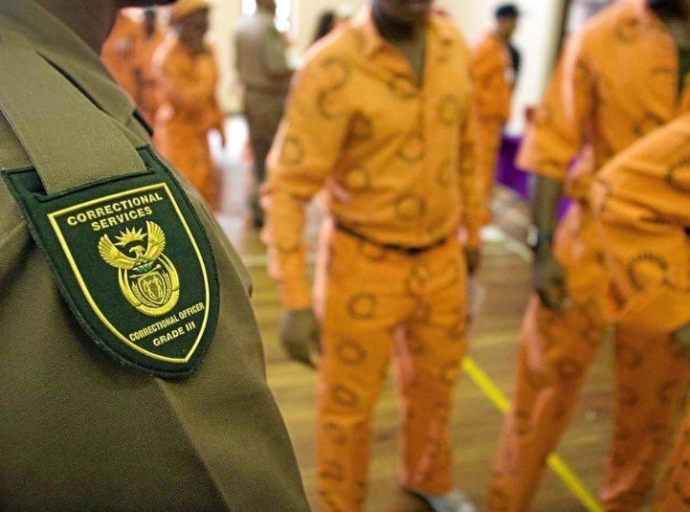
A former employee at the Department of Correctional Services (DCS) has been dismissed for insubordination following his refusal to escort an inmate who had a serious medical condition to hospital.
The dismissal comes after the DCS successfully appealed a previous ruling made by the Labour Court in Johannesburg. The Labour Court had set aside a sanction of dismissal and substituted it with an order of reinstatement with a final written warning.
TD Kutu worked as a prison warden at the Atteridgeville Correctional Centre. He was dismissed in August 2019 following a disciplinary hearing on three charges of misconduct pertaining to failure to carry out instructions.
Among other things, Kutu’s duties included escorting inmates to court or hospital, escorting them to clean offices and accommodation of officials and guarding them in field duties.
Kutu referred an unfair dismissal dispute to the General Public Service Sector Bargaining Council (GPSSBC) following a failed conciliation.
At the bargaining council, Malungwana, the unit manager, testified that in July 2018, he received a call from the prison clinic requesting an escort to take an inmate to Kalafong hospital.
He went to the clinic to enquire about the situation and the nurse informed him that the inmate had a kidney and bladder problem, and he could not urinate. As he came out of the clinic, he came across Kutu and asked him to assist with escorting the sick inmate to hospital.
Kutu refused to assist, stating that, as it was his birthday, he was going to knock off at 12pm.
Malungwana said he was not convinced that it was Kutu’s birthday as he had been working with him for a long time. He went to the human resource office to verify Kutu’s birthday, and he learned that his birthday was on September 22.
He went back to Kutu and confronted him about his dishonesty. Kutu then changed his story and said he confused his birthday with that of his wife. Malungwana asked him again to escort the inmate, he refused again and said he was going for lunch.
As part of his duties, Kutu had to escort inmates to court or hospital, escorting them to clean offices and accommodation of officials and guarding them in field duties.
In his defence, Kutu denied that he was given a reasonable instruction to escort the inmate to hospital. His evidence was that Malungwana informed him that he was requesting assistance but did not specifically order him to escort the inmate.
Furthermore, he claimed that that he was a victim of a conspiracy that was orchestrated by the head of the Correctional Centre to dismiss him because he had changed trade unions.
The arbitrator found it immaterial that Malungwana used the word assistance instead of ordered when he issued the instruction since it was Mr Kutu’s duty to escort inmates.
Therefore, Kutu was found guilty as charged. Regarding the sanction, the arbitrator found the dismissal appropriate, having taken into consideration the seriousness of the inmate’s medical condition.
Kutu lodged a review application in the Labour Court and contended that the arbitrator failed to consider the relevant evidence, particularly, the evidence that showed that there was no instruction.
Kutu argued that since the instruction was given in a casually, it gave him the impression that he had a discretion to refuse to assist.
The court found that Kutu had been with the department for 17 years and it cannot be said that he was a problem employee or that his record is marred with disciplinary incidents.
The judge said he was not satisfied that Kutu's misconduct was justified as an immediate dismissal, especially in a system which has restorative justice as one of its tenets.
The judge set aside a sanction of dismissal and substituted it with an order of reinstatement with a final written warning.
Aggrieved, the DCS went to the Labour Appeal Court to overturn the decision and Judge Portia Nkutha-Nkontwana presided over the case.
The judge said the Labour Court erred in finding that Mr Kutu was not a problem employee because there was evidence showing that Kutu had three existing disciplinary warnings. The three disciplinary warnings were verbal, written and final written pertained to insubordination.
Judge Nkutha-Nkontwana said this evidence was not seriously challenged.
"In all the circumstances, the appeal by DCS must succeed, and the order of the Labour Court pertaining to the sanction falls to be set aside," said the judge.
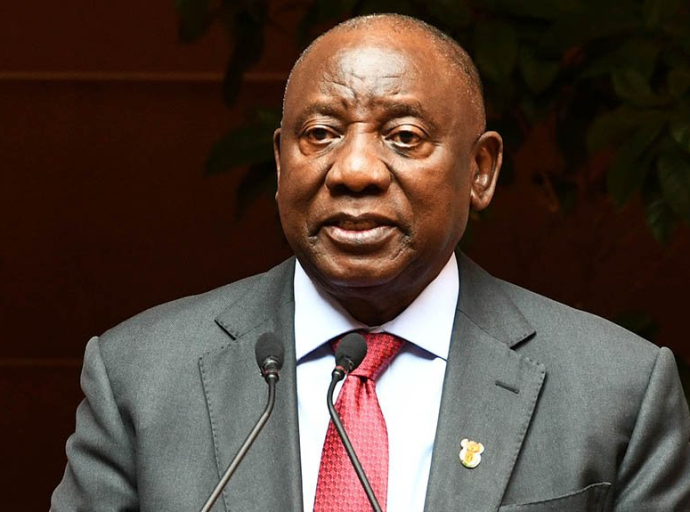
President Cyril Ramaphosa was responding to questions in the National Council of Provinces (NCOP) on Wednesday on transformation and its impact on foreign investment.
President Cyril Ramaphosa has again defended the country’s transformation laws, saying it was not the only country that requires international companies to transfer ownership to local investors.
Ramaphosa also said new regulations that won’t require global companies like Starlink to hand over 30% ownership were well within the law and should be welcomed.
Ramaphosa was responding to questions in the National Council of Provinces (NCOP) on Wednesday on transformation and its impact on foreign investment.
The president said that new regulations on equity equivalence, which is investment without handing over ownership, should be welcomed.
This is despite opposition by his own party in the communications committee, which insists on 30% ownership for disadvantaged groups.
President Ramaphosa said the regulations, introduced by Communications Minister Solly Malatsi, were about finding new ways to trigger investment without doing away with transformation.
But Ramaphosa said that the transfer of shares to local investors was not unique to South Africa.
"And let me immediately say that we are not the only country in the world that requires that there should be local ownership."
He said that South Africa was probably the only country that promoted transformation through "equity equivalence".
"If you’re not able to have joint ownership, we want equity equivalence that will help to address the injustices of the past."
On the regulations on equity equivalence, Ramaphosa said that South Africans would have an opportunity to make public submissions before they’re finalised.
*This article was first published by Eye Witness News
The test findings come from a landmark study by researchers at the University of Notre Dame, Indiana, who analysed 189 samples of various cancer drugs. About one-fifth failed.
Vital chemotherapy drugs used around the world have failed quality tests, leaving cancer patients in more than 100 countries at risk of ineffective treatments and fatal side effects, the Bureau of Investigative Journalism (TBIJ) can reveal.
The drugs in question form the backbone of treatment plans for numerous common cancers, including breast, ovarian and leukemia. Over the past six years, they have been shipped to every populated continent on the planet, to both low- and middle-income countries like Nepal, Ethiopia and North Korea, and wealthy nations such as the US, UK and Saudi Arabia.
The test findings come from a landmark study by researchers at the University of Notre Dame, Indiana, who analysed 189 samples of various cancer drugs. About one-fifth failed.
"We were all taken aback when we saw the results,” said Marya Lieberman, the professor who led the research.
The worst-performing drug in the study is made by Indian manufacturer Venus Remedies. All eight samples of the company’s cyclophosphamide product failed, with six containing less than half the stated active ingredient.
Venus Remedies told TBIJ that our results were “not scientifically plausible” given the company’s “validated manufacturing systems and quality controls.” It said it has received no complaints or concerns about the batches in question and shared the results of its own testing that indicated they were of a good standard.
The manufacturer said storage conditions in the supply chain – which can impact drug quality – might have affected the researchers’ test results. However, the absence of similar quality issues across the entire data set suggests this is not the case.
Venus Remedies is one of three companies or regulators that queried the methodology used by the lab, saying it deviated from international standards or could give erroneous results. However, Lieberman said that her researchers’ methods follow international standards as closely as possible and employ similar standards to a regulatory lab. Both the findings and methods have been scrutinised by independent academics.
Two other manufacturers whose products failed the testing, Zuvius Lifesciences and GLS Pharma, have supplied failed brands to over 40 countries.
Of the 17 companies to have manufactured failed drugs, 16 are based in India. Five have been previously flagged by regulators for producing substandard drugs, including Zee Laboratories, which has been flagged 46 times since 2018.
Some drugs contained so little of their key ingredient that pharmacists said giving them to patients would be as good as doing nothing. Other drugs, containing too much active ingredient, put patients at risk of severe organ damage or even death. “Both scenarios are horrendous,” said Shereen Nabhani-Gebara, vice chair of the British Oncology Pharmacists Association. “It’s heartbreaking.”
Zuvius Lifesciences, GLS Pharma, and Zee Laboratories did not respond to multiple requests for comment.
Doctors from multiple countries told TBIJ of the drugs in question not working as expected, leaving patients suddenly unresponsive to treatment. Other patients suffered side effects so toxic that they could no longer tolerate the medicine. “It’s very worrying,” a pharmacist in Malawi told TBIJ.
These findings expose huge holes in the global safety nets intended to prevent profit-seeking manufacturers from cutting corners and to protect patients from bad drugs. More than two in three countries around the world are reportedly unable to ensure the quality of medicines their populations are exposed to.
One such country is Nepal, which is also one of the biggest importers of the failed chemotherapy brands in this investigation. The country’s medicines regulator does not have the capacity to test cancer drugs and although it can recall cancer drugs based on external evidence, it has never done so.
“Neither patients nor their families have any way of knowing the quality of these drugs,” said Smriti Pokharel of the Wish Nepal Foundation. “No one seems willing to take responsibility for ensuring proper treatment for cancer patients.”
Much of the global demand for cancer treatment is met by generic drugs, which can be made once the original manufacturer’s exclusivity rights have expired. The bad drugs found by TBIJ in this investigation were all generics.
In India, the world’s largest producer of generic drugs, questions have been raised over whether manufacturers are properly punished for producing drugs unfit for purpose.
“The Indian government’s interest is in trying to protect the industry,” said public health activist and former Big Pharma whistleblower Dinesh Thakur.
India’s drug regulator defended the oversight system, saying that failing drugs are recalled and manufacturers face “either administrative penalties or legal prosecution in court”.
Thakur pointed to limitations in the World Health Organization’s means of ensuring that people across the world have access to safe effective drugs. He described one WHO standards certificate scheme as “not worth the paper it’s written on”. The WHO did not respond to several requests for comment made by TBIJ.
One cancer pharmacist in Ethiopia estimated that it could take over a year for a patient to save for cancer treatment. If that medicine then turns out to be faulty, they simply might not be able to afford to pay for another.
“Most people believe cancer is incurable,” they said. “When they end up with a medicine that won’t cure them, that’s another tragedy.”
*This article was first published by Eye Witness News