Free State Targets Surgical Backlogs
The three-day Cataract Marathon, held over the weekend at Boitumelo Regional Hospital in Kroonstad, was a great success, with over 100 patients receiving treatment.
Screening was conducted last week Friday with cataract operations scheduled for Saturday and Su...
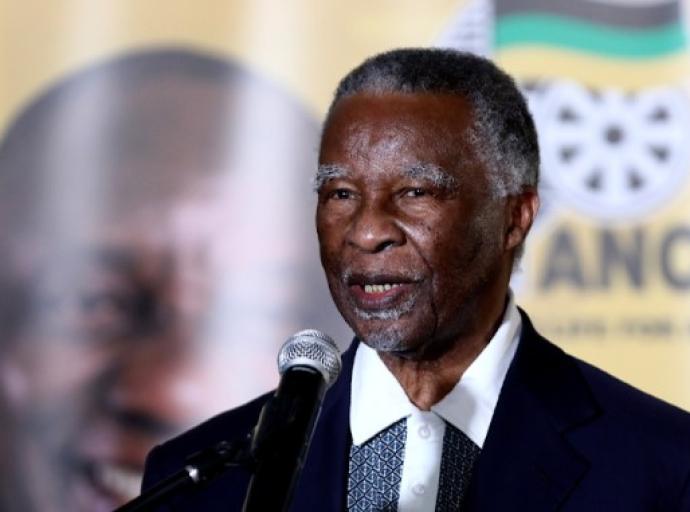
Former African National Congress (ANC) president Thabo Mbeki said one of the problems the party faced was people who joined it for personal gain.
Former African National Congress (ANC) president Thabo Mbeki said one of the problems the party faced was people who joined it for personal gain.
Mbeki addressed the KwaZulu-Natal ANC structures during a political school class in Durban on Saturday.
The party invited Mbeki to add his input as it works to regain the decline of support in what used to be its stronghold.
Mbeki said that in the past, people used to join the party to advance the fight for liberation but things took a different turn when they became a government party.
"Then we started attracting wrong people. People who were interested in the membership of the party, comrade Convenor raised this thing this morning when he spoke, not to pursue the objectives of the movement but for self-betterment... self-enrichment... and that’s a problem."
*This article was first published by Eye Witness News
The Congress of South African Trade Unions (COSATU) has issued a stark warning about the rapidly growing problem of employers defaulting on pension fund contributions, a breach that threatens the financial security of nearly 600,000 workers across key sectors.
In a statement released on Sunday, COSATU spokesperson Zanele Sabela revealed that the number of employers failing to pay workers’ deducted pension contributions has more than doubled since last year.
According to the latest Financial Services Conduct Authority (FSCA) report, 15,521 employers are now in default—up from 7,700 in 2024 and dramatically higher than the initial 4,000 reported in 2023.
“This disturbing trend places the livelihoods and futures of hundreds of thousands of South African workers at risk,” Sabela said.
“When pension contributions are withheld or remain in arrears, workers lose critical benefits such as death and disability cover, which can have devastating consequences for them and their families.”
The sectors most affected remain the automotive industry, private security firms, and municipalities. Collectively, these defaulters owe a staggering R7.29 billion in unpaid pension contributions.
COSATU stated that the automotive sector, already weakened by a 30% tariff on exports to the US, faces further strain following shutdowns and retrenchments, such as Goodyear’s closure and Ford’s planned layoffs of over 470 workers.
It stated that such instability makes securing pension funds even more vital.
“Municipal workers, too often grappling with months of unpaid salaries due to maladministration, suffer the added blow of not honoruing pension contributions.
“This withholding erodes their retirement savings through lost compounding returns and complicates their access to funds under South Africa’s Two-Pot Pension system, designed to ease financial pressure.
COSATU said that defaulting employers are violating Section 13A of the Pension Funds Act, which mandates the timely payment of retirement fund contributions and compliance enforcement.
The federation said it has previously called out private security companies that simultaneously default on pension payments yet receive lucrative government contracts—an incongruity COSATU condemns.
“We have insisted that the government must not reward lawbreakers with tenders but lead by example,” Sabela said.
Sabela mentioned that COSATU is engaging with government bodies, including the FSCA and the Department of Employment and Labour, to develop lasting solutions.
The organisation said at Nedlac that dialogue is ongoing to address the crisis, and agreements have been reached to bolster labour inspection mechanisms.
Furthermore, Sabela said that the number of Labour inspectors is set to increase tenfold from 2,000 to 22,000 by 2026 to improve oversight of pension contribution compliance.
“We are ramping up campaigns with our affiliates in the hardest-hit sectors to expose and hold employers accountable,” Sabela added.
“We will ensure that all monies owed—including interest—are paid, to protect the rights and futures of all workers.”
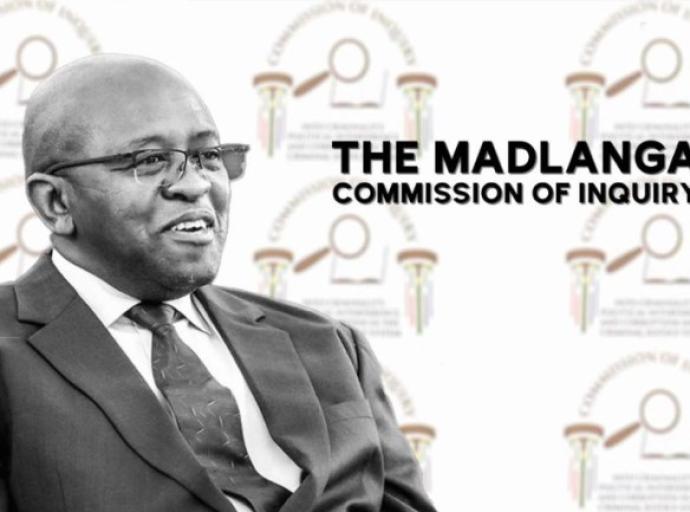
SAPS national head of crime intelligence and Project Leader of the Political Killings Task Team (PKTT), Lieutenant General Dumisani Khumal, is expected to testify at the Madlanga Commission on Monday.
He is the fifth witness as proceedings enter day eight.
Justice Mbuyiseli Madlanga, the commission chair, confirmed on Friday that Khumalo will appear before the commission on Monday.
He is also scheduled to appear before the Pretoria Magistrate’s Court as an accused.
“For the record, it has been reported to us that the issue of General Khumalo appearing in court on Monday, Magistrate’s court, has been resolved about his appearance before us at 9:30 am on Monday,” Madlanga said.
Khumalo was arrested in June at OR Tambo International Airport alongside six high-ranking police officials.
The group is under investigation for serious allegations, including fraud, corruption, and the alleged abuse of intelligence funds.
Khumalo’s arrest, coupled with his former leadership of the now-disbanded PKTT, has positioned him as a central and highly controversial figure in the ongoing inquiry.
He is expected to play a key role in exposing the inner workings of the PKTT and shedding light on widespread allegations of corruption within the broader security cluster.
According to the KZN Police Commissioner, Lt-Gen. Nhlanhla Mkhwanazi, who has already testified at the commission, said the arrest of Khumalo was a calculated move to shut down investigations into powerful drug cartels and organised crime.
IOL reported that Mkhwanazi said the planned arrest became clearer as investigations continued.
“When General Khumalo was arrested, it became clear – this wasn’t just a legal matter. It was a strategic hit on our operations. His arrest was meant to immediately collapse the investigation,” said Mkhwanazi.
The commissioner said the letter, which sparked Khumalo’s arrest, was never formally requested but obtained through whistleblowers within IDAC.
“The Chief of Staff and the Minister cannot deny the letter exists — it has a signature. It was used to call for the docket and initiate the arrest,” he told the commission.
According to Mkhwanazi, the project to expose drug cartels was gaining momentum until Khumalo’s arrest forced it to a sudden halt.
“We began to connect the dots when our intelligence operations in Gauteng were being disrupted. Then came Khumalo’s arrest, and everything stopped. That was the goal,” he said.
The commission continues and more people are expected to come forward and testify following corruption allegations in the SAPS and also the judiciary.
Three years after the devastating September 2022 Jagersfontein mine disaster, which left five people dead, over 300 injured, and thousands of homes destroyed.
Members of this community say they may be facing yet another horror, as their newly built houses are on the brink of collapse.
The mine collapse, which released six million cubic meters of contaminated waste, is a structural failure of a mine which resulted in a mudslide.
The mining company committed R150 million to compensate the victims, but to date, the victims are still in pain and have no hope that their lives will ever change for the better.
The newly built structures are not only too small but also plagued by poor construction materials, evident in the cracks that have begun to appear. Weak window frames, incomplete construction works, and inadequate electricity connections pose a significant security risk, leaving residents vulnerable and anxious that they may go through another disaster.
The disaster is now regarded as one of the worst mining-related environmental catastrophes in democratic South Africa.
This weekJournal News visited Jagersfontein, a town in the Xhariep District of the southern Free State, to assess the progress made in providing housing for community members in Charlesville and Itumeleng townships that were affected by the disaster.
The investigation was to determine how far the community has come in rebuilding their lives and addressing their housing needs.
Sidelined, unanswered questions, and neglected by the government, the residents of Jaggersfontein are privy to yet another disaster, and theysaa, they are not at peace.
Joyce Tsotetsi, a resident and victim whose house was wiped away by the mudslide, says she is scared for her life.
“These houses are small, and some of us are cramped in there with our furniture. My previous house was not big, but it was spacious and safe. I am not happy at all, and they must come back and fix these houses.
“My children even had to put burglars on my windows because I live alone with young children,” said Joyce Tsietsi.
Some say their newly built houses do not have an electricity infrastructure.
Tseko Ntelele says, “I use candles because the new houses don’t have a proper electricity connection.
“I take medication every day, and I always have to make fire to cook, because the electricity breaker they put for me is not working.”
Thabo Mosala also says that he is not happy at all because it looks like they were just in a hurry to build the houses without a proper plan.
The families that were affected by the mudslide were given a starter pack of money to buy their household furniture.
“We don’t feel safe living with our children in these houses because any day now they will fall on us. I even had to move my younger children.
“ I received a once-off payment of R35 000, and they said they will give us another one in two years. What am I going to do with that little money, because I have a lot of furniture and it's in good condition?
“I told them that instead of them giving me the money, I can give them the receipts for my furniture, and they will buy it themselves because that money is too little, it's not even half of what my furniture was worth,” said Mosala.
He added that his house was half tiled, and they said they would come back and finish, but they never did.
Journal News reached out to the Xhariep District spokesperson to get clarity on how government intervention would be, but did not get a response.
So far, five employees of an engineering company have been charged in connection with the dam collapse.
Hawks spokesperson Lieutenant Colonel Zweli Mohobeleli confirmed that criminal charges have been filed following a lengthy investigation conducted in collaboration with the Department of Forestry, Fisheries, and Environment.
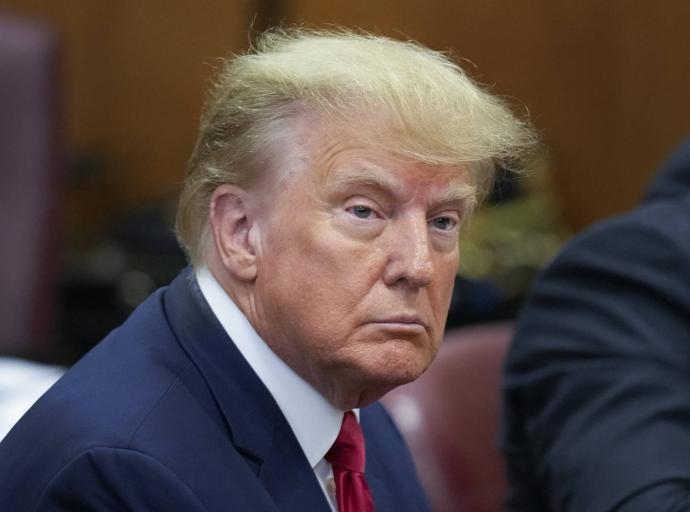
President Donald Trump has signed an executive order greenlighting the reinstatement of the death penalty for murder in Washington, DC, which he said would help deter violence in the nation’s capital.
The order directs US Attorney General Pamela Bondi and US Attorney for the District of Columbia Jeanine Pirro to “fully implement” capital punishment where evidence supports it. Trump announced the move during a White House signing ceremony, surrounded by Bondi, Vice President J.D. Vance, FBI Director Kash Patel and others.
“Death penalty in Washington,” Trump said as he signed the directive. “You kill somebody, or if you kill a police officer, law enforcement officer – death penalty. And hopefully there won’t be that. We’ve had week after week where we haven’t had a murder.”
White House Staff Secretary Will Scharf described capital punishment as “one of the most powerful deterrents we have to violent crime” and said it was part of Trump’s effort to make Washington “a safe and secure city for its residents and all who visit.”
The measure follows Trump’s sweeping crackdown on crime in the capital. In August he invoked the 1973 Home Rule Act to declare a public safety emergency, placing the city’s Metropolitan Police Department under federal control and deploying hundreds of National Guard troops to support local law enforcement.
The death penalty has not been legal in Washington, DC, since the Supreme Court nullified capital punishment statutes nationwide in 1972. City residents rejected its reinstatement in a 1992 referendum. While the federal government retains authority to seek capital punishment in certain cases, Trump’s attempt to extend its use across DC homicide prosecutions is expected to face legal and political challenges.
Twenty-seven US states currently allow executions, while 23 have abolished the practice. Trump has long advocated the broader use of capital punishment as a deterrent against violent crime. In recent weeks, he has called for the death penalty for the killers of Ukrainian journalist Iryna Zarutska and conservative activist Charlie Kirk.
An SAPS expert, Maj-Gen. Patronella Van Rooyen, has said Parliament failed in its constitutional oversight role by ignoring allegations of political interference by KZN Police Commissioner, Lt-Gen. Nhlanhla Mkhwanazi, months before his explosive media briefing in July.
“So the fact that the Portfolio Committee didn't act on that is, in my mind, a failure of their mandate,” she told the Madlanga Commission.
“Even if they initiated an investigation, called the management of the police to come and explain, that would already have been an exercise of oversight on their part to ensure that the matter received attention.”
Mkhwanazi made headlines on July 6, when — flanked by heavily armed tactical officers and wearing a Special Task Force uniform — he publicly accused Police Minister Senzo Mchunu of interfering in high-level investigations.
He said Mchunu interfered in police investigations, including giving an order to disband the Political Killings Task Team (PKTT).
Mchunu protected criminal networks within the police and political spheres, according to Mkhwanazi and National Commissioner, Fannie Masemola.
Mchunu and the suspended deputy commissioner, Shadrack Sibiya, are accused of having links to the controversial businessman, Vusimuzi “Cat” Matlala and Katiso Molefe.
In her testimony, Van Rooyen said Mchunu, had no authority to disband the PKTT.
This is a reason she viewed as falling outside the boundaries.
“To manage and control the police service, that must be linked to manage and control the police service in the execution of its constitutional mandate.
“And the decision of the minister to close a political task team that was responsible for the investigation of crime, in my view, fell outside the mandate or authority of the minister,” she said, according to Section 207 of the Constitution.