Free State Targets Surgical Backlogs
The three-day Cataract Marathon, held over the weekend at Boitumelo Regional Hospital in Kroonstad, was a great success, with over 100 patients receiving treatment.
Screening was conducted last week Friday with cataract operations scheduled for Saturday and Su...
In a dramatic show of frustration during protests, University of Fort Hare students in the Eastern Cape have allegedly set alight the administration and Student Affairs buildings on fire.
The act of arson comes after growing unrest and desperation among students, who feel their voices are not being heard regarding their governance and representation.
Students are also calling for Vice-Chancellor, Professor Sakhela Buhlungu's removal.
Meanwhile, the SABC reported that during the Wednesday protest, two students have been taken to hospital after sustaining injuries while clashing with police.
Student leader Uzusiphe Vuzane told the broadcaster that the shots fired were through live ammunition.
“The other student was shot on the left knee the other student was shot just above the heart near the shoulder," Vuzane was quoted as saying.
The Supreme Court of Appeal has upheld President Ramaphosa’s 2022 recognition of King Misuzulu, overruling a previous judgment.
While the Supreme Court of Appeal has put an end to the legal battle over who leads the Zulu nation, cultural expert Professor Musa Xulu says the ruling also exposes deeper issues within the way traditional leadership is governed, largely through oral traditions that leave room for dispute and interpretation.
On Monday, the Supreme Court of Appeal in Bloemfontein ruled that President Cyril Ramaphosa acted lawfully in recognising Misuzulu kaZwelithini as the Zulu King in 2022.
At that time, members of the Zulu royal family who opposed Misuzulu’s ascension to the throne approached the court to oppose the recognition.
This week's judgment overrules the one made by the Pretoria High Court in December 2023 which found in favour of Princes Mbonisi and Simakade Zulu.
The SCA accepted that all processes had been followed and confirmed that it is the royal family and not the president who chooses the king.
Cultural expert Professor Musa Xulu explains that the Traditional and Khoi-San Leadership Act, No. 3 of 2019, was introduced to address the way in which leaders are appointed.
"Basically, it should be based on your traditions", he says. "It is very much based on oral and customary perceptions...the Act does not prescribe how it must be."
On the issue of establishing a more formal, codified system, Xulu adds, "I once mentioned to the president in passing that he should consider forming a committee that would be able to help write down codification for all these customary practices."
He notes that one of the reasons there are frequent disputes around traditional leadership issues is due to the complexities of the oral tradition.
And what of a possible challenge to the Supreme Court ruling and the likelihood of an appeal being launched with the Constitutional Court?
Xulu says it's possible, but unlikely.
"That judgment is very tight, but you never know."
*This article was first published by Eye Witness News
The Standing Committee on Public Accounts (SCOPA) will, on Tuesday morning, begin its oversight enquiry into the evidence of, and allegations of maladministration, financial impropriety, and the misuse of public funds at the Road Accident Fund (RAF).
The enquiry will begin with the RAF and the Department of Transport in the afternoon. On Wednesday, the Office of the Chief Procurement Officer, the Office of the Accountant General and the Auditor-General of South Africa will appear before the committee.
The Special Investigating Unit is expected to appear on Friday.
Among SCOPA’s key concerns are:
Failure to perform adequate background checks on senior management and executive appointments who nonetheless have access to and manage significant sums of public funds, despite having a deeply concerning employment and disciplinary history involving allegations of reckless financial management decisions.
Subsequent refusal by the RAF to disclose to the committee where such funds are kept and for what purpose.
Failure to appoint critical officials such as a Chief Claims Officer, Head of Claims Operations, Head of Legal, Chief Corporate Support Officer, Head of People Management etc, for an unacceptably long time while decisions with a significant financial impact on the RAF are being taken, alternatively, not being taken when they should.
Apparent failures of governance with a direct impact on the rule of law, the authority and powers of Parliament, as well as Chapter 9 institutions tasked with performing oversight on behalf of the South African people.
Numerous whistleblower accounts relating to supply chain irregularities involving more than R1 billion, while internal management controls appear not to be applied.
The Oversight Enquiry is a legally mandated process to allow Parliament to conduct its oversight in a structured manner, but it is neither a judicial nor a quasi-judicial process, and is not adversarial in nature.
According to the RAF Terms of Reference: “The Oversight Enquiry is an inquisitorial process, informed and underpinned by Parliament’s oversight mandate. The SCOPA does not seek to usurp the functions of any other organ of state or law enforcement agency.
“The SCOPA, therefore, acknowledges that parallel investigations or enquiries outside (and even inside) of Parliament may be taking place. This, however, cannot absolve the SCOPA from carrying out its oversight functions.”
SCOPA Chairperson Songezo Zibi said that they have been preparing the inquiry for the last three months. Zibi said that since October last year, they have asked for accurate and truthful information from the RAF, and that the information received has either been unreliable or not forthcoming at all.
“We will begin the enquiry, which will be led by the (committee) members themselves. I will chair the sessions, and it will go on for several weeks until the middle of November.
“We will do our best to complete our report either by the end of November or the beginning of December so we can table it before the National Assembly with recommendations, which will then form part of our oversight work.”
Zibi thanked the public and other stakeholders for their submissions after SCOPA put out a call. He said they received just under 100 submissions, with some of them running into hundreds of pages.
“A lot of them we very useful and they got us in touch with several people, inside and outside of the RAF, that helped us determine how we are going to conduct the enquiry.”
“We have received a lot of allegations that have caused us to do this inquiry, so we are going to probe all of that,” Zibi said.
“All of this will be conducted in public, and at the end of each day, we will upload documents so that members of the public can see for themselves.”
International oil prices tested four-month lows late last week, and that could bring good news for motorists in November with early data showing significant fuel price reductions could be on the cards.
Unaudited data from the Central Energy Fund (CEF) is pointing to petrol price cuts in the region of 48 cents for 95 Unleaded and 51 cents for 95 Unleaded.
Diesel looks set for a more modest reduction in the region of 10 cents per litre for both grades.
However, if we see a continuation of current trends, as portrayed by the latest daily data, price cuts in the region of 30 cents for diesel and 70 cents for petrol could be on the cards.
This significant over-recovery for fuel prices is being driven by a stronger rand and lower international oil prices.
Late last week, the South African rand hit a one-year low of R17.17 to the US dollar, and the local currency is currently trading at R17.21.
The price of Brent Crude oil dropped below the US $65 per barrel mark on Monday, down from $70 since late September. While prices edged upwards slightly on Monday, closing at $65.51 on Monday after the OPEC+ cartel agreed to a modest production boost, oil is still 6.5% down on last week’s price peak, boding well for a continuation of the current over-recovery.
OPEC+ has been steadily increasing output in 2025, after implementing cuts in the previous two years, which was originally meant to be phased out by September 2026, Euro News reported.
South Africa has seen relatively stable fuel prices this year, with both petrol and diesel currently costing around the same level as they did in January.
Following October’s modest increase of eight cents per litre, 95 Unleaded currently costs R20.84 at the coast and R21.63 in Gauteng. 93 Unleaded, following this month’s one cent increase, costs R21.48.
Diesel saw modest October decreases of 10 cents for 500ppm and eight cents for 50ppm, with the latter now carrying a wholesale price of R18.63 at the coast and R19.39 inland.
E-cigarettes are fuelling an "alarming" new wave of nicotine addiction, with millions of children now hooked on vaping, the World Health Organisation (WHO) warned on Monday.
In countries that have the data, children are on average nine times more likely than adults to vape, the WHO said.
The UN health agency said the industry was promoting vapes as supposedly less harmful products than cigarettes - but in fact was aggressively targeting young people and getting children addicted.
More than 100 million people are vaping, according to the WHO's first global estimate of e-cigarette use.
They include at least 86 million adults, mostly in high-income countries - and at least 15 million children aged 13 to 15.
"E-cigarettes are fuelling a new wave of nicotine addiction," Etienne Krug, the WHO's director of health determinants, promotion and prevention, said in a statement.
"They are marketed as harm reduction but, in reality, are hooking kids on nicotine earlier and risk undermining decades of progress."
One in five still addicted to tobacco
Globally, people are smoking less, with the number of tobacco users dropping from 1.38 billion in 2000 to 1.2 billion in 2024, while the world's population has swelled.
However, one in five adults worldwide are still addicted to tobacco.
"Millions of people are stopping, or not taking up, tobacco use thanks to tobacco control efforts," WHO chief Tedros Adhanom Ghebreyesus said in the statement.
In response, the tobacco industry "is fighting back with new nicotine products, aggressively targeting young people", Tedros added.
Twelve countries are seeing tobacco use rising, the WHO said in its global report on trends in tobacco use prevalence.
"These reversals... represent millions more people at risk of disease, disability and premature death," said WHO's assistant director-general Jeremy Farrar.
Worldwide, smoking reduction is happening more quickly among women than men.
'Subtle' online ads
Farrar said tobacco use was killing more than seven million people every year, while second-hand smoke killed over one million.
Smoking damages "every single part of the body", Farrar told reporters, adding that doing it indoors around children was "irresponsible and unacceptable".
Around 40 million children aged 13 to 15 currently use tobacco, or one in 10, said Farrar.
In some countries, children were "well under 10" when they started using tobacco, said Alison Commar, the global report's lead author.
Commar warned children were being "very heavily exposed" to tobacco advertising online.
"It's really subtle. It's very difficult to regulate," she said, with social media influencers using products while discussing something else.
She told reporters that e-cigarettes were "very much a gateway for young people to move later into tobacco, or to maintain a nicotine addiction as they grow older".
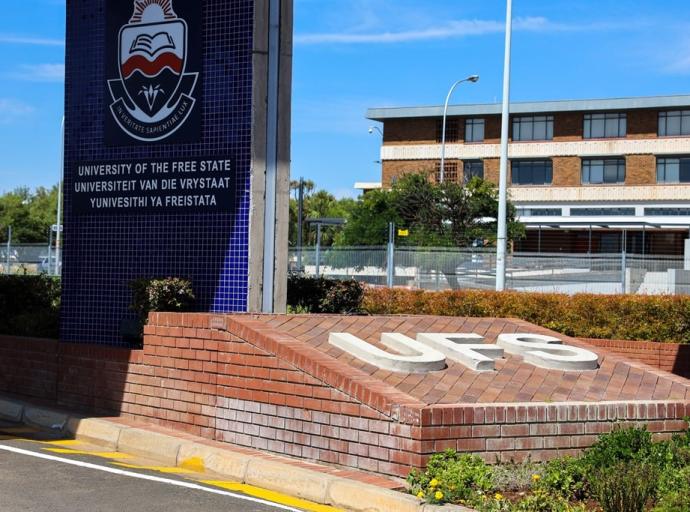
A quiet crisis is unfolding at the University of Free State School of Nursing, with about 50 postgraduate students trapped and stuck with “fake” qualifications. The class of 2023 Postgraduate Diploma in Occupational Health Nursing and the Postgraduate Diploma in Primary Care Nursing at the UFS nursing school, who attended a yearlong programme with the hopes and aspirations of improving their lives and careers have turned into a nightmare as their qualifications are not valid to be registered by the South African Nursing Council. After graduating the students received the shock of their lives when SANC declined to register their qualifications saying that their diplomas are invalid. SANC is the official body responsible for setting and maintaining high standards for nursing education and practice across South Africa, if not registered, nurses may not practice. Their dreams were shattered when they received an email from the school on 13 December 2023 stating that there is a delay in the registration process due to pending matters with SANC concerning their status as learners. According to SON, the OHN and PHC programmes were only registered by the Higher Education and South African Qualifications Authority (SAQA) before commencement. A professional nurse in private sector and one of the Nursing students, Karabo Tlhatlogi explained that in 2022 the UFS advertised then post graduate diploma programmes in Primary Care Nursing, Occupational Health and Nursing Education. He says these programmes were listed on the SANC website as accredited offerings, but at onstage during the registration of their studies were they informed that the programme was not fully accredit ed. “This lack of transparency denied us the right to make informed decisions about our education and professional futures. “Despite numerous attempts to engage with the school of nursing, our concerns have been met with silence, delay and inadequate responses. While oath to empower herself and upgrade her salary, as her current salary is not enough. xxx. Picture: Supplied er students from other cohorts have been registered and employed, our applications remain unresolved. Journal news is in possession of all the letters that were sent to students about the matter since 2023, and the message is that the nursing school is still trying to resolve the matter. The first letter dated 13 December 2023 from Programme Director Dr LJ Magakwe “ …There may be some delays with the registration of your additional qualification at SANC due to challenges that were experienced during your registration and as learners….” The second letter dated 02 May 2024 from nursing school head Dr Jeanette Sebaeng “…..The two programmes commenced on conditional accreditation…” Third letter dated 10 October 2024 from Seabeng “….No formal feedback has been received yet….” Fourth letter dated 20 March 2025 from Seabeng “…SANC only accredited this qualification in the cause of 2023, meaning this qualification was not registered by SANC at the time UFS registered students in this programme at the start of 2023…” The same letter was sent again in November 2024 by Seabeng The final letter dated 19 September 2025 from UFS spokesperson Lacea Loader “….UFS received feedback from appeals panel of SANC….we will inform you soon of our response to the feed back from the appeals panel….” These students have expressed their frustration saying that they feel betrayed by the University for giving them a qualification that they cannot use, and it has become a nightmare. Tlhatlogi says this has been a stressful and depressing experience. He says he has invested money, time an effort to do his postgraduate on Occupational Health and now 18 months later he is unable to be a specialist in his nursing career. “We have been fighting this matter, but we are not getting a clear message. All we are getting from then university is that they are in talks with SANC. “When we contacted SANC, they say that the issue is not within SANC’s scope to resolve and directed the matter back to the university, which added further confusion and concern to us. “Eighteen months after completing our qualification, we remain unregistered with SANC, leaving us professionally stranded. Tlhatlogi says he has missed four opportunities as a nursing specialist, but he cannot get the promo t ion because his qualification is not recognised. Samantha Drury from the Eastern Cape studied a Postgraduate Diploma in Primary Care Nursing. She said that she enrolled in this qualification “I am stagnant in a facility that I do not want to work in because I had an agreement with HR that I would take a transfer to a closer facility after graduating, because they had a vacant post which needed this Primary Care Nursing qualification, now 18 months later, I’m stuck in this facility as a general nurse,” she said. “I spend triple the petrol I used to because I had an injury on duty after being assaulted by a patient, thus we had the agreement with my HR department that I’d move to one of the two facilities next to my home because my sight was reduced after the injury. She says going to work is a nightmare and that she is on depression medication because of this whole situation. “I have never felt so betrayed in my life. I was handed over to attorneys for fees of a qualification that is invalid. “I will never recommend anyone to go to UFS, to think this was one of the reputable universities” Another occupational health student, Azola Nyamfu says she is tired and emotional. She says that this year alone, she had three offers from three occupational health clinics but was turned down after disclosing that she didn’t have SANC documents. Due to frustration, the group even approached the UFS Law Department in June 2024 with requests for assistance in resolving the matter, but no effective support or resolution was offered. Journal News approached Loader about this matter and she explained that the university is committed to finding an amicable solution. “The university is engaging relevant stakeholders, including the South African Nursing Council (SANC), and will liaise with the students imminently regarding the professional registration of their Postgraduate Diploma in Occupational Health Nursing and the Postgraduate Diploma in Primary Care Nursing, which they completed in 2023. “The UFS recognises that this has been a lengthy process and remains committed to finding an amicable solution, said Loader.