Free State Targets Surgical Backlogs
The three-day Cataract Marathon, held over the weekend at Boitumelo Regional Hospital in Kroonstad, was a great success, with over 100 patients receiving treatment.
Screening was conducted last week Friday with cataract operations scheduled for Saturday and Su...
At least a quarter of a million people have been waiting years for their applications for late birth registration to be processed. And this is a conservative estimate, the Children’s Institute says in its papers filed with the Western Cape High Court. The court application seeks to put the Department of Home Affairs (DHA) on terms to take action to tackle the backlog.
The institute, represented by the Legal Resources Centre, says the department’s tardy approach to this issue, which affects fundamental rights of children and their parents and caregivers, must be declared unconstitutional. It wants the court to order that the DHA develop a clear and comprehensive plan to tackle the backlog and prevent future backlogs.
The court papers are full of personal stories of how some people are left waiting for up to seven years to have their applications decided, and how it affects them.
One, the mother of a now 15-year-old, described how she grew up without a birth certificate and was constantly threatened that she would not be allowed to write matric. Now her son is having the same experience, though she applied for his birth certificate when he was eight. A keen soccer player, he could no longer participate in tournaments and had a recent brush with the law.
Parents of a 13-year-old, said she had been “expelled” from school twice because she had no birth certificate. She was eventually accepted at a school far from home, where she felt ostracised.
Generally, without birth certificates, children cannot get identity documents. And without proof of identity it is very difficult to access the schooling system. They cannot operate within the formal economy and battle to access social grants.
“They find themselves pushed further and further to the fringes of society,” legal researcher Mbonisi Nyathi says in his affidavit.
Since launching the application on behalf of 15 affected clients, the DHA has taken action to resolve these particular cases.
In a “briefing note”, senior researcher Paula Proudlock says the 15 caregivers involved in the case are primarily mothers, while others are fathers, relatives, foster parents and prospective adoptive parents, who have all lodged applications with Home Affairs for the late registration of their children’s births (and in two instances for their own births).
“Despite submitting all the necessary documents and complying with the provisions of the Births and Deaths Registration Act and its Regulations, they have been forced to wait for between two and seven years for Home Affairs to decide their applications. Most of them have followed-up multiple times over the years, incurring high transport costs, only to be told to go home and wait for a call for an interview,“ Proudlock said.
“Since belatedly becoming aware of the litigation in late May 2025, Home Affairs had prioritised holding interviews to finalise the applications of the 15 caregivers who are involved in our case,” she said. “Concerningly, these interviews have generally focussed on questioning the circumstances which caused the late registration to be necessary and coercing mothers to admit they were negligent, in order for the interview to be short and successful. Ten of the 15 individuals have to date been issued with birth certificates.”
In the court application, Nyathi said that while the institute supported the policy that births should ordinarily be registered within 30 days, there were many reasons why this does not happen, so there would always have to be a system to deal with late birth registration.
He said some babies were born at home in isolated rural areas, where sometimes cultural practices required mother and child to remain at home for up to three months.
Many mothers did not have their own IDs because they were young (between 15 and 21) and either had not applied for an ID or were also victims of the LBR system. Without an ID they could not use the birth registration desk at the hospital or clinic where they gave birth, Nyathi said.
He said the late birth registration process was arduous because it involved verifying documents and because of the insistence by DHA on conducting interviews, despite this not being required by law.
There was no co-operation between offices in different provinces and applications were being dealt with manually, in paper folders in local offices, making them “invisible to national office and more susceptible to loss and neglect”.
“A significant contributing factor is the DHA’s failure to acknowledge the backlog and the factors within its control that have created it,” Nyathi said.
He said while the DHA had promised to address backlogs for temporary resident and permanent resident permits and unabridged marriage and death certificates, no mention had been made of the late birth application backlog.
“Ultimately this situation is untenable and violates the constitutional rights of hundreds of thousands of children and adults,” Nyathi said.
“Not only does this impact their own lives, but it creates an intergenerational ripple effect, ultimately resulting in their children also remaining unregistered after birth for significant periods of time.”
The government respondents, including the Minister and Director-General of Home Affairs, have 30 days to file opposing affidavits.
This article was first published by Eye Witness News
Patients are being treated at old church buildings because the clinic has been closed since 2022 for renovations
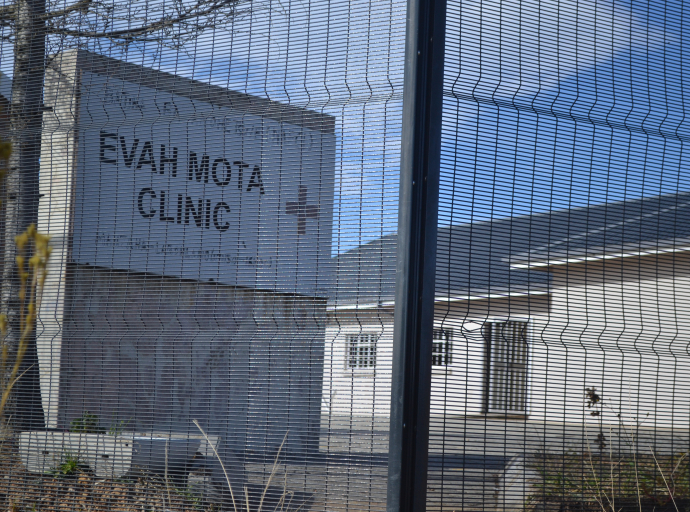
Patients in Tsheseng village in Qwaqwa wait outside one of the old church buildings currently being used as a clinic. Renovation of the Evah Mota Clinic has been on hold since November because the Free State Department of Health still owes the building contractor about R3-million. Picture: Tladi Moloi/GroundUp
The renovation of the Evah Mota Clinic in Tsheseng village in Qwaqwa, Free State, is stalled because the provincial Department of Health owes the contractor millions of rands.
The clinic has been closed since 2022 for major renovations. In the meantime, clinic staff are using old church buildings to treat patients, store medication and keep confidential patient files.
The contractor, Phunya Consulting, abandoned the clinic site in November after waiting for payment. The department has only paid R7-million of the R10-million renovation cost.
At the church building being used temporarily as the clinic, patients were queuing outside to see the doctor, some sitting on the ground.
One of the patients, Seipati Makume, said the church building is too small so patients have to wait outside, regardless of the weather. “There are no chairs. You will stay at the clinic the whole day because the service is very slow. Imagine staying outside while it is raining,” she said.
Sipho Mgudlwa, an executive at Phunya Consulting, confirmed that the contractor had left the site in November after the department failed to pay the outstanding balance for work done.
“We invoiced them last year but we did not get the money. We kept on working with our own money until our coffers dried up and we had to stop.
“We wrote letters to the department but we were told that they don’t have the budget to pay us. Our last communication was in March,” he said. Mgudlwa said this was not the first time the project had been delayed by a failure to pay.
Department spokesperson Mondli Mvambi confirmed that the department had only paid R7-million of the R10-million to the contractor. “The Evah Mota Clinic is 95% complete with outstanding work on waste management and the water tank.”
“There was a delay in the payment processes to the main contractor which resulted in the contractor going off site.” He said the delay was due to “cash flow challenges” in the department. “We are working on mechanisms to get the outstanding work done,” Mvambi said.
This article was first published by Eye Witness News
Some parties have also noted the high salaries paid to some of the CEOs of the network operators, calling on them to help contribute to uplifting poor communities.
Members of Parliament (MPs) have grilled the country’s mobile network operators over poor connectivity and their pricing models for services like data.
Some parties have also noted the high salaries paid to some of the CEOs of the network operators, calling on them to help contribute to uplifting poor communities.
The mobile network operators, including MTN, Vodacom, Cell C and Telkom, appeared before the communications committee on Friday to give an update on challenges and progress made in achieving universal connectivity.
The CEOs of the mobile network operators told the committee that they’ve made major strides in expanding coverage, especially in the 5G network space.
But MPs have questioned their pricing construct, especially the issue of expiring data.
Committee member Sinawo Thambo said this remains a concern and affects people’s ability to communicate.
"Our logic might be sound financially, but it undermines possibly human rights and human dignity."
MK Party MP Colleen Makhubele accused the operators of preying on the poor.
"You have become loan sharks to the poor. Instead of cutting data costs, you are now advancing it and loaning them."
The companies told the committee that while they note their concerns, they’ve already invested billions in infrastructure to expand coverage.
*This article was first published by Eye Witness News
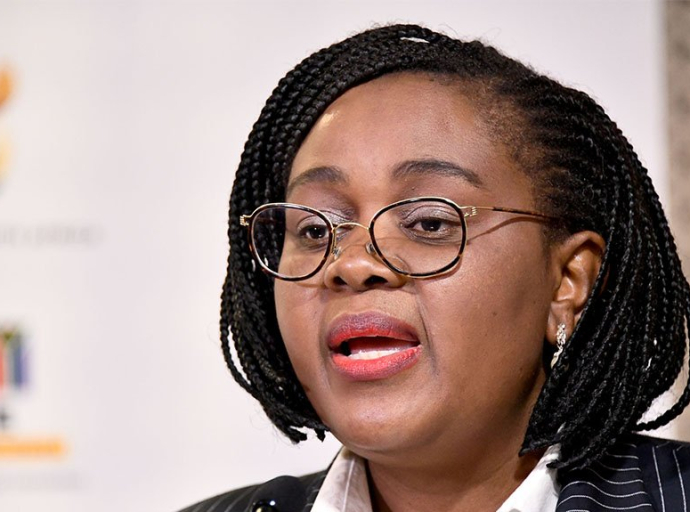
Justice minister Mmamoloko Kubayi is set to introduce new divorce laws for South Africa, by tabling the General (Family) Laws Amendment Bill, 2025, to parliament.
The laws will give effect to changes ordered by the Constitutional Court in 2023, to make it easier for spouses married out of community of property without accrual to get their fair share when the marriages end in divorce or death.
The minister said she would introduce the new laws to the National Assembly “shortly”.
The bill seeks to amend certain aspects of the Divorce Act of 1979, which arise from the amendments to the Mediation in Certain Divorce Matters Act 1987.
It also aims to provide for the transfer of assets by a court granting a decree of divorce regarding a marriage out of community of property for those entered into before the commencement of the Matrimonial Property Act of 1984.
The new bill will also amend the Matrimonial Property Act to provide for the distribution of matrimonial property in a marriage out of community of property upon the dissolution of the marriage by death.
The last Act that the bill will amend is the Mediation in Certain Divorce Matters Act of 1987, which will provide for the functions of the Office of the Family Advocate.
The Mediation in Certain Divorce Matters Act will further be amended regarding long and short titles, and other connected matters.
Why the changes are needed
Many of the changes in the bill stem from the Constitutional Court ruling in October 2023 which found that certain parts of the Divorce Act were unconstitutional and invalid.
These relate to couples married “out of community of property”, with the intention now to make it fairer on certain spouses when these marriages end.
When married out of community of property, the estates of spouses are kept separate, and neither spouse has a claim against the other spouse’s estate even if they contribute to the maintenance or growth of the other’s estate.
In November 1984, the Matrimonial Property Act introduced the concept of “accrual”, which allows spouses who are married out of community of property to share in the growth of each other’s estates while still maintaining their separate estates.
Upon divorce or death, the spouse with the smaller accrual or no accrual has a claim against the spouse with the bigger accrual.
Marriages before 1984 did not have the option of accrual, and would have to apply to a divorce court for a redistribution order. This was enabled through amendments to the Divorce Act.
However, the Constitutional Court found this to be invalid, as the Divorce Act did not allow this for spouses who were married out of community of property without accrual after 1 November 1984, nor for marriages ending in death before or after the 1984 change.
With the expected amendments, spouses who find themselves in financially vulnerable positions when their marriages out of community of property without accrual will benefit.
Other big changes for divorces coming
If the new bill passes through parliament and is assented to, it would mark another significant change to divorce laws following President Cyril Ramaphosa signing the Divorce Amendment Bill last year.
The Divorce Amendment Bill brought significant changes to Muslim divorces in the country and comes after a lengthy court battle.
In the Women’s Legal Centre Trust v President of the Republic of South Africa and Others, the Constitutional Court ruled that the act was unconstitutional as it excluded Muslim marriages.
The non-recognition of Muslim marriages in civil law meant that a person, particularly a woman, who is married in terms of Islamic law had no right to seek a divorce from a court.
Al Jama-Ah leader Ganief Hendricks, who introduced a private member’s bill on the matter, said that Muslim families suffered greatly due to not having the same legal remedies offered in the Divorce Act.
Muslim women under Sharia law are often left destitute if a divorce is initiated, as they cannot try to claim patrimonial benefits following dissolution.
The Divorce Amendment Bill thus introduced the following changes:
To insert a definition of a Muslim marriage,
To provide for the protection and to safeguard the interests of dependent and minor children of a Muslim marriage.
To provide for the redistribution of assets on the dissolution of a Muslim marriage
To provide for the forfeiture of the patrimonial benefits of a Muslim marriage.
“The amended legislation addresses shortcomings in the Divorce Act of 1979, which differentiated between people married in terms of the Marriage Act and people married according to Muslim rites, especially women,” said the Presidency.
It was a bloody long weekend in Cape Town as police investigated two separate shootings that left four people dead and five others injured.
As South Africa commemorated Youth Day on Monday, June 16, gunshots rang out in the Siyajlala informal settlement in Nyanga at 5 pm.
Western Cape police spokesperson, Sergeant Wesley Twigg, confirmed the mass shooting.
“A 47-year-old man was shot and fatally wounded. Four others, between 30 and 40, were wounded and are under investigation.
"Police members responded to a complaint of a shooting, and upon arrival on the scene, they found the victims with gunshot wounds to their bodies. The 47-year-old victim was declared deceased on the scene by medical personnel, while the other victims were taken to a medical facility for medical treatment,” Twigg said.
Police said unknown suspects entered the premises looking for someone and opened fire. The suspects fled the scene and have yet to be arrested.
“Nyanga detectives are investigating a murder and four cases of attempted murder,” Twigg said.
In a separate incident on Sunday, June 15, just before midnight, a shooting incident in Philippi East claimed the lives of three men, aged between 28 and 39. A fourth victim was wounded in the shooting incident.
Officers attached to the Provincial Serious Violent Crimes are investigating the shooting incident.
Police said the victims were consuming alcohol in a residence on 18083 Road in Better Life when unknown suspects entered the premises and opened fire.
The victims were declared dead on the scene, and the fourth victim was transported to the hospital for medical treatment.
Police urged anyone with information that could assist the investigation is urged to contact Crime Stop on 08600 10111 or submit a tip-off anonymously via the MySAPS mobile application.