Free State Targets Surgical Backlogs
The three-day Cataract Marathon, held over the weekend at Boitumelo Regional Hospital in Kroonstad, was a great success, with over 100 patients receiving treatment.
Screening was conducted last week Friday with cataract operations scheduled for Saturday and Su...
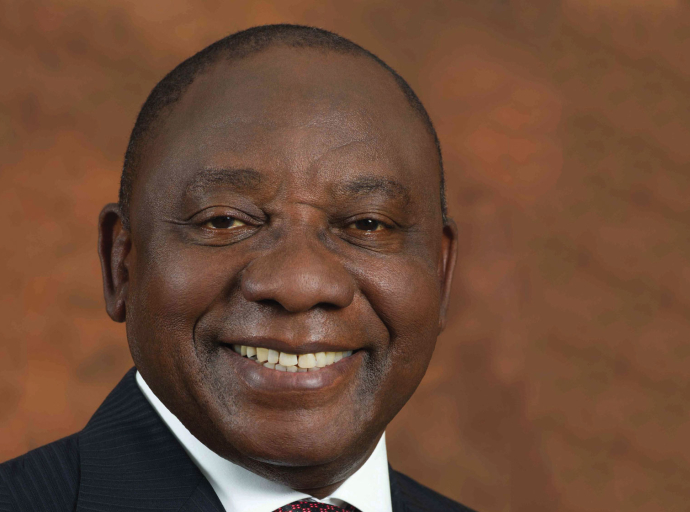
As the death toll rises to 78, President Ramaphosa leads a high-level delegation to the devastated Eastern Cape, pledging swift action and compassionate support for affected families and communities.
President Cyril Ramaphosa will visit the flood-stricken areas of the Eastern Cape on Friday, 13 June 2025, following a devastating storm that has caused widespread destruction and mounting casualties.
Nearly 78 people have lost their lives, and significant damage has been reported across infrastructure in the OR Tambo and Amathole District Municipalities.
The Presidency announced that the President’s visit aims to assess the situation on the ground, oversee relief efforts, and engage directly with affected communities.
He will be accompanied by Minister of Cooperative Governance and Traditional Affairs (Cogta) Velenkosini Hlabisa, Eastern Cape Premier Oscar Mabuyane, and senior disaster response officials.
Presidency spokesperson Vincent Magwenya confirmed the visit, stating:
“The President is being kept abreast by Minister Hlabisa and Premier Mabuyane on search and rescue efforts, as well as the additional support required to ensure a comprehensive response to this devastating disaster.”
Mabuyane confirmed that on Wednesday afternoon, 49 people were confirmed dead. Among the victims were children who had been using scholar transport that was swept away by the floods.
“The number of people confirmed to have been in the minibus taxi that was swept away is 13. Three learners were rescued alive yesterday, and sadly, four learners have been confirmed deceased together with the driver and a conductor of the minibus taxi. Four learners are still missing,” Mabuyane said.
Ramaphosa expressed deep sorrow over the loss of life and extended heartfelt condolences to the families and communities impacted by the tragedy.
During the visit, the President and his delegation will monitor the progress of ongoing rescue and relief operations and coordinate further interventions where necessary, said Magwenya.
“The President will commence his oversight visit to the flood-affected sites accompanied by Minister Hlabisa, Premier Mabuyane, and disaster response leaders,” Magwenya said.
“The delegation will engage with communities to assess their needs and reaffirm the government’s commitment to support recovery and rebuilding efforts.”
Meanwhile, the Presiding Officers of Parliament, led by Speaker of the National Assembly Thoko Didiza and Chairperson of the National Council of Provinces Refilwe Mtshweni, have expressed deep sorrow over the tragic loss of life in the Eastern Cape and the widespread devastation caused by severe weather in both the Eastern Cape and KwaZulu-Natal provinces.
“Our heartfelt condolences go out to the families who have lost loved ones, and we stand in solidarity with all those whose homes and livelihoods have been affected,” said Parliament spokesperson Moloto Mothapo in a statement.
Basadien's possible future move Stellenbosch FC defender and stand-in Bafana Bafana captain Fawaaz Basadien is in demand after an impressive season for his club.
As the countdown to the World Cup qualifiers in September begins, Bafana Bafana head coach Hugo Broos has taken proactive steps to refine the national squad by playing friendlies.
Recently, the national team managed a goalless draw against Tanzania before securing a convincing 2-0 victory over Mozambique.
The line-up featured a mix of experimental talent as several key players from Mamelodi Sundowns and overseas-based players were absent; the performances from emerging stars have ignited optimism for the team's future.
Among the stand-out performers in these matches were the Orlando Pirates duo of Relebohile Mofokeng and Mohau Nkota, who both demonstrated their potential for most of the season in the domestic arena.
Additionally, three other players made a compelling case for their inclusion in future Bafana Bafana squads: Mbekeza Mbokazi, Fawaaz Basadien and Luke le Roux.
1 Mbekezeli Mbokazi
At just 19 years old, Mbokazi has created a buzz in South African football, establishing himself as a candidate for the left centre-back position that Broos has pinpointed as needing urgent attention.
He rose through the ranks at Pirates with remarkable speed and now made his national debut against Mozambique. He had an impressive understanding of the game alongside his club teammate Nkosinathi Sibisi in the rearguard.
From the moment he stepped onto the pitch in international colours, it was evident that Mbokazi’s talent transcended his age.
He has solid defensive skills, is comfortable on the ball and poses a threat during set plays. Mbokazi impressed with his tenacity and aerial prowess.
Not the tallest of defenders, his ability to secure aerial duels often contrasts with expectations, proving that skill and determination can conquer physical limitations on the pitch.
2 Fawaaz Basadien
Basadien, who captained the team against Tanzania, exhibited strong leadership, tactical skills, and unwavering commitment to his team.
At Stellenbosch FC, he is recognised for his ability to inspire teammates and maintain a positive attitude. He is a dependable set-piece taker and provides excellent ball distribution, making him an asset on the pitch.
In the 2024/25 Premiership season, Basadien made a significant impact with his goal contributions, scoring seven goals and providing eight assists in 46 matches.
In his debut against Tanzania, Basadien established himself as a reliable option in the left-back position.
He demonstrated commendable composure, and his ability to push forward will be vital for South Africa as they aim to score when chasing matches, especially when compared with the inconsistent performances of Bafana Bafana incumbent Aubrey Modiba.
3 Luke le Roux
The 25-year-old Sweden-based midfielder Le Roux has had health setbacks that have denied him regular duty for the national team.
His recent performances highlight his technical prowess, showcasing a mastery of possession that is invaluable as South Africa gears up for crucial World Cup qualifiers.
His physical strength, stamina, and work ethic that does not wane have made him an indispensable asset to both his club and the national squad.
Regarded as a ‘box-to-box midfielder’, Le Roux’s ability to transition between defensive responsibilities and offensive thrusts plays a significant role in shaping the team's dynamics.
His impressive aerial ability allows him to excel in duels, contributing significantly to both defence and attack.
Coupled with his tactical intelligence, Le Roux demonstrates an understanding of the game, making astute decisions on the pitch that often tilt the balance in tight encounters.
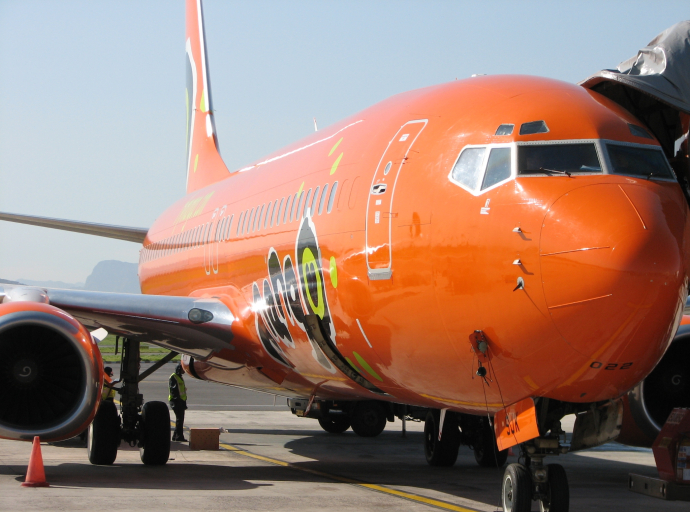
South African Airways (SAA) says it has no involvement in the business rescue of its subsidiary, Mango Airlines, as the low-cost carrier moves closer to finalising a sale to a new investor.
The airline issued the clarification following a wave of public queries about Mango’s status.
SAA emphasised that Mango’s business rescue process is entirely separate from the one SAA exited in April 2021.
"Mango Airlines (SOC) Limited remains a subsidiary of SAA that was placed in business rescue in August 2021. Mango’s business rescue process is totally separate from the business rescue process that South African Airways (SOC) Limited came out of in April 2021," the airline said.
"SAA has no authority or direct oversight over Mango’s financial obligations, and current and future business plan," it added in a statement to the media.
The update comes after Mango’s Business Rescue Practitioner, Sipho Sono, confirmed that the airline is nearing the final stages of negotiating a sale and purchase agreement with a potential investor.
"This stage of the business rescue process follows debates and litigation between Mr Sono, the former Ministry of Public Enterprises, and the Board of SAA on the level of transparency required from a BRP on the identity and financial capabilities of the investors purchasing a business being disposed of".
Mango halted its operations on July 26, 2021, leaving many passengers with unused tickets.
"As part of this BRP’s disposal process, Mango is verifying the value of unflown air tickets purchased by Mango passengers before 26 July 2021 for departure dates after 26 July 2021. Mango operations were suspended on 26 July 2021.
"SAA emphasizes that it is not involved in Mango Airlines' claims, refunds, or any financial settlements related to its operations".
SAA also urged affected individuals to follow "Mango’s official channels for all inquiries related to its business rescue process".
Debate has been sparked on the unemployment rate in South Africa with suggestions that it could be lower if one considers entrepreneurs and those employed in the informal economy.
Debate has been sparked on South Africa’s unemployment rate after it was suggested that the figure could be much lower than the publicly recorded rate if the role played by the informal sector of the economy is taken into account. Economists weighed in on the issue this week. They said while Statistics South Africa collects quality information to produce statistics on unemployment and GDP, this information could be affected by incorrect data and untruths.
Capitec CEO Gerard Fourie first raised the issue and said there should be a rethink of the country’s unemployment metric, contending that when the vast informal sector is taken into account, the headline figure of 32.9% could be closer to 10%. The government places the rate of unemployment at about 32%, with the expanded definition of unemployment— which includes people who are despondent and no longer looking for work— at around 50%.
Fourie mentioned that Statistics South Africa does not count self-employed people, highlighting that many individuals in the informal economy are selling all kinds of goods and making up to R1000 a day.
Independent economic analyst Professor Bonke Dumisa said South Africa has a strict definition of employment and unemployment.
“Yes, it could be true that the unemployment rate is much lower than our statistics show. The fact is that I have travelled to many countries, even those facing much more difficult conditions than us, and they are regarded as doing better than South Africa when it comes to unemployment. This is because South Africa has a very strict definition of employment,” he said.
He said a person running a small informal business that makes more money than someone working at a factory is considered unemployed, even though they might be earning more. He added that some people running businesses in the informal economy avoid declaring that income to avoid tax repercussions.
Dumisa, however, said the country should not change the definition, as it would distort the real picture of unemployment. “We should not run away from the fact that we have structural unemployment that is not absorbing the highly qualified people that the country is producing.”
Another economist, Dawie Roodt, said, “Based on the expanded definition of unemployment, which puts unemployment at around 50%, there should be a dire scene of destitute people on the side of the roads. However, we are not seeing that, which suggests that people are earning an income from somewhere, indicating that the real number of unemployment could be lower than it is recorded.
“What we really need to be concerned about when it comes to unemployment is the trajectory of unemployment. It is true that over the years this has been increasing, and that is something we need to be very concerned about.” He added that while Statistics South Africa gathers quality data, people may lie or provide incorrect information, fearing repercussions from SARS or losing their grants.
Prof Dieter van Fintel, from the Department of Economics at Stellenbosch University, however, disagreed; he stated that if somebody has done just one hour of work in the week, statistics count them as employed. “That is, even informal work is captured in the statistics, even if people do not experience this as sustainable “work” that provides a decent income. Nearly 20% of everyone working in South Africa is in the informal sector. This figure has remained stable across decades.
“The question that economists have wondered is why this figure is so small when unemployment is so high. “Some of the factors that may impede informal sector participation in South Africa are high crime rates, spatial disparities arising from the Group Areas Act and isolation from supply chains and business networks," he said.
Stats SA has also defended its data. It told news channel eNCA that the informal sector is included in reports such as its Quarterly Labour Force Survey.
The Matjhabeng Local Municipality, currently under administration, and its acting municipal manager, Thabo Panyani, have been declared in contempt of court and fined R250,000 for failing to implement a court order compelling them to address sewage spillage in Welkom
The troubled Matjhabeng Local Municipality and its acting municipal manager, Thabo Panyani, have been found guilty of contempt of court and fined R250,000 after failing to address sewage spillage into business premises.
The sewage spillage into Nashua Welkom has been the subject of court proceedings dating back to 2021.
In September 2022, then-municipal manager Zingisa Tindleni was ordered to take all steps necessary to ensure full and timely compliance with the Free State High Court decision forcing the municipality to repair the sewage system and provide updates to Nashua Welkom's attorneys monthly until the repairs are finalised.
The municipality was also ordered to take all the necessary steps and ensure that temporary mobile pumps, which regulate the flow of sewerage within the interim installed pumps, are kept in place.
Additionally, the municipality was told to take all precautionary steps to avoid, in the interim, any possible contamination and/or associated problems/issues/damages with the sewage lines/infrastructure and the proper and effective flow thereof up until the final date of resolution of the matter as ordered.
Parties in the matter were then allowed to approach the court on the same papers, and duly supplemented, if need be, for the further directives and or orders in the event of a change of circumstances or non-compliance with the terms of the order.
In December last year, Nashua Welkom and the municipality agreed that as reasonably possible in the interim, the municipality will pump the sewerage lines at or near the company's premises in Welkom twice a day and, if necessary, and the circumstances change, as at rainfall, the municipality shall ensure that the pumping of the sewerage line is done at regular intervals, including jet pumping to address any emergency to avoid any possible contamination and/or associated problems/issues, including damages to its property.
In addition, the municipality also undertook to clean any current sewerage spills at Nashua Welkom's premises and surrounding areas to avoid any further pollution and or health risks and keep a logbook to be signed by the operator as well as the company immediately after the pumping.
However, the company approached the high court, arguing that the municipality had failed to comply with the order, and Acting Judge Suzanne Boonzaaier agreed last Thursday, June 5.
“In the circumstances, wilfulness could be inferred, placing an evidential burden on the respondents (the municipality and Panyani) to raise a reasonable doubt as to whether their non-compliance was wilful or in bad faith,” she found.
Nashua Welkom had wanted Panyani to be imprisoned for six months or such as the court might find appropriate and on conditions it deems appropriate.
But Acting Judge Boonzaaier ruled that previous court orders were issued when different officials held office in the local municipality.
“In my view, it would be inappropriate to attribute that responsibility to the current acting official in his personal capacity, particularly given the temporary nature of his position,” stated the acting judge.
She was, however, not persuaded that the municipality and Panyani made every reasonable effort to comply with the court order, as the issue persists, and its impact continues to be felt not only by Nashua Welkom but also by the general public.
Acting Judge Boonzaaier declared Matjhabeng and Panyani to be in contempt of court by failing to comply with three orders and ordered them to pay a fine of R250,000 to Nashua Welkom.
The fine was wholly suspended for six months on condition that the municipality and Panyani purge their contempt.
Should they fail to purge their contempt in any manner, the company was granted permission to approach the court, with papers duly supplemented, if necessary, to commit the municipality and Panyani to pay the fine.
The municipality was also ordered to pay Nashua Welkom's costs.
Panyani did not respond to requests for comment on Thursday.
The Department of Agriculture is currently battling a foot-and-mouth outbreak in three provinces, which has halted exports to China and parts of the Middle East.
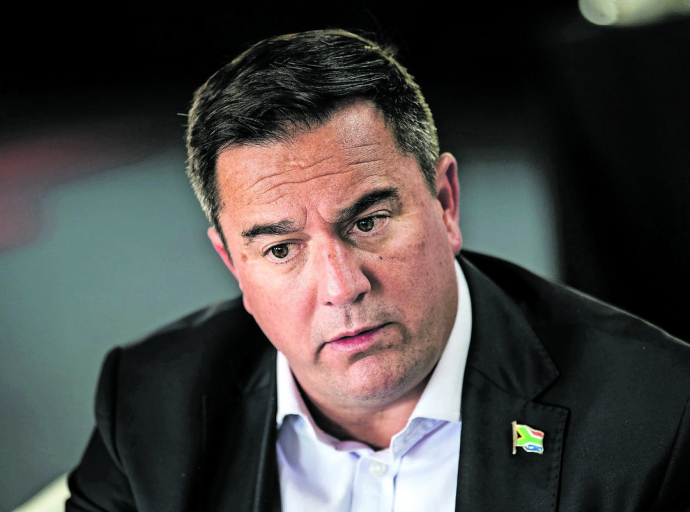
Minister of Agriculture John Steenhuisen said farmers who don’t want to get behind livestock tracing will ultimately be excluded from international export markets.
The department is currently battling a foot-and-mouth outbreak in three provinces, which has halted exports to China and parts of the Middle East.
Steenhuisen said South Africa is under pressure from international consumers to know exactly where their meat comes from and how it’s been treated.
An auction in Utrecht, KwaZulu-Natal, in February is being blamed for the spread of foot-and-mouth disease to four locations in the province and another in Mpumalanga.
Steenhuisen said he will be issuing directives in the coming days that will impose strict regulations on auctions.
“Anyone who breaks those laws will face prosecution and potential civil recovery from others who have been economically harmed by their selfishness or recklessness.”
Amid mounting pressure from international consumers for greater transparency on where animals are reared, slaughtered and exported from, Steenhuisen said breeders who don’t agree to tracing will find it harder to market their products.
“Traceable meat gets a premium on international markets, and being able to access new markets for your products, being able to get that premium is going to be fundamentally important for the viability, sustainability, and profitability of the red meat sector going forward.”
Steenhuisen said he’s looking at ways to incentivise farmers to get behind a track and trace system.
*This article was first published by Eye Witness News