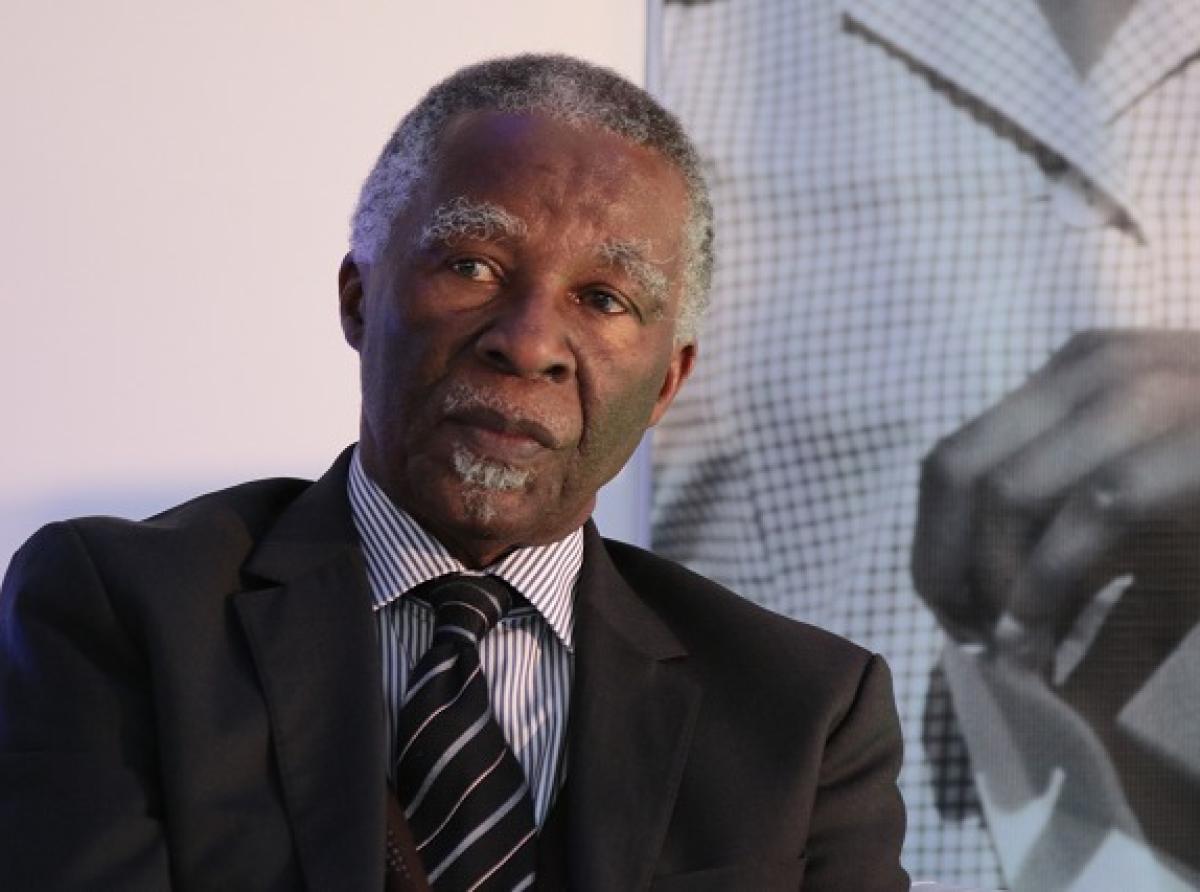
Former president Thabo Mbeki has issued a blistering warning about South Africa's unemployment crisis.
Speaking to eNCA, he laid the blame squarely at the feet of the nation's workforce.
Mbeki ignited outrage when he told the broadcaster: "Why are millions of our people unemployed? The reason they are unemployable is because they don't have the skills that the modern economy and society need."
He doubled down with a stinging attack on the country's welfare system.
"Why are we continuing to boast as though it is a great achievement with so many people on social welfare. It's not an achievement. It's failure."
Political analyst Siya Ntombela told IOL that Mbeki isn't entirely wrong but may be pointing fingers in the wrong direction.
"There is a mismatch between what our education offers and what employers need," he said.
However, he quickly turned the tables, pointing to historical policy decisions, including those made during Mbeki's own presidency.
"We need to trace the problem back to the education policies and legislation passed by previous governments, including Thabo Mbeki's administration," he said.
Ntombela highlighted controversial reforms such as the closure of vocational, teaching and nursing colleges, decisions he says have had long-term consequences for skills development in the country.
This refers to closely after the end of apartheid when the government embarked on a major overhaul of vocational and technical education, beginning with White Paper 4 on Education and Training (1998).
The reforms aimed to replace the fragmented network of technical colleges with a unified Further Education and Training (FET) system, designed to better align education with the country's skills and workforce needs.
These changes, formalised in the Further Education and Training Act of 1998, were rolled out during the early 2000s, setting the stage for significant shifts in vocational education under Thabo Mbeki's presidency.
Ntombela also pointed to ongoing systemic challenges, including electricity issues, which continue to disrupt practical training that depends on electricity, further widening the gap between education and employability.
But he also blamed the broader education system. "It taught teachers and learners to focus on the end assessment rather than holistic learning," he said.
Ntombela suggested that resistance to raising academic standards has contributed to a cycle of underprepared graduates.
"Meaning they wanted and continue to produce certificated unemployable but uneducated citizens who will not be critical of their wrongdoings
"What will Thabo Mbeki do to ensure that young educated South Africans are employable?" he asked.
The comments also triggered fierce backlash from General Secretary of the South African Federation of Trade Unions (Saftu) Zwelinzima Vavi.
"Regrettably, he is in denial," Vavi fired. He painted a grim picture of a country in crisis.
"There are 12.4 million unemployed people, and of these, around about 10 million, nearly 80% are trapped in structural, long-term unemployment, meaning they have been without work for over a year."
He went on to say that that the majority are young black South Africans, mostly those living in rural areas.
Even if they are incorporated into universities and TVET institutes, he said, it would not alleviate the situation since the economy is just not providing jobs.
Vavi dismissed the "skills-only" argument outright. "The crisis is not just a skills problem; it is a failure of the economy to generate decent work."
However, the founder of thinktank, Lex Libertas, Ernst Roets agreed with Mbeki's statement. "He is right," Roets said.
*This article was first published by IOL News