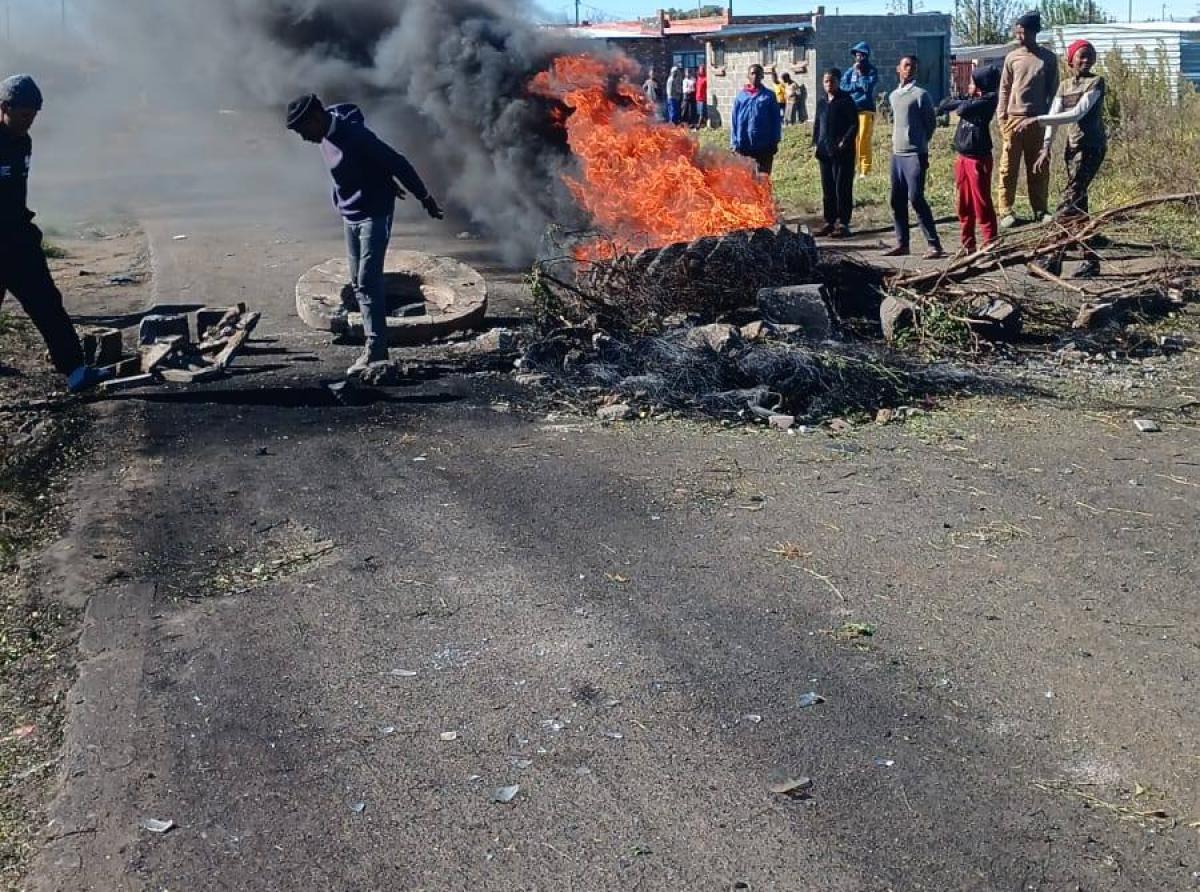
Anger boiled over in Hennenman this week as frustrated residents of Phomolong brought the township to a standstill, demanding jobs from a multi-million-rand solar energy project they say has excluded the very community it was meant to uplift.
The unrest, linked to recruitment disputes surrounding the Middelpunt PV Solar Project, triggered a full-scale shutdown that disrupted schools, healthcare services and daily life as residents accused contractors of hiring workers from outside the township while locals remained unemployed.
For many residents, particularly unemployed youth, the solar project had represented a rare opportunity for economic relief in a community battling severe poverty and soaring unemployment levels. But tensions exploded after allegations surfaced that recruitment processes were unfair and lacked transparency.
Roads were barricaded, businesses were affected and access to clinics became increasingly difficult as the protest intensified. Anxiety also mounted over matric learners preparing for critical mid-year examinations amid the instability.
The escalating crisis forced urgent intervention from the Free State Provincial Government.
Premier MaQueen Letsoha-Mathae first met with residents on 15 May, assuring the community that the government would return after consultations with all parties involved.
By 19 May, Acting Premier Jabu Mbalula convened a high-level stakeholder meeting in Hennenman involving representatives from Middelpunt PV Solar, the Matjhabeng Local Municipality, provincial officials and community leaders in a bid to calm the situation.
Also present were Health MEC Monyatso Mahlatsi and councillors Maxie Badenhorst and Phehello Nthuba.
During tense engagements, community leaders reportedly rejected a proposed 60/40 recruitment model, insisting that Phomolong residents should be prioritised for jobs linked to the project.
Residents further demanded that hiring processes be managed through a verified local database to prevent alleged favouritism, manipulation and the recruitment of outsiders.
Mbalula acknowledged the community’s frustrations, saying their concerns were legitimate.
“We have always said that local communities must be the primary beneficiaries of projects in their towns and we stand by that,” he said.
At the same time, he warned against individuals attempting to exploit the unrest for personal agendas and appealed for calm.
“Despite the differences between different parties, the education and future of learners must not be compromised,” Mbalula said as concerns grew over matric pupils scheduled to write exams.
After marathon negotiations, a breakthrough was finally reached on 20 May when a Memorandum of Demands was signed between the provincial government, Middelpunt PV Solar investors and community representatives, officially ending the shutdown.
The agreement commits the company to implementing a more transparent and inclusive recruitment process, with local residents expected to receive priority consideration for employment opportunities.
Mbalula welcomed the resolution and praised residents for protesting peacefully despite heightened tensions.
“I commend the community for maintaining peace and not vandalising state property. Their demands are reasonable, and residents must be prioritised in projects implemented in their area,” he said.
With calm restored, schools, clinics and other essential services have resumed operations. However, the standoff has once again exposed growing tensions around large infrastructure and renewable energy projects across South Africa, where communities increasingly demand direct economic benefits from developments taking place on their doorstep.
For Phomolong residents, the message was unmistakable: development means little if local communities are left behind.