President Cyril Ramaphosa will today, 10 October 2026, officially inaugurate the transformative Free State Catalytic Investment and Industrialisation Project in Phuthaditjhaba, QwaQwa.
The massive R100-billion venture, hosted alongside Free State Premier MaQueen Letsoha-Mathae and Chinese investors...
I buried a friend in Fouriesburg this past weekend. The funeral was full of familiar rituals; lowered heads and hymns that promised peace where life had refused to offer any.
Speakers spoke about my friend’s kindness, his laughter and his generosity. They said he had "fought a good fight" and he was now "finally resting."
But in my heart was embedded a different question: why are so many young men dying long before they are buried?
As I stood there, I kept thinking about the University of Witwatersrand. We arrived on campus carrying the same fragile dream. We believed education would free us from blackness. We believed a degree would loosen the grip of history on our families. We believed hard work was enough.
We were young. We believed many things.
Then my own dream collapsed. I failed academically and was excluded. The shame was unbearable. Returning home without a degree felt like returning with proof that witches who doubted me had been right all along.
So I stayed in Johannesburg. I had nowhere to go. For a while, I was homeless until my friend got me a room in some old residential area behind Auckland Park.
I have no recollection of him ever asking me how I had failed; he simply made space for me. With the passing of time, I realise that what he offered me was much bigger than accommodation. He restored something I had almost lost, that is, my dignity.
But there is a strange cruelty in this life thing. People who carry others are carrying unbearable weight themselves; you only discover how heavy that weight was when they are no longer here to tell you.
That is the thing about us men. We have become experts at hiding. Our smiles have become uniforms and our jokes some type of armour. We learn to perform strength so convincingly that even the people closest to us stop asking whether we are alright. We tell everyone else that things will get better when we rarely believe it ourselves.
The tragedy is that this performance begins long before adulthood. It starts when boys are taught that tears are embarrassing, fear is weakness and vulnerability belongs to somebody else. Somewhere between childhood and manhood, many of us are taught that love must be earned through endurance.
In our homes, the lesson arrives wrapped in a familiar proverb that says “Monna ke nku, ha a lle.” The saying is often repeated with affection. Our parents believe they are preparing us for a difficult world. Black people believe they are building resilience and our society celebrates this as wisdom.
But any wisdom that cost us our lives is foolish.
It is Bell hooks who wrote that patriarchy has no gender. It is a political and social order that demands domination, radical emotional suppression and control. Women suffer under it in profound and devastating ways. We suffer too, although differently. Patriarchy does not simply reward us men. It also punishes us. It teaches us to amputate parts of ourselves in exchange for acceptance. By the time we reach adulthood, we no longer know how to recognise our own pain.
Steve Biko understood this too well when he wrote about psychological liberation. Systems of oppression do not survive through force alone. They survive because people begin to internalise them. They become the policemen of their own minds. That is exactly what patriarchy does to men. We police ourselves; we hide depression because we mistake silence for strength. We apologise for needing help.
Then we wonder why so many of us disappear behind alcohol, violence and isolation. We wonder why so many funerals leave families asking the same impossible question: "why did he not say anything?". But this question too is foolish because we spend our whole lives being taught not to say anything.
French sociologist Pierre Bourdieu called this symbolic violence. It is the kind of violence that leaves no bruises because it teaches people to participate willingly in their own domination. Men inherit impossible expectations and then spend decades convincing one another that those expectations are normal.
South Africans only speak about masculinity when men become perpetrators of violence. That conversation is necessary. It cannot be avoided. But we should also ask what happens to the man who turns the violence inward. The one who never raises his hand against another person but wages war against himself every single day.
He is often invisible. Until he dies. Then everyone remembers that he was always smiling. I refuse to remember my friend only through the circumstances of his death. I remember the man who paid for my accommodation when I had nowhere to sleep. I remember the mortal who protected my dignity without asking for recognition. At one of the lowest points in my life, he quietly reminded me that failure was not final.
That is who he was. If his passing teaches us anything, it is that we have misunderstood strength for far too long. Strength is not silence and carrying unbearable pain until it crushes you. Real strength is telling another man that life is becoming too heavy. Real strength is asking for help before despair convinces you that you have become a burden.
People say that funerals are for the living. I think that is only partly true. Funerals are also moments when the dead ask something of us. They leave us with unfinished work. My friend's final gift is this reflection. Not because it will ease my grief, but because somewhere a young man who has mastered the art of saying "I'm fine" might be saved.
We bury too many men long before their actual deaths; many of them disappear beneath expectations they are never allowed to question.
Perhaps it is time to bury something else, not another man though. What we need to bury is the lie that men must suffer in silence to deserve the title of man. And maybe the greatest tribute we can offer those we have already lost is to build a generation of boys who never have to choose between being men and being human.
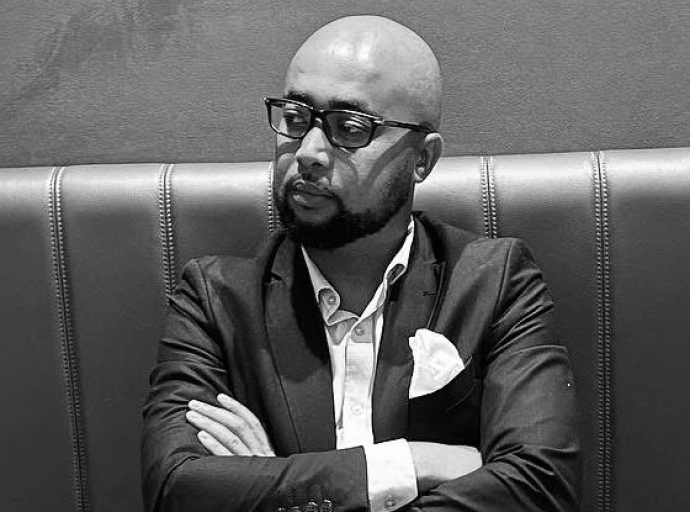
*Tshediso Mangope moonlights as a social commentator in his spare time and writes in his personal capacity…
The views expressed do not necessarily reflect those of this publication (Journal News Network).
The race to become the African National Congress (ANC) mayoral candidate for Mangaung Metro Municipality has narrowed to four leading contenders, setting the stage for a fiercely contested battle ahead of the party's candidate selection announcement later this month.
The shortlist, which includes experienced party leaders and regional office bearers, has intensified political interest as ANC structures weigh who is best positioned to lead the metro into the 2026 local government elections.
However, with the ANC expected to announce its successful mayoral candidate on 26 July 2026, the party appears poised to retain Mangaung's current municipal leadership.
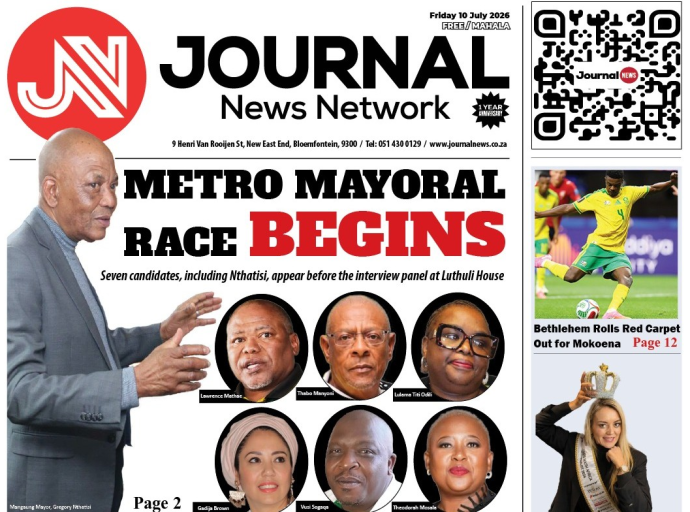
According to reliable sources within ANC provincial structures, the incumbent Executive Mayor Gregory Nthatisi has secured strong backing from national office bearers, despite reportedly lacking sufficient support from some branch structures.
Last week, Nthatisi was among seven candidates contesting for the position. Former ANC Free State Deputy Chairperson and former Mangaung Executive Mayor Thabo Manyoni, as well as former Free State Finance MEC Gadija Brown, are understood to have fallen out of contention, according to sources. Also failing to make the shortlist was Member of the Mayoral Committee (MMC) for Integrated Development Plan and Performance, Theodorah (Theo) Mosala, who is reportedly failed to secure a nomination from her own branch.
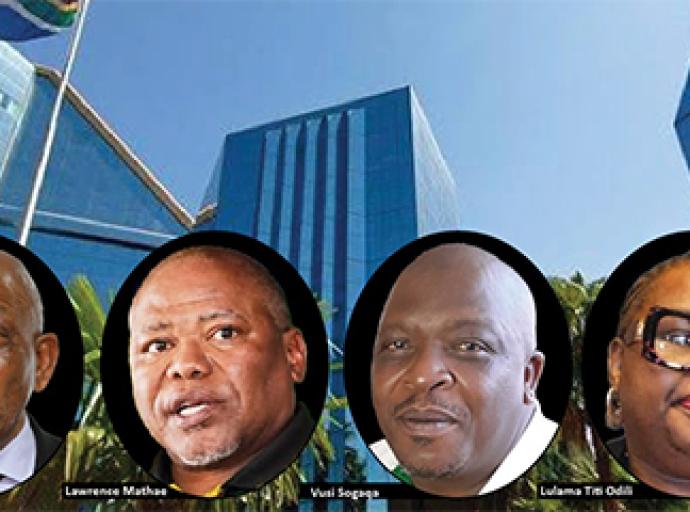
"I can confirm that the ANC's top seven leaders have thrown their weight behind Comrade Nthatisi for re-election as Executive Mayor. Furthermore, other key leaders, including current ANC Regional Chairperson and Mangaung Speaker Lawrence Mathae, as well as Deputy Mayor Lulama Titi Odili, are also expected to retain their positions," one source said.
Another ANC branch chairperson in the region, who requested anonymity, confirmed to Journal News that the party had resolved to retain the current leadership in the metro.
"Yes, it is true that the Mangaung leadership will be retained. However, this follows the party's call for unity, with leaders agreeing to smoke the peace pipe and shift their focus to the upcoming local government elections. This is not about who supports whom, but about ensuring an overwhelming ANC victory in November," the source said.
It remains unclear how ANC Mangaung Regional Deputy Chairperson Vusi Soqaga will be accommodated under the new arrangement, given his ambition to become mayor. Soqaga is also expected to challenge Regional Chairperson Lawrence Mathae for the ANC Mangaung regional chairmanship.
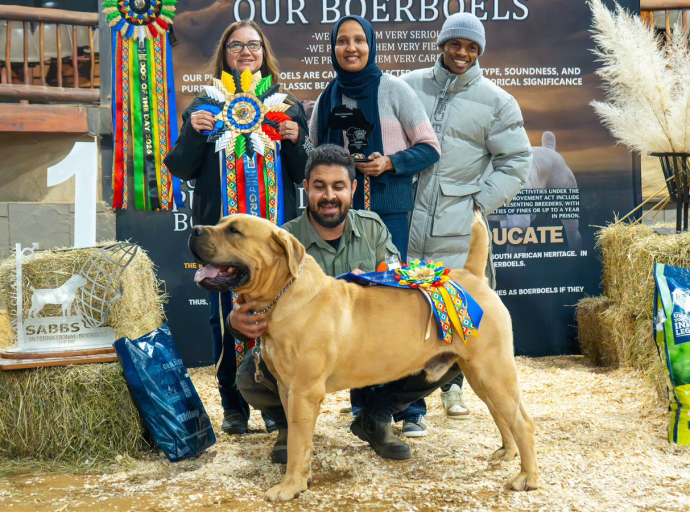
Years of meticulous planning, selective breeding, and a deep passion for preserving authentic South African Boerboel bloodlines (SABBS) paid off in a remarkable achievement for Free State breeder Ziyaad Issa of Bandit Boerboels. His dog, Bandit Orion, secured top honors at the SABBS International Boerboel Show in June 2026. The dog esteemed competition took place in Parys, Free State on 25 and 26 June.Brandit Orion was crowned Dog of the Year, Senior Champion, Grand Champion, and winner of Class 7B Males (18–24 months).
The achievement follows Bandit Boerboels’ runner-up finish at the 2025 SA Studbook Elite Awards, further cementing the kennel’s reputation among South Africa’s leading Boerboel breeders.For Issa, the victory was the result of years of dedication rather than a single competition.After winning Class 7B, Issa believed Orion had the potential to compete for the overall titles, but says the final moments in the championship ring tested his emotions.
“When they announced positions five to two and my dog’s number had not been called and I was extremely nervous.
“Why did I not exit the ring but it turns out we showed our hearts out and I felt elevated and ecstatic at the same time, almost as if I ran a marathon.
“This is certainly a moment that I will always remember and cherish,” he said.
Behind the championship title lies five years of rigorous work aimed at restoring valuable Boerboel genetics that have gradually disappeared over time. Issa, says he deliberately sourced older bloodlines to recreate a balanced Boerboel.
“My mission was to recreate a well-balanced dog with sound movement and an excellent temperament, he said.
Issa says he invested in developing his own expertise by attending breeder workshops, studying the breed extensively, and pursuing qualification as a SABBS Junior appraiser. He says he ensured that Bandit Orion met strict health standards through comprehensive health testing, embark on some DNA testing and registration as a semen donor.Issa’s passion for Boerboels dates back to his childhood.
As a Grade 1 learner, he visited a farmer in Lady Grey in the Eastern Cape who owned Boerboels. He says their impressive size and commanding presence inspired a dream that would eventually grow into Bandit Boerboels. He says that same year, his mother bought him his first Boerboel puppy, laying the foundation for a lifelong pursuit.
Today, Issa encourages aspiring breeders and dog owners to focus on learning rather than immediate success. Issa says every competition offers valuable lessons, whether through victories, setbacks, or new knowledge.
“Start by attending local puppy classes to familiarise yourself with basic socialization, basic commands and obedience training with your four-legged friend, enter the very first show you can attend and go there to have fun and learn.
“The mission is never to always win but to walk away with something whether it may be knowledge, insights or losses but the aim is to participate,” Issa said.
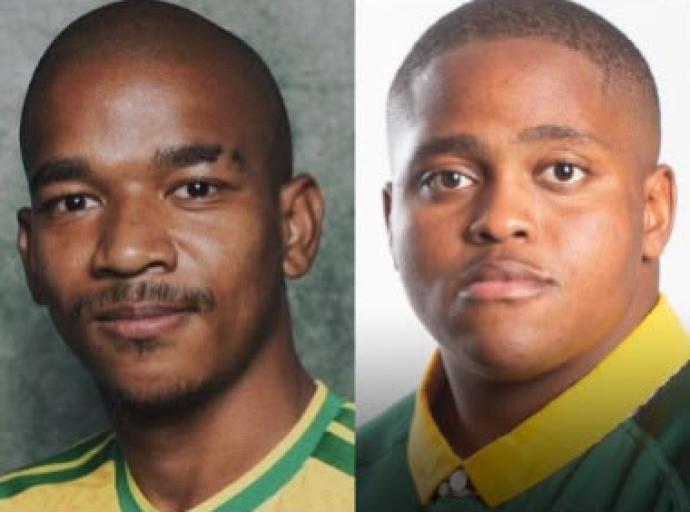
South Africa is reeling following the sudden deaths of two of the nation's most promising young sporting talents. Bafana Bafana and Mamelodi Sundowns midfielder Jayden Adams, aged 25, and former SA Under-18 rugby prop Luqobo “Bibo” Makwedini, aged 20, both passed away recently.
The double tragedy has left the entire country in deep shock, with countless tributes pouring in for the rising stars. Their untimely passings have cast a massive shadow over the local sporting fraternity and left millions grieving.
Adams had recently returned home after representing South Africa at the 2026 FIFA World Cup. The gifted midfielder rose through the ranks at Stellenbosch FC before organising his high-profile move to Mamelodi Sundowns.
The cause of his death has not yet been officially confirmed by local authorities. Officials have urged members of the public not to speculate while investigations continue.
Hours later, news broke that Makwedini had died in France after collapsing during a training session. The former Wynberg Boys’ High School pupil was playing for French club AS Béziers Hérault.
His recent move to Europe represented the dawn of an exciting professional rugby career. The sudden nature of his passing has left the global rugby community heartbroken.
President Cyril Ramaphosa described the loss of both athletes as an absolute tragedy for the nation.
“South Africans had been inspired by their commitment, talent and pride in representing their country.”
He praised both young sportsmen for carrying the South African flag with honour. He added that they gave incredible hope to countless aspiring athletes across the land.
Football fields and rugby pitches across South Africa now stand as somber reminders of two dreams ended too soon. Their legacies will live on through the teammates they inspired and the supporters who cheered them on.
Journal extends its heartfelt condolences to the families of both sporting heroes during this incredibly difficult time. Their passion, determination and love for their country will never be forgotten.