Prominent Mangaung businessman Ben Moseme has strictly distanced himself from growing political speculation suggesting he intends to stand for the executive mayoralty of the metro.
The founder of the Cultural Urban Festival Africa (CUFA) issued a formal statement dismissing claims that he holds any...
The African National Congress (ANC) has reportedly finalised its Proportional Representation (PR) candidate list, naming those entrusted with leading the party's campaign to retain control of the Mangaung Metropolitan Municipality in the upcoming Local Government Elections scheduled for 4 November.
The list, which Journal News has seen and has been widely anticipated amid intense internal lobbying and branch consultations, is expected to play a pivotal role in shaping the organisation's election campaign in Mangaung.
It also provides an indication of the party's strategic choices as it seeks to strengthen its position in the Free State’s only metropolitan municipalities following months of internal contestation.
According to a source within the ANC's regional leadership, a total of 89 Proportional Representation (PR) candidates were nominated from across the Mangaung Metro's 51 wards.
The source said only 11 candidates are expected to secure seats in the Mangaung Metro Council, based on the number of PR seats currently held by the ANC.
"Although the metro is made up of 51 wards, some branches could not conclude their nomination processes on time. As things stand, we have 89 PR candidates on the list, but only 11 of them will make it to council if the ANC retains its current level of representation," the source said.
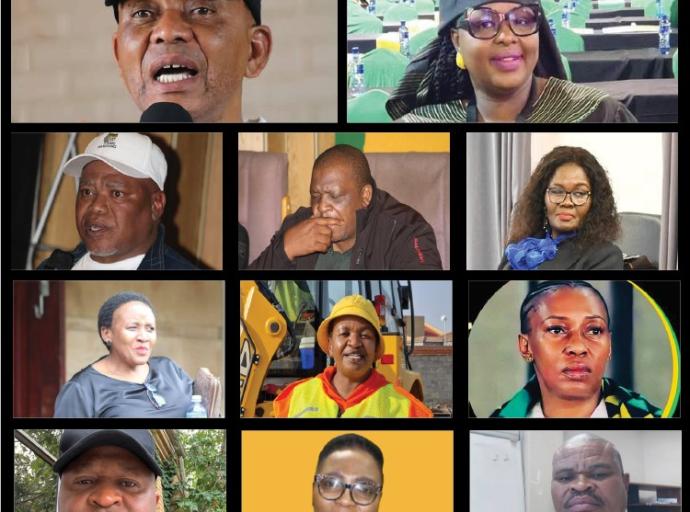
According to the list seen by Journal News, incumbent Executive Mayor Gregory Nthatisi, Deputy Mayor Lulama Titi-Odili and Speaker Lawrence Mathae are among the top 11 candidates expected to spearhead the party's campaign in the metro.
The list also indicates that Vusi Soqaga, Manthuse Letawana and Nthabiseng Jonas are in line to return to the council, while Sibongi Tsoaledi, Thoko Mokoenanyana, Motshewa Tladi, Ncamile Nxangisa and Charles Mgwedleka are expected to replace Chief Whip Vumile Nikelo, Logan Kruger, Theodarah Mosala, Alfred Qai and Pani Twala.
However, ANC Mangaung regional spokesperson Ncamile Nxangisa dismissed the circulating list, insisting that the party's internal processes have not yet been concluded.
"Nothing is legitimate about that list doing the rounds. I can tell you now that the organisational processes are still ongoing and nothing has been finalised. This is the work of people with an interest in the outcome of the process because the nomination process was open to the public," Nxangisa said.
Journal News previously reported that the race to become the ANC's mayoral candidate for Mangaung had narrowed to four leading contenders, with Nthatisi widely tipped to retain the mayoral position following strong backing from senior national leaders. Regional Chairperson and Mangaung Speaker Lawrence Mathae, together with Deputy Mayor Lulama Titi-Odili, are also understood to be among those expected to retain prominent leadership roles should the ANC retain control of the metro.
African National Congress (ANC) Provincial Chairperson and Northern Cape Premier Zamani Saul has come out guns blazing, describing the resignation of a member of his provincial cabinet as a "political mishap" that threatened to derail the organisation's work.
Saul's remarks follow the recent resignation of MEC for Roads and Public Works Fufe Makatong, just eight months after former Health MEC Maruping Lekwene stepped down from the provincial executive.
In a letter seen by Journal News, Saul issued a formal apology to ANC structures, acknowledging that the handling of Makatong's resignation had created unnecessary political distractions during the party's voter registration weekend.
He described the resignation as a political mishap that risked diverting the ANC's focus from its organisational priorities and admitted that the matter should have been managed more carefully.
"I wish to extend a sincere and formal apology, on behalf of the entire PEC, for the political mishap that occurred over the weekend. This unfortunate incident threatened to derail our collective focus from our principal historic task: to defend and advance our glorious movement. As the leadership, we accept collective accountability for this matter and acknowledge that it ought to have been handled with greater care and revolutionary discipline," Saul wrote in the letter dated 3 August 2026.
The letter was addressed to ANC Provincial Executive Committee (PEC) members, Regional Executive Committees (RECs), Branch Executive Committees (BECs), as well as party members and volunteers.
Saul also sought to reassure party structures that there was no leadership crisis within the ANC in the province, despite Makatong's departure from the Executive Council. He noted that Makatong remains a member of the ANC's Provincial Executive Committee Top Five, serving as the party's Provincial Treasurer.
“I want to state categorically and directly to you, as your provincial chairperson; there is no crisis. The PEC remains rock-solid, structurally sound and entirely focused on our dual mandate to fix local municipalities and secure an overwhelming and decisive victory at the polls,” said Saul in the letter.
He said that the party’s Provincial Executive Committee (PEC) will convene this week and address the matter comprehensively.
“The collective leadership will thoroughly reflect on these developments and issue a coherent and unified directive to all our structures, members and supporters,” promised Saul.
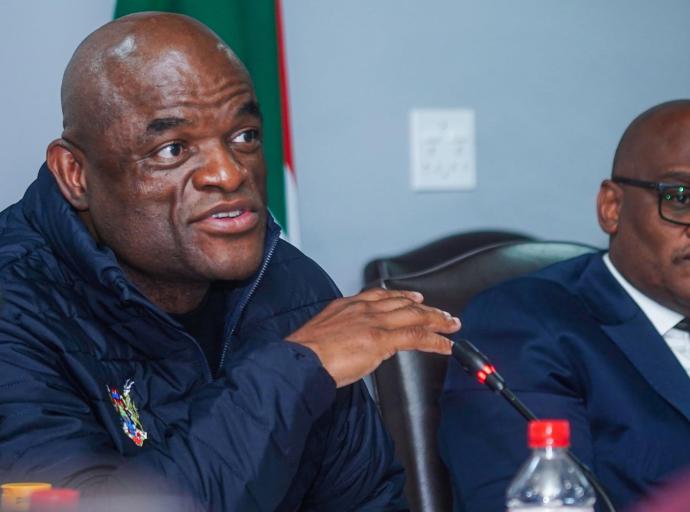
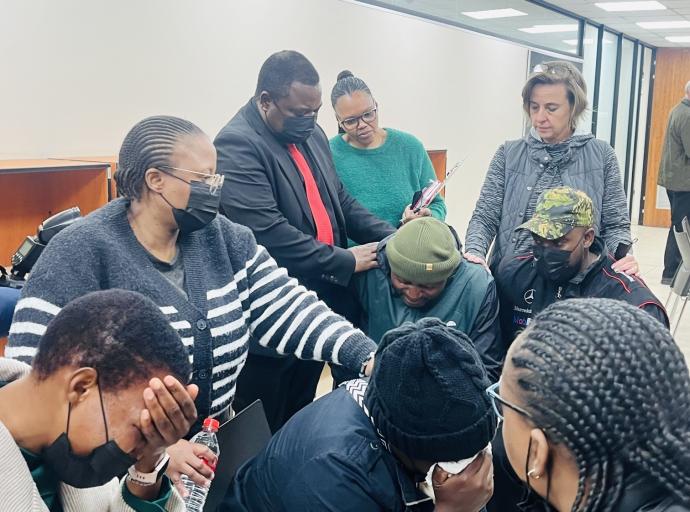
Heartbreak filled the Free State Government Mortuary in Bloemfontein on Thursday as grieving families began the painful process of identifying loved ones killed in last week’s devastating N1 bus crash.
The identification process was attended by Free State Premier MaQueen Letsoha-Mathae, MEC for Community Safety, Roads and Transport Jabu Mbalula, and Zimbabwe’s Consul-General, Eria Phiri, who offered support and condolences to the bereaved families.
The victims died when a long-distance bus travelling from Cape Town to Zimbabwe overturned on the N1 between Trompsburg and Edenburg in the early hours of Friday, 31 July.
Addressing grieving relatives, Letsoha-Mathae acknowledged that no words could ease the pain of losing loved ones.
“Today, we are here to pass our condolences. We are here to say we are sorry and that we are with you in our prayers. We know words alone cannot comfort you, nor can they explain your profound loss,” she said. The Premier also urged long-distance passengers to ensure their details are recorded before travelling, saying passenger registers are critical in helping authorities identify victims and notify next of kin during emergencies.
“If you travel by taxi or bus, ensure your details are captured in the passenger register. It greatly assists authorities in contacting families when tragedies like this occur,” she said.
According to Free State police spokesperson Sergeant Mahlomola Kareli, the bus was carrying approximately 78 people, including the driver, when it allegedly lost control and overturned.
Ten passengers were declared dead at the scene. The victims included four adult women, one adult man, three girls and two boys.
Kareli said 57 passengers sustained injuries and were transported to Albert Nzula District Hospital in Trompsburg, while nine critically injured passengers were transferred to Pelonomi and Universitas hospitals in Bloemfontein for specialised treatment.
He confirmed that the bus driver had been taken in for questioning as part of the investigation.
“A case of culpable homicide has been opened and investigations are continuing,” Kareli said.
Mbalula said improving road safety remained a priority for both national and provincial governments, with regular engagements taking place to reduce fatalities on South Africa’s roads.
“In our MinMec meetings we continuously assess how to make our roads safer for everyone. Unfortunately, no one can predict when an accident will occur, but we extend our deepest condolences to all the affected families,” he said.
He also wished the injured a speedy recovery and urged transport operators and motorists to remain vigilant and strictly comply with road safety regulations, particularly on long-distance routes.
As investigations continue, authorities are working closely with affected families to complete the identification process and ensure the victims are laid to rest with dignity.
South Africa’s Banyana Banyana head into their high-stakes Women’s Africa Cup of Nations quarter-final showdown against hosts Morocco holding an undeniable psychological advantage.
The reigning continental champions boast a flawless head-to-head record against the Atlas Lionesses on North African soil, having most notably overcome them in Rabat to lift their maiden title.
However, historical dominance guarantees nothing when a spot at the 2027 FIFA Women’s World Cup is on the line. The host nation is extra determined to rewrite history and turn their fortunes around against their familiar rivals.
Driven by the pain of past defeats, Morocco enters the knockout fixture in formidable form, having topped Group A without conceding a single goal.
Supported by a passionate home crowd, the hosts present a stern test for the South Africans, who must rely on their big-stage temperament and composure.
Banyana Banyana forward, Gabriela Salgado, acknowledged the immense test awaiting the team while expressing confidence in their ability to advance.
“It's not going to be easy against the hosts. We want to get the World Cup ticket, and we can defeat Morocco,” she said.
South Africa’s journey to the last eight required immense resilience following a rocky group stage. After an opening defeat, Desiree Ellis’s side displayed remarkable character to secure their qualification, proving that their championship pedigree remains intact under pressure.
Head coach, Desiree Ellis, warned her squad against complacency, emphasising that previous victories will count for nothing inside a partisan stadium.
“History shows that we can do it, but it doesn't give us the right that it's going to happen. It's a different team with different challenges. The home crowd, all of that comes into play,” Ellis said.
With automatic World Cup qualification serving as the primary prize for the victor, Ellis believes the outcome will be decided by sheer determination and tactical discipline. The veteran coach highlighted the magnitude of the occasion for both squads.
Ellis continued: “It's basically going to come down to who wants it the most. We know what's up for grabs. It's a World Cup spot and it could not be any bigger motivation than that.”
Navigating the host nation’s intense atmospheric pressure will demand tactical adaptability from the South Africans.
Ellis noted that her team is prepared to prioritise defensive solidity and pragmatism over aesthetics to secure the desired result.
“Sometimes it doesn't have to be pretty. We stuck defensively. We were organised. Sometimes that is what wins your games. If we keep a clean sheet, we're going to create chances,” she added.
If Banyana Banyana can combine their proven big-match composure with defensive discipline, the former champions stand a strong chance of silencing the Rabat crowd and securing their global showpiece ticket.
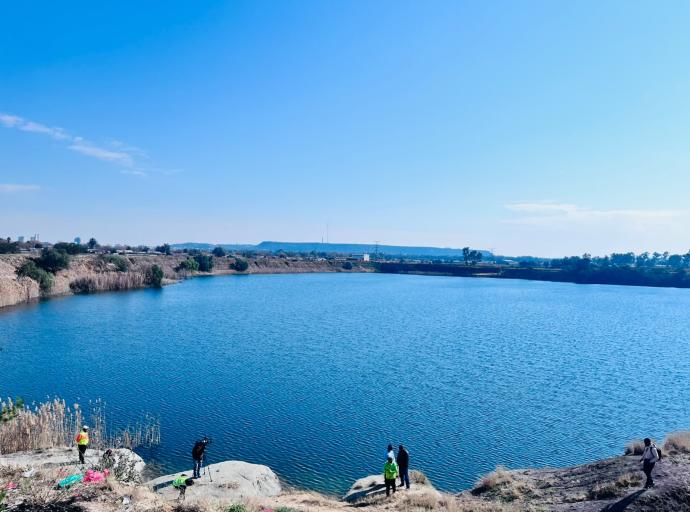
After years of warnings, petitions and repeated drownings, an 11-year campaign to secure Mangaung's notorious Heidedal quarry has finally reached the courts, with the Mangaung Metropolitan Municipality seeking an order compelling the private owner to fence off the hazardous site.
Quarry safety activist Gregory Verner, who has been campaigning for the quarry to be secured since 2015, welcomed the municipality's legal action but said authorities should have acted years ago.
The municipality has obtained a provisional court order requiring the owner to show cause by 13 August 2026 why the interim order should not be made final. If confirmed, the order will prohibit the owner from selling or disposing of the property until matters relating to fatalities at the quarry have been resolved. It will also compel the owner to fence and secure the site in accordance with the court's directives.
The legal action follows years of complaints about the abandoned quarry and comes after a parliamentary oversight visit in November 2025 exposed serious safety concerns. Parliament found that the quarry remains an extreme public hazard, with water reaching depths of about 50 metres, steep embankments and submerged mining debris posing significant risks to anyone entering the site.
The oversight report also highlighted conflicting figures on the number of people who have lost their lives at the quarry.
According to SAPS spokesperson Warrant Officer Morne Koch, police recorded 15 drowning incidents between June 2001 and October 2025, resulting in 16 fatalities, including confirmed drownings and suspected suicides registered as inquests.
However, residents told parliamentary committees that as many as 51 people may have died at the quarry between the late 1970s and 2025.
The committees said the conflicting figures suggested the true death toll remains unknown, raising concerns over possible underreporting and inadequate investigations.
Verner said his campaign intensified following the drowning of 16-year-old Justin Jacobs in 2016. During Parliament's oversight visit in November last year, Justin's mother, Maggie Jacobs, told lawmakers that returning to the quarry felt like reliving the day she buried her son.
Parliamentary records indicate the quarry was previously operated by Coronation Brick and Tile, now Corobrik, and was never properly fenced or rehabilitated after mining operations ceased. Lawmakers questioned whether rehabilitation obligations had been fulfilled and whether the mine's closure complied with environmental requirements in force at the time.
The Department of Mineral and Petroleum Resources told Parliament that an application for a closure certificate had been submitted in January 2004, before the Mineral and Petroleum Resources Development Act came into effect later that year, meaning the closure process was dealt with under the Minerals Act of 1991.
Despite this, the issue of rehabilitation remains disputed. Parliamentary committees noted contradictions between departmental records indicating rehabilitation had been completed and the quarry's current condition, which remains visibly dangerous and unsecured.
The South African Human Rights Commission also informed Parliament that it received a complaint about the quarry on 6 August 2021, raising concerns over child drownings and other public safety risks.
The Commission investigated whether mine closure obligations had been met and requested documents relating to environmental assessments and rehabilitation. However, parliamentary committees criticised what they described as the slow pace of the investigation, noting that it remained incomplete more than four years later.
The Department of Water and Sanitation similarly acknowledged delays in taking action. Water-quality tests conducted in 2016 detected elevated electrical conductivity and sodium absorption levels, while concerns were also raised about possible contamination, illegal dumping and wastewater entering the quarry.
The department told Parliament that it only issued a notice of intention to direct the owner to take corrective action in November 2025 following parliamentary intervention.
The quarry's depth continues to hamper search-and-rescue operations. SAPS Search and Rescue divers told Parliament that the water is about 50 metres deep and contains submerged mining debris, making recovery operations particularly dangerous.
"We have participated in approximately 15 reported drowning cases at the quarry," Koch said.
The parliamentary report further noted that diving regulations limit rescue operations because of the quarry's depth and the absence of a suitable dive chamber within the Free State or within a two-hour travelling radius.
For Verner, the court action marks the culmination of years of lobbying, petitions and attempts to compel authorities to act. He said he opened a criminal case in 2016 but received no meaningful response.
He later petitioned Parliament, leading to the joint committee oversight visit to the quarry on 19 November 2025, where police, government officials and community members presented evidence of the ongoing dangers.
Following the visit, Parliament recommended an urgent interdict preventing the sale of the property, the establishment of an interdepartmental task team, immediate measures to secure the quarry, and a hydrogeological study to assess contamination risks, overflow hazards and long-term rehabilitation options.
Despite welcoming the municipality's intervention, Verner fears the legal process could drag on.
"My only concern is that I don't know how long this legal battle will take. Summer is coming, and we know legal matters can take years to resolve. Meanwhile, the quarry remains unfenced," he said.
Nevertheless, he praised the municipality's decision to approach the courts.
"I personally welcome it, and I thank the mayor for taking that decisive and bold step, although it happened 25 years too late," he said.
Mangaung Metropolitan Municipality City Manager Sello More said the municipality had repeatedly attempted to compel the owner to secure the property.
"We previously issued compliance notices to the property owner under the municipality's Unsightly and Neglected Buildings and Premises By-laws, requiring remedial action to address the hazardous condition of the property," More said.
He said the owner failed to comply, leaving the municipality with no option but to seek legal intervention.
"The evidence before the court demonstrates the urgent need for measures to protect human life. We will continue taking all lawful steps necessary to address the danger," More said.
For Verner and the families who have lost loved ones, however, the priority remains preventing another tragedy.
The property owner has until 13 August 2026 to convince the court why the provisional order should not be made final.


_thumbnail.jpg)