Prominent Mangaung businessman Ben Moseme has strictly distanced himself from growing political speculation suggesting he intends to stand for the executive mayoralty of the metro.
The founder of the Cultural Urban Festival Africa (CUFA) issued a formal statement dismissing claims that he holds any...
The news cycle moves fast, but the real story runs deeper. Get the full picture, unfiltered insight, and today's top headlines delivered straight to your screen with the latest edition from the Journal News Network.
• Instant Access: Clean layout, zero fluff, ready to read anytime, anywhere.
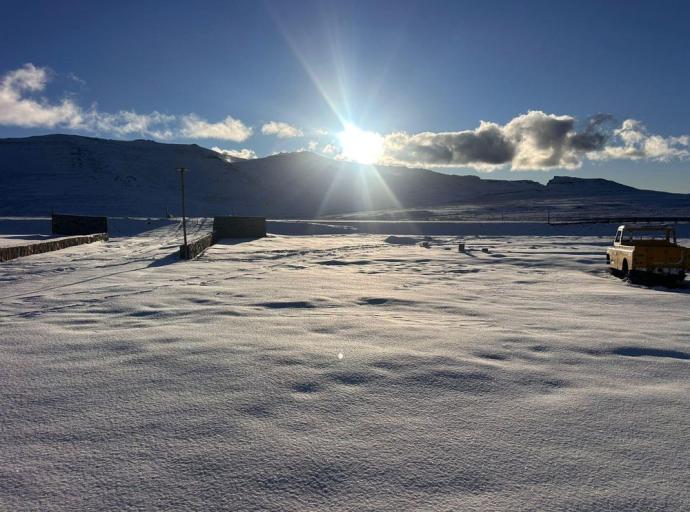
As the Spring season approaches, South Africans are advised to exercise extreme caution and follow guidance issued by officials during this weather event.
The South African Weather Service (SAWS) and SnowReportSA have issued a severe warning for expected winter weather, which is said to impact a majority of South Africa. Severe weather is expected between 2 and 6 September in high-lying areas, including the Eastern Cape, North West, Free State, and Lesotho.
This snowfall is expected to impact large parts of the country with a combination of cold fronts and low-pressure air impacting South Africa, causing low temperatures that bring heavy snow.
According to SAWS it is expected that snow will dramatically affect areas such as Gauteng, Western Cape, Northern Cape and Mpumalanga.
The weather service says these weather conditions and heavy snowfall may cause dangerous travel conditions, and areas near mountains such as Van Reenen's Pass in KwaZulu-Natal may enforce closures on the route due to possible landslides.
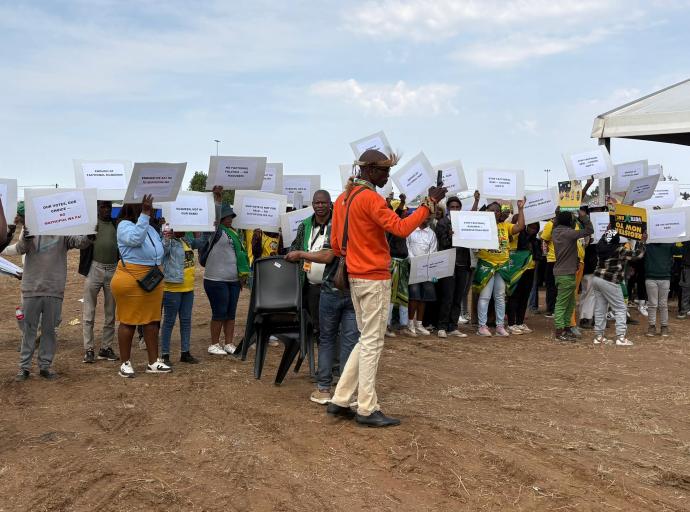
Community members arrived at the ANC’s Free State manifesto event in Grassland, Bloemfontein, on Sunday, voicing their grievances and demanding that their concerns be addressed.
The group, carrying placards with messages for the ANC, made their presence known as the manifesto programme was underway.
Their grievances centred on issues they want the ANC to address, with the demonstration highlighting growing concerns among some community members ahead of the upcoming local government elections.
The arrival of the group created a notable moment at the manifesto, where the ANC was presenting its plans and priorities to communities in the province.
One of the community members said they are not satisfied with several issues affecting their communities. Highlighting Maladministration and the selection process of councillors in different areas.
“We are here because our communities are not happy with several issues, but the main one currently is the selection process of councillors in different areas”, he said.
The demonstration comes as the ANC aims to present its vision and commitments to voters, while also engaging communities on issues affecting their daily lives.
Responding to the protest, Nonmvula Mokonyane, the ANC Deputy Secretary General, stated that distressed communities are going to be contacted to determine how best they can be assisted.
“The beauty of the ANC is that we didn’t chase them away; between today and tomorrow, communication is going to happen. We did not chase them away, but we listened to their grievances,” she said.
She stated that the protesters came to highlight their issues and not to protest against the rally.
“They came to highlight their issues, and they have been listened to, and there was no cop who stopped them because they are ordinary citizens of South Africa who must be listened to,” she added.
Despite the grievances raised during the event, the ANC said it was satisfied with the turnout and welcomed the community’s participation in listening to and celebrating the manifesto.
The glamour, heartbreak and triumph of pageantry took centre stage as Free State medical doctor Palesa Van Rooyen secured her place in the coveted Miss South Africa 2026 Top 19.
The Top 19 cohort was unveiled on the Miss South Africa YouTube channel by international television personality Minnie Dlamini, who dazzled in a classic black beaded gown by pageant sponsor Nala Privé.
While Van Rooyen celebrated her breakthrough, the latest cut brought disappointment for several hopefuls, including Top 24 finalist Gift Ntimini.
“Thank you so much, I would like to thank everyone who has supported me through my journey of Miss South Africa 2026. Unfortunately, I did not make it to Top 19, but I’ll forever be proud and grateful for making it to the Top 24,” Ntimini said in a farewell message to her supporters.
The difficult selection was overseen by an elite judging panel comprising businesswoman Dr Aisha Pandor, former Miss South Africa Shudufhadzo Musida and Colleen Larsen, with global auditing firm PwC independently auditing the process.
The remaining 19 contestants now turn their attention to developing social impact initiatives under the Empower Youth Africa (EYA) framework.
Van Rooyen is quickly emerging as a strong contender, combining her pageant ambitions with her medical profession and passion for community development. Splitting her time between Hobhouse, Ladybrand and Bethlehem, she is focusing on child safety and malnutrition, drawing on her medical expertise to address challenges facing vulnerable communities.
Her approach has impressed the judges.
“Our communities are richer for having an empathetic, caring doctor like you. You will ensure major impact through the work you do,” Larsen said.
Musida added: “Palesa is very thoughtful in her approach to her EYA. There is a genuine care in her ‘why’.”
Van Rooyen’s advocacy also extends to Bloemfontein, where her Beauty with a Purpose project focuses on paediatric healthcare gaps in underserved communities.
Her initiative recently reached an important milestone when her first group of “Nutrition Champions” completed their initial assessment.
“These young people have committed themselves to attending teaching sessions, studying, asking questions and applying themselves—all because they want to see THEIR community uplifted,” Van Rooyen said.
“I have been deeply moved by their commitment, their excitement and their eagerness to get into the field and start serving their community.”
With the competition now entering Bootcamp Week, the pressure is intensifying. Van Rooyen said she intends to embrace every opportunity to learn and grow.
“I hope to achieve with my time here to remain wide open to the process, to learn as much as I can and to take all the good gems away,” she said.
Bootcamp training has already included public speaking sessions with conversation strategist Nozipho Tshabalala, followed by media training with reporter Heidi Giokos. An upcoming workshop will be led by Dr Precious Moloi-Motsepe.
With her medical expertise, community-focused advocacy and growing pageant momentum, Van Rooyen now has her sights firmly set on going all the way.
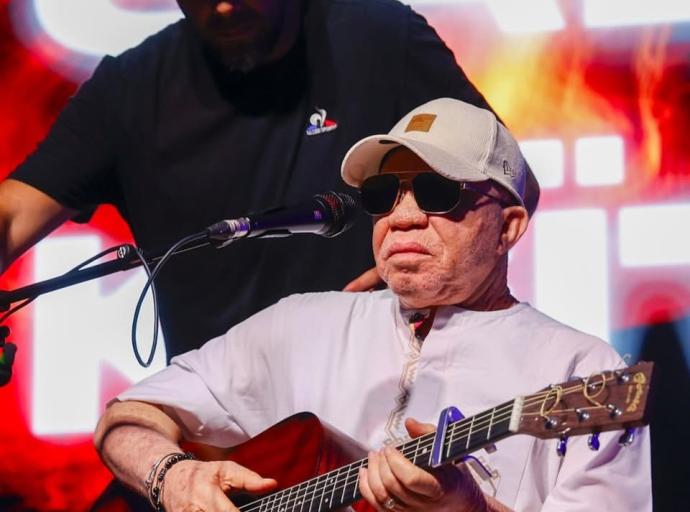
Legendary Malian singer-songwriter Salif Keita has withdrawn as the headline international act for the upcoming Mangaung African Cultural Festival (MACUFE) Main Festival, citing concerns over reports of xenophobic violence against migrants in South Africa.
The 76-year-old Afro-pop icon was scheduled to headline the festival in Bloemfontein on 12 September, following the high-profile launch of the 2026 festival programme on 31 July at the War Museum of the Boer Republics.
In an emotional statement posted on Facebook, Keita said his decision was driven by conscience rather than a rejection of South Africa or its people.
“To my beloved brothers and sisters in South Africa, and across the continent,” Keita wrote. “For over fifty years, Africa has not just been a place I visit — it is who I am. South Africa, in particular, has always welcomed me as a brother, not just an artist.”
Keita said reports of attacks on migrants had deeply troubled him.
“I cannot ignore the reports of xenophobic violence against our African brothers and sisters. When I see migrants attacked, I do not see ‘politics’,” he said.
A longtime advocate for Pan-African unity and human rights, Keita also reflected on his historic ties with South Africa. He recalled performing at Wembley Stadium in 1988 during the celebrations for Nelson Mandela’s 70th birthday, highlighting the solidarity between South Africa and Mali during the apartheid era.
He stressed that his decision should not be interpreted as a permanent rejection of the country.
“To be clear — I am not closing the door on South Africa. I am closing the door on violence,” Keita said.
Despite withdrawing from commercial performances, the music veteran said he remained willing to participate in grassroots initiatives aimed at promoting healing, dialogue and unity.
“If there is a stage in a township, I will sing there... When the time is right, I will return — not for applause but for healing, dignity and ubuntu,” he said.
The Free State Department of Sport, Arts, Culture and Recreation (SACR) expressed regret over Keita’s withdrawal but confirmed that MACUFE 2026 would continue as planned.
“The Department accepts it and will follow any requisite steps for redress in line with the contract terms entered into with the artist,” said the department Spokesperson Tankiso Zola.
“We share in the disappointment of all MACUFE patrons who were eagerly anticipating the performance of this preeminent artist.”
The department, however, assured festivalgoers that the withdrawal would not derail the event.
“The 2026 MACUFE programme will proceed uninterrupted. A dynamic artistic line-up has been put in place and will continue to entertain the attendees,” he said.
Keita’s withdrawal is set to cast a spotlight on the broader challenges of xenophobia and African solidarity, while MACUFE organisers face the task of maintaining the festival’s momentum without one of its biggest international attractions.
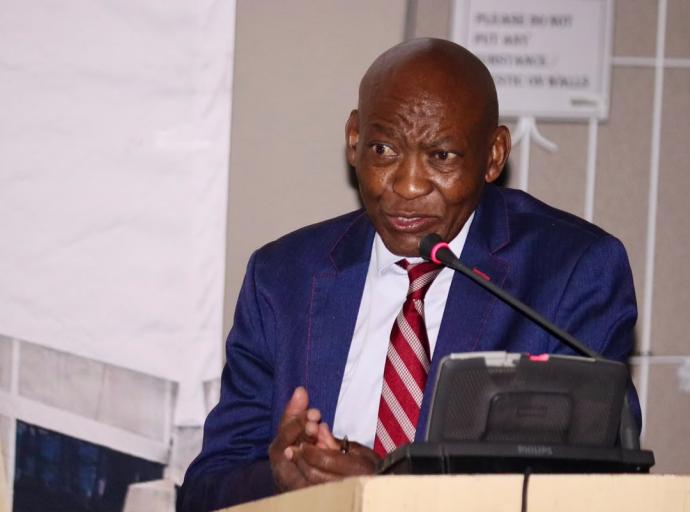
Persistent implementation failures, financial mismanagement and weak accountability have come under fire after the National Council of Provinces (NCOP) raised serious concerns over the state of municipalities in the Northern Cape.
During its annual Provincial Week oversight visit, the NCOP delegation, led by Provincial Whip Patrick Mabilo, assessed service delivery and progress on previous recommendations at Sol Plaatje, Siyancuma and Siyathemba local municipalities.
While the delegation acknowledged progress on some infrastructure projects, it warned that recurring failures continue to undermine service delivery and public confidence.
Mabilo said the province’s biggest challenge was not a shortage of plans, but the failure to implement them effectively.
“We have seen that the Northern Cape’s principal challenge is not the absence of plans or commitments, but weak implementation and follow-through,” Mabilo said.
The delegation identified municipal capacity, financial management and accountability as major weaknesses, alongside contractor failures, project delays, excessive reliance on consultants and poor financial controls.
According to the delegation, the Auditor-General raised concerns over municipalities’ dependence on consultants, while R656 million in irregular expenditure was identified across municipalities. Nine municipalities remain distressed, with 30 of 144 senior management posts vacant.
The province is also losing billions of rands through water inefficiencies. Non-revenue water is estimated at 45%, translating into an estimated annual revenue loss of R2.93 billion. None of the water systems assessed achieved Blue Drop certification in the 2023 assessment.
Housing projects stuck
At Siyancuma, the NCOP found major delays in a 150-unit low-cost housing programme serving Griekwastad, Schmidtsdrif, Campbell and Bongani.
The project, initially expected to take eight months, has dragged on for about two years, with only 20 houses completed.
Siyancuma has received qualified audit opinions for four consecutive years and accumulated R66 million in unauthorised expenditure and approximately R21.256 million in irregular expenditure.
The municipality also owes about R321 million to Eskom and water boards, while revenue collection stands at only around 49%, putting further pressure on its finances.
Residents raised additional concerns over severe water shortages and the poor condition of the gravel road between Schmidtsdrif and Douglas, which is used by learners.
The Schmidtsdrif Communal Property Association also reported inadequate post-restitution support, limited financial and institutional capacity and poor cooperation between government departments.
Siyathemba presents a similarly troubling picture, having received qualified audits for five consecutive years.
The municipality has an unfunded budget overspend of R611 million dating back to 2011, while Eskom debt has reached about R350 million.
The stalled Prieska housing development remains a major concern. Phase 2, comprising 200 units, has 61 incomplete houses after the contractor defaulted in 2023.
The abandoned site has reportedly become vulnerable to vandalism and criminal activity, while 18 houses from an earlier development have developed severe cracks and require urgent repairs.
Sol Plaatje shows progress — but concerns remain
The delegation acknowledged progress on the R2.7 billion Sol Plaatje Bulk Water Infrastructure Project, a seven-year programme aimed at strengthening water security.
The emergency phase is reportedly 98% complete, with nightly water shutdowns eliminated and unplanned interruptions substantially reduced.
However, the NCOP raised concerns over R97 million in unspent funds, continuing water losses and shortcomings in water-quality testing and reporting.
Delays were also flagged at the Hull Street Social Housing Project, where only 106 of the planned 372 units are nearing completion.
The original contractor was terminated in March 2024, while the replacement contractor suspended work in November 2025 over an outstanding payment of R42.3 million. The matter is currently before the Northern Cape High Court.
The NCOP called for interim or emergency funding and site security to protect the near-complete units while funding and legal disputes are resolved.
Mining wealth, but little local benefit
The delegation also questioned the beneficiation of tiger’s eye mined in the Siyathemba area.
The mineral is reportedly processed in Kimberley instead of within the municipality where it is extracted, raising concerns that local communities are not benefiting sufficiently from the province’s mineral wealth.
The NCOP said the situation undermines the principles of inclusive economic development and local beneficiation.
NCOP demands action
The delegation has called on municipalities to fill critical vacancies, particularly chief financial officer posts, while reducing consultant expenditure by 30% in line with Auditor-General recommendations.
It also wants municipalities to strengthen internal financial functions and improve water-quality monitoring and public reporting.
The stalled Prieska housing project has been prioritised, with a detailed action plan expected to be submitted to the NCOP within two months. The delegation will also engage National Treasury on solutions for stalled housing developments.
Departments responsible for infrastructure projects have been given three months to submit detailed progress reports outlining funding, timelines, challenges and remedial measures.
Mabilo said the success of the NCOP’s oversight would ultimately be measured by whether its recommendations translate into action within agreed timeframes.
The delegation said it would continue monitoring commitments after the local government elections.
“Communities must see tangible change, not just repeated observations,” the delegation said.